


Pick up an old cast iron skillet at an estate sale. Turn it over. Feel the cooking surface with your thumb.
It’s smooth as glass. The new one at the hardware store feels like fine sandpaper by comparison.
That difference isn’t nostalgia talking. Somewhere along the way, a lot of kitchen tools got cheaper to make and worse to use. The metal got thinner. The glass changed formulas. The extra polishing step got cut.
Some of these old gadgets aren’t just charming. They flat-out outperform the shiny replacements, and they cost a fraction of the price if you know where to look.
Here are 31 old kitchen gadgets that still beat anything on the shelf today.
1. Griswold & Wagner Cast Iron Skillet

Run your finger across a Griswold from the 1930s. Then across a new Lodge. You’ll never unfeel the difference.
Old foundries machine-polished the cooking surface after casting, grinding it to a mirror finish. That slick surface seasons faster and releases food like nonstick.
Lodge and most modern makers skipped that step decades ago to cut cost. What’s left is a pebbly, sandy texture that takes years of cooking to smooth out.
Griswold and Wagner were the two giants of American cast iron, and as Southern Kitchen notes, the polish-grinding largely disappeared after the 1960s. A well-kept one from that era cooks better than almost anything you can buy new.
Find one at a flea market for $30. It’ll outlive you.
2. Early Le Creuset Enameled Dutch Oven

Le Creuset made cast iron pretty in 1925. It’s been coasting on that reputation ever since.
Collectors chase the vintage pieces for a reason. The old matte enamel is smoother, the iron is heavier, and the worn edges tell you it survived fifty years of Sunday roasts.
Discontinued colors go for hundreds of dollars. Flame orange, that original shade, still turns heads at auction.
You get cast iron’s heat retention with a coating that won’t quit. Buy a chipped one cheap and it’ll still braise better than a new pot at ten times the price.
3. Thick French Copper Cookware

Weight was the whole point.
Vintage French copper runs 3 to 5 millimeters thick. Most modern copper pots barely clear 2.5mm, and a lot of what’s sold now is copper-plated decoration with no real cooking benefit.
That extra thickness is why old copper responds to heat instantly and holds it evenly. No hot spots. No scorched sauce.
The tin lining wears out eventually. But a coppersmith can re-tin it, and then you’ve got another lifetime of cooking ahead. These pots don’t die. They get refurbished.
4. Borosilicate PYREX Bakeware
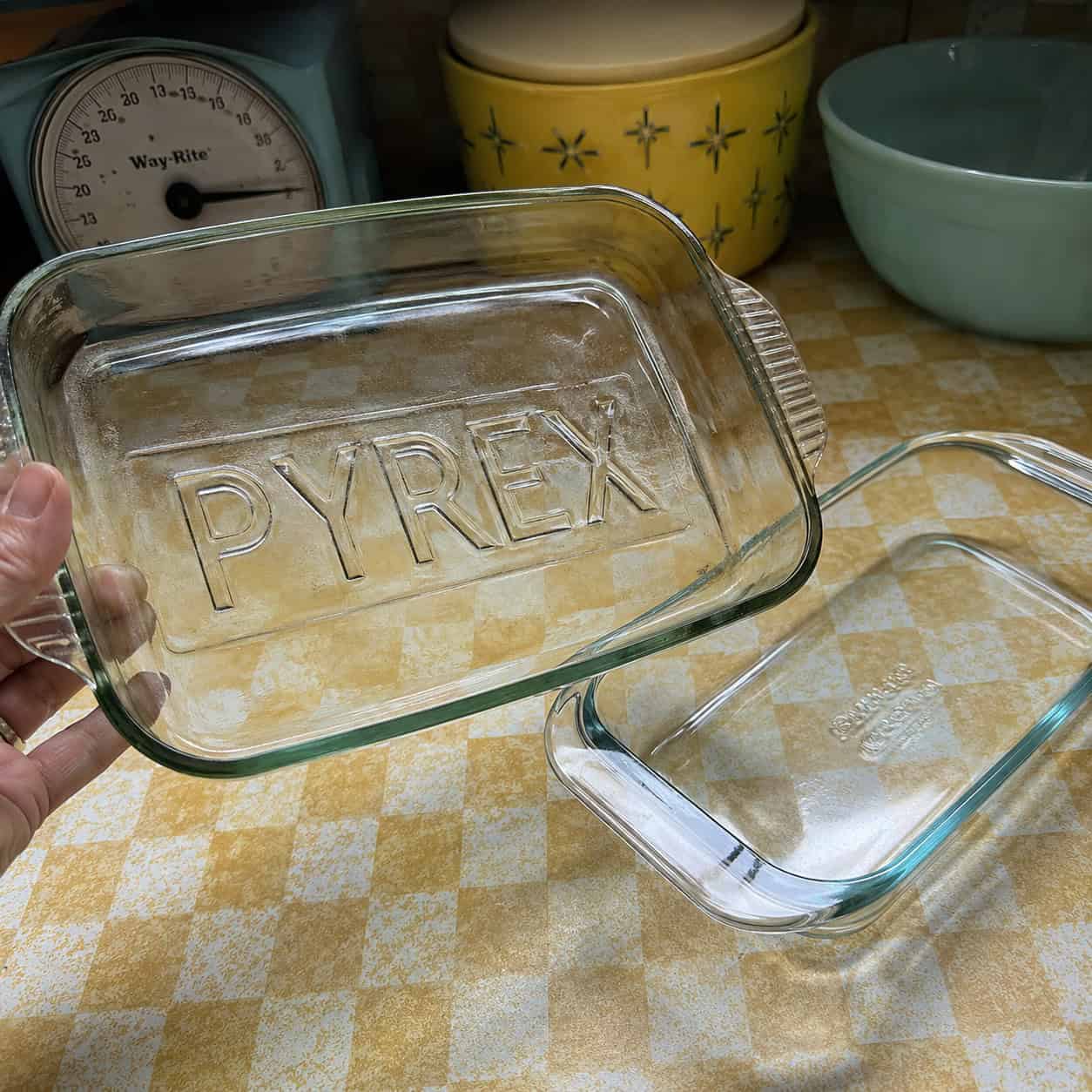
Check the logo. This one trick tells you everything.
If it says PYREX in all capital letters, it’s the old borosilicate glass, made from 1915 onward. That formula shrugs off thermal shock. You can pull it from the freezer, drop it in a hot oven, and it won’t blink.
Lowercase “pyrex” is the newer soda-lime glass. The US switched around 1998 to save money, and soda-lime can shatter when the temperature swings too fast.
Per Gari’s Galley, that all-caps-versus-lowercase tell is the fastest way to spot the good stuff at a thrift store. Grab the old dishes. They’re safer and tougher.
5. Heavy Stoneware Mixing Bowls

A good mixing bowl doesn’t move.
Those weighty yellowware bowls from the late 1800s stay planted on the counter while you knead dough or beat batter one-handed. No skittering, no chasing it across the counter.
The stoneware holds temperature too. Warm it for a rising dough. Chill it for whipping cream.
Plastic bowls slide. Thin glass tips. Heft is a feature here, not a flaw, and these old bowls have it in spades.
6. Carbon Steel Chef’s Knife
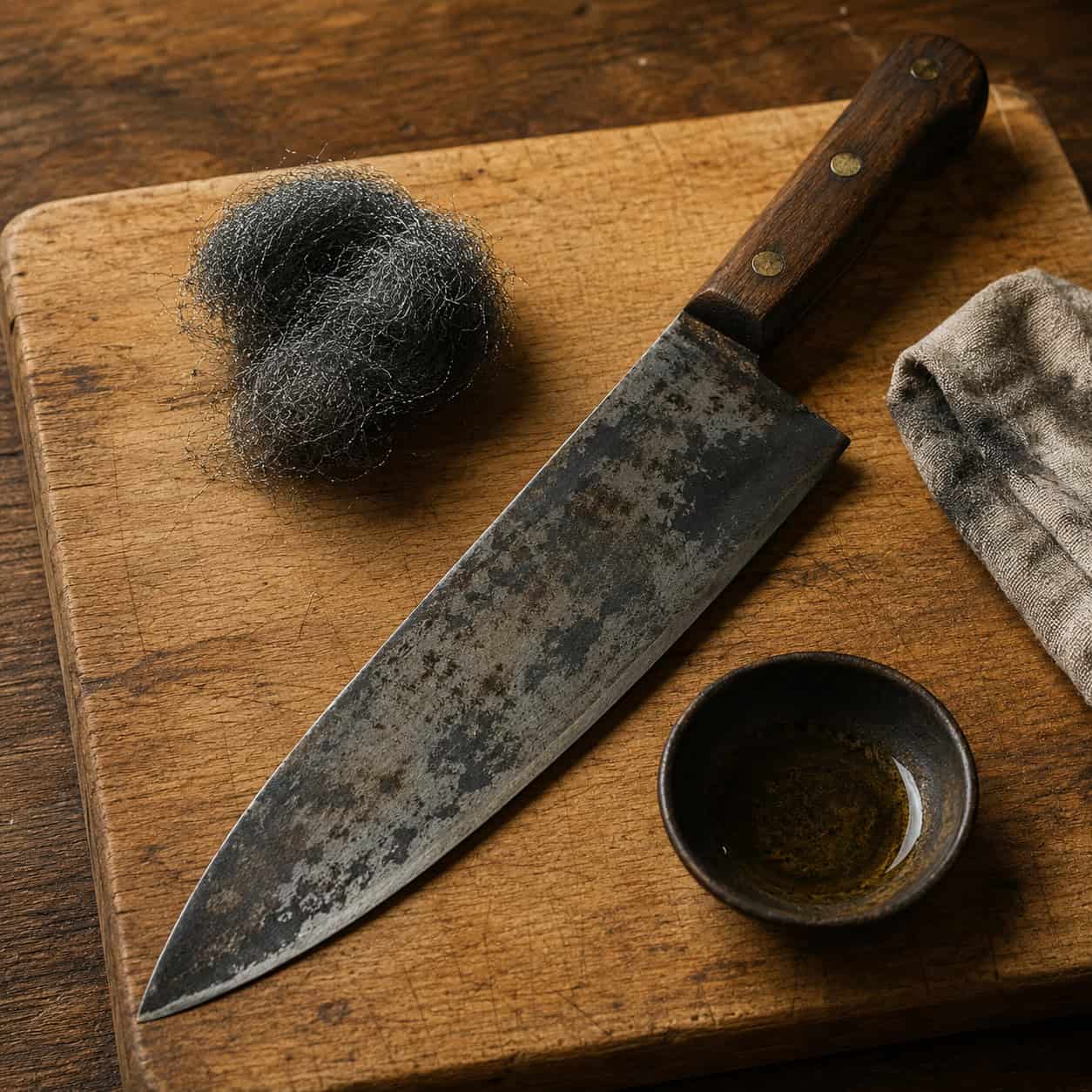
That rusty knife in the antique store bin? It might be the best blade in the shop.
Carbon steel took an edge sharper than stainless and held it far longer. For most of the 20th century, it was what serious cooks used.
Stainless replaced it because carbon steel rusts if you leave it wet. That’s the whole tradeoff. Wipe it dry after each use and the problem disappears.
A crusty old carbon blade cleans up with steel wool and a little oil. Underneath the grime is a knife that sharpens in seconds and cuts like a razor.
7. Foley Food Mill

The Foley food mill is the anti-blender.
Foley Manufacturing of Minneapolis introduced it in 1934, and the design barely needs improving. You crank the paddle and it purees while separating out skins, seeds, and cores.
A blender blitzes everything into one uniform mush. The mill leaves texture. That’s why applesauce, tomato sauce, and mashed potatoes come out better this way.
The Hennepin History Museum documents that 1934 debut. Nearly a century later, cooks still reach for it over a food processor for the fluffiest potatoes they’ve ever made.
8. Hand-Crank Rotary Egg Beater

You can feel the exact moment cream thickens.
An electric mixer blows past that moment. One second too long and you’ve got butter, or a broken meringue, or over-whipped cream.
The hand-crank rotary beater gives you that feedback through the handle. It slows as the mixture stiffens, so you always know where you are.
It’s quiet. It needs no outlet. And it rinses clean in about ten seconds. For a bowl of whipped cream, nothing beats it.
9. Swing-A-Way Manual Can Opener

Electric can openers die. The Swing-A-Way doesn’t.
The 1950s and ’60s versions are legendary among people who’ve owned one for forty years. Sharp cutting wheels, sturdy steel body, and wheels you can replace when they finally dull.
No motor to burn out. No cord. It works in a blackout and it works on the camping trip.
Compare that to a bulky electric opener taking up counter space, waiting for its motor to give up. The manual one just keeps going.
10. Box-Style Burr Coffee Grinder

Blade grinders chop beans unevenly and scream while they do it.
The old wooden box burr grinders crush beans between two burrs for a consistent, adjustable grind. Turn the top nut to dial in coarse for a French press or fine for espresso.
Hand-cranking keeps the beans cool, so you preserve the oils that give coffee its flavor instead of scorching them.
Ground coffee drops into a little wooden drawer underneath. Pull it out, dump it in the pot. These grinders were built in the 1800s and still turn out a better cup.
11. Cast-Iron Apple Peeler-Corer

Spike an apple on the fork. Crank. Watch it peel, core, and slice in one pass.
Many of these designs date to the 1870s and 1880s, and nothing modern peels an apple faster. LoveToKnow points out that 140-year-old cast-iron units still run fine with a squirt of WD-40 on the gears.
Making a pie? You’ll fill the bowl in minutes.
Making apple butter by the bushel? This is the only sane way to do it. The cast iron just doesn’t wear out.
12. Clamp-On Manual Meat Grinder

Before the food processor, sausage got made with one of these.
It clamps to the edge of the table and you feed the meat through by hand. That gives you precise control over the grind — coarse for chili, fine for a smooth sausage.
A food processor chops meat unevenly and warms it up, which ruins the texture. The hand grinder does neither.
It also works when the power’s out, which is why the from-scratch and prepper crowds keep them around. For a coarse grind, it still beats the electric option.
13. Hand-Crank Flour Sifter

A tin cup with a mesh bottom and a crank. That’s the whole machine.
Simplicity is why it lasts. There’s nothing to break, and what does wear out you can bend back into shape.
Per House Digest, these old sifters routinely outlast the flimsy modern ones by decades. Foley even patented improved one-hand squeeze versions in the 1940s.
Cheap modern sifters bind up and rust at the crank within a year or two. The old ones just keep sifting.
14. Wire Potato Masher & Ricer

The simplest tool wins this one.
Electric mixers and immersion blenders overwork potatoes, breaking down the starch until you get glue. Nobody wants gluey mashed potatoes.
A zigzag wire masher or a ricer gives you fluffy control. You mash exactly as much as you want and stop.
There’s nothing to break and it rinses clean under the tap. Skip the appliance for this job.
15. Glass Citrus Reamer

A ridged glass cone. That’s it. And it beats half the electric juicers on the market.
Press a lemon half onto the ridges and twist. The juice runs down into the dish while the reamer catches the seeds.
You can see exactly how much juice you’ve got. Nothing to plug in, nothing to wash but one piece of glass.
It never wears out because there’s nothing to wear. Effectively immortal, and dishwasher-safe on top of it.
16. Hand-Crank Nut Grinder

Fill the hopper. Crank. Evenly chopped walnuts drop into the glass jar below.
Bakers swear by these because a food processor can’t match the uniform texture. Pulse nuts in a processor and half turn to powder while the rest stay in chunks. A few seconds too long and it’s nut butter.
The hand grinder chops each nut to the same size, every time.
As Hilda’s Kitchen Blog notes, the glass measuring jar at the bottom is part of the charm — you grind straight into a measure. Old-school and still unbeaten for even chopping.
17. Enamel & Metal Colander

A plastic colander does one job. A metal one does two.
Those old holey metal bowls outlast plastic by decades. No cracking, no staining, no warping in the dishwasher.
Set one over a pot of simmering water and it becomes a steamer. Try that with plastic and you’ll melt it into the pot.
The enamel ones look good doing it, too. Buy the metal. It never becomes a puddle on your stove.
18. Solid Wooden Rolling Pin

Wood is the right material for dough, and it always was.
It stays at the right temperature so pastry doesn’t stick and warm up. Its weight lets you feel the dough thinning under your hands as you roll.
Marble is too cold and too heavy. Plastic gives you no feedback at all.
A good solid wood pin — the classic smooth-handle kind — reads the dough for you through your palms. That sense of touch is exactly what a baker needs.
19. Solid Wood Cutting Board
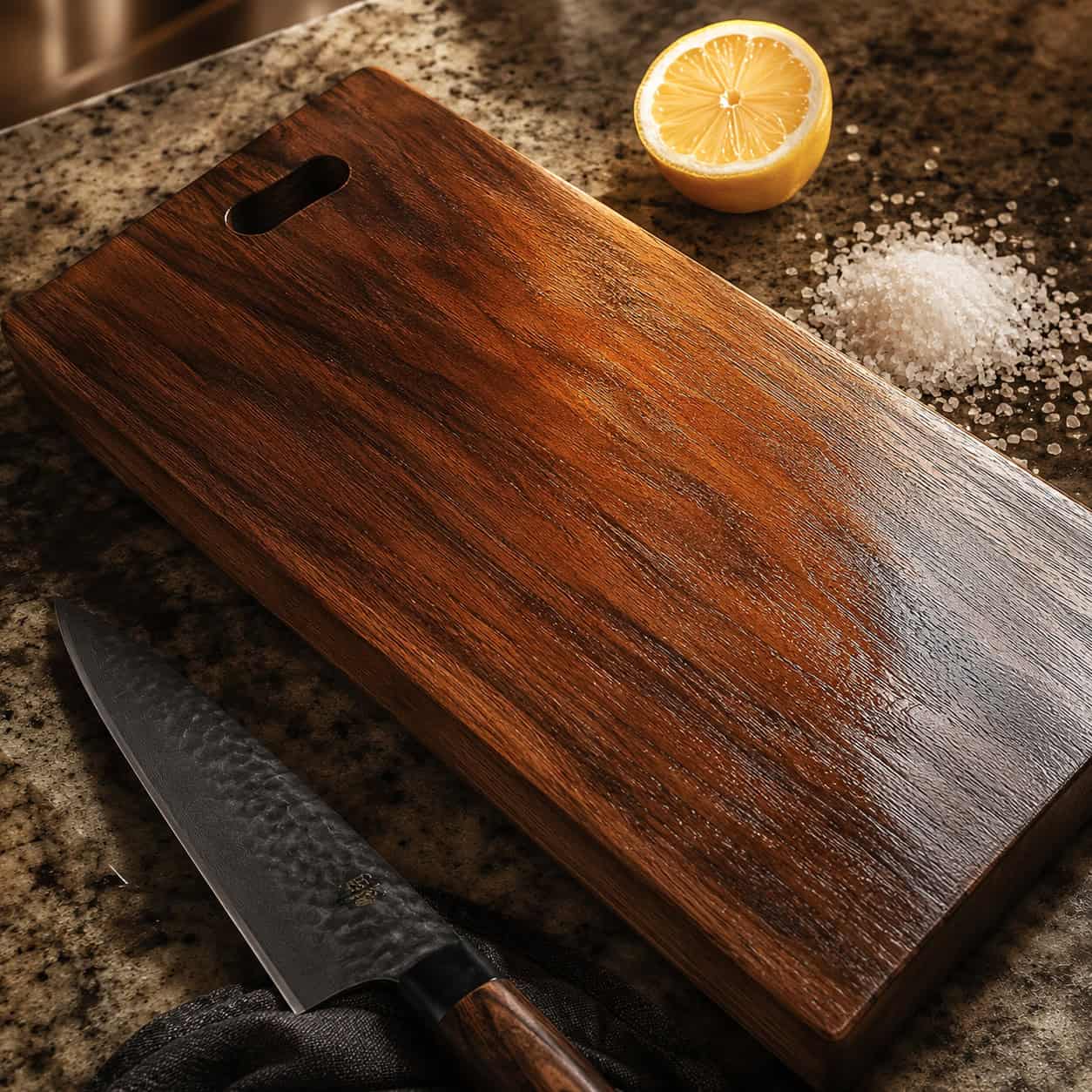
Glass boards ruin knives. Plastic boards harbor grooves that trap bacteria.
Wood does neither. Chopping on a solid wood board is far gentler on your knife edge, so your blades stay sharp longer.
Wood also has natural antimicrobial properties, and vintage French boards get singled out by Remodelista as editor favorites for good reason.
Care is easy. Scrub with coarse salt and half a lemon, rinse, dry standing up. Oil it now and then. A good board lasts generations.
20. Nutmeg Grater

Pre-ground nutmeg is a shadow of the real thing.
The little curved metal grater, common since the early 1900s, strips a whole nutmeg into fine aromatic dust in seconds. The smell alone tells you why it matters.
Fresh-grated nutmeg has a warmth and bite that the jarred powder lost months ago on a store shelf.
It’s small, cheap, and there’s nothing to break. Grate over eggnog, oatmeal, or a béchamel and taste the difference.
21. Cast-Metal Meat Tenderizer Mallet

Heft does the work.
The grid of pyramidal teeth breaks down muscle fiber evenly without shredding the meat, and the weight of a cast-metal mallet gives you feedback a flimsy modern one can’t.
You feel each strike land. That control keeps you from pounding a cutlet into confetti.
Bonus use: flip it around and smash a bag of ice for cocktails. One heavy old tool, two jobs, no batteries.
22. Aluminum Lever Ice Cube Tray

Why did we ever downgrade to plastic?
Aluminum conducts cold far better than plastic or silicone, so your cubes freeze faster. That’s just physics.
Then there’s the lever. Lift it and the whole grid of cubes pops free at once. No twisting, no cracking the tray in half, no fighting frozen plastic over the sink.
The old aluminum trays, standard before plastic took over around 1960, are called out by Hilda’s Kitchen Blog for exactly this reason. Pull the lever, done.
23. Mechanical Dial Kitchen Scale

No batteries. No pairing. No dead display three years in.
A spring-and-dial scale just works. Put the flour on, read the needle, done. It’s accurate enough for any real cooking or baking you’ll ever do.
Digital scales die when the battery corrodes or the electronics fail. The mechanical ones from the early 1900s still spin true.
They look good enough to leave out on the counter, too. Handsome, honest, and effectively immortal.
24. Osterizer Glass-Jar Blender

Oster’s been building blenders since 1943, and the old ones put the plastic-jar models to shame.
The pitcher is heavy glass, not thin plastic that clouds and cracks. The motor was built to run for decades, and plenty of them still do.
Foodie flags one real caveat if you buy vintage: check the old power cord before you plug it in. Cloth-wrapped cords can dry out and crack.
Sort that out and you’ve got a blender that’ll outlast three of today’s models. The glass jar alone is worth the hunt.
25. Sunbeam Mixmaster Stand Mixer

Built like a ’50s Cadillac. Tail fins and all.
Sunbeam released the Mixmaster in 1930 and ran the classic line through 1967. People find them in basements, plug them in, and they still whir to life fifty years later.
The beaters were the clever part. As Tasting Table explains, they were designed with full-coverage geometry that worked the whole bowl instead of just spinning batter in the center.
No stopping to scrape the sides constantly. It mixed everything. And it kept mixing for generations.
26. Hobart-Era KitchenAid Stand Mixer

Flip an old KitchenAid over and look for one word: Hobart.
Hobart owned KitchenAid through the mid-century, and those all-metal mixers were overbuilt to last for generations. The green K5-A and Hobart-stamped units are collector gold.
Some listings run close to $800. That’s what people pay for a machine that won’t quit.
Tasting Table lists these among the vintage tools actually worth real money. Solid metal gearboxes, no plastic bushings to strip. If you inherit one, keep it.
27. Revere Ware Stovetop Kettle

If it ain’t broke, don’t redesign it.
The Revere Ware whistling kettle has been around since at least 1949, and its copper-clad bottom design has barely changed in 75 years, according to Foodie.
The copper bottom spreads heat fast so the water boils quick. The whistle tells you when.
No electronics, no heating element to burn out. And when the power’s down, it still boils water on a gas burner or a camp stove. Try that with an electric kettle.
28. Stovetop Pressure Cooker

The Instant Pot got all the attention. The old stovetop cooker quietly does the job better.
Stovetop pressure cookers hit higher pressure than most electric models, even the expensive ones. Higher pressure means faster cooking. Beans in twenty minutes, tough roasts in under an hour.
As AOL points out, the retro stovetop versions still outpace their electric replacements.
If you kept grandma’s, you kept the better machine. Learn the gauge and it’ll cook rings around the countertop pot.
29. Stovetop Moka Pot

Almost nothing to go wrong. That’s the genius of it.
The moka pot is a 20th-century Italian icon still made exactly the same way. Water in the bottom, coffee in the basket, screw the top on, set it on the burner.
It brews a rich, espresso-style coffee with just a gasket and a filter plate as the only real wear parts. Both cost a few dollars to replace.
It stores small and you’ll trip over vintage ones in every thrift store, per AOL. Buy one for $5. It’ll make your coffee for the next thirty years.
30. Cherry Pitter

Pie season separates the people who own one from the people who wish they did.
A cast-metal cherry pitter, a design going back to the mid-1800s, punches the pit out clean while leaving the fruit intact. You spike a cherry, squeeze, and the pit drops out one side.
Do it by hand instead and you’ll spend an hour with purple fingers and a mangled bowl of fruit.
It’s a single-task tool, sure. But on the one day a year you need it, nothing else comes close.
31. Wooden Butter Mold

This one earns its place on beauty and history more than raw performance.
Pressing butter into a carved wooden mold is a technique that dates to the 15th century, and it was common on American farms into the early 1900s. Each mold stamped a farm’s own pattern into the block.
A wheat sheaf. A cow. A rosette. The butter came out looking like a small carved monument.
You don’t need one to make butter. But if you churn your own, nothing turns a plain block into something worth putting on the table quite like this.
The Common Thread
Notice what these tools share. Weight. Simple mechanisms. Materials chosen for how they work, not how cheap they are to ship.
Somewhere between then and now, “good enough to sell” replaced “good enough to hand down.” The polishing step got cut. The metal got thinner. The glass formula changed.
The best part is that most of this stuff is still out there. Estate sales, thrift shops, grandma’s basement. You can rebuild half your kitchen for the price of one new gadget that’ll break in three years.
Go find the smooth skillet. Your grandkids will fight over it.