


You spent the money. New tile, new fixtures, the whole room gutted and rebuilt. And your agent walks in, glances around, and quietly knocks your listing price down.
It happens more than sellers want to believe.
Some of the most expensive bathroom upgrades don’t just fail to pay off — they actively repel the buyers shopping in your price range. A few common ones get your listing filtered out of search results before a single person tours the house.
The good news: most of these mistakes are cheap to avoid and cheaper to reverse. You just have to know which choices read as “charming” to you and “renovation bill” to everyone else.
Here are 22 bathroom renovation moves that quietly drag down what your home is worth.
1. Ripping the Tub Out of Every Bathroom

A big walk-in shower feels like the obvious upgrade. It photographs well. It’s easy to clean. And if it’s your only tub, it can cost you buyers you never even met.
Here’s the mechanism most sellers miss. Buyers with kids filter listings by number of bathtubs. A home with zero tubs gets stripped out of those search results automatically — nobody rejects it, they just never see it.
Real estate outlets like Quartz have flagged the all-shower house as one of the quieter resale traps for exactly this reason.
Keep at least one tub in the house. A walk-in shower in the primary bath is fine — smart, even. Just leave a tub in a secondary or guest bathroom so families don’t scroll right past you.
2. Venting the Fan Into the Attic
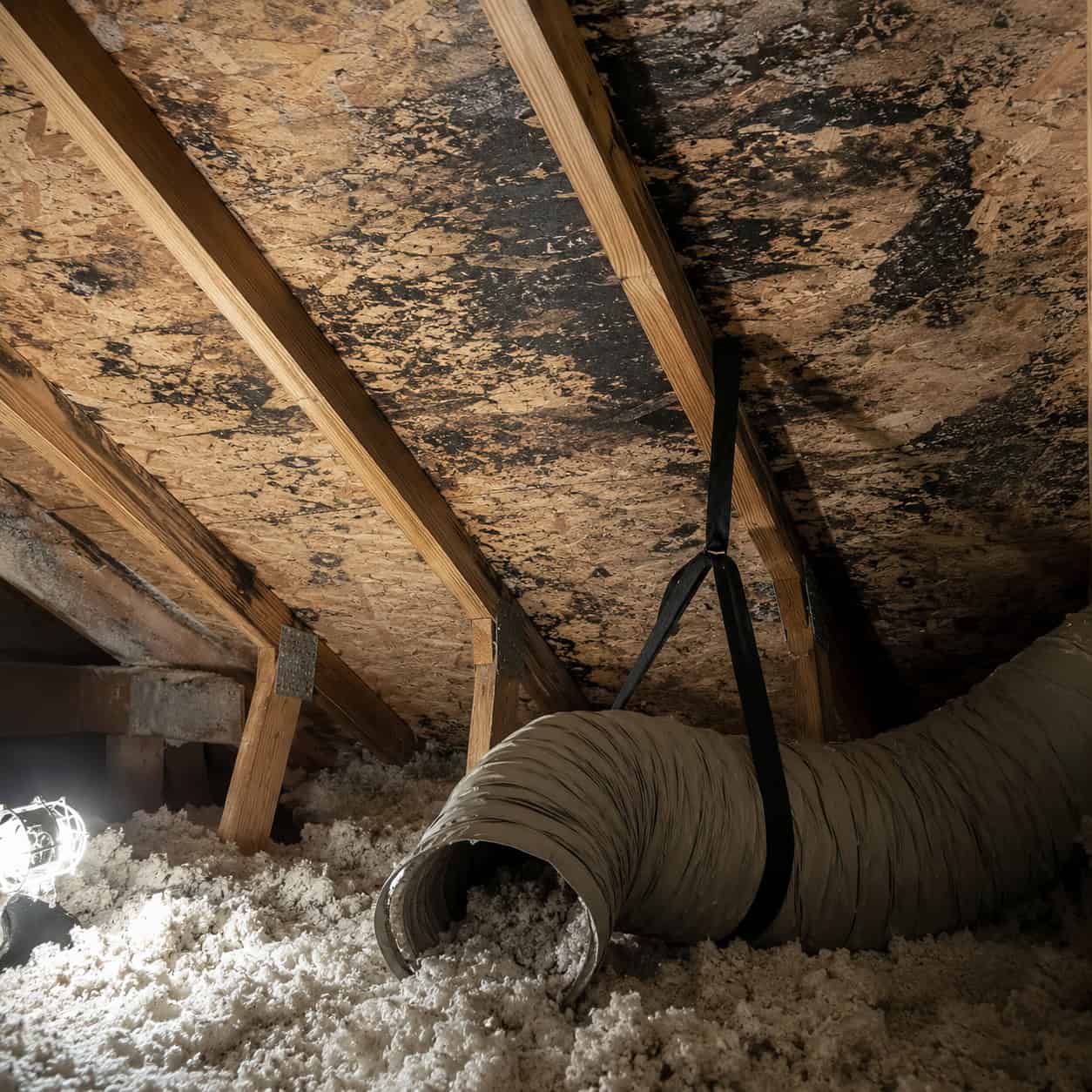
This one hides. It’s silent for years, and then it shows up as a five-figure problem on an inspection report.
An exhaust fan is only doing its job if it moves moist air outside the house. Plenty of DIY installs — and more than a few contractor jobs — just dump that warm, wet air straight into the attic. The fan runs, the mirror clears, and everything looks solved.
It isn’t. Warm bathroom air hits cold attic framing and condenses. Day after day, shower after shower, that moisture soaks into rafters, sheathing, and insulation.
The EPA is blunt about the outcome: mold can start growing on damp wood and drywall within 24 to 48 hours, and the only real fix is controlling the moisture at the source. Their guide to mold and moisture treats trapped humidity as the root of nearly every indoor mold problem.
The Home Ventilating Institute goes further, calling proper ventilation the single most effective weapon against moisture damage in a house. Their research on ventilation and mold ties bad fan venting directly to rot in framing and roof decking.
It’s also a code violation almost everywhere. Bathroom fans are required to terminate outside — through the roof or a sidewall — not into the attic, soffit, or the space between floors.
So the buyer’s inspector finds stained sheathing, rusty nails, and a fan duct pointed at nothing. Now you’re negotiating against a mold remediation quote and a roof-decking repair, not a $40 duct.
Run the duct all the way out. Insulate it so the air inside doesn’t condense on the way. If you’re unsure your fan is doing anything at all, that’s worth checking before you list — a fan that quietly dumps into the attic is doing damage the whole time it “works.”
3. Over-Improving for Your Neighborhood

A $40,000 spa bathroom in a modest home doesn’t earn you $40,000. It often earns you a smaller pool of buyers.
People shopping a given price band expect a matching level of finish. Drop a marble-and-heated-floors showpiece into a house priced for laminate and builder-grade, and it reads as strange — even suspicious — instead of luxurious.
As House Digest puts it, you can’t recover money on luxury that nobody in your market is paying for.
Match your renovation to the ceiling of your street, not the ceiling of your Pinterest board. The nicest bathroom on the block sells. The nicest bathroom in the county, sitting in an ordinary house, just sits.
4. Converting a Bedroom Into a Bathroom

Turning a spare bedroom into a giant en-suite feels indulgent in the best way. On paper, it’s usually a loss.
Bedroom count drives listings harder than bathroom count. A three-bed becomes a two-bed, and you fall out of every “3+ bedroom” search — the exact filter most families start with.
HomeAdvisor has pegged the hit from removing a bedroom at up to 15% of a home’s value. That’s a brutal trade for one more sink.
If you want a bigger bathroom, steal from a hallway, a closet, or dead space. Never from a room a buyer would count as a bedroom.
5. Cheap Materials and Sloppy Grout and Caulk

Buyers can’t always name what’s wrong. They just feel that a bathroom is “cheap.” Nine times out of ten, it’s the grout.
Cracked, discolored grout and moldy, peeling caulk are the first things a buyer’s eye lands on. They read it as neglect — and as a warning that whatever’s behind the tile probably isn’t sealed either.
One real estate pro told Real Simple that re-grouting and re-caulking is one of the highest-return, lowest-cost things a seller can do.
Re-caulk the tub and the vanity. Refresh grout lines or have them professionally cleaned. It’s a weekend and a few dollars, and it buys back trust the rest of the room depends on.
6. Shrinking the Bathroom Too Small

Stealing bathroom square footage to enlarge a closet sounds efficient. In a showing, it reads as claustrophobic.
Buyers want room to move. Agents from firms like Compass say nobody wants to squeeze past a glass door to reach the toilet or bump a wall reaching for a towel.
A cramped layout kills the feeling of the whole room, no matter how nice the finishes are.
Protect walkways and clearances. A bathroom that feels tight is one buyers apologize for out loud during the tour — and that’s never a good sign.
7. Trading the Vanity for a Pedestal Sink

A pedestal sink looks light and pretty. Then a buyer opens the door, sees nowhere to put anything, and mentally files it under “downgrade.”
A pedestal is a fixture, not furniture. No counter to set a toothbrush on, no cabinet to hide the clutter. In a main or family bathroom, that’s a real loss of function.
House Digest notes buyers overwhelmingly want the storage a vanity provides over a pedestal sink, even at the cost of a little visual openness.
Pedestals belong in tiny powder rooms where storage isn’t the point. Anywhere someone actually gets ready in the morning, give them a vanity.
8. Leaving No Cabinets or Storage

The minimalist, spa-blank bathroom is a magazine look. Buyers see it and think: where does my stuff go?
Agents call a bathroom with no cabinets of any kind a straight consumer negative. Nowhere for toiletries, towels, or the ordinary mess of daily life.
And because custom storage is expensive to add, the buyer isn’t admiring the clean lines. They’re pricing the vanity they’ll have to install.
Build in at least some closed storage. Empty and airy sells in a listing photo; storage sells at the offer.
9. Carpet Anywhere in the Bathroom

Carpet around a toilet is a hard no. Ask any agent — the reaction is immediate and physical.
It looks dated, it traps moisture and odor, and buyers assume the worst about what’s soaked into it over the years. A carpeted bathroom, per GOBankingRates, is one of the fastest ways to make a buyer wince.
Rip it out. Even inexpensive vinyl or basic tile is a massive upgrade over carpet in a wet room.
This is one of the cheapest fixes on the list and one of the most worth doing before a single showing.
10. Skipping the Exhaust Fan

No fan at all is the invisible mistake — invisible right up until the inspection.
A bathroom with no ventilation traps every shower’s worth of steam. That moisture has nowhere to go, so it settles on the walls, the ceiling, and the paint. Peeling paint, bubbling drywall, and black spotting in the corners follow.
The timeline is faster than most people expect. As noted earlier, mold can take hold on damp surfaces in 24 to 48 hours — and a windowless bathroom without a fan stays damp for hours after every shower.
Older homes are the usual culprits. Plenty of pre-1950s bathrooms were built with an operable window as the only “ventilation,” which does nothing in January when nobody’s opening it. Remediation specialists like Greenworks tie missing or failed fans directly to recurring bathroom mold.
Modern codes require mechanical ventilation in a bathroom without a suitable window. So an inspector who finds no fan flags it — and a buyer’s lender may care, because mold and moisture damage are exactly the kind of thing that spooks underwriters.
Add a properly sized fan and vent it outside. Run it during every shower and for a few minutes after. It’s a small box on the ceiling that quietly protects your framing, your paint, and your closing price.
11. Skipping Permits on DIY Plumbing

This is the most expensive mistake on the list, and it’s completely invisible until it isn’t.
Moving a drain, relocating a toilet, running new supply lines — that’s permitted work in almost every jurisdiction. Skip the permit and you’ve created a problem that follows the house to closing and beyond.
Inspectors are trained to spot amateur plumbing. Wrong pipe slope, missing vents, no shutoffs, connections that were never inspected behind a wall. Once they see one, they start looking for more.
The fallout goes well past a failed inspection. As FastExpert lays out, unpermitted work can make a lender refuse the loan, make an insurer deny coverage, and force the city to demand retroactive permits — which sometimes means opening up finished walls to prove the work behind them was done right.
That’s the nightmare scenario: a buyer’s under contract, financing falls through over unpermitted plumbing, and now you’re either tearing out your new bathroom to get it inspected or slashing the price to a cash buyer who’ll take the risk.
Some plumbing tasks are fine to DIY without a permit — swapping a faucet, replacing a shower cartridge, changing out a vanity in the same spot. The line gets crossed when you move water. If your renovation relocates a fixture or opens up supply and drain lines, pull the permit and get it signed off.
A permit costs a little now. Unpermitted plumbing discovered at closing can cost you the whole sale.
12. Undersizing the Water Heater for Spa Fixtures

You install the rain head, the two body sprays, and a deep soaking tub. It’s glorious — for about four minutes, until the hot water runs out.
Nobody plans for the hot water math. A single 40-gallon tank that served a modest bathroom can’t feed a multi-head shower and a big tub. The fixtures outrun the supply.
Consumer Reports flags this as a classic remodel oversight — the luxury shower that can’t stay hot long enough to enjoy it.
A buyer who runs out of hot water on their first morning feels cheated by the whole renovation. Size the water heater — or add a tankless — to match the fixtures you’re installing. Spa hardware with a starter tank behind it is a broken promise.
13. Painting It a Funky, Bold Color

Deep eggplant walls. A saturated teal ceiling. It says something about you — and buyers don’t want to hear it.
Bold bathroom color does more damage than a repaint bill suggests. Painters point out that a jarring color shapes how a buyer feels the moment they walk in, and that feeling colors their read of the entire house.
As Nasdaq notes, a strong color is cheap to create and disproportionately expensive to the sale.
Before you list, go neutral. Soft white, warm greige, pale sage. You can add every bold accent you want with towels and art — things the buyer knows they can carry out the door.
14. Eccentric, Hard-to-Replace Tile

Creative tile is a gamble. When it misses, buyers don’t just dislike it — they price the demolition into their offer.
The problem is that tile is expensive and labor-intensive to rip out. A buyer staring at a wild mosaic or a color combination they’d never choose isn’t seeing decor. They’re seeing a gut job and a contractor invoice.
Nasdaq notes that unusual tile specifically scares off the buyers who don’t want a project — which is most of them.
For permanent surfaces, stay classic. Save the personality for materials and finishes you can swap without a demo crew.
15. Bold or Heavy Wallpaper
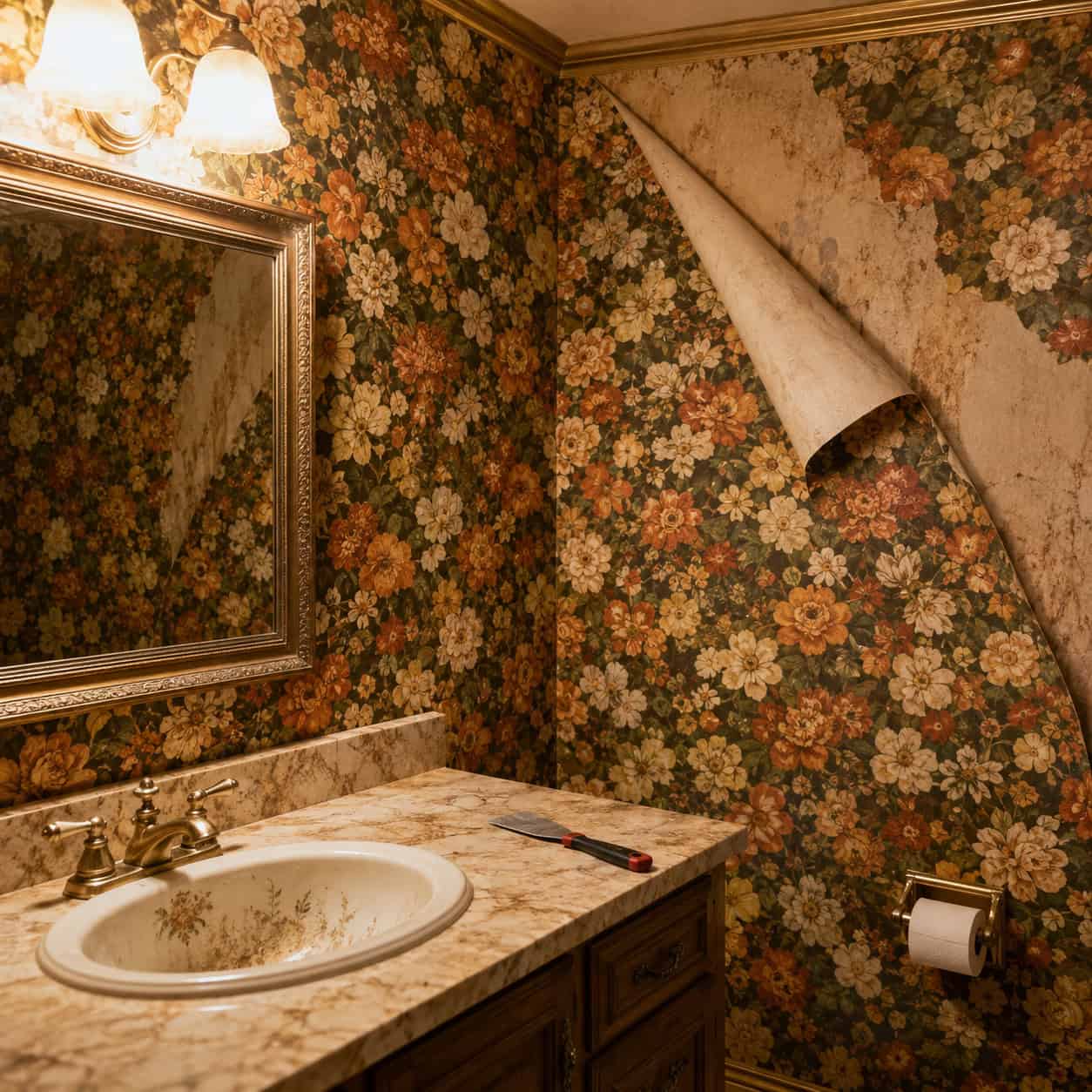
Wallpaper carries a reputation, and it’s not a good one at resale.
To most buyers, patterned or heavy wallpaper means one thing: stripping it. The dread of that chore — steamers, scrapers, gouged drywall — is enough to send them toward a different house entirely.
Florals with gold trim, dense damask, anything loud gets quietly flagged as a “must-fix” the moment a buyer walks in.
If you love wallpaper, use a removable peel-and-stick you can take down for showings, or keep it to a small powder room. A whole bathroom wrapped in bold paper reads as a project, not a feature.
16. Gold and Ornate Faucets and Fixtures

Ornate gold fixtures announce a specific era, and it isn’t this one.
The heavy, shiny “luxury” faucet with the fussy handles doesn’t read as rich anymore — it reads as dated. And buyers do the math out loud.
One Las Vegas agent quoted by Nasdaq said gold faucets prompt buyers to knock a few thousand dollars off an offer just to cover swapping them out.
Reach for clean, current finishes — brushed nickel, matte black, or a warm brushed brass rather than bright ornate gold. If you’re weighing options, our take on which finish is best for bathroom faucets breaks down what’s aging well. A simple, well-chosen faucet doesn’t cost you a thing at the negotiating table.
17. Hollywood Globe Vanity Lights

The strip of round bulbs over the mirror. The soap-opera dressing-room look. It dates a bathroom instantly.
Agents call out the globe-bulb bar as one of the clearest signals that a room hasn’t been touched in decades, per GOBankingRates.
What makes it worth mentioning is how cheap the fix is. A modern vanity light is an afternoon and a modest budget.
Swap the globe bar for a clean linear fixture or a pair of sconces. Leave it in place and it drags the whole room backward in time — and buyers price rooms by the decade they look like.
18. The White Vessel Sink on a Floating Slab

For a few years, the white ceramic bowl perched on a floating wood shelf was the height of modern. Now it’s shorthand for a flip.
That combination — the stark vessel, the featureless slab — dates a bathroom to roughly 2012 through 2018 as instantly as dark grout on subway tile dates a kitchen.
Design outlets like Redesign Daily now list the vessel-on-a-shelf as one of the vanity styles that ages a room fastest.
Vessel sinks also splash, sit awkwardly high, and are a pain to clean around the base. A drop-in or undermount sink in a real vanity looks current and works better. Trendy hardware ages fast — a boring sink almost never does.
19. Installing a Brand-New Jetted Tub

Here’s the counterintuitive one. A brand-new jetted whirlpool tub, the thing that once screamed luxury, now reads as a liability.
Buyers know what jetted tubs mean over time: mold growing inside jet lines you can’t reach, pumps that die, and a look that already feels dated. It’s maintenance they didn’t ask for.
As Oakwood Remodeling notes, plenty of homeowners are ripping these out rather than installing them.
What buyers actually want is a clean, deep soaking tub or a generous walk-in shower. If you’re spending on a tub, spend on a simple soaker — not a machine that grows biofilm in its plumbing.
20. The Over-the-Top Themed Bathroom

The full nautical bathroom. The rose-covered floral suite. The novelty room built around one very specific joke. Buyers see it and picture a gut job.
A heavily themed bathroom is the whole resale problem in miniature. You decorated for yourself. The buyer prices in what it’ll cost to undo all of it.
Hunker notes that over-personalized theme baths force buyers to mentally demolish before they can imagine living there.
Neutralize before you sell. Theme with removable things — art, towels, a shower curtain — not with permanent tile, fixtures, and built-ins that shout a single idea.
21. A Remodel That Clashes With the Rest of the House

An expensive bathroom can still hurt you if it doesn’t belong in the house.
Drop an ultra-modern, all-concrete bathroom into a cozy traditional home and it feels disjointed — like a room teleported in from a different property. Even beautiful work reads as “off.”
That broken flow undercuts buyer confidence on the whole tour, as Clever Dude points out. People start wondering what else doesn’t match.
Renovate in a style that talks to the rest of the house. Consistency reassures buyers. A gorgeous bathroom that fights the home around it just makes them uneasy.
22. Leaving Pink or Green ‘Grandma’ Fixtures in Place

Mint green tile. A bubblegum-pink tub, sink, and toilet in matching glory. It was the height of style in 1958.
To most buyers today, a colored fixture suite doesn’t read as charming vintage — it reads as a renovation budget. They’re not admiring the pink. They’re pricing a full tub-and-tile tear-out.
There’s a small collector market that genuinely loves these retro colored suites — but that market is narrow, and betting your sale on it is risky.
For a broad-appeal sale, swap colored fixtures for clean white. White always sells. Pink almost always needs an explanation, and buyers don’t like doing math during a showing.
Quick Fixes vs. Costly Ones
Not every mistake here carries the same price tag to fix. Some are a Saturday afternoon; others need a permit and a pro. Here’s the rough split.
| Cheap to Fix | Expensive to Fix | |
|---|---|---|
| Grout & caulk | Weekend refresh | — |
| Bold paint | Neutral repaint | — |
| Globe lights | Swap fixture | — |
| Carpet | Basic tile/vinyl | — |
| Fan venting | — | Duct rerun + attic repair |
| Unpermitted plumbing | — | Retroactive permit + rework |
The takeaway: fix the cheap stuff before you list, and never create the expensive stuff in the first place. The costly mistakes are the ones that hide inside walls and attics until an inspector drags them into the light.
The Bottom Line
The through-line here is simple. You renovate for how you’ll live in the house. Buyers price it for how much it’ll cost them to undo your choices.
The most dangerous mistakes aren’t the loud ones. It’s the fan pointed at the attic and the plumbing moved without a permit — the invisible problems that surface at inspection and cost you real leverage at the worst possible moment.
Before you swing a hammer, ask one question about every decision: does this help me sell, or does it just help me enjoy it until I do? Sometimes the answer is worth thousands of dollars.
Build the bathroom you love. Just don’t build one the next owner has to apologize for.