

Her whole kitchen was smaller than your island.
One oven. Four burners. A single cast-iron sink with a faucet that swung maybe eight inches. No dishwasher, no second fridge, no warming drawer, no pot filler. And somehow twenty people ate hot food at two o’clock while she stood there in an apron looking unbothered.
Meanwhile you’ve got double wall ovens and a 36-inch range and you’re still sweating at noon wondering where the green bean casserole is going to go.
The difference was never square footage. It was sequence, borrowed space, and about three dozen small habits that nobody writes down anymore because they weren’t considered clever — they were just how it was done.
Here are 34 things she did right, and most of them still work in your kitchen today.
1. The Oven Schedule Written Backward From Dinnertime

She started at the end. Dinner at two o’clock, written at the top of an envelope, and every dish worked backward from there in pencil.
Turkey out at 12:45 to rest. Rolls in at 1:30. Dressing at 1:00 on the lower rack. The oven wasn’t a thing she used — it was a thing she booked, like a hotel room with twelve reservations and one bed.
That’s what a single 24-inch range forces you into. You can’t wing it when there’s no second oven to catch your mistakes, so you plan down to the quarter hour and the plan holds.
Most modern holiday disasters aren’t capacity problems. They’re scheduling problems in a kitchen big enough to hide them until 1:45.
2. The Unheated Back Porch As A Second Refrigerator

Open the door, set the pie down, close the door. Done.
North of the Mason-Dixon line, an enclosed porch in late November sat right around 35 to 40 degrees for weeks at a stretch. Pies, relish trays, a bowl of cranberry sauce under a plate, the extra butter — all of it lived out there.
Some houses still had the old milk box built into the wall, a little insulated cubby from the delivery days that made a perfect cold cabinet for a jar of gravy.
Nobody called it a beverage fridge. It was the porch.
3. Two Dishpans In One Cast-Iron Sink

One enameled pan of hot soapy water. One of clear rinse water. Both sitting down inside a single deep cast-iron basin, and suddenly a one-bowl sink was a two-bay dish station.
This is the part people miss when they argue about sink configurations. Grandma’s sink wasn’t divided — it was deep. Eight, nine, sometimes ten inches of basin, which meant she could drop two pans in it, or stand a roasting pan upright, or fill it with ice.
A divided sink can’t do any of that. Half a roaster hangs over the divider and water goes everywhere.
The dishpan system also rationed water on purpose. Fill once, wash twenty plates, dump once. She used a fraction of what a running tap burns through, and the hot water stayed hot because it wasn’t pouring down the drain between every plate.
Modern equivalent: a single deep bowl, 9 to 10 inches, with a faucet that actually reaches the back corners. If you’re weighing a single or double kitchen sink, cook a holiday meal in your head first and see which one washes a roasting pan.
Faucet reach matters more than finish. A pull-down with a decent swing arc fills a stockpot sitting on the counter beside the sink — something a short, stubby spout can’t do no matter what it cost.
4. Pies Baked Two Days Before Anyone Arrived

Pumpkin and pecan hold beautifully for two or three days. She knew that, so they never saw the oven on the holiday itself.
Tuesday night was pie night. Wednesday was dressing, cranberry, and anything that could be assembled cold in a Pyrex dish and covered.
By Thursday morning the oven had exactly two jobs: the bird and the rolls. Everything else was a reheat or a room-temperature dish already sitting on the sideboard.
The holiday wasn’t the cooking day. It never was. The night before was.
5. The Card Table And The Ironing Board As Extra Counter

The ironing board came out of the closet and became a cooling rack. It was the right height, it was narrow enough to fit against the wall, and it held four pies.
Mid-century kitchens often ran 80 to 100 square feet total, with maybe six feet of usable counter once you subtracted the drainboard and the bread box. You didn’t get more counter. You went and found some.
The card table went up in the dining room and became the carving station. A folding TV tray held the gravy boat. A chair with a cutting board across the arms held the relish bowls.
None of it was pretty. All of it worked.
6. The Turkey Thawed In The Refrigerator For Three Days

She bought the bird the weekend before and surrendered an entire fridge shelf to it. No hurry, no sink full of lukewarm water, no panic Wednesday night.
The math hasn’t changed. Figure about 24 hours of refrigerator thawing for every four to five pounds, which puts a sixteen-pound turkey at roughly four days. USDA FSIS still publishes the same chart your grandmother worked out by habit.
Where the old way was wrong: plenty of kitchens thawed birds on the counter overnight. That was never safe, and it isn’t now. Outer surface hits bacterial growth temperature hours before the middle gives up its ice.
Fridge, bottom shelf, in a pan. Start early.
7. The Electric Roaster Oven Plugged In On The Porch

The 18-quart Nesco was a second oven that didn’t require a second kitchen.
Turkey went in it, or the ham, or a vat of dressing. And critically, it got plugged in somewhere else — the porch, the basement stairs, the far end of the dining room on a card table.
That one move pulled the heat, the cord, the smell, and the hovering relatives out of her work zone. The range stayed free for burners. The oven stayed free for rolls.
People still buy these. They’re under a hundred dollars and they’re the cheapest oven you’ll ever own.
8. Ice And Drinks Parked In The Laundry Sink

A galvanized wash tub, a bag of ice, and every bottle of pop in the house. Or the basement utility sink, filled to the rim.
Two problems solved at once. An entire refrigerator shelf got freed up for food that actually needed cold, and the drink traffic — which is most of the traffic — moved out of the kitchen entirely.
Melt water drains straight down. No mopping, no dripping cooler by the back door, no puddle under the table.
The modern version is identical: a deep laundry or utility sink in the mudroom, a bag of ice, done. If you’ve got one and you’ve never used it this way, you’re wasting the best holiday fixture in your house.
Two cautions, though, because that drain is usually the one nobody thinks about. Utility sink traps dry out when the sink sits unused for months, and a dry trap means sewer gas in the laundry room the minute you start running water. Pour a quart of water down it the week before.
And don’t let the cleanup crew treat it as the overflow kitchen drain. Grease, bone fragments, and coffee grounds going down a utility line that was never built for food waste is how December clogs happen. If you’ve already got a slow one, unclogging a sink with baking soda and vinegar is worth trying before guests arrive, not after.
9. The Relish Tray Out First To Buy Forty-Five Minutes
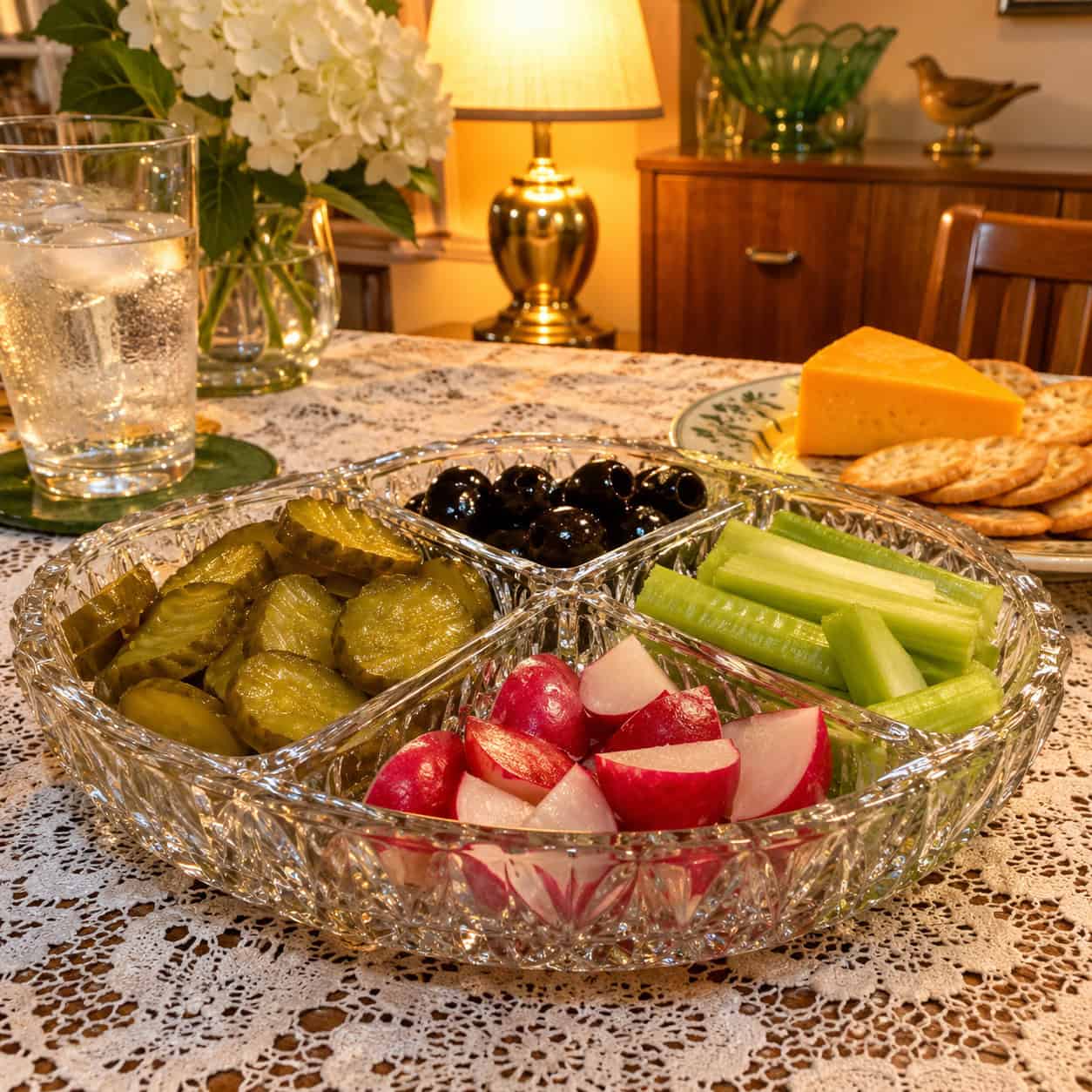
Sweet pickles. Black olives. Celery sticks. Radishes cut into little roses if she was feeling fancy. A wedge of sharp cheddar and a sleeve of crackers.
Out on the table before anyone sat down, and it bought her the single most valuable thing in holiday cooking: slack.
Turkey running twenty minutes long? Nobody noticed. Everyone was eating olives and arguing about football.
Zero oven. Zero burners. Zero timing. The relish tray was never about the relish.
10. The Basement Chest Freezer Stocked In October

Home freezers went mainstream after the war, and by 1960 the chest freezer in the basement was as standard as the washing machine.
Hers filled up slowly through the fall. Turkey stock from last year. Two dozen rolls baked on a slow Tuesday. Cranberry sauce in October when the berries were cheap. A whole pan of dressing, wrapped and frozen flat.
December work got moved into November and October, where there was room for it.
That’s the trick nobody copies. The freezer isn’t storage. It’s a time machine for labor.
11. Cooked In The Same Dish It Was Served In

Pyrex went from the oven to the table. So did the enamelware roaster, the Corning casserole, the heavy stoneware bean pot.
No transferring to a nice serving bowl. No nice serving bowl at all, for most dishes.
Every transfer creates a dirty dish, and in a kitchen with one sink and no dishwasher, that math decides whether cleanup takes forty minutes or two hours.
It also keeps food hotter. A casserole in its own hot glass dish holds temperature far longer than the same food spooned into a cold ceramic bowl.
12. The Pressure Cooker Freeing Up Burners

Potatoes in eight minutes. Beets in fifteen. Winter squash without tying up the oven.
On a four-burner range feeding twenty, every burner you reclaim is a dish you get to serve. Three simmering pots collapsing into one jiggling cooker was the difference between a full table and a short one.
Home pressure cookers peaked in the 1940s and 50s, then got a bad reputation from a generation of blown gaskets and ceiling applesauce.
They came back as electric multicookers, which is the same idea with a safety lock and a timer. Same burner math, less drama.
13. Dishes Assigned By Phone, Weeks In Advance

This wasn’t a potluck. Potluck implies people bring whatever they feel like.
She called. Aunt Dot got the rolls because her oven ran hot and her rolls were better. The cousin with the station wagon got the green beans because they travel. Someone else got pie, and someone got ice.
What she was actually doing was renting oven capacity in four other houses. Five ovens cooking, one table serving.
Try it. The awkward phone call in early November saves you two hours on the day.
14. Hot Water Rationed — Glasses First, Roasters Last

A 30-gallon water heater had to cover the cooking, the cleanup, and twenty people using the bathroom. That’s it. That was the whole budget.
So she washed in strict order, and the order was not negotiable. Glassware first, in the cleanest, hottest water. Then plates. Then flatware. Then pots and pans. The greasy roasting pan went absolutely last, into water that was by then lukewarm and gray — which was fine, because that pan was getting a long soak anyway.
Every step down the ladder, the water got dirtier and cooler, and every step down the ladder, the item cared less.
Modern tanks are bigger, but the holiday math still catches people. A 50-gallon tank sounds generous until four guests shower in the morning and you’re washing a roaster at nine at night with cold water coming out of the tap.
Here’s the comparison worth knowing before you host.
| Then (30-gal tank) | Now (50-gal tank) | |
|---|---|---|
| First-hour rating | About 40 gallons | About 65-80 gallons |
| Recovery time | 60-90 minutes | 45-60 minutes |
| Showers before empty | Two, maybe | Three to four |
| Holiday strategy | Strict wash order | Stagger showers early |
The real lesson isn’t tank size. It’s that recovery time, not capacity, is what ruins your evening — and sequencing your hot-water use beats buying a bigger heater.
If you’re already waiting too long for hot water at the kitchen sink, a holiday with twenty guests is when you’ll finally care enough to fix it.
15. Everything On The Table At Once, Family Style

No courses. No plating. No chafing dishes with little flames under them.
Every bowl went down the middle of the table at the same time and got passed. One trip from kitchen to table, and then she sat down.
Plating twenty individual dishes takes fifteen minutes, during which the first ten plates go cold and the cook eats standing up.
Family style is faster, hotter, and it puts the cook in a chair. That last part was the point.
16. The Bird Carved In The Kitchen, Not At The Table

The tableside carving scene is a Norman Rockwell invention. In most houses the turkey got carved on the kitchen counter and went out as a neat platter of white and dark.
Practical reason: it freed the oven and the counter an hour earlier, and it kept a guest with a knife out of her workspace.
Food-safety reason, which she likely never thought about but was right regardless: a whole cooked turkey can’t cool fast enough to go into the fridge intact. USDA FSIS is blunt about it — carve it down before it’s stored.
Carved bird also serves faster and stretches further. Twenty people take less turkey off a platter than they take off a whole bird.
17. The Thirty-Cup Percolator Exiled To The Dining Room

Big chrome urn, church-basement issue, running on an extension cord taped down with a scrap of rug over it.
It never lived in the kitchen. It lived on the sideboard or a hallway table with the cups, the sugar bowl, and the creamer set up beside it.
That’s an appliance, a counter footprint, and a standing crowd of coffee drinkers all relocated in one move.
The sound of it — that slow irregular gurgle that went on for twenty minutes — is one of those things you don’t realize you remember until you hear it again.
18. Fridge Triage — What Never Needed To Be Cold

A week ahead, she went through the refrigerator and pulled out everything that didn’t belong there.
Apples. Onions. Potatoes. Winter squash. Tomatoes. The butter went into the covered dish on the counter where it belonged. Baked pies came out and sat under a tea towel.
Half a shelf, sometimes a whole one, appeared out of nowhere. That’s how a 10-cubic-foot fridge absorbed a twenty-person menu without anyone buying a second one.
Go look in yours right now. Count what’s in there out of habit rather than necessity.
19. Gravy Made In The Roasting Pan Itself
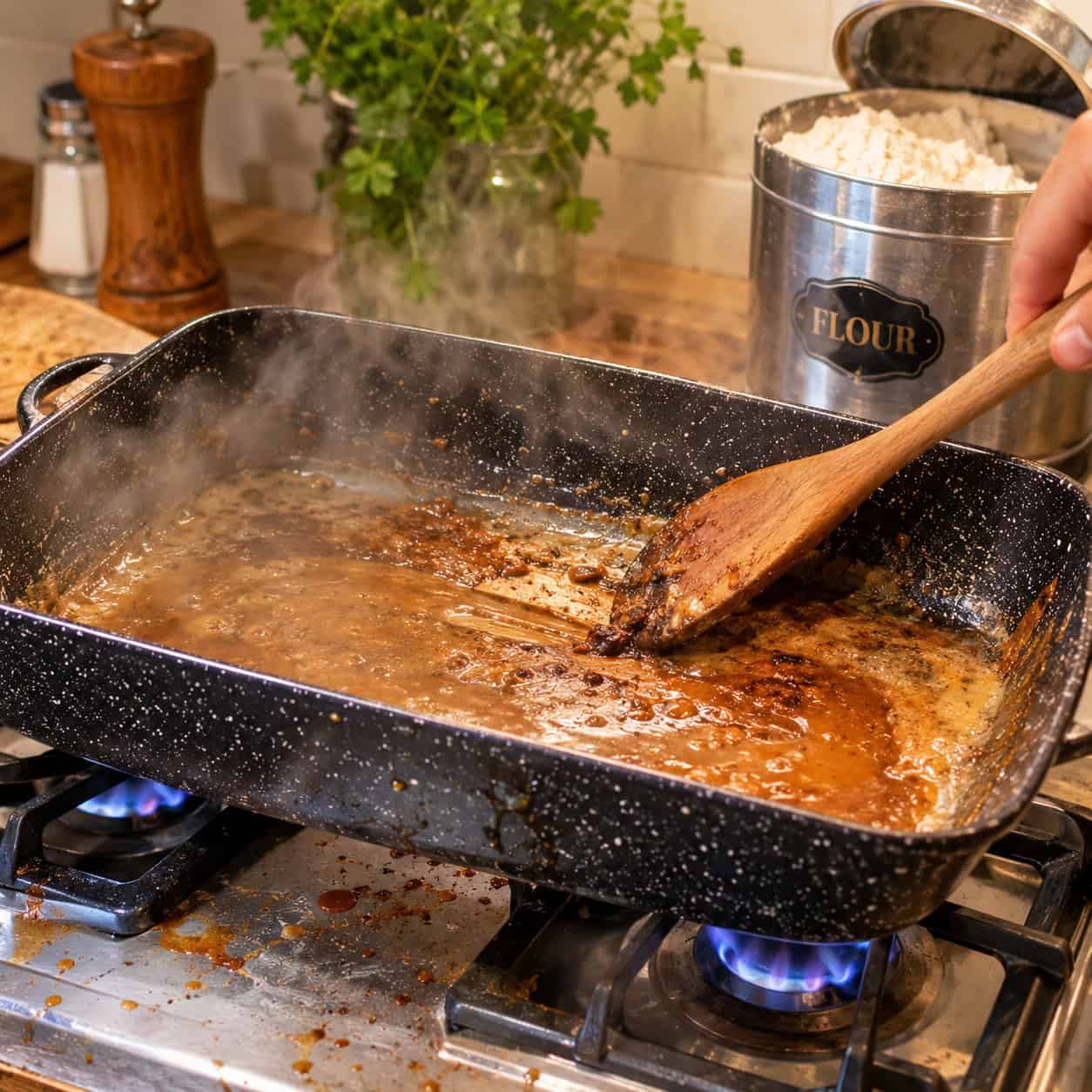
Bird out, pan straight onto two burners, flour into the fat, and a wooden spoon scraping every browned bit off the bottom.
No separate saucepan. No extra dish to wash. And the gravy tasted like the turkey because it was made of the turkey.
Modern kitchens make gravy in a clean pot from stock and drippings strained through a sieve. It’s tidier and it’s worse.
One pan did the roasting, the resting, and the sauce. Then it went into the soak water and the night was over.
20. The Dining Table As A Staging Counter The Night Before

Nine o’clock Wednesday night, the dining table was covered end to end. Mixing bowls, the dressing pan, celery on a cutting board, the good platter, two pie plates cooling.
By two o’clock Thursday it was set with a cloth and twenty place settings, and you’d never know.
Borrowing counter space from another room is the biggest square-footage hack a small kitchen has, and it costs nothing. You just have to be willing to clear it before guests arrive.
Most people with big kitchens never think of it. They’ve got an island, so they fight for the island.
21. Casseroles Sharing One Compromise Oven Temperature

Three recipes, three different temperatures — 325, 350, 375. She picked 350 and adjusted the times.
That’s it. That’s the whole trick. Temperature is a suggestion within about 25 degrees; time is the variable you move.
The dish that wanted 325 comes out five or ten minutes early. The one that wanted 375 goes in first and stays a little longer. Everything shares a rack schedule.
Modern cooks fail at this because they follow each recipe literally, like the number was handed down on a tablet. It wasn’t. It was tested in somebody’s test kitchen on somebody else’s oven, which also ran hot.
22. Half The Menu Designed To Be Served At Room Temperature

Cranberry relish. The jellied salad in the ring mold. Pickled beets. Bread and butter. Pie.
None of it needs heat. None of it needs timing. None of it touches a burner or a rack.
Count the hot items on a mid-century holiday menu and you’ll usually find four or five: turkey, dressing, potatoes, one vegetable, gravy. Everything else is cold or room temperature by design.
A menu where only five dishes need heat is a menu one oven can actually deliver. A menu where twelve dishes need to be piping hot at the same moment isn’t a menu — it’s a dare.
23. Serving Bowls Laid Out The Night Before With Labels

Every bowl, platter, and gravy boat set out on the sideboard the night before, each with a folded slip of paper inside naming the dish it would hold and the spoon that went with it.
Two things happen. First, you discover at nine o’clock Wednesday that you’re one bowl short, when there’s still time to borrow one. Not at 1:55 Thursday with the green beans going cold.
Second, anyone can help without asking you a single question. Someone wanders in offering to pitch in, and instead of explaining, you point at the sideboard.
It looks like fussiness. It’s actually crowd control.
24. A Soak Pot Started Before Dinner Was Served
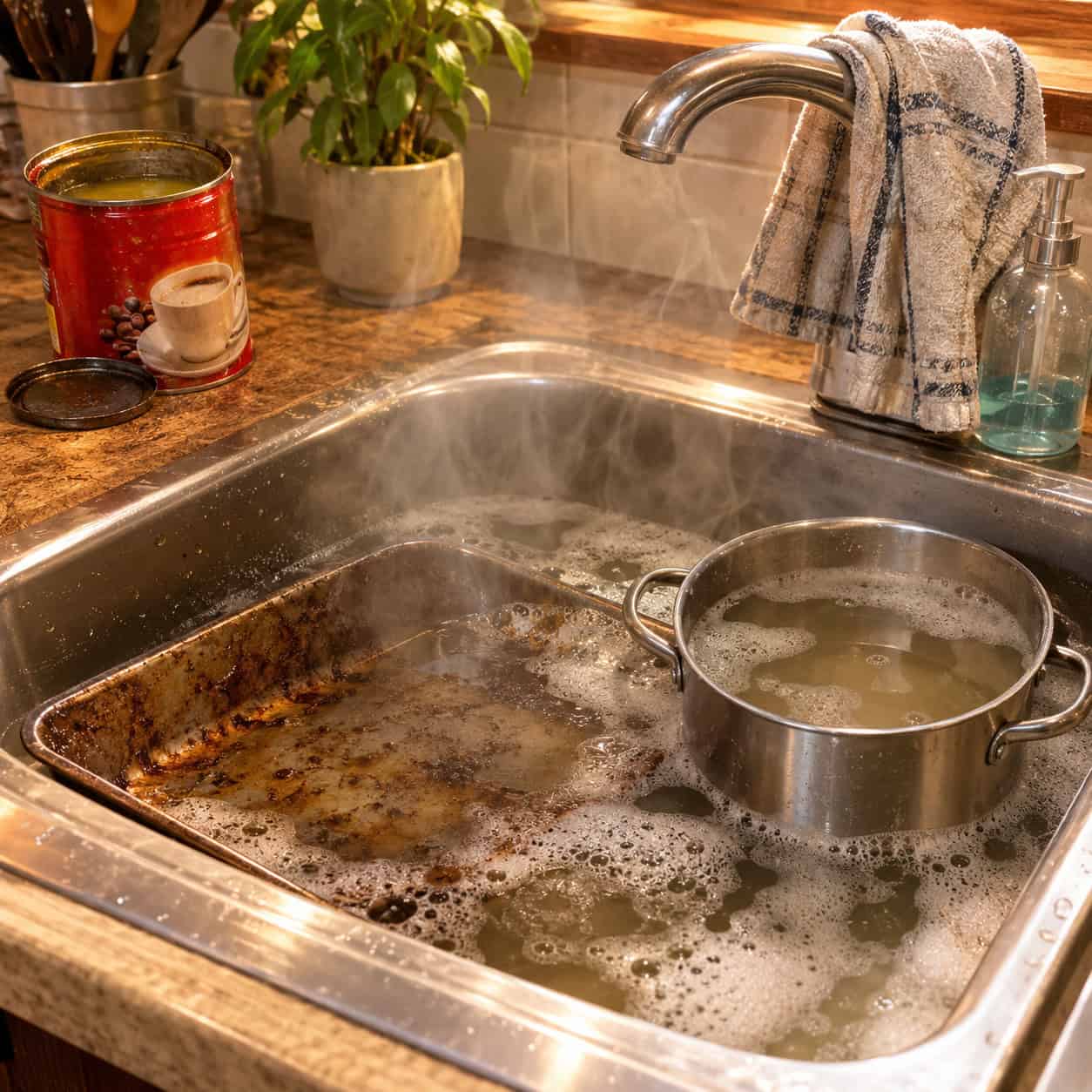
The roasting pan, the potato pot, the gravy skillet — all of them went into the sink with hot water and a squirt of dish soap before she ever sat down to eat.
Three hours later, when the table finally cleared, that baked-on fat wiped off with a cloth. Nothing hardened. Nothing needed scouring.
Hot water and time do the work that elbow grease otherwise has to. It’s the single highest-return habit on this entire list and it costs about ninety seconds.
But here’s where the old kitchen and the modern one part ways, and it matters. She poured the cooled turkey fat into a coffee can and threw it out, or kept it for cooking. It never went down the drain, because her drain was cast iron and she’d learned the hard way once.
Yours shouldn’t either. Liquid grease goes down warm and solidifies twenty feet out in the line where you can’t reach it, and a holiday meal produces more fat than any other day of the year. Disposals don’t help — they grind solids, not fat.
Scrape plates into the trash first. Wipe greasy pans with a paper towel before they hit the water. If you want the full list of what shouldn’t go down there, the things plumbers see in kitchen sink drains daily is a sobering read right before a big meal.
The call nobody wants to make on the Friday after a holiday is the one about standing water in the kitchen sink.
25. Rolls, Potatoes, And Dressing Doing The Heavy Lifting

Twelve pounds of turkey fed twenty people because twelve pounds of turkey was never supposed to do the feeding.
The starches did. Mashed potatoes, two pans of dressing, a basket of rolls, sweet potatoes with the marshmallows, a noodle dish if the family leaned that way.
Cheap, filling, oven-friendly, and they stretch infinitely. Nobody left hungry and nobody noticed that they’d each eaten about six ounces of bird.
That’s Depression thinking carried forward three decades without anyone naming it. Surround the expensive thing with inexpensive things and the expensive thing goes twice as far.
26. The Oven At 170 With Foil And Clean Dish Towels On Top

Finished dishes went into the oven at its lowest setting, or they came out and got covered in foil with two folded dish towels laid on top.
A towel-wrapped casserole holds serving temperature for forty-five minutes. No appliance, no warming drawer, no chafing fuel.
The towels have to be clean and dry, and they go over the foil, not under it. Stack two or three.
Someone reading this just remembered the specific smell of a dish towel warmed over a casserole dish. That’s the whole holiday right there.
27. The Kitchen Closed To Everyone But One Helper

“Out of my kitchen.” You heard it, and it wasn’t rudeness.
Lillian Gilbreth’s step-saving research in the 1920s produced what became the kitchen work triangle — the three-point path between sink, stove, and refrigerator that a good kitchen keeps short and clear. In a 90-square-foot kitchen, that triangle might total fifteen feet.
Put four people in it and it stops being a triangle. It becomes a traffic jam with knives.
One helper, assigned a job, standing in one spot. Everyone else in the dining room with the relish tray and the coffee urn, exactly where she’d put the relish tray and the coffee urn on purpose.
28. Borrowed Chairs, Borrowed China, Borrowed Folding Tables

She called three neighbors and didn’t buy a thing.
Six folding chairs from the Hendersons. A long folding table from the church. A second set of dishes from her sister, who’d be eating off them at this table anyway.
Seating twenty in a house built for five was a social problem with a social solution. Nobody rented. Nobody ordered. You asked, and then in January you loaned them a roaster.
The mismatched chairs in the old photographs weren’t carelessness. They were the neighborhood, sitting at the table.
29. The Drying Line — Towels, Not A Dishwasher

One washing, two drying, one putting away, and a fifth person leaning in the doorway supervising badly.
Twenty plates and four willing relatives beats a dishwasher every single time. The kitchen was clean before the pie got cut, and the pots were done before the coffee finished.
Dishwashers didn’t hit the majority of American homes until the 1980s. Before that, cleanup was a group activity that lasted twenty-five minutes and generated most of the conversation nobody remembers having but everybody remembers enjoying.
The flour-sack towels worked better than terrycloth. They still do.
30. Leftovers Packed Before Dessert Was Served

Food came off the table and into shallow containers while the pie was still being cut.
Not after the last guest left at eight. Not “we’ll deal with it later.” The USDA two-hour rule — perishable food out of the danger zone within two hours of coming off the heat — is the exact standard she enforced by instinct, decades before anyone published it.
Shallow containers matter more than people think. A deep bowl of dressing can take six hours to cool through in a refrigerator. Spread it two inches deep and it’s safe in under one.
And it clears the table, which makes the room feel like dessert instead of the tail end of dinner.
31. The Carcass In The Stockpot Before Bed

The bones went into the big pot that same night. Water, an onion half, celery tops, the carrot ends she’d saved in a bowl all afternoon.
Low heat, lid cracked, and it simmered while she sat down for the first real time all day.
By Friday afternoon it was soup, and by Saturday it was gone. Nothing that cost money left her kitchen as garbage.
A twelve-dollar turkey became three meals. That’s not frugality as a lifestyle choice — that’s somebody who remembered 1934.
32. Everyone Went Home With A Plate

Wax paper. Aluminum foil smoothed flat and reused. A margarine tub with a rubber band around it.
Every single person leaving got a plate pressed into their hands at the door — turkey, a scoop of dressing, a slice of pie, whether they wanted it or not. Especially if they lived alone.
It solved her refrigerator problem, and that was the practical half. The other half was that she’d spent three days cooking and she wasn’t ready for it to be over, so she sent a piece of it home with everyone.
Somebody got one of those plates out of their refrigerator the next day and ate it standing at the counter, and it was better than the meal itself.
33. Real Cloth Napkins Instead Of Paper

Pulled from the drawer, pressed Tuesday, and used until somebody married or died.
They weren’t fancy in most houses. Plain white cotton, maybe a worn monogram from a wedding gift two generations back, a scorch mark in the corner from an iron set too hot in 1958.
Washing twenty napkins meant one more load of laundry, which was nothing compared to what a holiday already demanded.
It made an ordinary dining room feel like an occasion, which was the point, and it cost her nothing but the folding.
34. The Pie Safe And Bread Box On The Counter

Before every house had a big refrigerator, the pie safe did the work — a wooden cabinet with punched-tin panels that let air through and kept flies out.
The bread box sat on the counter beside it, and both of them held food that genuinely did better outside the cold.
Bread goes stale faster in a refrigerator than on a counter. Pies get soggy crusts. She knew this the way you know not to touch a hot stove — not from a study, from experience.
The punched-tin pattern on an old pie safe is one of those details that makes a kitchen feel like somebody’s, not something’s.
Modern kitchens traded all of it for a crisper drawer and a plastic clip on a bread bag.
None of this required a bigger house. It required a plan written on the back of an envelope, four phone calls in early November, a porch, and a willingness to use the ironing board for something other than ironing.
Your kitchen is probably twice the size of hers and has four times the equipment. What it doesn’t have is the sequence.
Borrow the sequence. Write the oven schedule backward, move the drinks to the laundry sink, bake the pies on Tuesday, and start the soak pot before you sit down.
Then sit down. That part was always the point.