

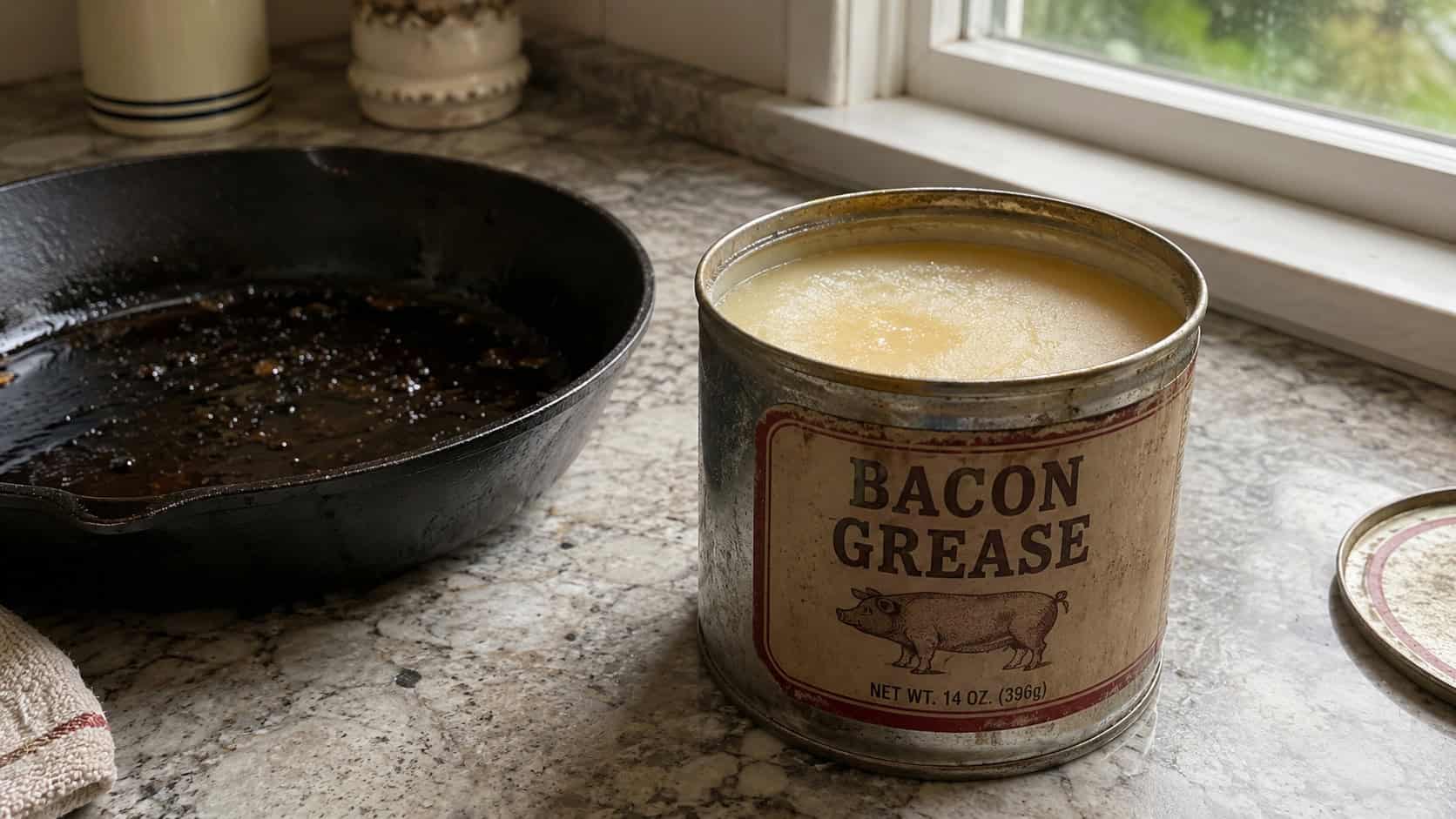
Pour a little hot bacon grease down the sink. Run the tap. Watch it swirl away, clean and gone.
Except it isn’t gone. It’s forty feet down the line, cooling on the pipe wall, hardening into something with the density of candle wax.
Your kitchen drain looks like it can handle anything. It can’t. Half the stuff people rinse away every day is quietly building a wall inside pipes you’ll never see until water comes back up the basin at the worst possible moment.
Some of it clogs. Some of it corrodes. Some of it poisons water that eventually circles back to a tap somewhere. And a few items on this list can turn a sewer line into something a city crew won’t enter without a gas monitor.
Here are 29 things that should never go down your kitchen sink — and exactly what each one does once it’s out of sight.
1. Fats, Oils & Grease (FOG)
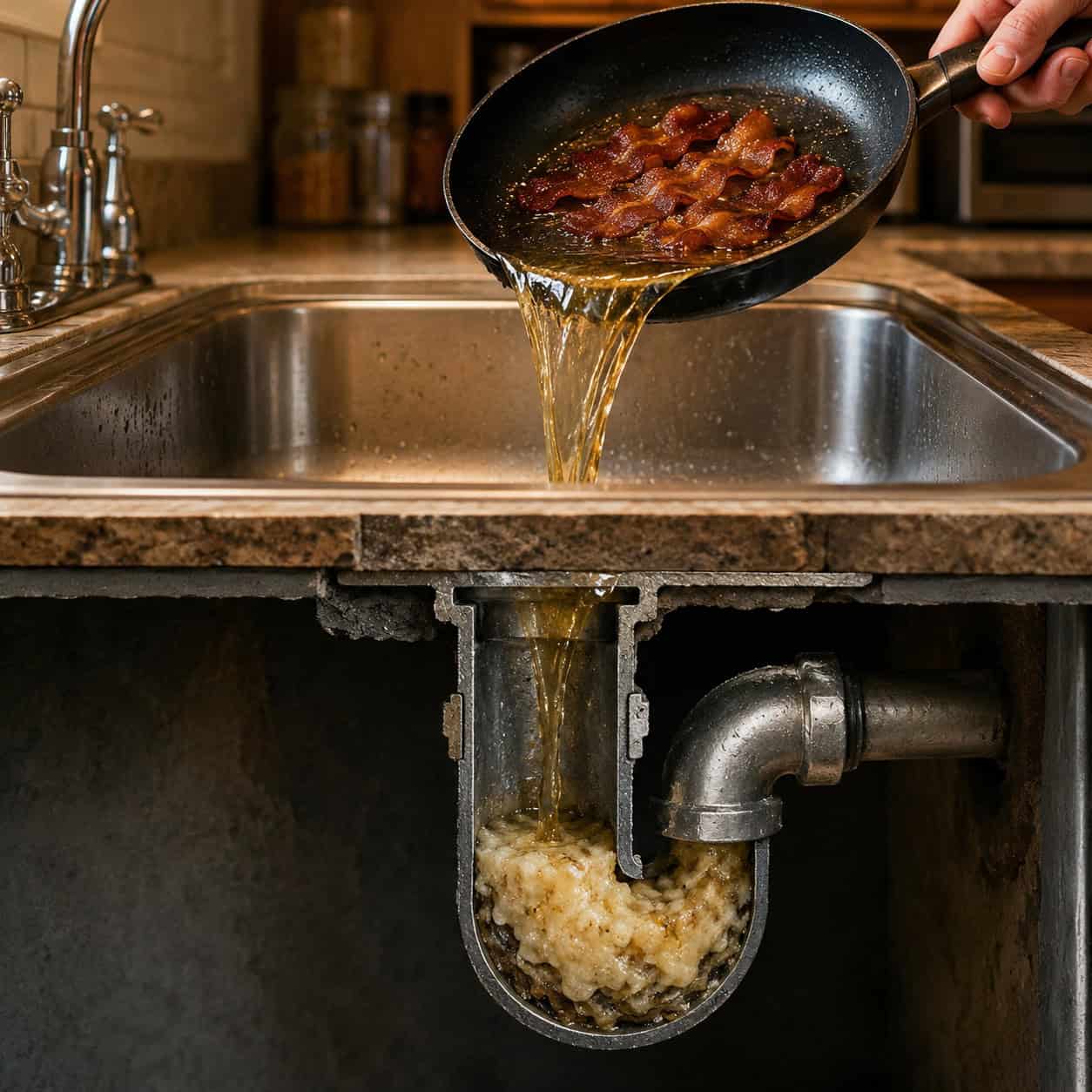
This is the one. The reason plumbers stay busy and cities spend fortunes.
Grease goes in hot and liquid and behaves like water. Then it cools. On the inside of a pipe it sets up like soft concrete, and every future rinse of grease adds another layer.
The scale is hard to picture until you see the numbers. Grease and its cousins drive an estimated $25 billion a year in municipal cleanup across the U.S., and according to In-Pipe Technology, fats, oils and grease are the leading cause of sewer blockages nationwide. Consumer Reports has quoted a wastewater engineer tying grease to as much as 65% of sewer overflows.
London has pulled 100-foot “fatbergs” out of its sewers — congealed masses of grease bound with wipes and debris, weighing as much as a bus. Those start as somebody’s frying pan.
The most stubborn myth: hot water and a squirt of dish soap will carry it through. It won’t. The soap emulsifies the grease for about ten feet, then it separates and re-hardens somewhere past your control. Warm pipes cool. The grease always wins.
Bacon fat is the poster child, but it’s all of it — fryer oil, pan drippings, the slick left after browning meat. Let it cool in a can or jar and throw it in the trash. Trash, never the drain.
2. Butter, Margarine & Dairy
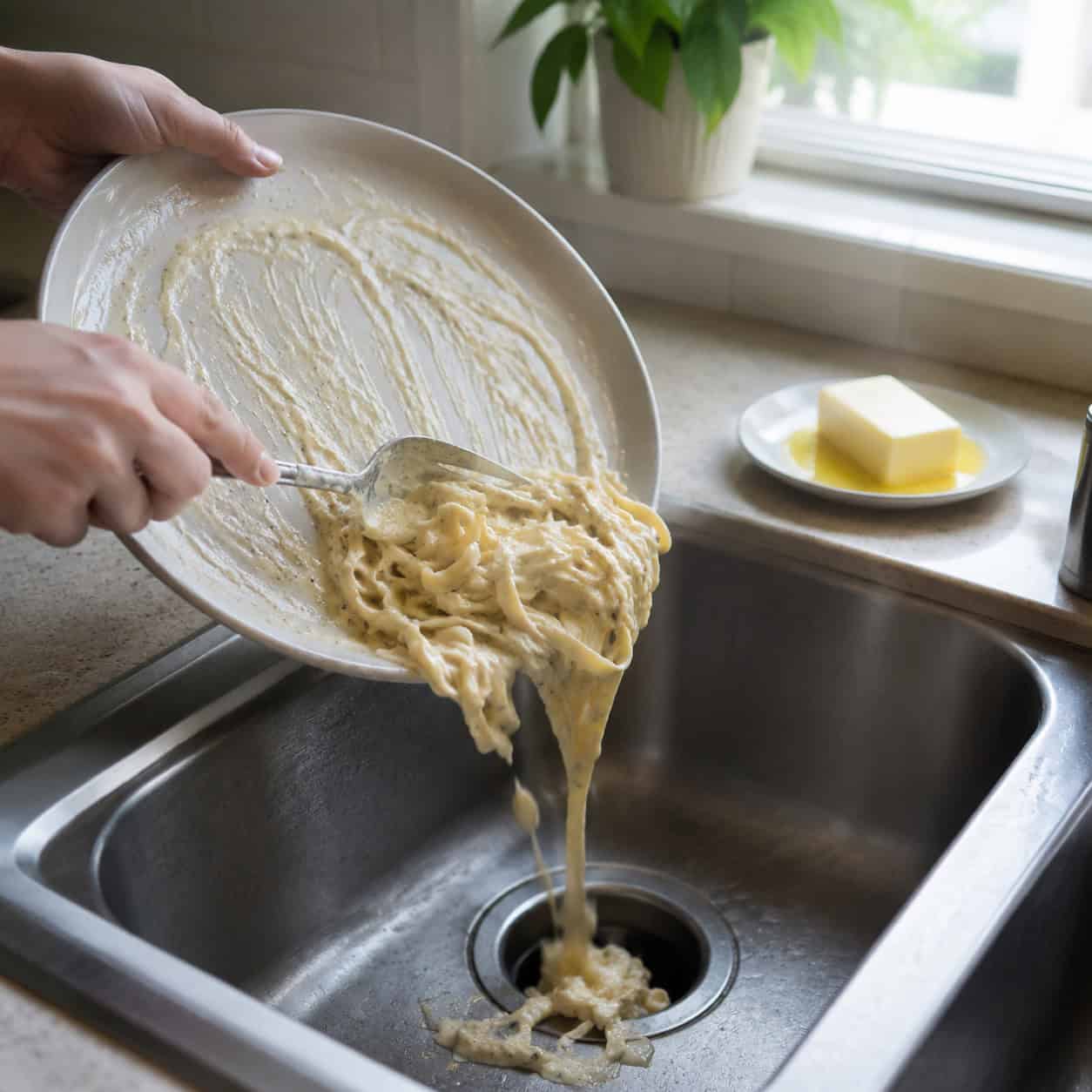
Nobody thinks of a stick of butter as grease. It is, exactly.
Butter, margarine, and creamy leftovers are pure fat that happens to be soft at room temperature. Down the drain, they cool and firm up in the trap the same way pan drippings do.
That half-cup of alfredo you scraped off a plate? It’s coating the pipe wall right now.
Wipe greasy dairy into the trash before rinsing. Your P-trap doesn’t know the difference between butter and bacon fat.
3. Peanut Butter & Nut Butters
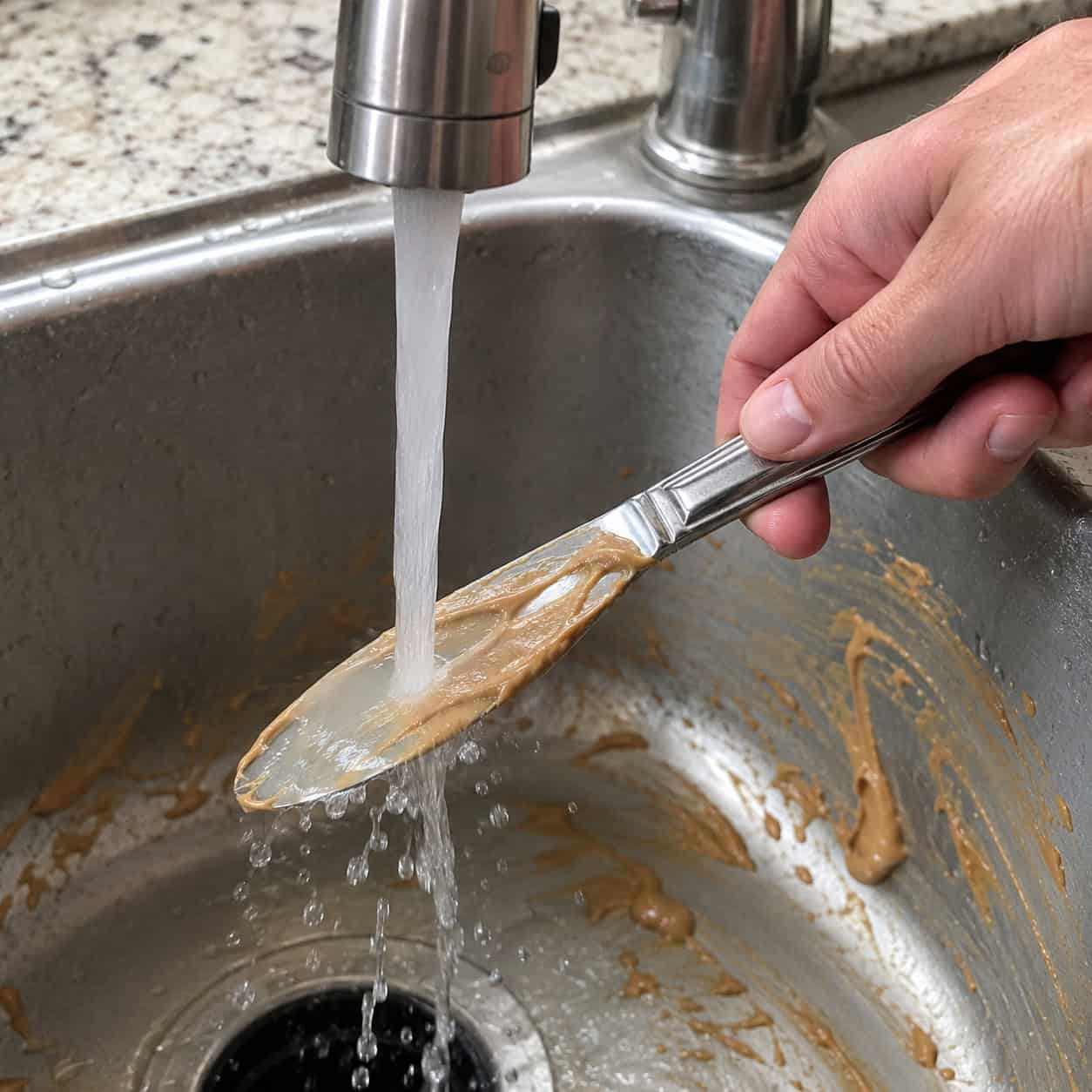
Rinsing a peanut butter knife feels harmless. Watch what happens instead.
Nut butters are mostly oil, and they’re viscous enough to cling to everything they touch. They don’t wash away — they smear along the pipe and grab whatever floats past.
Coffee grounds, a stray noodle, a shred of onion skin. The peanut butter holds it all in place like glue on the wall of the drain.
Scrape the jar and the knife into the trash. A quick wipe now beats a snake later.
4. Mayonnaise, Salad Dressing & Ice Cream
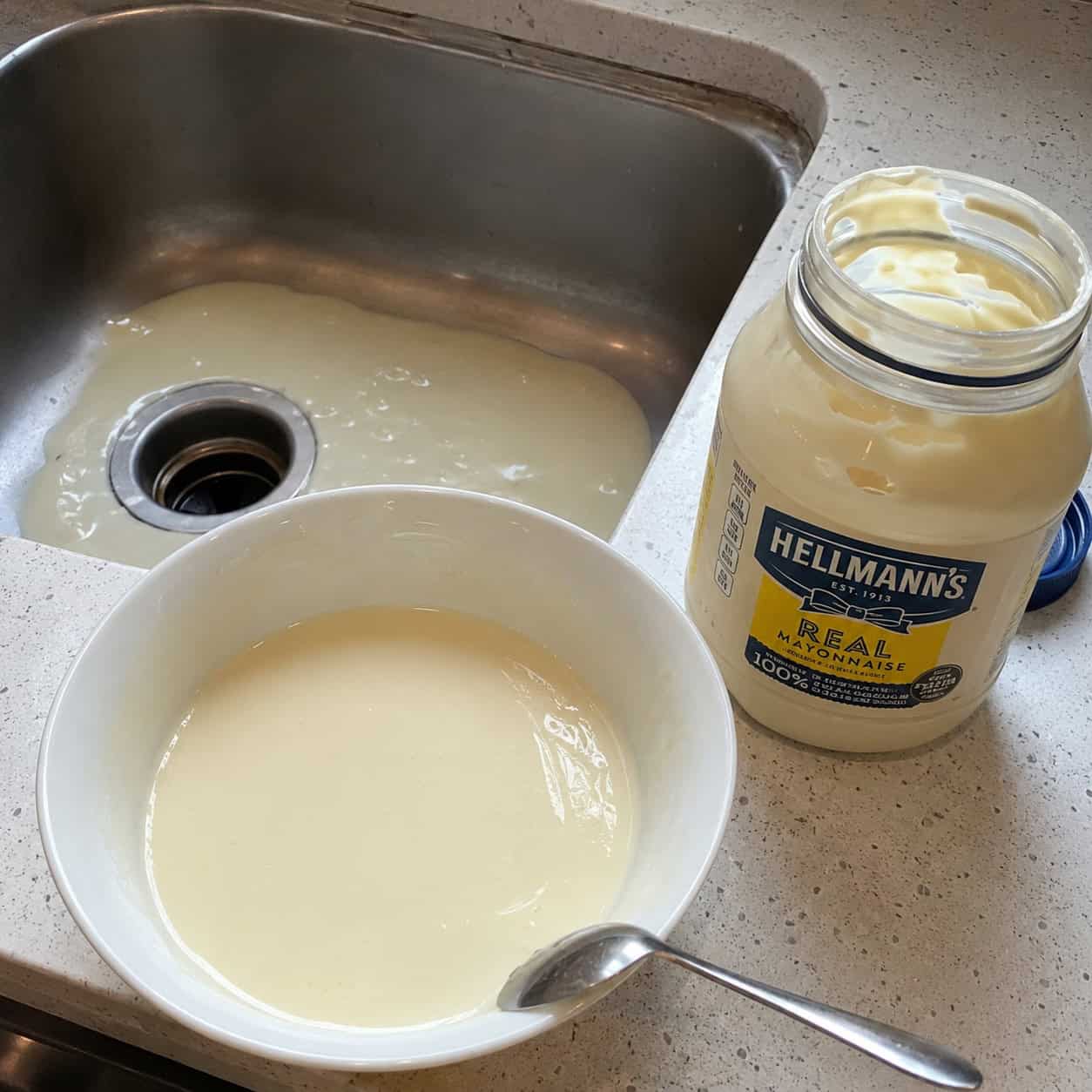
These melt, so they seem safe. That’s the trap.
Mayo, oily salad dressing, and ice cream all go down as liquid and re-solidify below. Robillard Plumbing names all three by name as common FOG offenders, and the logic is identical to bacon grease.
Melted ice cream is cream and fat. Once it cools in the pipe, it’s back to solid.
The “it’s a liquid, it’ll flow” assumption is exactly why these three cause trouble. Bin the leftovers.
5. Coffee Grounds
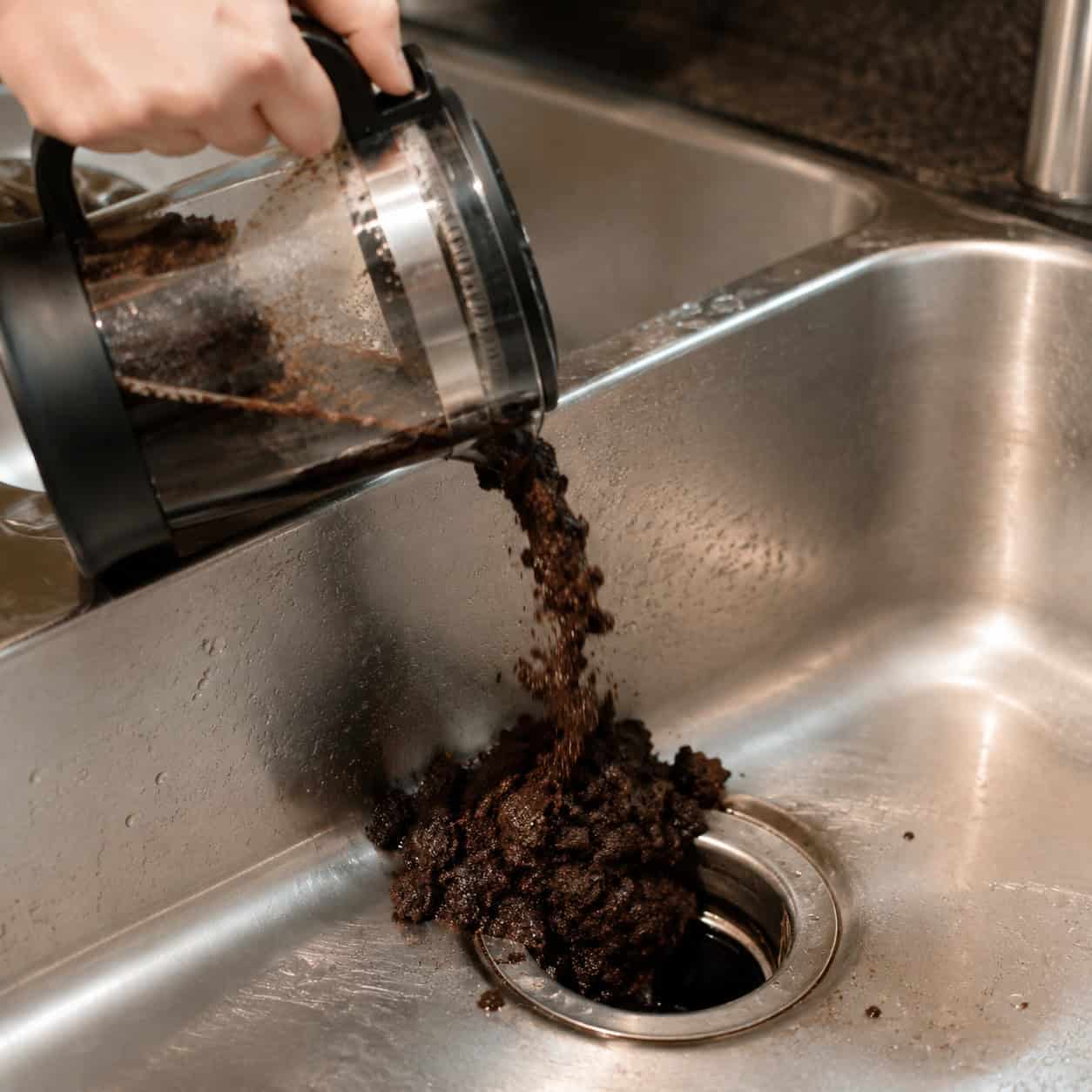
Plumbers rank coffee grounds among the most common kitchen clogs they pull. There’s a reason it comes up so often.
Wet grounds don’t dissolve. They clump into a heavy, sand-like sludge that sinks and settles, and when they meet grease they bind into a paste that packs a pipe tight.
The old advice that grounds “clean” or “freshen” a disposal is backwards. They do the opposite — they’re one of the fastest ways to build a blockage.
Toss them in the trash, or compost them around acid-loving plants like blueberries and azaleas. Never the sink.
6. Eggshells
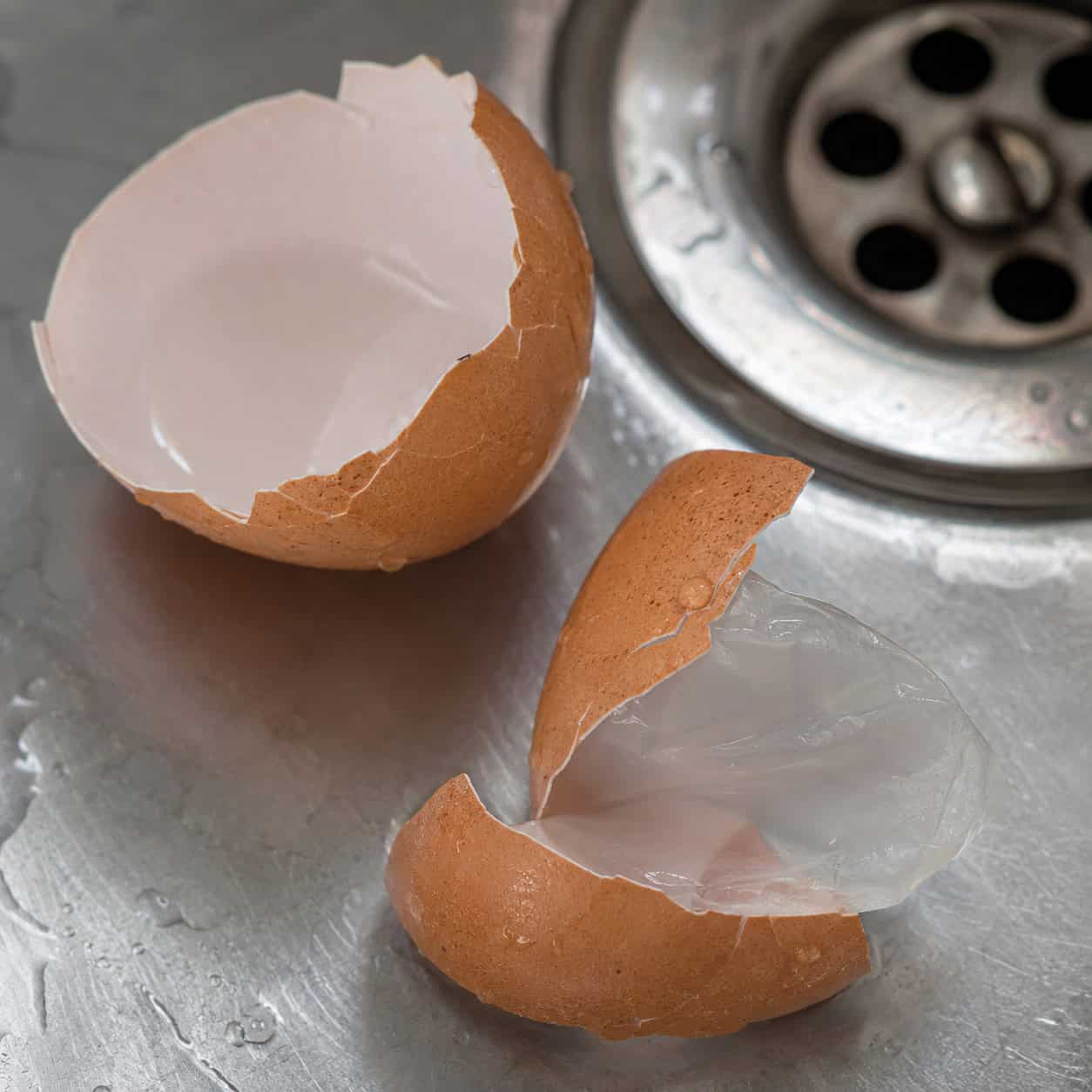
“Eggshells sharpen the disposal blades.” You’ve heard it. It’s wrong twice over.
First, disposals don’t have blades — they have blunt impellers that fling food against a grind ring. Nothing gets sharpened.
Second, the real problem is the thin inner membrane. It peels off and wraps around the impellers like wet tissue, and it catches on everything.
Ground shells turn into gritty sand that settles in the trap and combines with grease into a cement-like layer. The myth costs people money. Compost the shells instead.
7. Pasta & Noodles
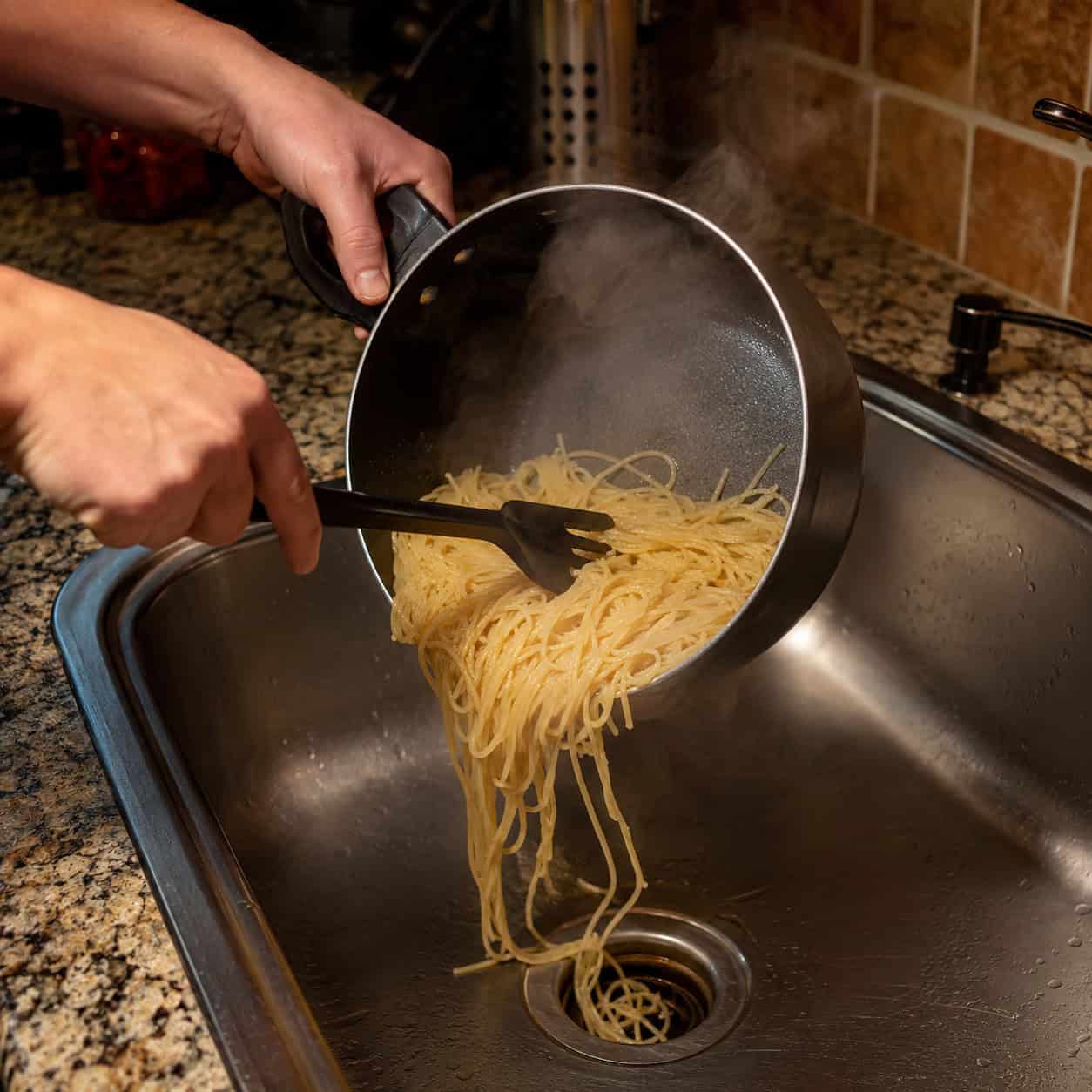
Pasta is designed to absorb water. That doesn’t stop when it hits the drain.
Semolina and durum noodles keep swelling long after they’re out of the pot, filling a pipe that can’t get any wider. Then they break down into a gummy, gluey paste.
A fixed-width pipe. An expanding starch. You can see where that goes.
Even a disposal just chops it into smaller pieces that swell just as much. Scrape the pot into the trash.
8. Rice
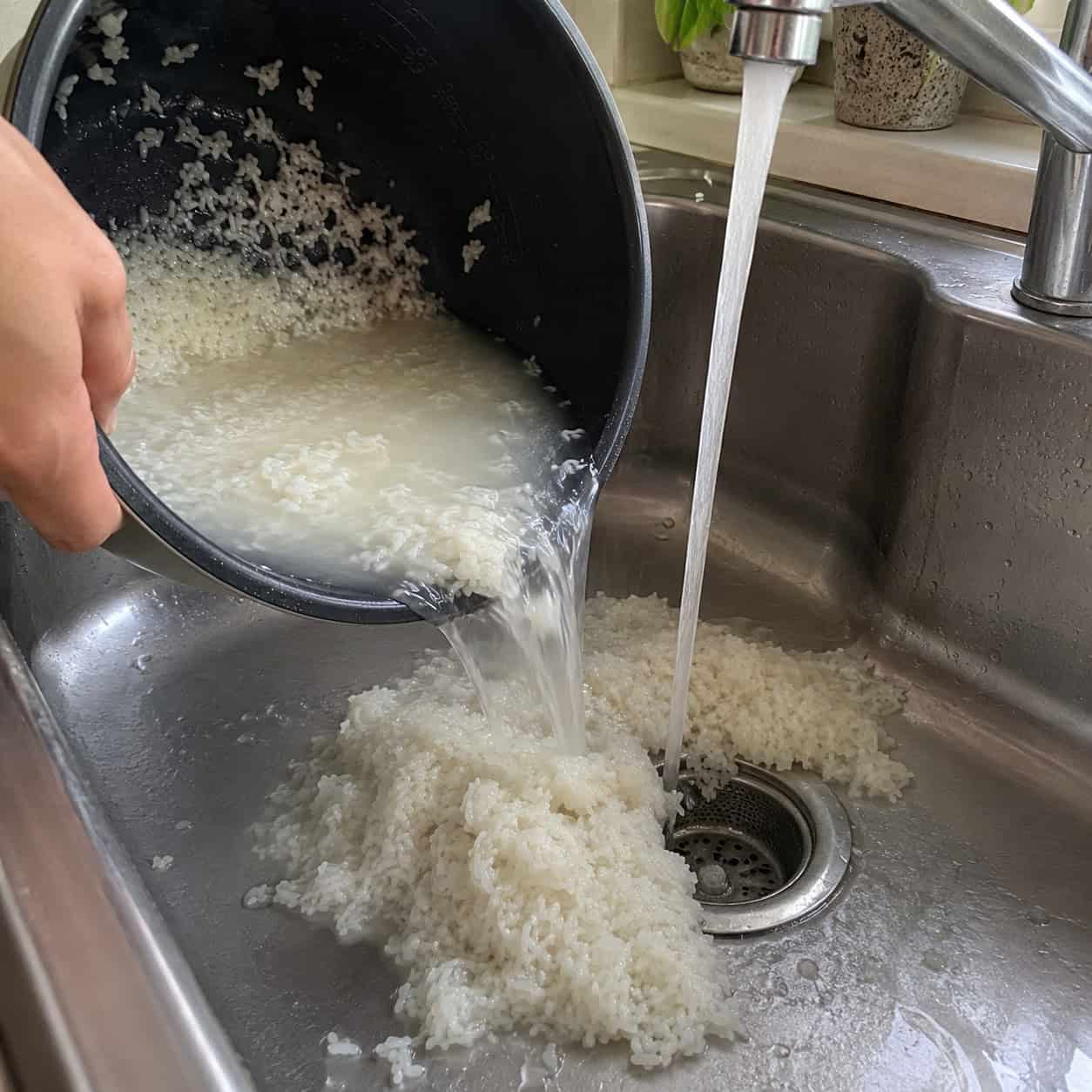
Same story as pasta, different grain.
Rice keeps drinking water after it’s down the drain, ballooning into a sticky mass that clings to pipe walls. A cup of leftover rice can expand to several times its volume.
Holidays make it worse — that’s when the leftover volume spikes and whole pots get rinsed at once.
Toss it. Rice belongs anywhere but the sink.
9. Flour
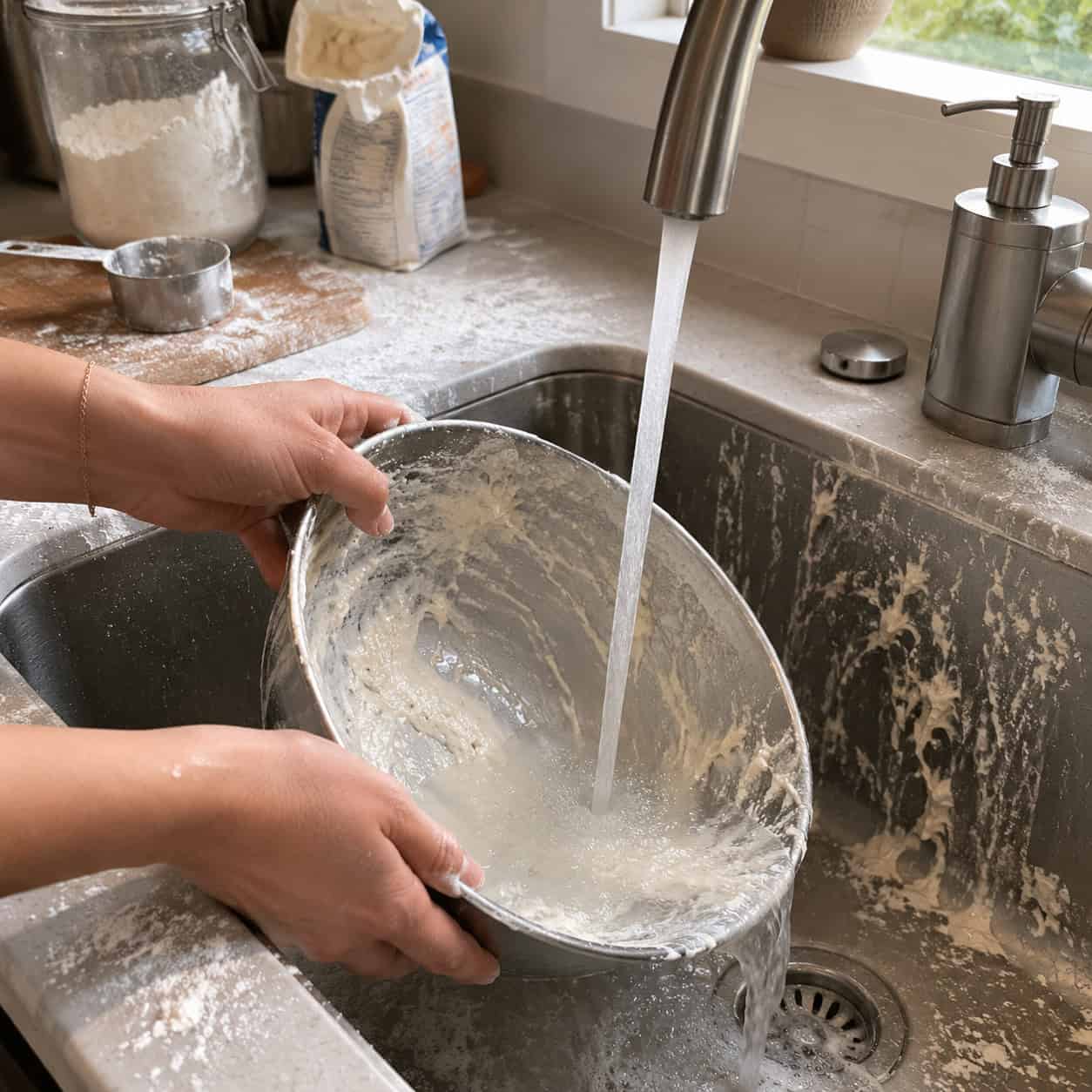
Flour feels innocent. It’s a fine powder — surely it just rinses away.
Add water and flour becomes glue. Actual glue. Wallpaper paste is essentially flour and water, and that’s precisely what forms in your line.
Kitchen drains run narrower than bathroom lines, so the paste clumps and grabs hold fast. A dusting from a cutting board is fine; dumping a mixing bowl of batter rinse is how you buy a clog.
Scrape dough scraps and dry flour into the trash before you rinse.
10. Oatmeal
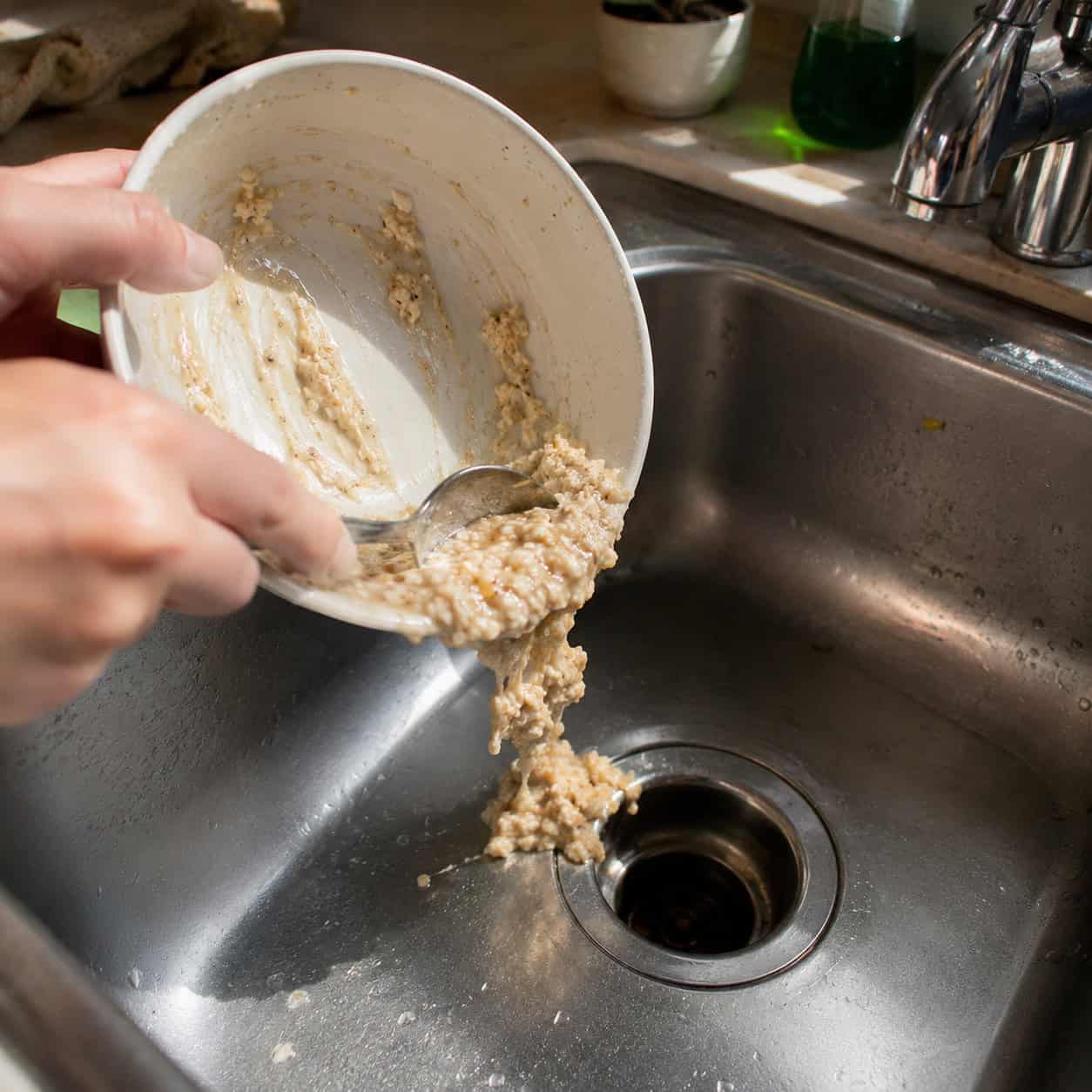
Oatmeal is a binder, and that’s the danger.
It doesn’t just sit there — it grabs sludge and grease and holds it together like cement. Benjamin Franklin Plumbing points out that oatmeal is largely impervious to store-bought drain cleaners once it sets.
So the clog forms, and the bottle you’d reach for barely touches it.
The morning bowl seems harmless. Rinse it into the trash, then run water down the sink.
11. Bread & Dough
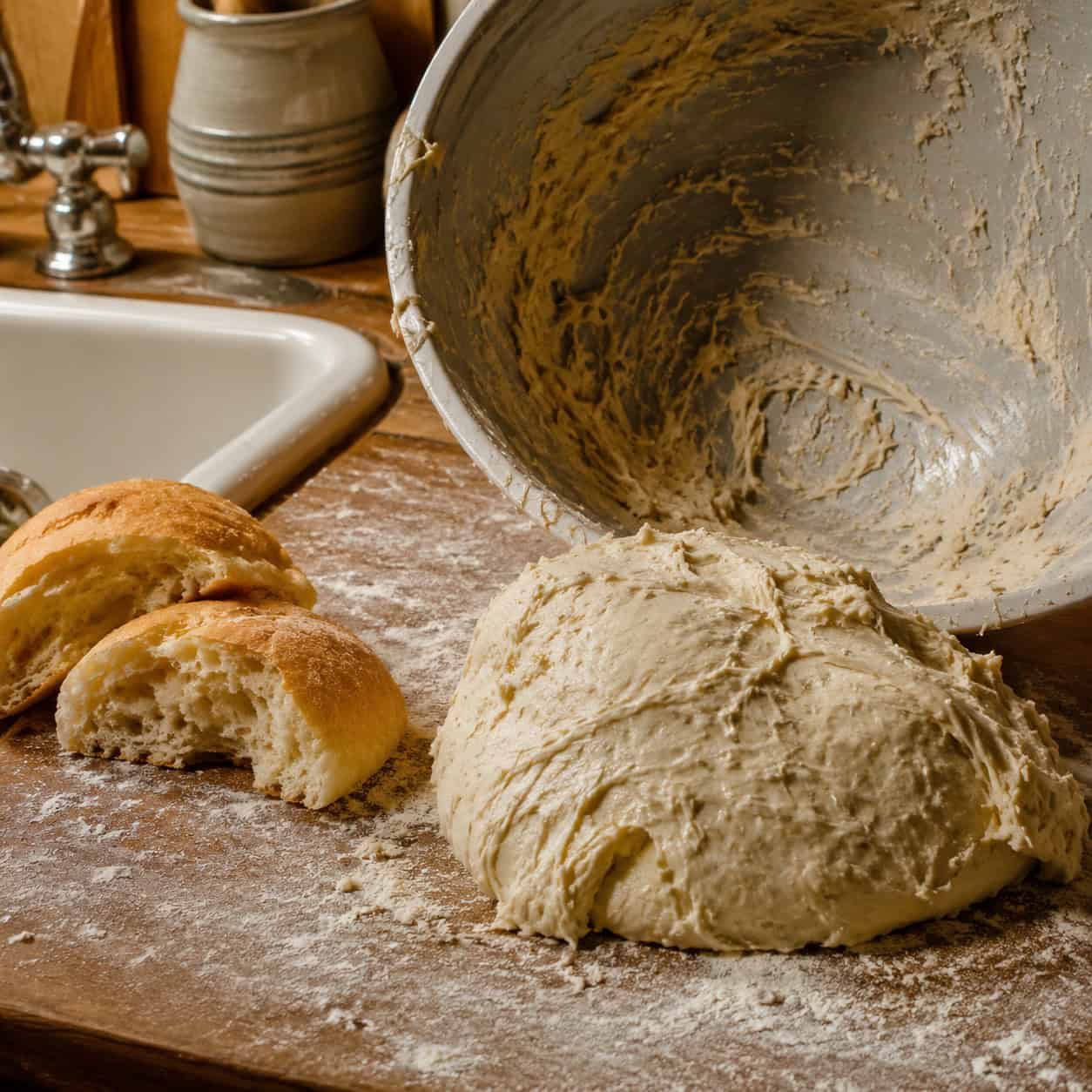
Bread does in a drain exactly what it does in your stomach. It swells.
Both baked bread and raw dough soak up water and expand into a dense, gluey wad that plugs a pipe like a cork. Raw dough is worse — it keeps rising.
Baking cleanup is the usual moment. You’re scraping the bowl, the dough is sticky, the sink is right there.
Don’t. Peel it into the trash and rinse the residue with plenty of water.
12. Potato Peels
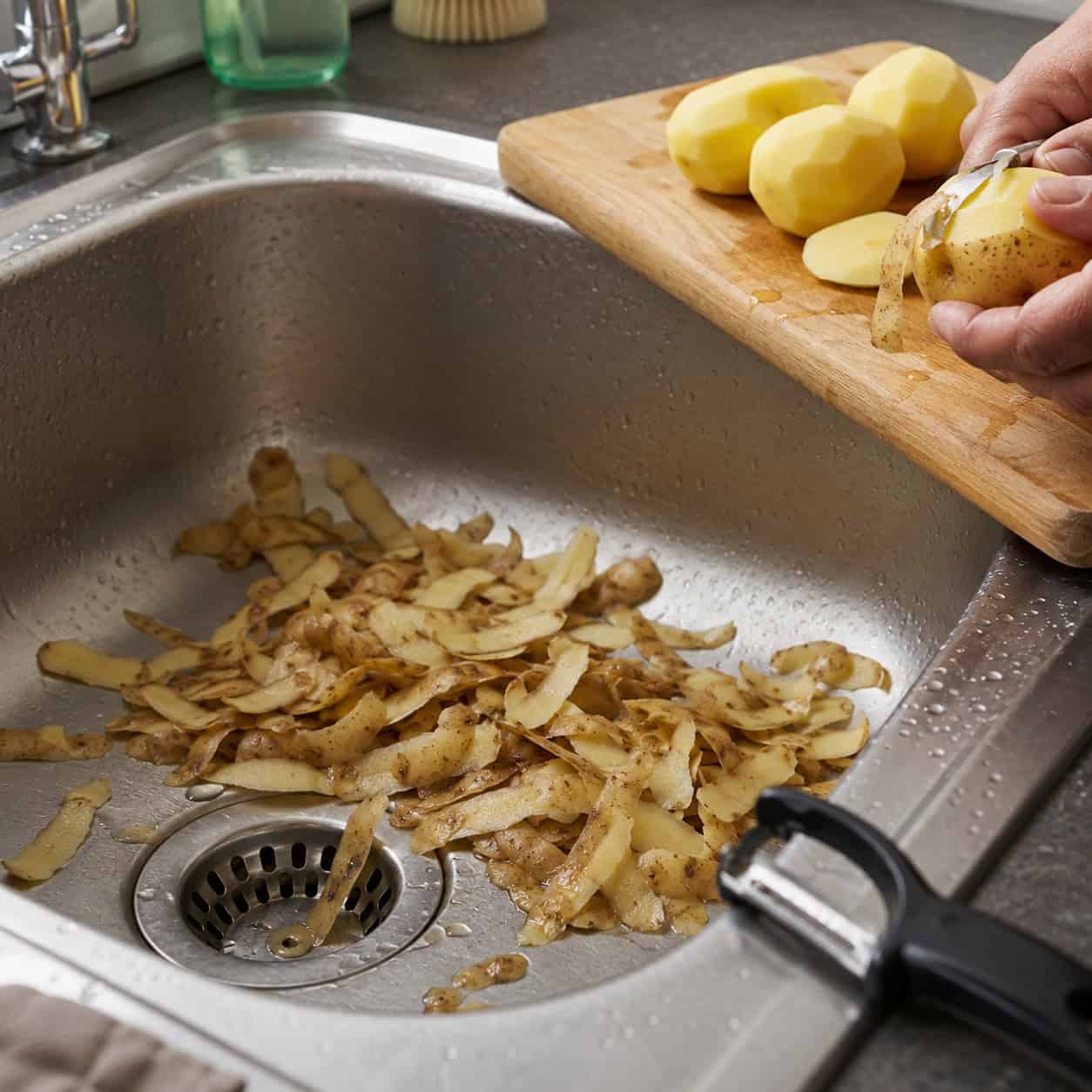
Potato peels are a Thanksgiving-prep classic, and a plumber’s favorite emergency call the next day.
They’re thin and slippery, so they slide right past the impellers without getting ground. Then they collect in the P-trap and pile up.
As they sit, they release starch, and that starch turns into a watertight paste that seals the trap. Peels plus starch is a two-part clog.
Peel into the trash or the compost bin. A colander over the drain catches the strays.
13. Fibrous Vegetables (Celery, Asparagus, Corn Husks)
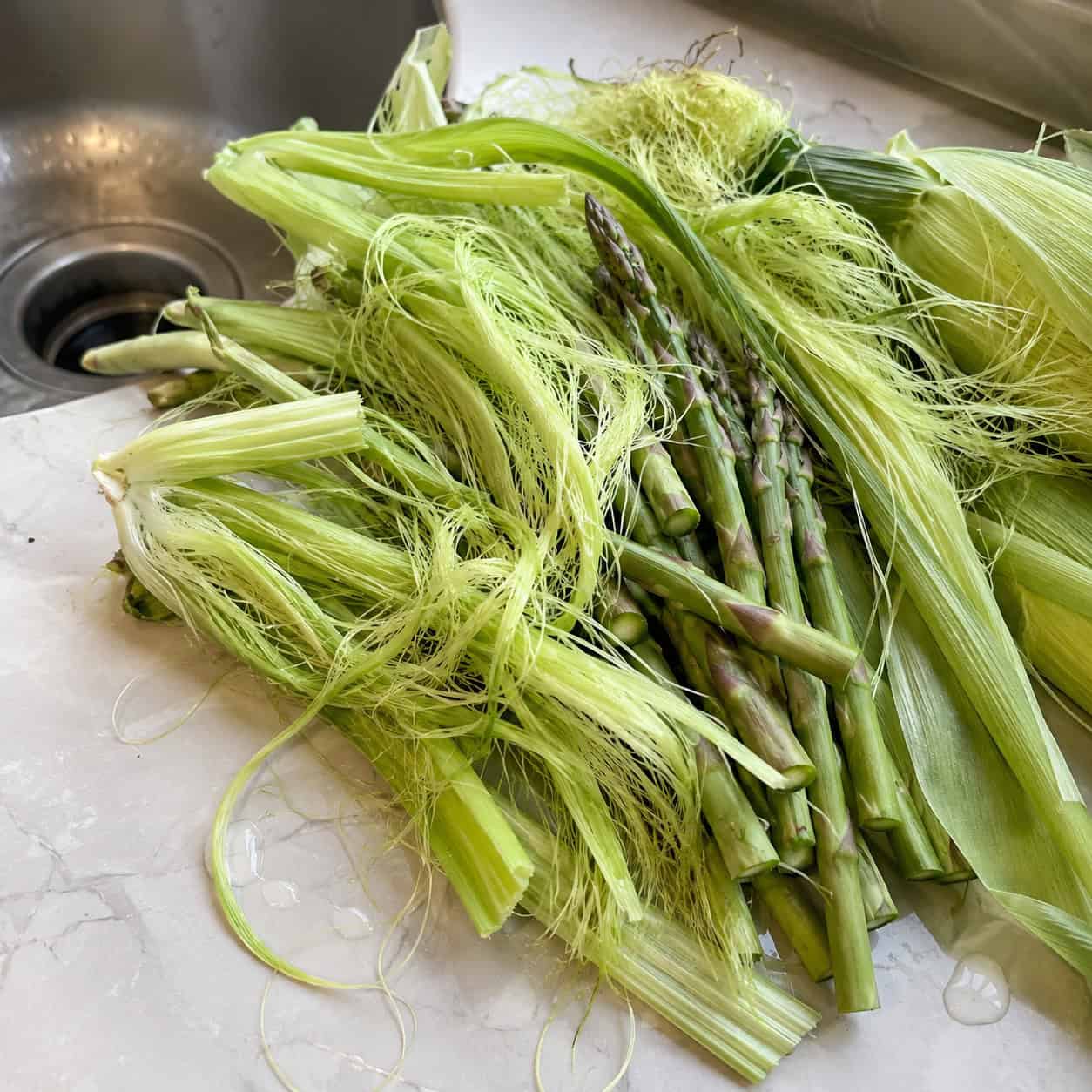
Long stringy fibers and spinning impellers are a bad match.
Celery strings, asparagus ends, and corn husks wrap around the disposal mechanism like thread around a spool. What doesn’t wrap passes through un-ground and balls up downstream.
Consumer Reports adds artichokes, edamame pods, and rhubarb to the same list. Even disposals marketed as “multi-grind” struggle with stringy produce.
The safe move is boring and effective: trash or compost. Keep the strings out of the mechanism.
14. Onion Skins
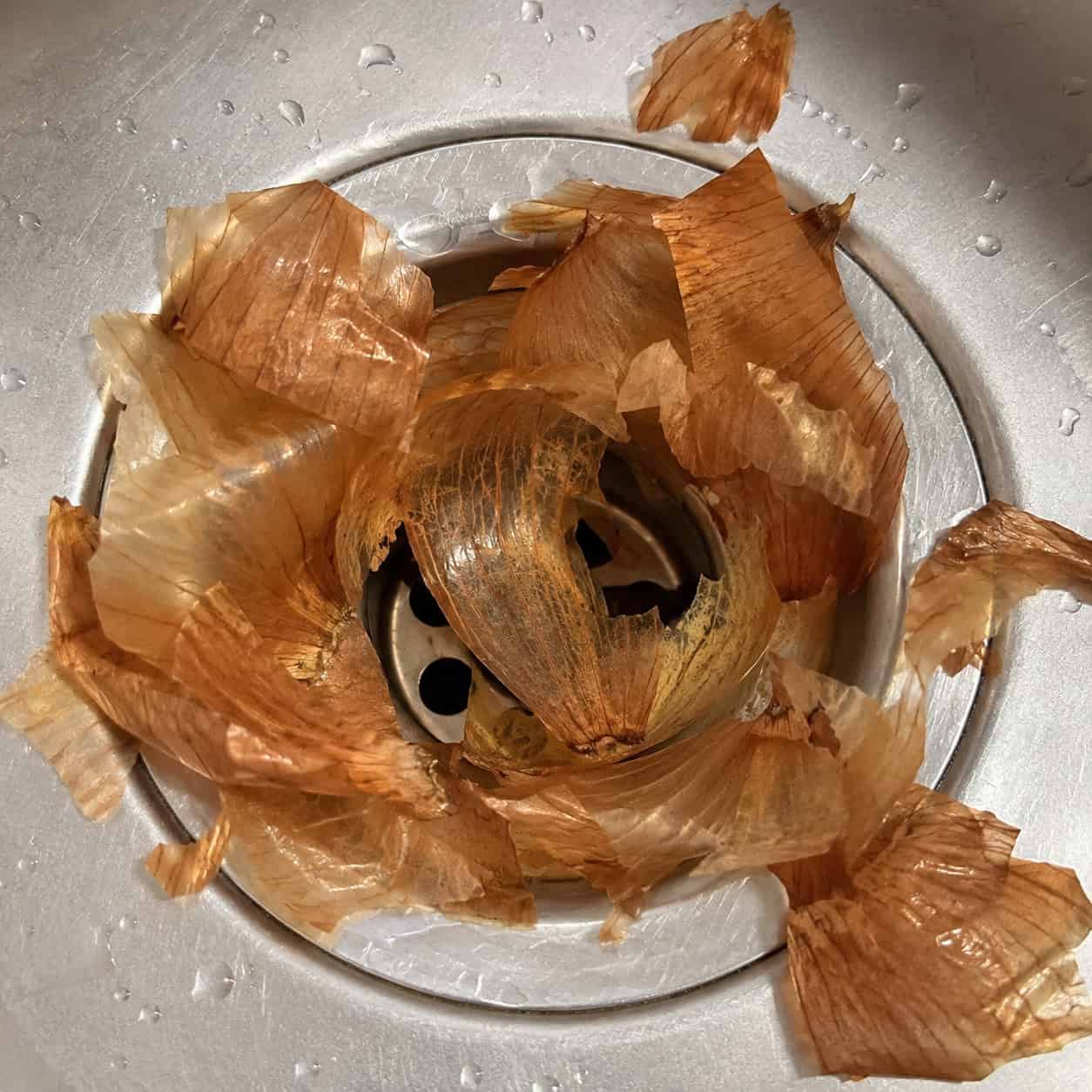
The papery outer skin of an onion is easy to ignore. It shouldn’t be.
Those thin layers behave like the eggshell membrane — they slip past the grind, then flatten against the pipe and form a net.
That net catches the next bit of debris, and the next. A blockage builds quietly out of almost nothing.
Small item, real problem. Into the trash it goes.
15. Banana Peels
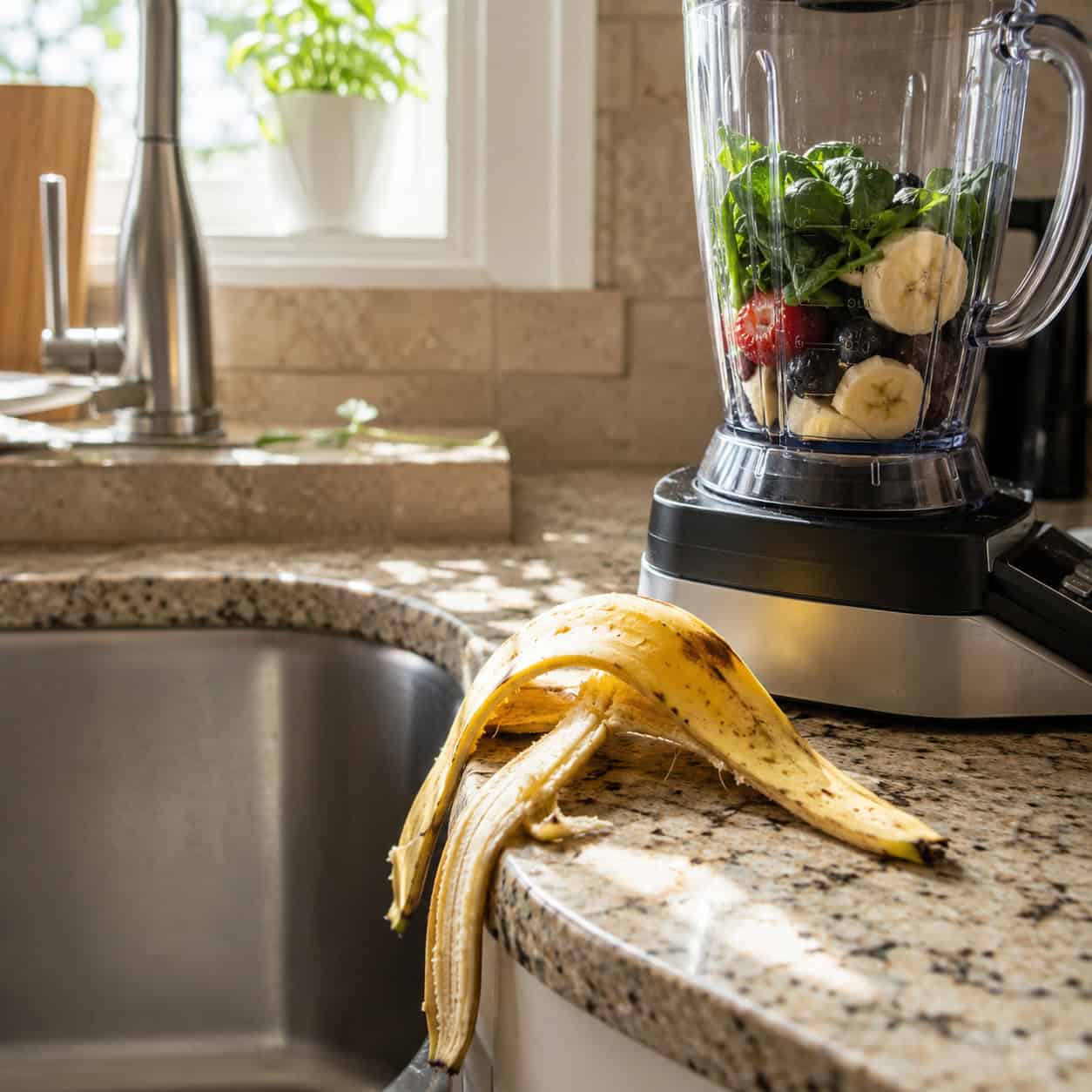
Banana peels are a double threat — tough and stringy on one axis, dense and starchy on the other.
Liquid-Plumr singles them out as a disposal no-go, and the reason is that combination. The fibers tangle the impellers while the starchy flesh gums up the works.
Smoothie season is the danger zone. You’re already at the blender, the peel goes in the sink, the disposal groans.
Compost it. Banana peels are great for a garden and terrible for a drain.
16. Bones
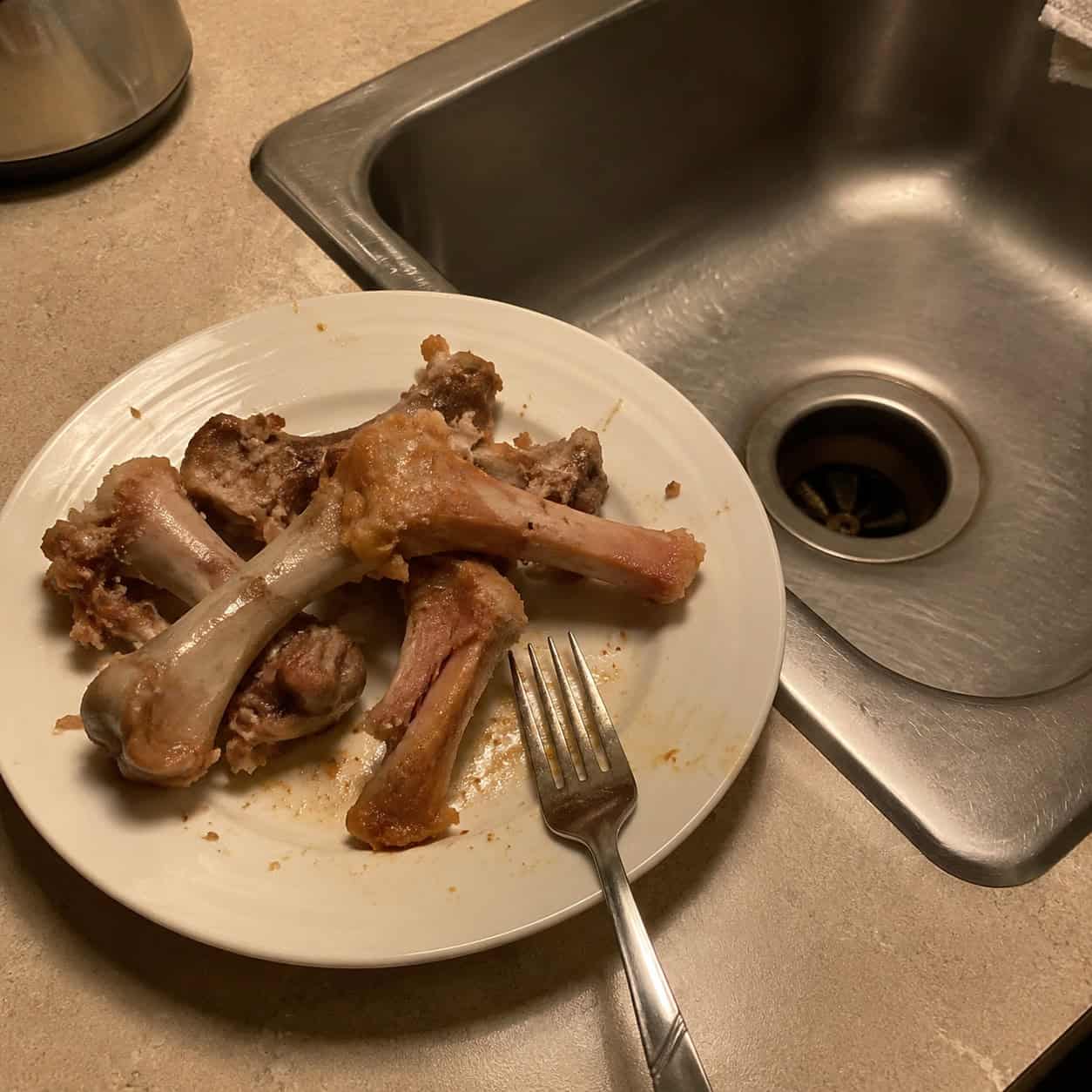
No disposal grinds bone. Not chicken, not beef, not pork.
Bones are too dense to break down, so they rattle against the grind ring, jam the flywheel, and can burn out the motor trying. What survives heads down the pipe as a hard, jagged chunk.
Older plumbing raises the stakes. Consumer Reports notes that clog risk climbs sharply with aging cast-iron pipes compared to newer PVC, where the interior stays smoother — a decent argument for an upgrade if your lines are decades old.
Bones belong in the trash. Every time.
17. Fruit Pits
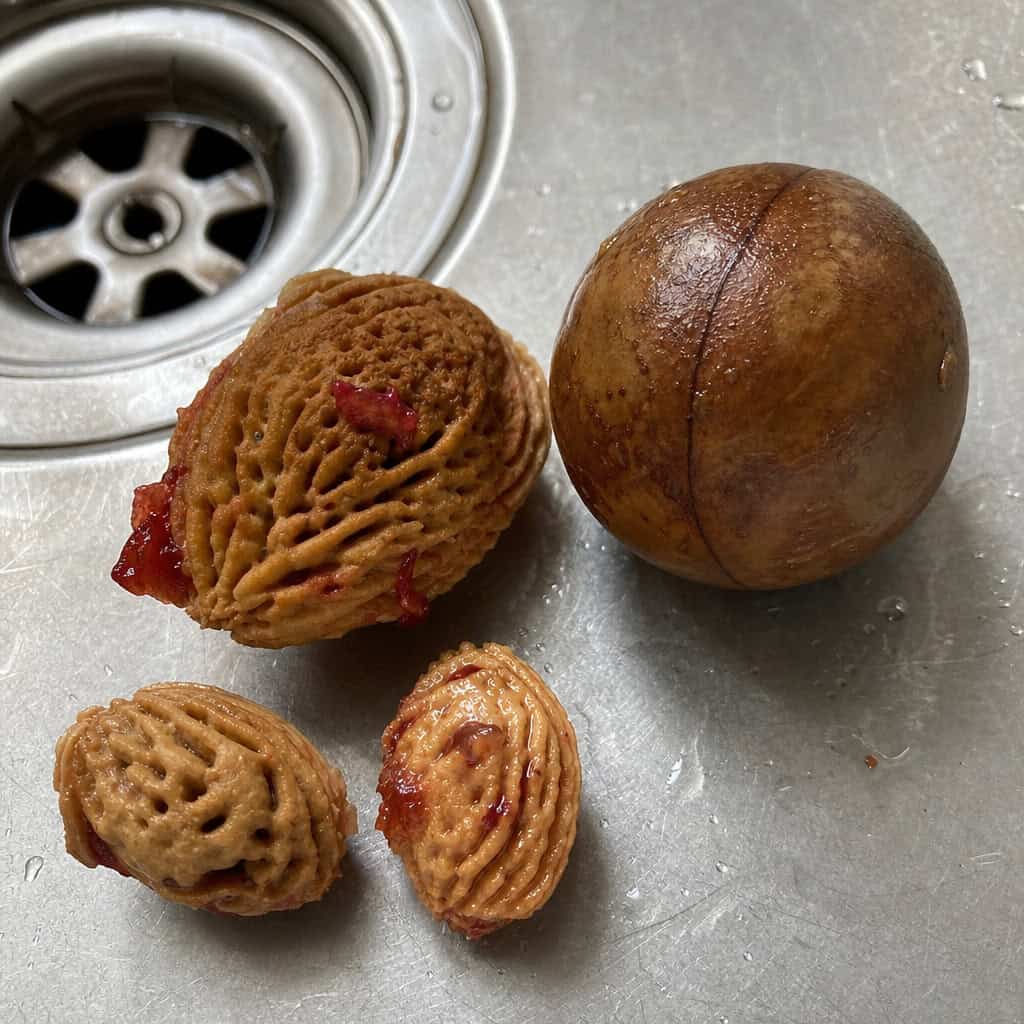
To a disposal, a peach pit is a rock.
Peach, plum, avocado, and mango pits are too hard to grind, so they just spin and clatter around the chamber, banging on the grind ring and chipping it.
An avocado pit will win that fight every time.
There’s no clever trick here. Toss the pit and move on.
18. Seafood & Shellfish Shells
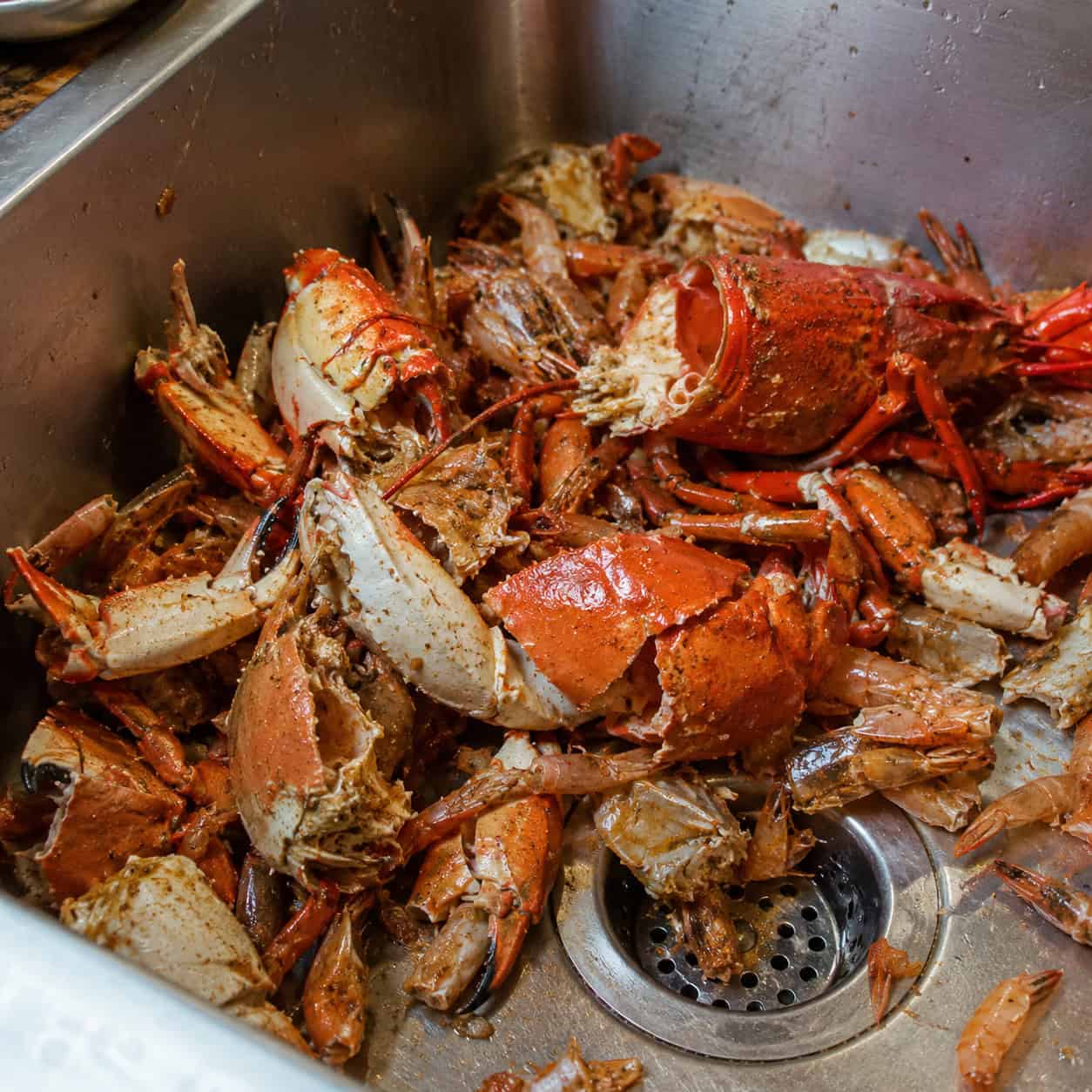
Shells are armor. They’re built not to break.
Lobster, crab, clam, oyster, mussel, and shrimp shells crack impellers and form blockages when the fragments settle downstream. Shrimp shells are small enough to seem harmless and stubborn enough to prove otherwise.
Coastal cooking and holiday seafood boils are peak season for this mistake.
Bag the shells with the trash. A crab feast makes a lot of them.
19. Nuts & Nut Shells
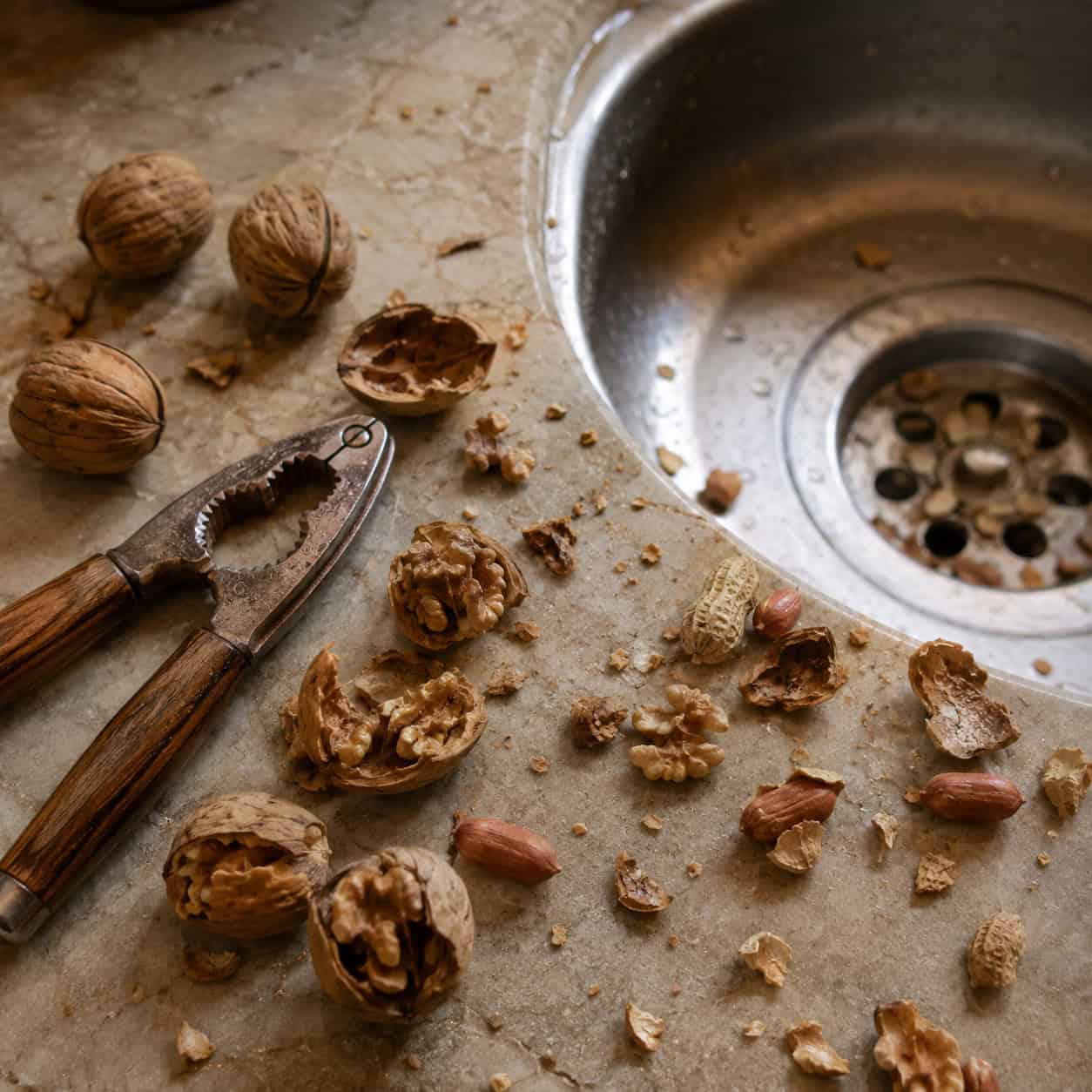
Grinding nuts in a disposal is how peanut butter gets made. Think about where that leaves you.
The oils release into a sticky paste that coats the pipe exactly like the nut-butter jar you already avoided. Meanwhile, the hard shells jam the mechanism like fruit pits do.
So you get both problems in one handful — the paste and the jam.
Trash the shells, trash the nuts. Skip the drain entirely.
20. Produce Stickers (PLU Labels)
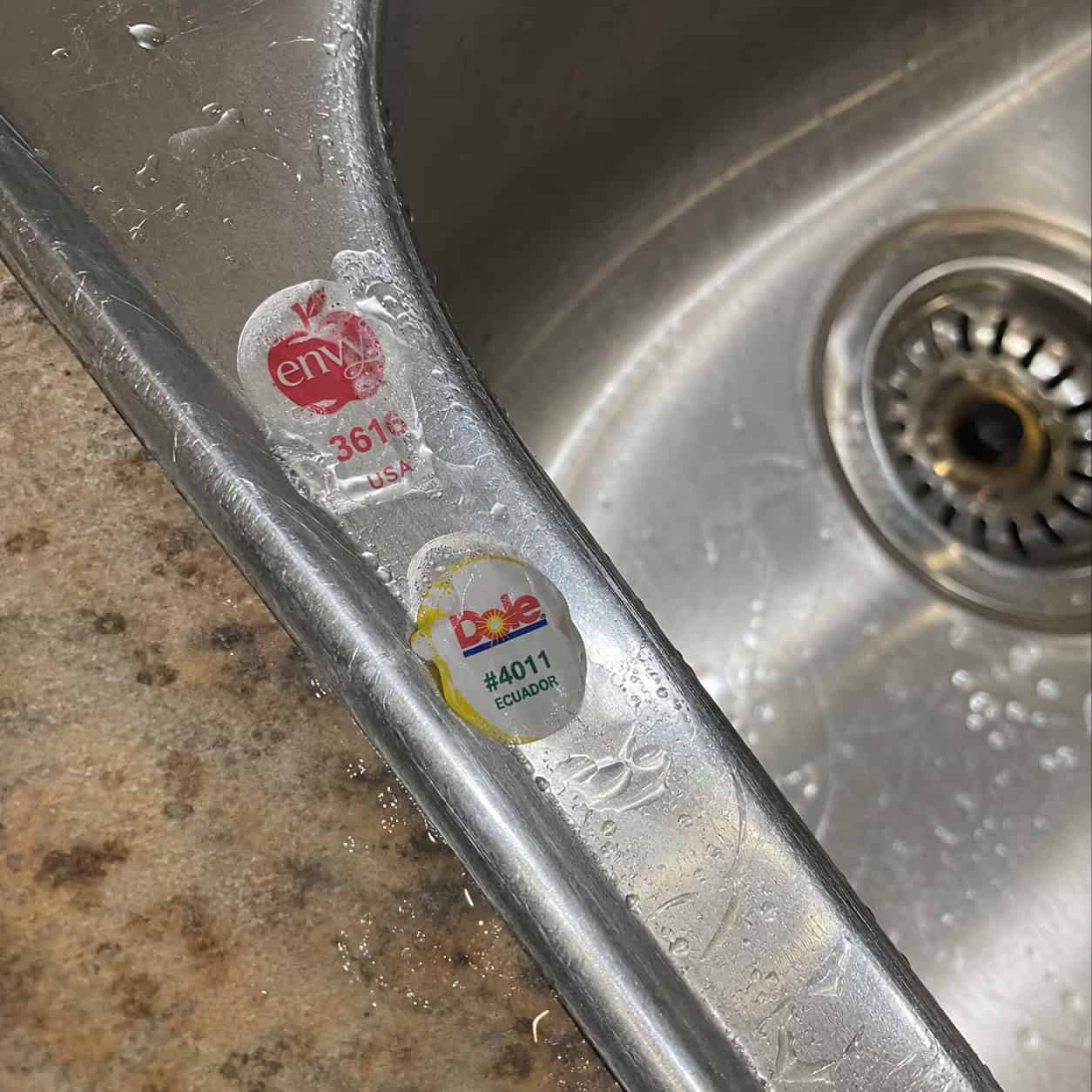
Those little oval stickers on apples and bananas are plastic. Most people rinse them off without a second thought.
They don’t dissolve. They cling to pipe walls, slip past drain filters and treatment screens, and end up as tiny plastic pollution in waterways.
One sticker won’t clog anything. But they add up, and they never break down.
Peel them off before the fruit goes near the sink and drop them in the trash.
21. Medications & Pharmaceuticals
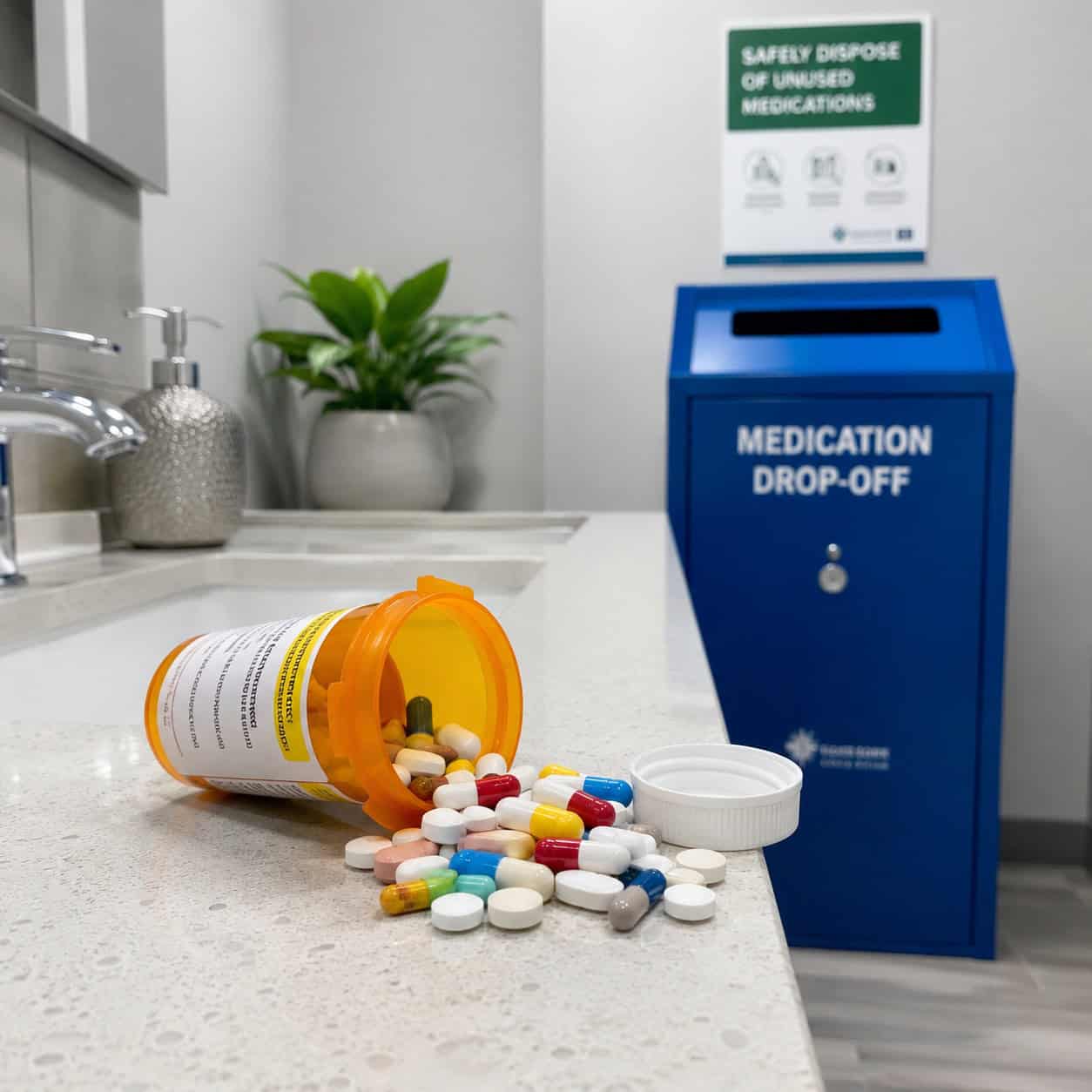
This one isn’t about clogs. It’s about what comes out the other end.
Wastewater treatment plants were built to handle human waste and organic matter, not pharmaceuticals. Most aren’t designed to filter out drug compounds, so those compounds pass through and back into rivers and streams.
The result shows up in testing. U.S. Geological Survey sampling has found measurable pharmaceutical residues in a large share of the nation’s streams — everything from antibiotics to hormones to painkillers.
Flushing old pills down the sink or toilet feeds that directly. According to Portland.gov, the drain is one of the worst places old medication can go.
Do this instead. Use a DEA drug take-back site — many police stations and pharmacies host permanent drop boxes, and the DEA runs national take-back days twice a year. Chain pharmacies increasingly have kiosks near the counter.
If no take-back exists nearby, mix the pills with used coffee grounds or cat litter in a sealed bag before trashing them, so they’re unusable and unappealing. Never the sink.
22. Paint & Paint Thinner
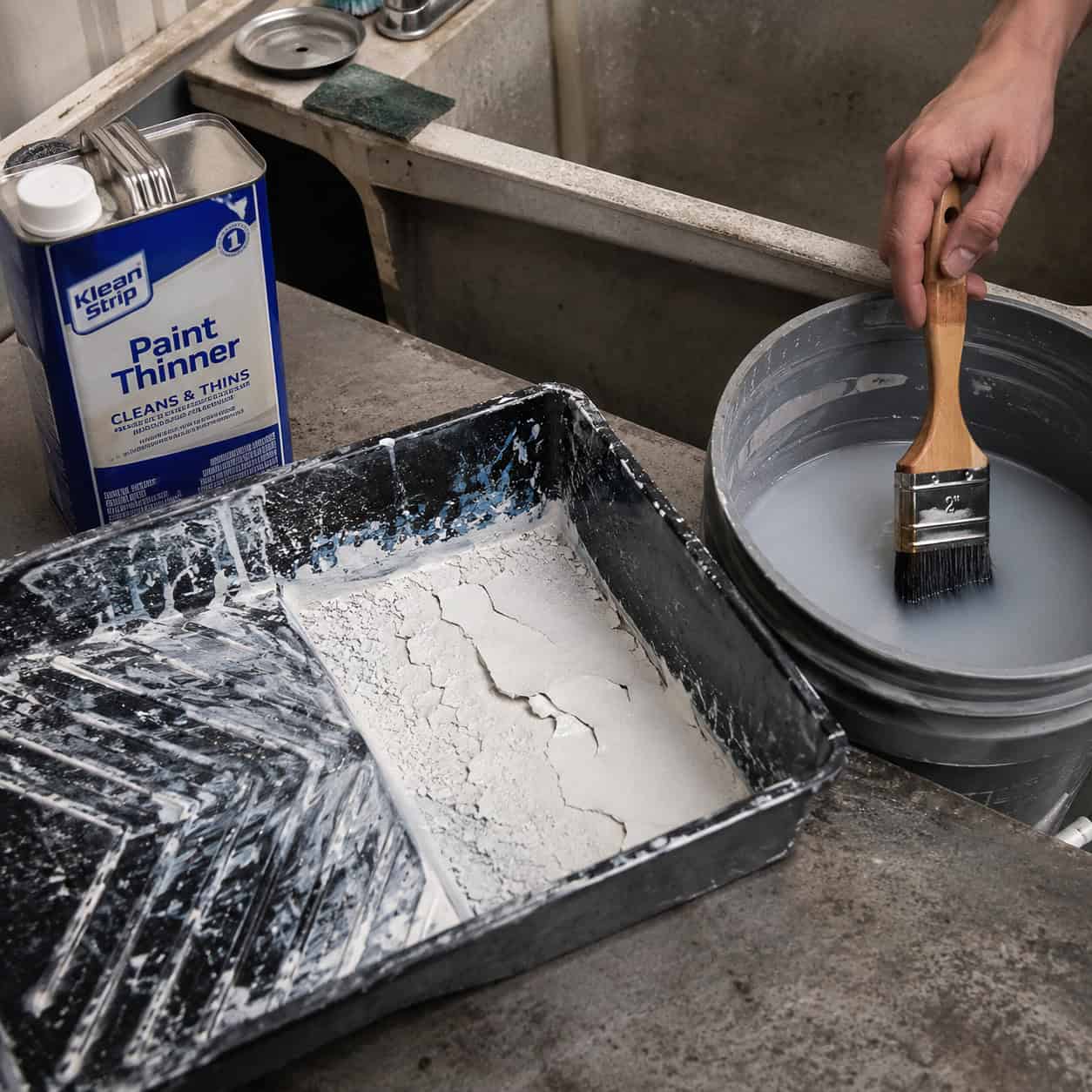
Paint down the drain is a triple threat, and each part is bad on its own.
First, it dries. Latex paint skins over and hardens inside the pipe, building up on the walls with every rinse of a roller tray. Second, it leaches. Some paints carry metals like lead and cadmium that treatment plants can’t fully remove. Third, solvent-based thinners are corrosive enough to damage both your pipes and the treatment system downstream.
Latex and oil-based paint need different endings. Latex (water-based) can be dried out — leave the can open, stir in cat litter or a paint hardener, and once it’s a solid brick, most areas let you trash the can with the lid off. Oil-based paint and all thinners are hazardous waste, full stop.
For brushes, don’t rinse them straight into the sink. Use a bucket. Rinse latex brushes in a bucket of water, let the paint solids settle overnight, pour off the clear water outside, and scrape the sludge into the trash. Clean oil brushes with solvent in a sealed jar, let the solids settle, and reuse the clear solvent next time.
SpringWell Water flags paint among the worst things you can pour down a drain, and the fix is a trip to a household hazardous waste drop-off. Most counties run one free.
23. Motor Oil & Automotive Fluids
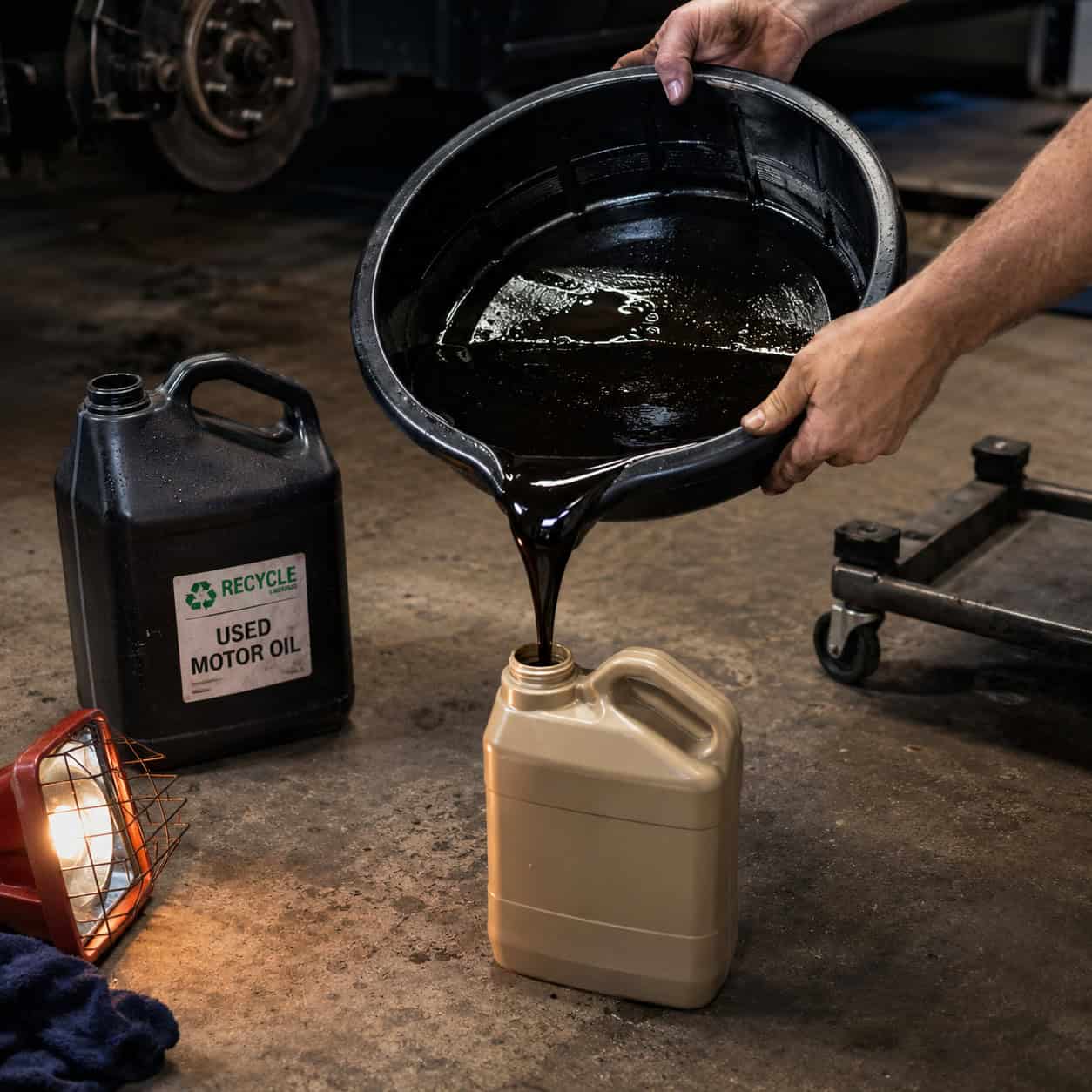
A DIY oil change ends with a pan of black used oil and a tempting garage drain. Resist it.
Motor oil isn’t water-soluble. It coats the inside of pipes the way cooking grease does, and it doesn’t break down in treatment — it slips through and contaminates soil and groundwater. A single oil change can foul a startling volume of water.
The same goes for transmission fluid, antifreeze, and brake fluid. All toxic, none drain-safe.
Seal used oil in a clean container and take it to any auto-parts store. Most chains recycle it free — no purchase, no questions. Aztec Plumbing & Drains and every environmental agency say the same thing: it never goes down a drain.
24. Chemical Drain Cleaners
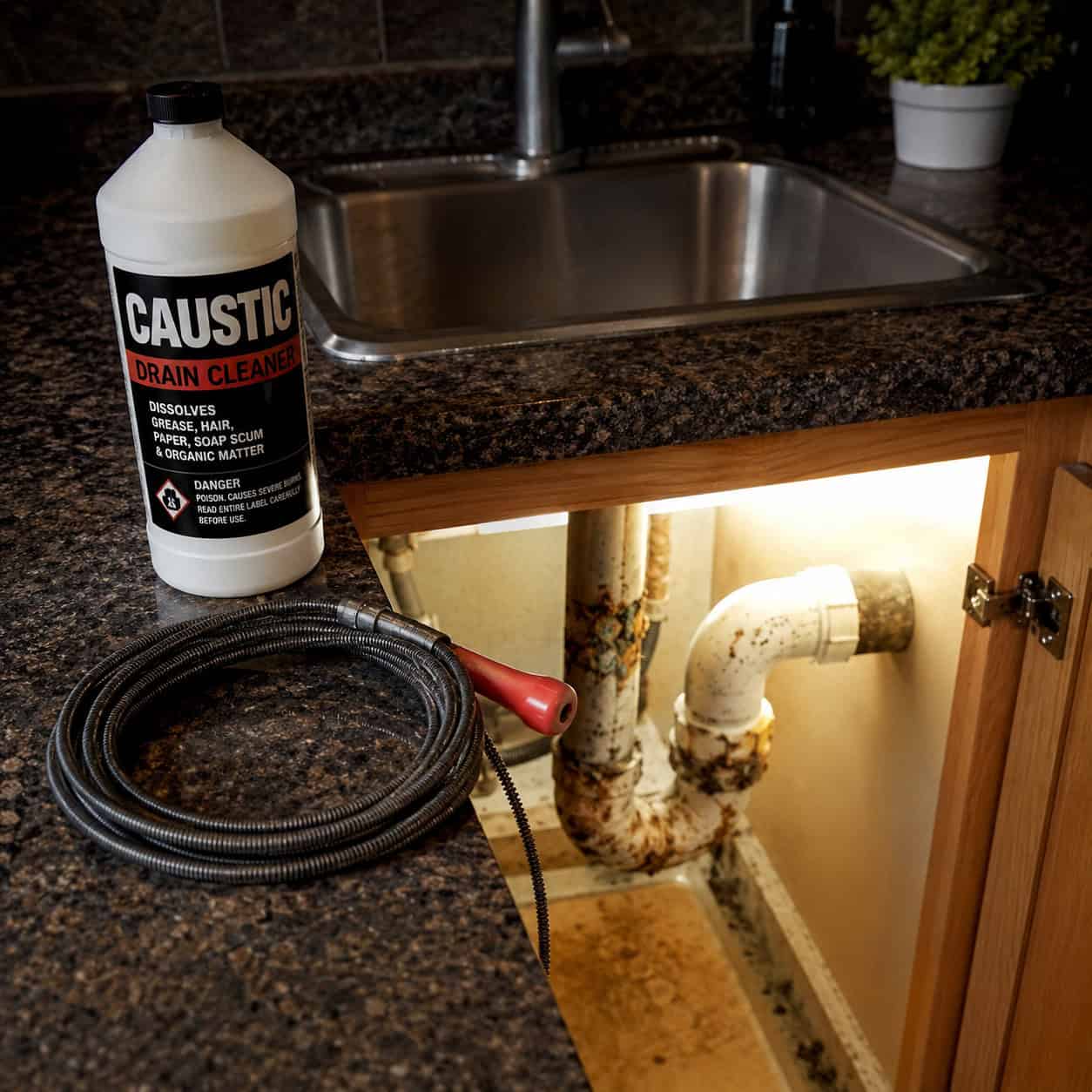
Here’s the irony. The bottle people grab at the first sign of a slow drain belongs on this list too.
Caustic drain cleaners work by generating heat and eating through the blockage. They also eat everything around it — the protective coating inside your pipes, the pipe walls themselves, and the rubber gaskets at the joints. Repeated use corrodes metal pipes and warps PVC, and that’s how a slow drain becomes a leak inside a wall.
The chemicals that dissolve a clog don’t stop when the clog’s gone. They keep working on your plumbing.
The math argues against them, too. A plumber snaking a line typically runs $100 to $275 — a bad afternoon, but a fixed one. Replacing a corroded pipe section inside a wall runs into the thousands once you add drywall repair. You’re spending $15 on a product that quietly builds a four-figure problem.
Try a drain snake or a plunger first. For grease and grime, a plumber’s auger clears what chemicals only push around. When it’s beyond you, a plumber is cheaper than the pipe.
25. Bleach & Harsh Cleaning Chemicals
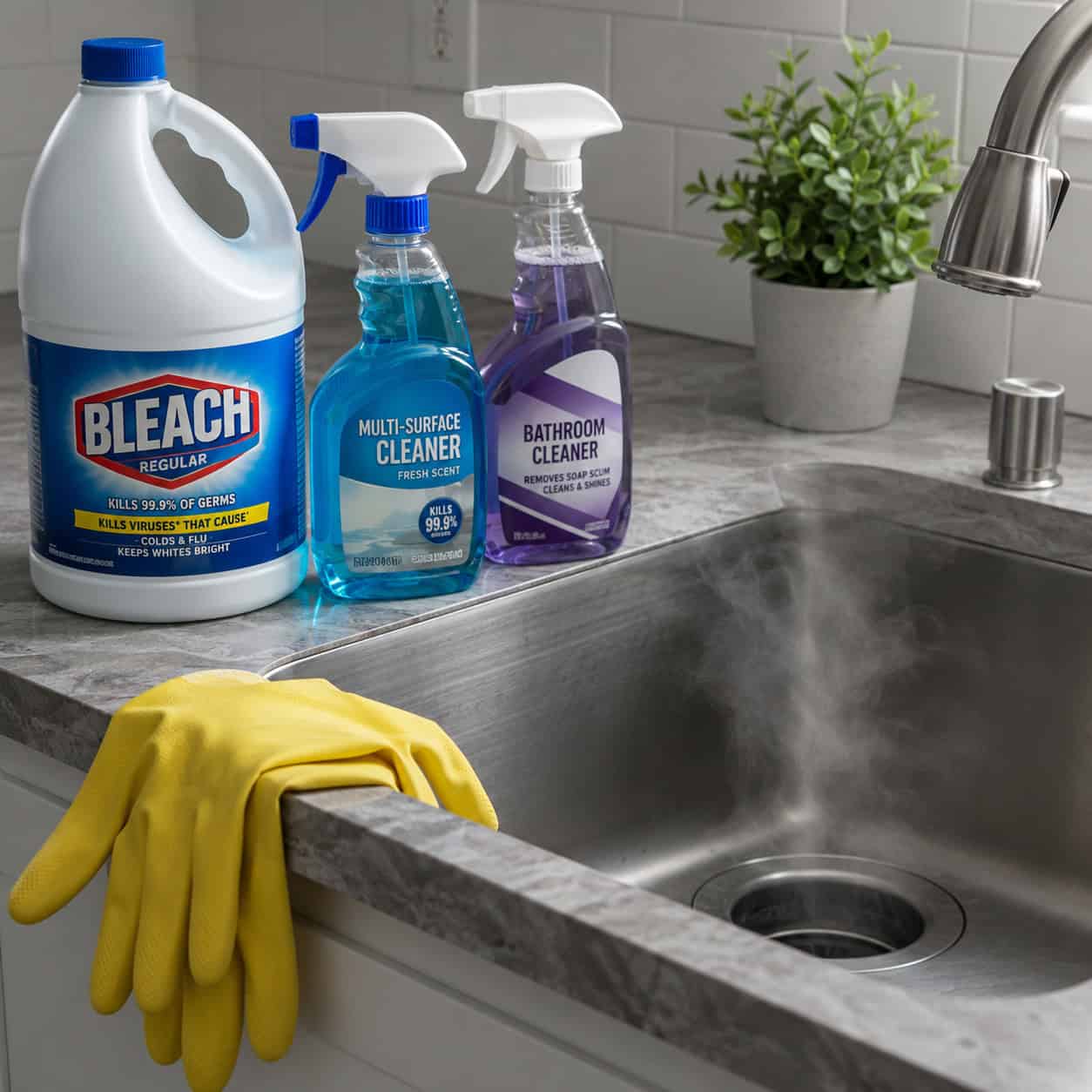
Bleach seems like it belongs in a drain. It’s a hazard there.
Pour bleach onto residue from an ammonia-based cleaner sitting in the trap and you can generate chloramine gas — the same reaction that makes mixing cleaners dangerous in a closed room. Chlorine bleach also reacts with organic matter in the line to form new toxic compounds that flow downstream.
It corrodes older pipes and kills the beneficial bacteria that septic systems depend on.
If you must, dilute a small amount with lots of running water, and never chase it with another cleaner. Vinegar and baking soda handle most routine drain freshening without the risk.
26. Paper Towels, Tissues & “Flushable” Wipes
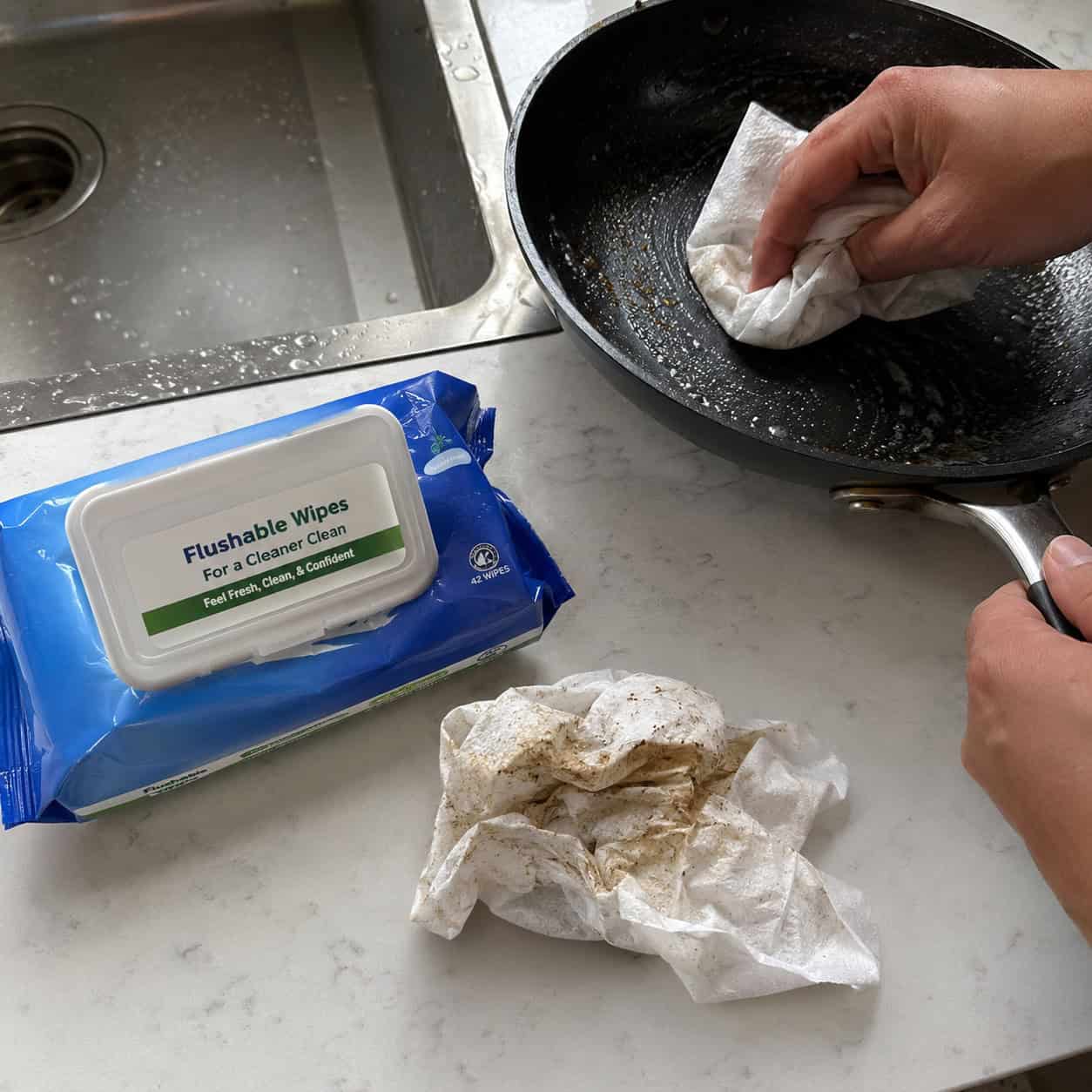
Toilet paper is engineered to fall apart in water within seconds. Paper towels, tissues, and wipes are engineered to do the opposite — to stay strong when wet.
That’s the whole problem. They don’t dissolve, so they snag on any rough spot in the line and start collecting everything behind them.
“Flushable” is marketing, not chemistry. Municipal water districts are blunt about it — the Santa Margarita Water District and countless others state plainly that flushable and biodegradable wipes are neither, and they’ve spent millions clearing the clogs to prove it.
Wipes are also the binder in a fatberg. Grease alone is soft; grease wrapped around a lattice of wipes is what forms those bus-sized masses cities pull from sewers.
In a kitchen, the trap is wiping a greasy pan with a paper towel and rinsing the scraps. Put the towel in the trash — the only place any of these belong.
27. Flammables (Gasoline, Nail Polish Remover, Kerosene)
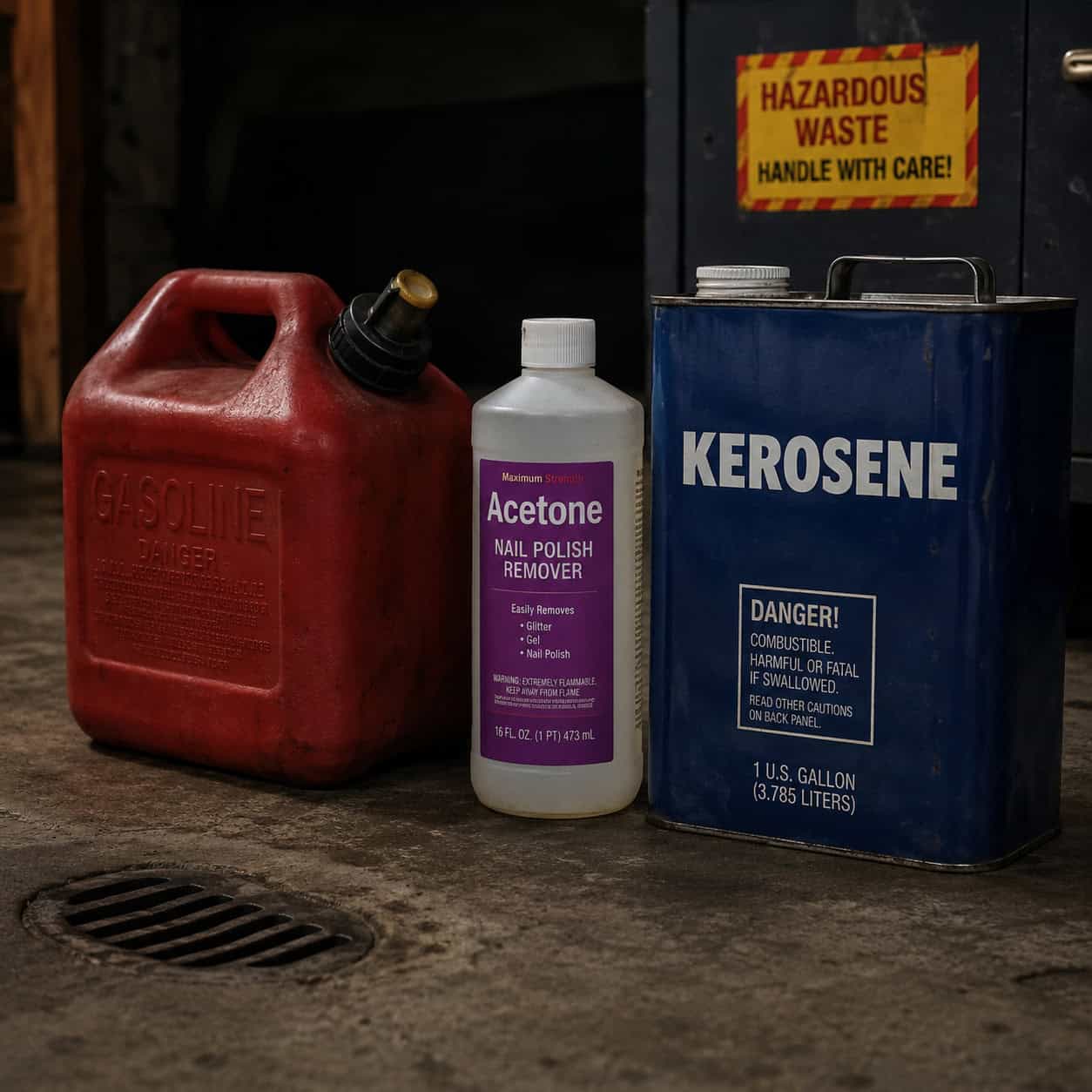
This is where a drain mistake stops being a plumbing bill and becomes a body count.
Gasoline, kerosene, acetone-based nail polish remover, and similar solvents corrode pipes on contact. Worse, they don’t stay put — they evaporate and pool as vapor in the sewer line.
Those vapors are explosive. Sewer workers have been killed by fumes and ignitions traced back to solvents somebody poured down a drain upstream. A single spark in the line is all it takes.
There’s no diluting your way out of this one. Flammables go to a hazardous waste facility, sealed and labeled — nowhere else.
28. Petroleum Jelly (Vaseline)
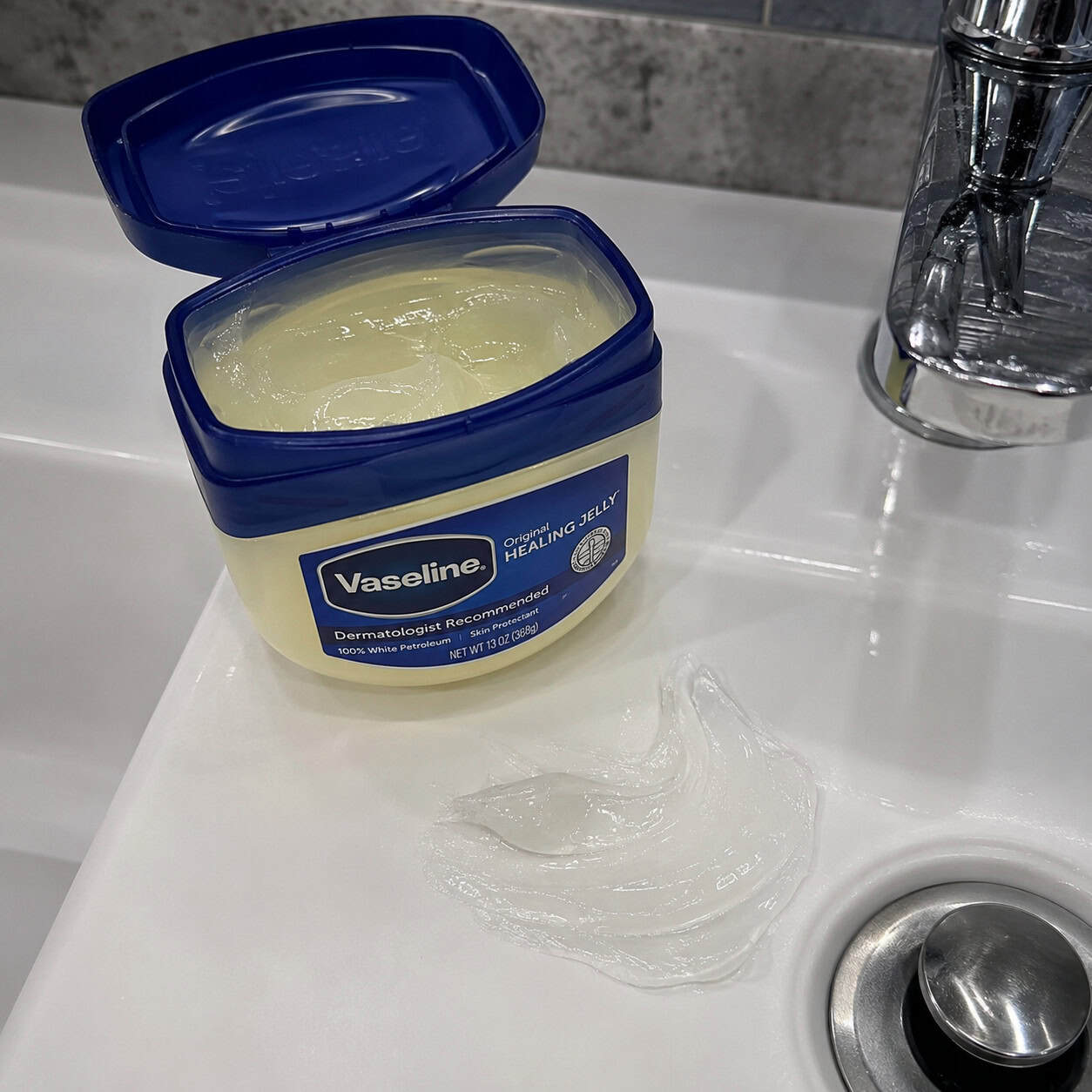
Petroleum jelly isn’t food and doesn’t feel greasy the way bacon fat does. In a pipe, it acts exactly like grease anyway.
It’s a thick, water-repelling gel that won’t wash away. It smears along the pipe wall, and because it repels water, running the tap does nothing to move it.
Then it grabs debris, same as every other clog-former on this list.
Wipe excess into the trash with a paper towel. Don’t count on hot water to carry it off.
29. Wax (Candle or Cheese Rind Wax)
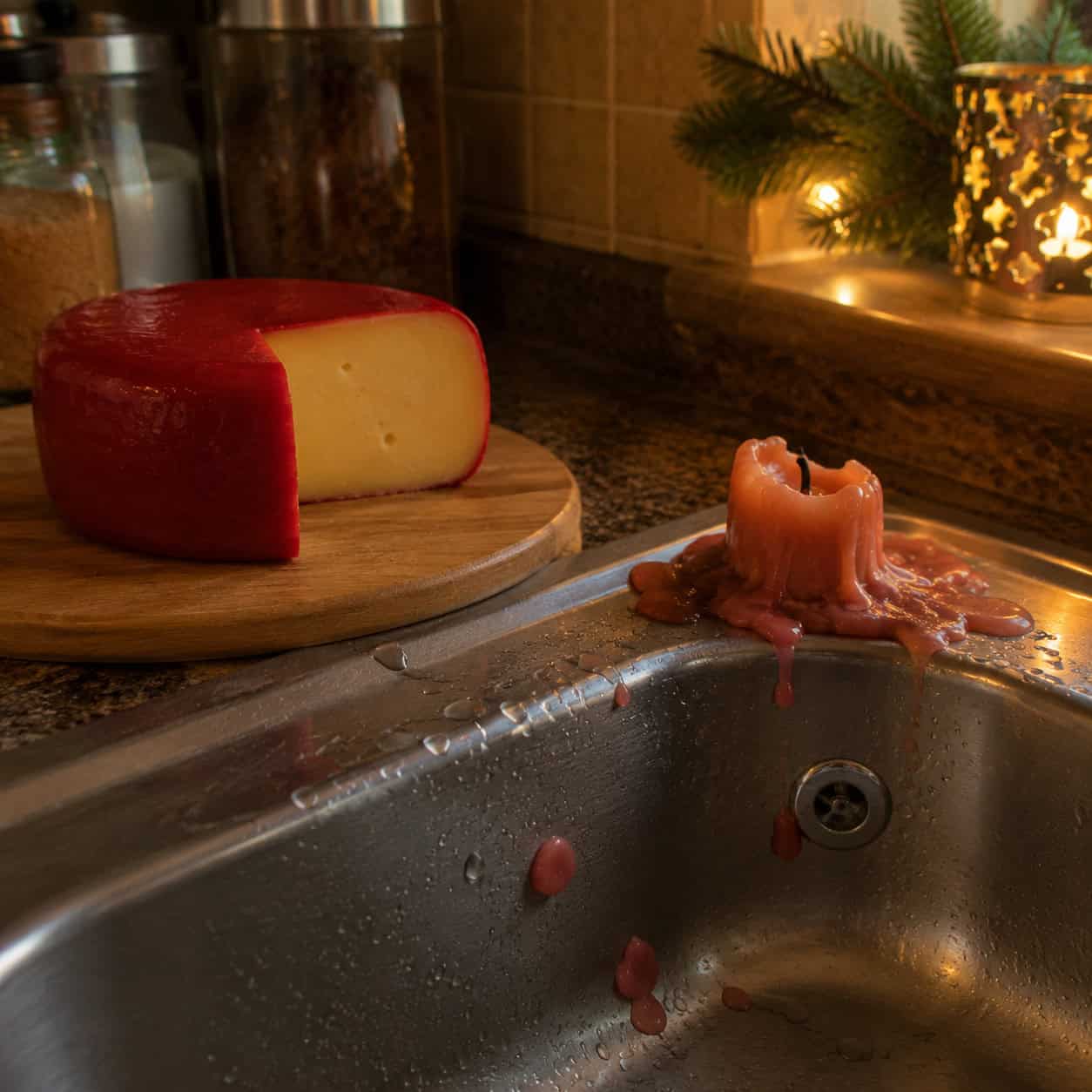
Melted wax is the fastest solid on this list. It re-hardens the instant it cools.
Pour the dregs of a melted candle down the sink and it sets on the pipe wall in seconds, laying down a coating that only grows with the next pour. The red wax off a wheel of gouda does the same.
Holidays bring both — candle stubs and wax-wrapped cheese in the same week.
Let the wax harden in its container and throw it out. It will never soften enough to flow through a drain, no matter how hot the water runs.
Conclusion
Notice the pattern. Almost everything here does one of three things: it hardens, it swells, or it poisons.
Grease and wax and butter set up like concrete. Starches drink water and expand. Chemicals and pit-hard scraps either eat the pipe or jam the machine.
The fixes are all the same size — a trash can, a compost bin, a jar with a lid, one trip to a hazardous waste site. None of it is hard. It just requires not trusting a drain that looks like it can take anything.
The sink is a doorway, not a disposal for the world. Everything you send through it goes somewhere — and sooner or later, so does the bill.