

Stand in the middle of any kitchen and your eye lands on the sink. It’s where the light pools, where the faucet rises, where hands spend more time than anywhere else in the room.
Swap it and the whole space shifts.
A cabinet color change costs a weekend and a new attitude. But a sink change reaches deeper — it can drag a room backward into a 1920s farmhouse or forward into a gallery-white minimalist box, all from one fixture under the faucet.
Most people pick a sink for its bowl count and move on. That’s the wrong first question. The shape, the mount, the material, and the finish do more to set the tone of a kitchen than almost anything short of the cabinets themselves.
Here are 26 kitchen sink styles that each pull a room in a completely different direction — and how to tell which one fits yours.
1. Apron-Front Farmhouse Sink
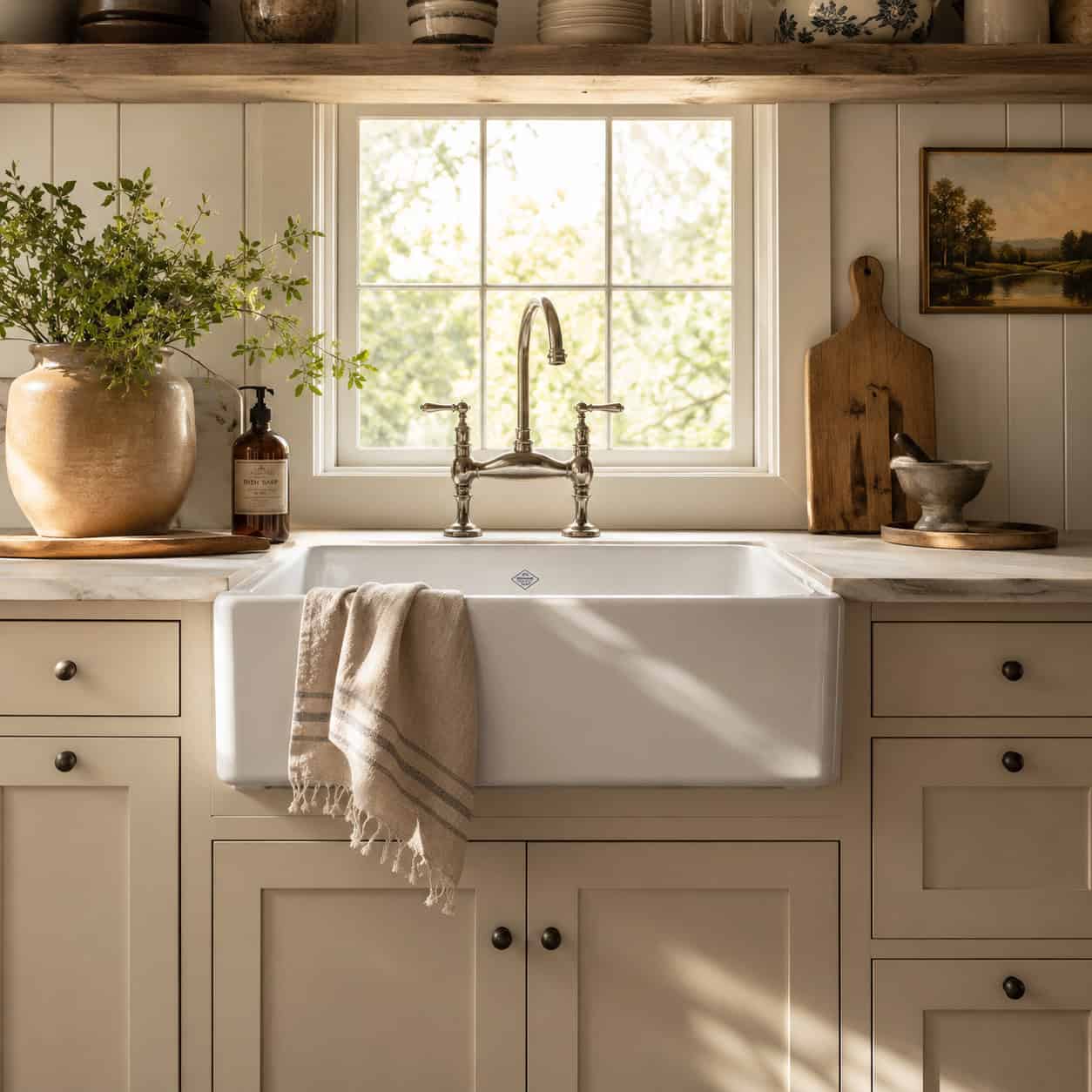
Nothing rewrites a kitchen faster. The apron front replaces a strip of cabinetry with an exposed basin panel, so the sink stops hiding and starts leading the room.
You read it as “farmhouse” from the doorway. That’s the whole point.
It needs a cabinet built to hold it, since the front sits proud of the counter and carries real weight — a fireclay apron can top 100 pounds empty. Retrofitting one into standard cabinets usually means custom modification, as Universal Appliance & Kitchen Center lays out.
Worth every bit of the trouble if the farmhouse look is the goal. It’s the single most transformative sink you can install.
2. Undermount Sink
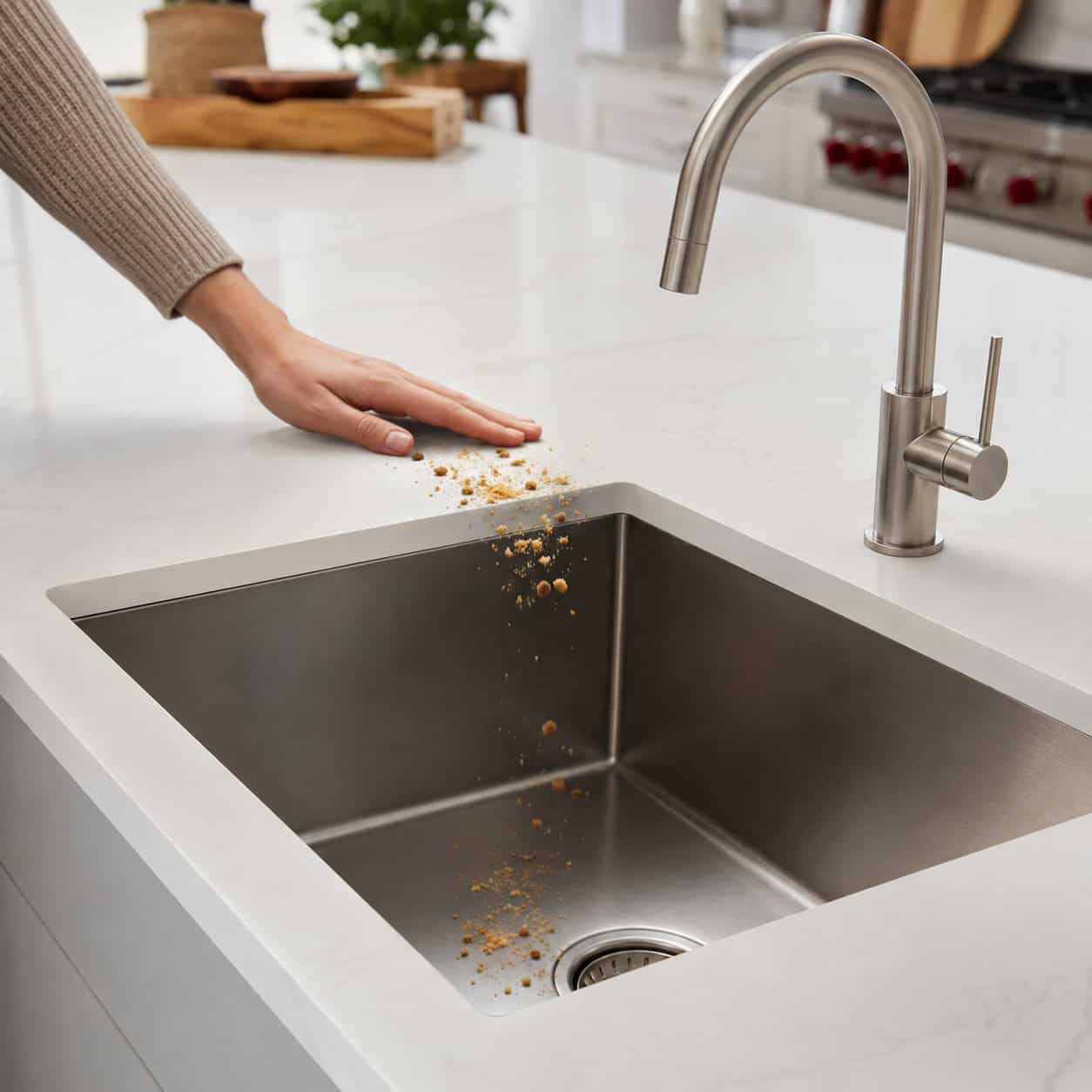
Mounted below the counter, so the stone edge runs straight down into the basin with no rim breaking the line. Crumbs sweep right off the counter and into the bowl.
This is the clean, expensive-looking mount. The default for quartz and granite tops.
Because there’s no lip catching gunk, the counter wipes down in one pass. That seamless edge is why it reads high-end even on a modest basin.
It can’t go under laminate — the exposed particleboard core would swell. Solid stone or quartz only.
3. Drop-In (Top-Mount) Sink
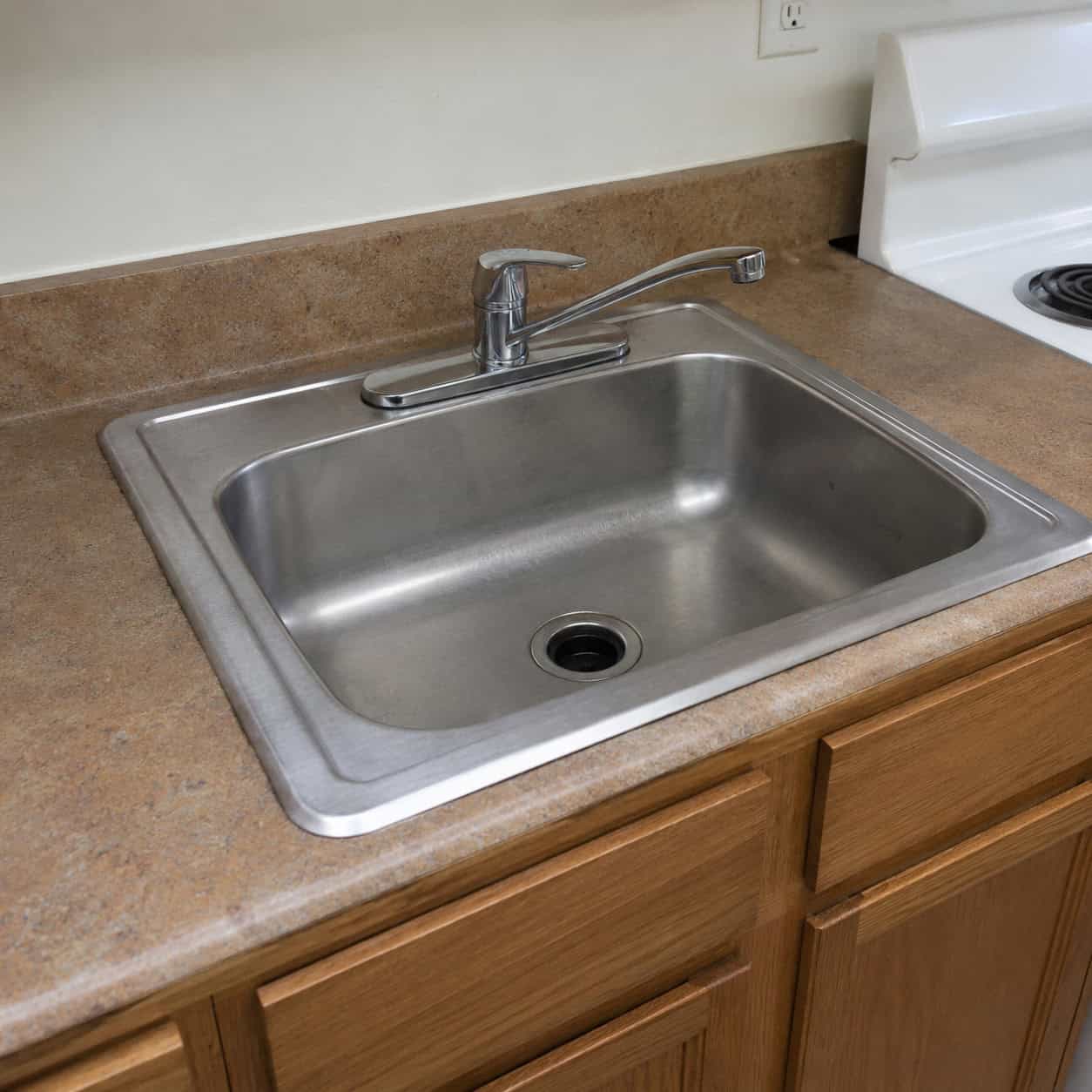
The visible rim resting on top of the counter. The look most people grew up with.
It reads more casual and a little dated next to an undermount, but it’s the workhorse of budget and rental kitchens for a reason. Drop it in the cutout, caulk the rim, done.
It’s the only real option for laminate counters, since the rim seals over the exposed edge. And it’s the easiest sink swap a homeowner can do in an afternoon.
The trade-off is that rim. Grime collects along it, and you can’t sweep straight into the bowl.
4. Integrated Seamless Sink
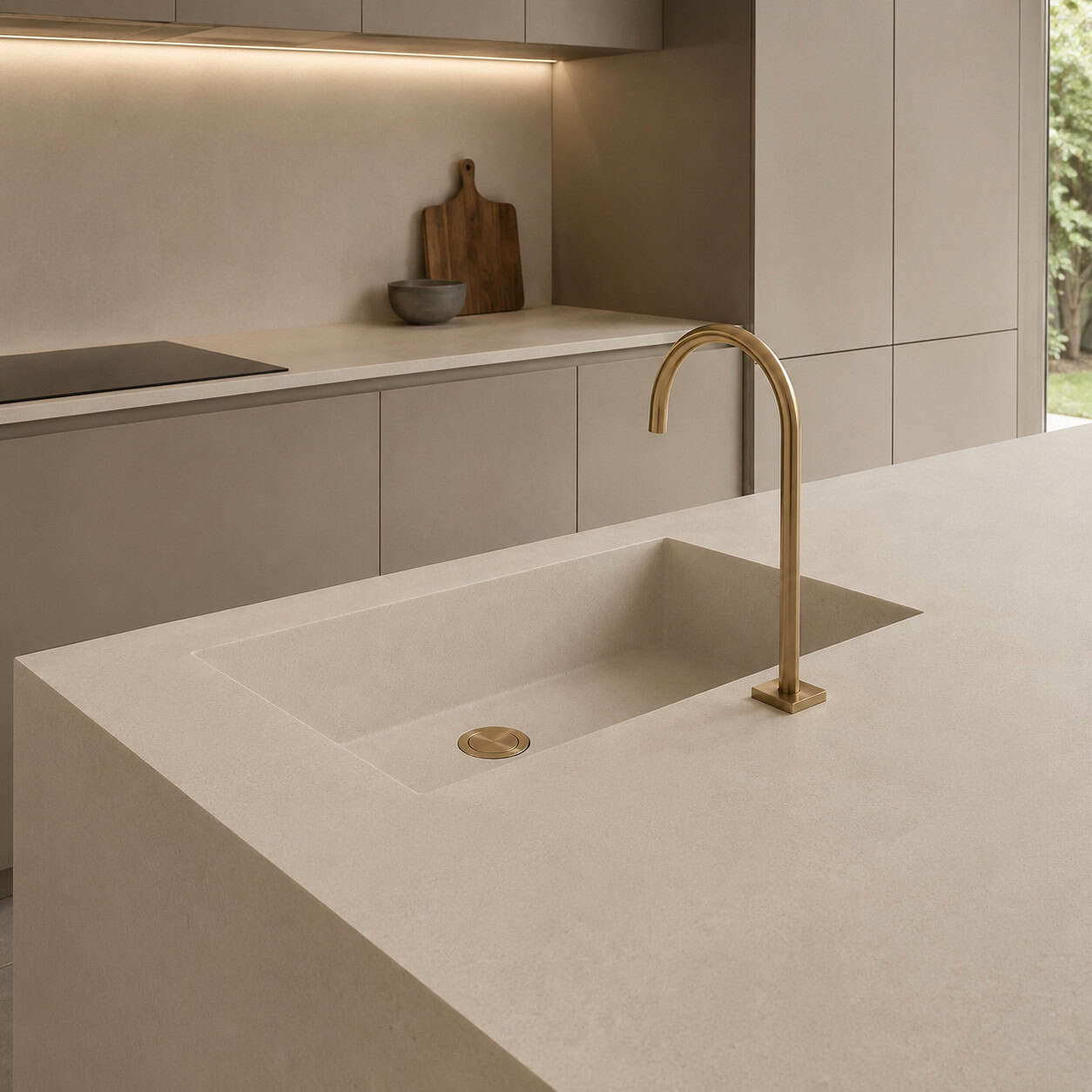
Sink and countertop molded from one continuous piece of quartz or solid surface. No rim, no seam, no visual break anywhere.
The most architectural look on this list.
The counter appears to dip down and become the basin, like the whole surface was poured as one object. Nothing interrupts the eye. It’s the monolithic, gallery-clean effect designers reach for in high-end contemporary kitchens.
Expect a 30 to 50 percent premium over a standard undermount. And if the basin cracks, you’re often replacing the counter too.
5. Workstation Sink
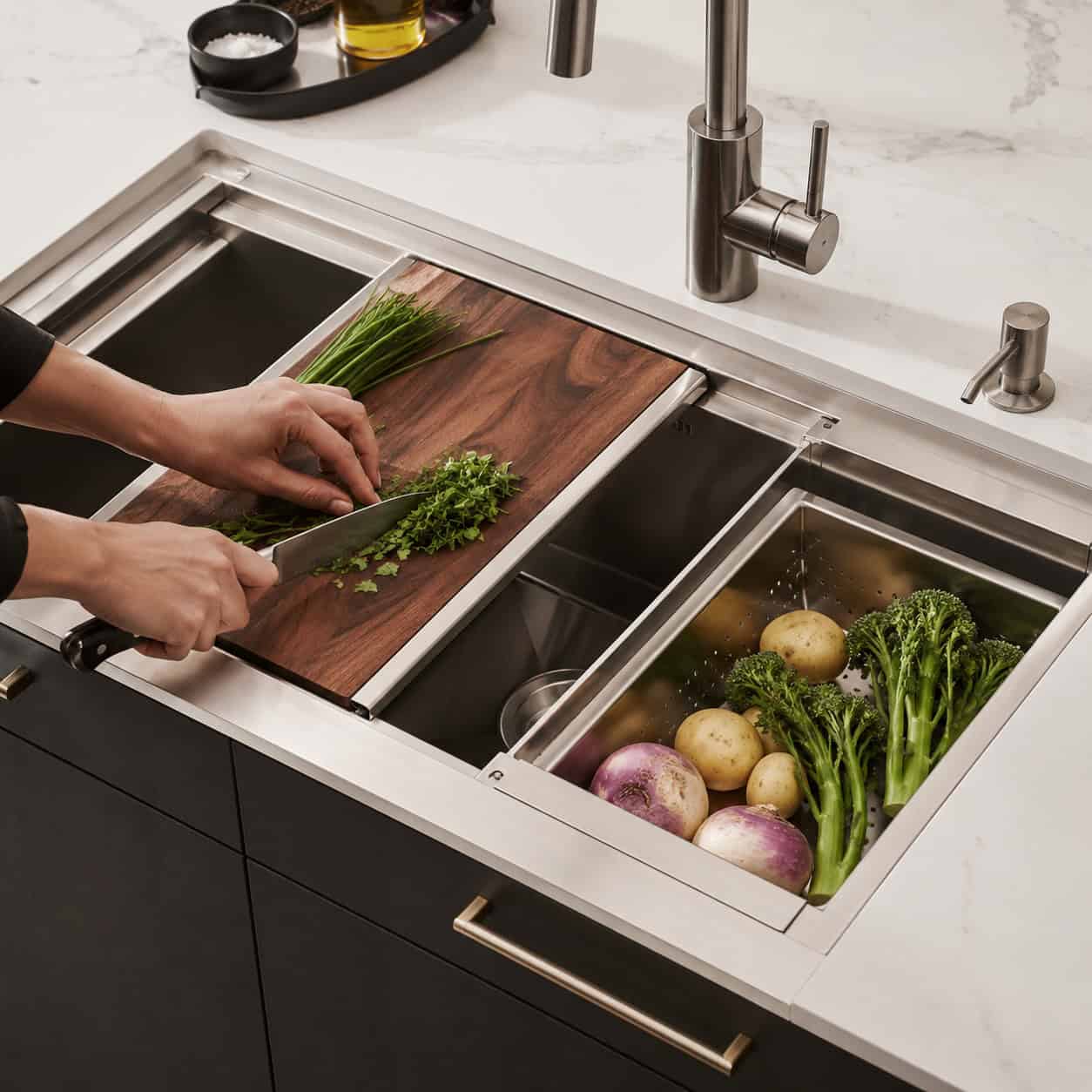
Built-in ledges run along the rim so cutting boards, colanders, and drying racks slide across the basin on tracks. The sink becomes a full prep station.
Chop over the bowl, sweep scraps straight down, rinse, repeat.
It signals a serious cook’s kitchen the moment someone sees the accessories stacked across it. And in a small layout, that sliding board doubles your usable counter without adding an inch.
One of the strongest sink trends going right now. If you actually cook, it earns its keep daily.
6. Corner Sink
Tucked into a corner that would otherwise sit dead. Often a V-shaped “butterfly” dual basin angled into the cabinet joint.
It frees up the prime straight counter runs for prep.
Awkward galley and L-shaped kitchens are where it shines — that unused corner becomes the wash zone, and suddenly the good counter is open. It genuinely reshapes how the whole layout reads and moves.
Reaching into a deep corner takes a stretch, and the cabinet below loses easy access. A fair trade in a tight room.
7. Single-Bowl Sink
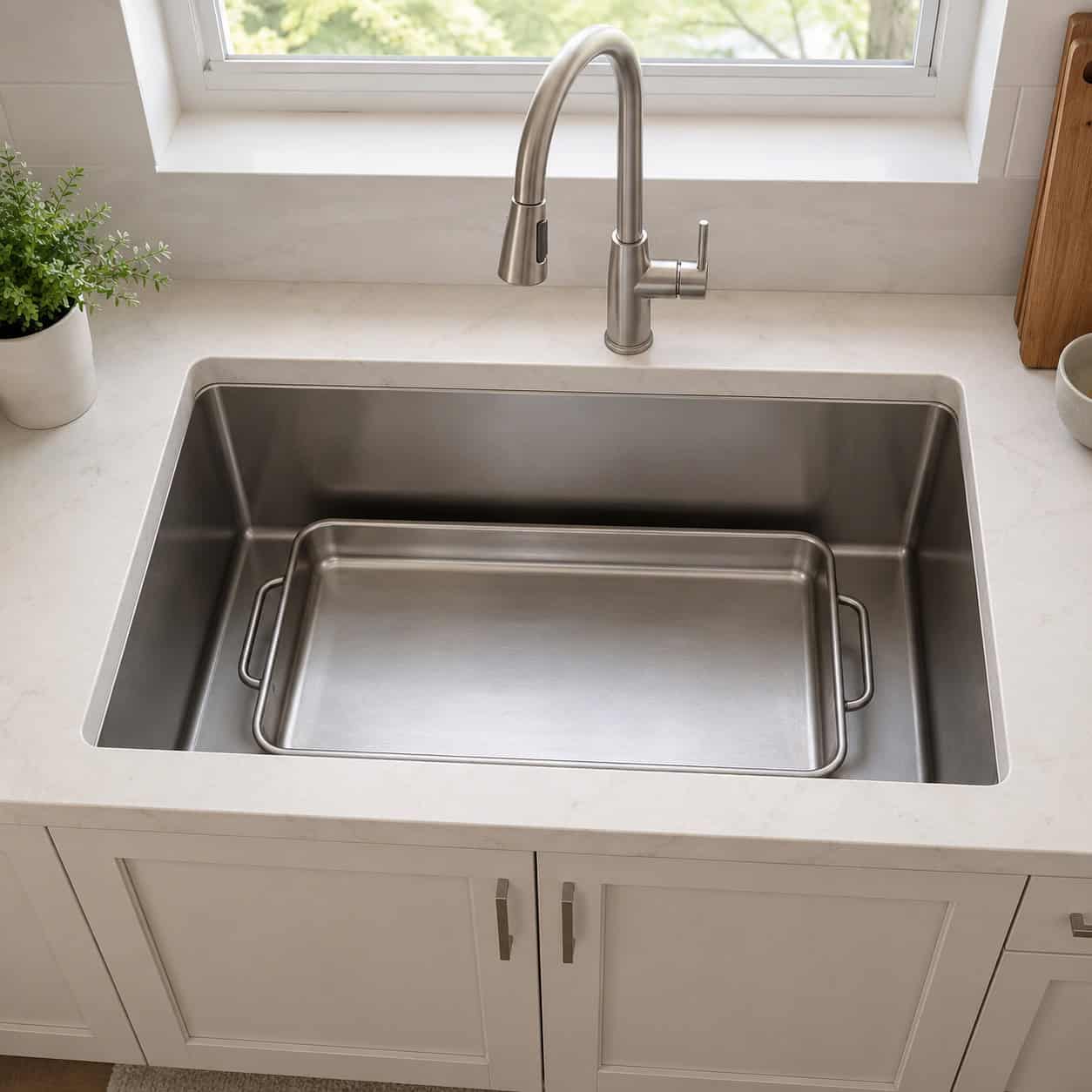
One large uninterrupted basin. No divider, no compromise on width.
Clean lines. A full roasting pan lies flat.
This is increasingly the modern default, edging out the divided look that ruled kitchens for decades. Baking sheets, stockpots, oven racks — everything fits without wedging around a wall in the middle.
You lose the built-in second zone for rinsing. Most people gladly trade it for the room.
8. Double-Bowl Sink
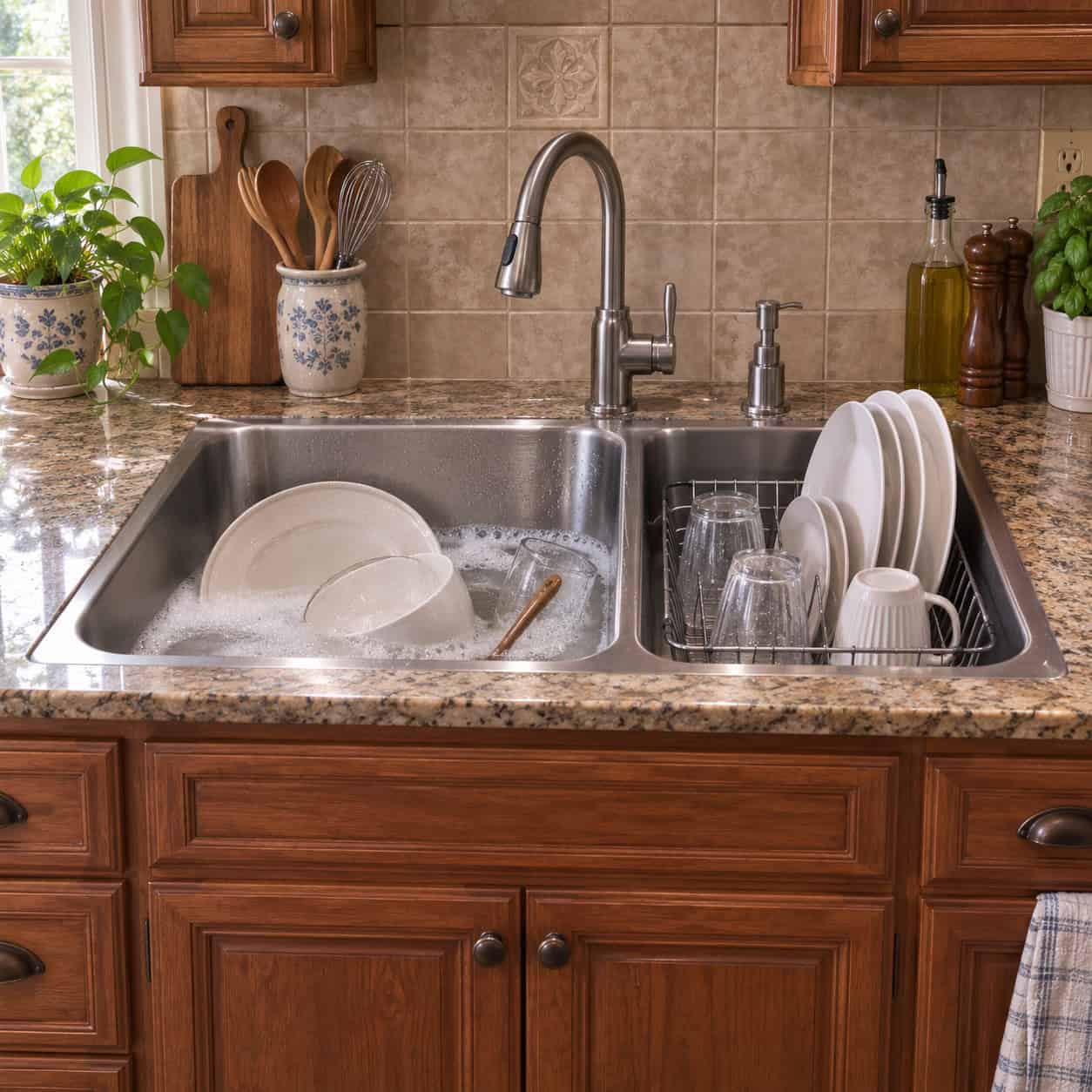
Two basins split down the middle, either 50/50 or a 60/40 with one bowl bigger. The classic wash-in-one, rinse-in-the-other setup.
It reads practical and traditional.
The split lets you soak dishes on one side while keeping the other clear for a colander or dish rack. Households that hand-wash a lot still swear by it, and The Sink Boutique breaks down where each layout wins.
It wants a wide cabinet, usually 36 to 42 inches, which itself changes the whole counter run around it. And neither bowl fits an oversized pan.
9. Low-Divide Double Bowl
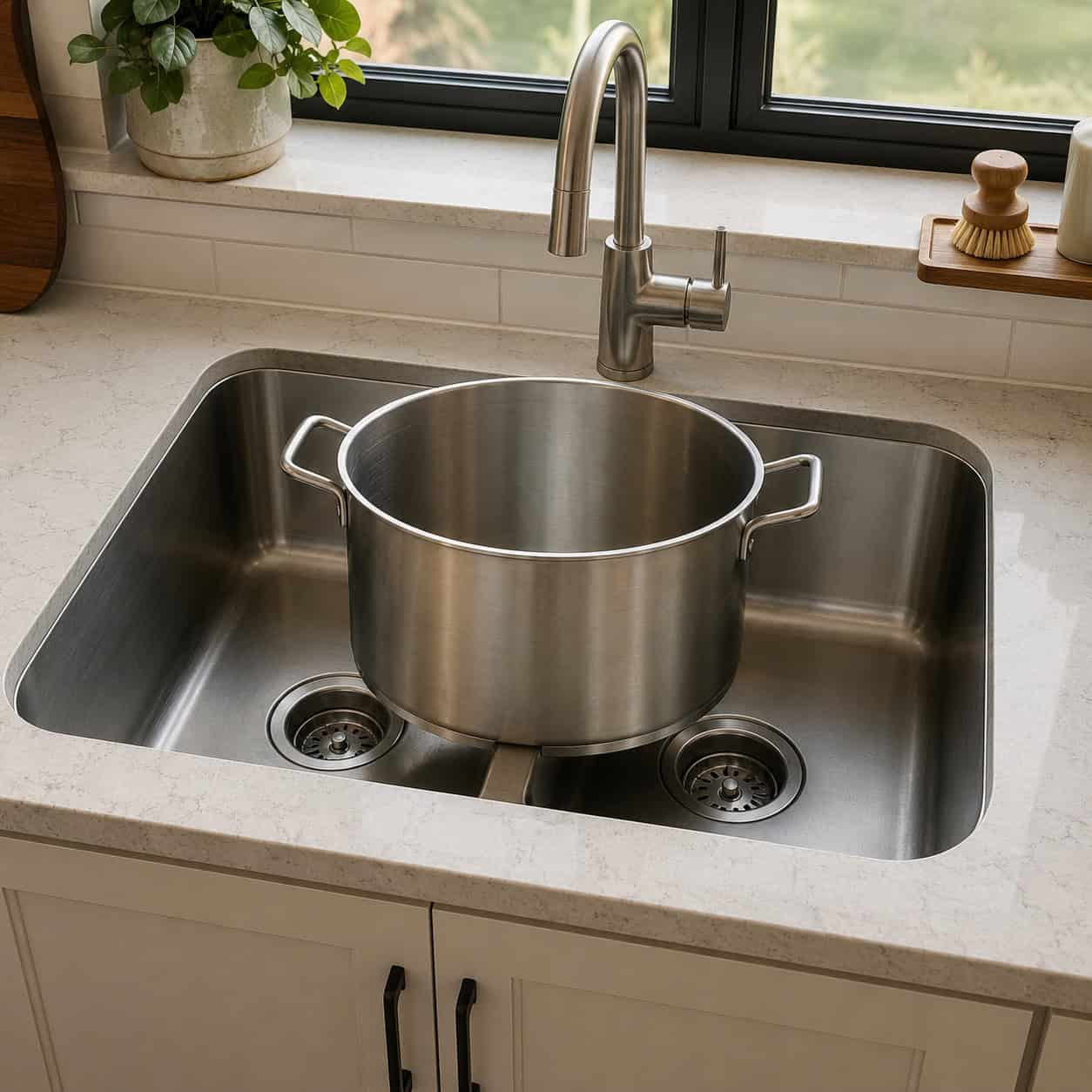
A short center divider — roughly half the height of a normal one — gives two zones up top but a nearly open basin below. The hybrid answer.
Fill a stockpot across both sides. Still keep a rinse zone.
Visually it reads far cleaner than a full-height wall down the middle, since your eye slides over the low divider instead of stopping at it. You get the split-task function without the boxed-in look.
Best of both, honestly. The sweet spot for people who can’t decide between one bowl and two.
10. Drainboard Sink
A ribbed drying board built right into the sink, extending across the counter beside the basin. Water runs off dishes and channels straight back down the drain.
The silhouette is unmistakably vintage.
It echoes 1920s American farmhouse kitchens, when the drainboard was standard equipment before dishwashers existed. Drop one in and it anchors an entire retro scheme — nothing else says “old kitchen, done on purpose” quite like it.
The board eats counter space. In a period restoration, that’s exactly what you want.
11. Fireclay Sink
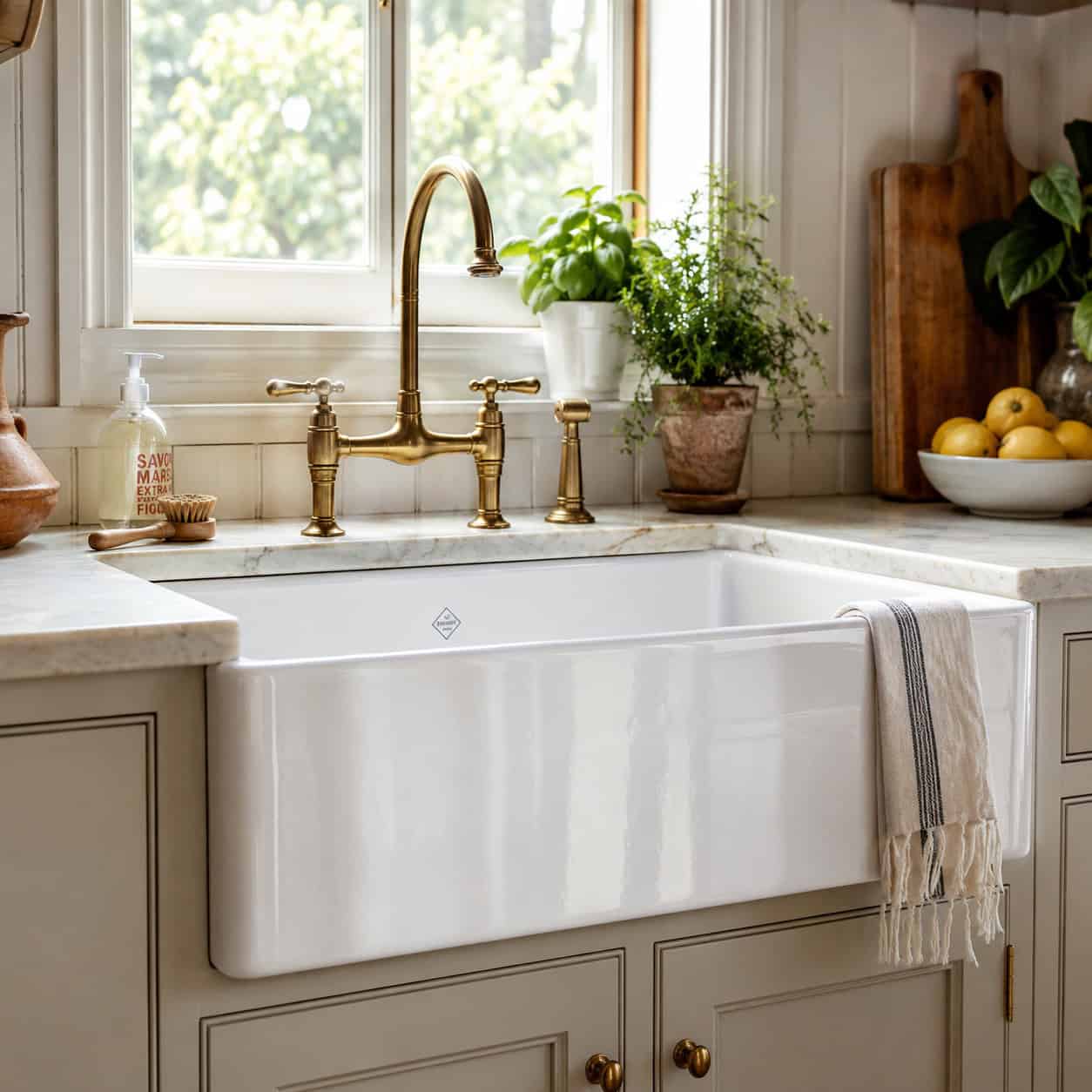
Clay and glaze fired together above 2,000 degrees until they fuse into one glossy, non-porous surface. The bright white ceramic that defines the classic farmhouse sink.
It won’t rust. It resists chipping and staining.
That deep gloss holds up under decades of use, and the white bounces light around a room the way stainless never will. It’s the timeless choice when you want the apron look to feel genuinely old-world.
Heavy, though — the cabinet has to be ready for it. And a cast-iron pan dropped from height can still crack the glaze.
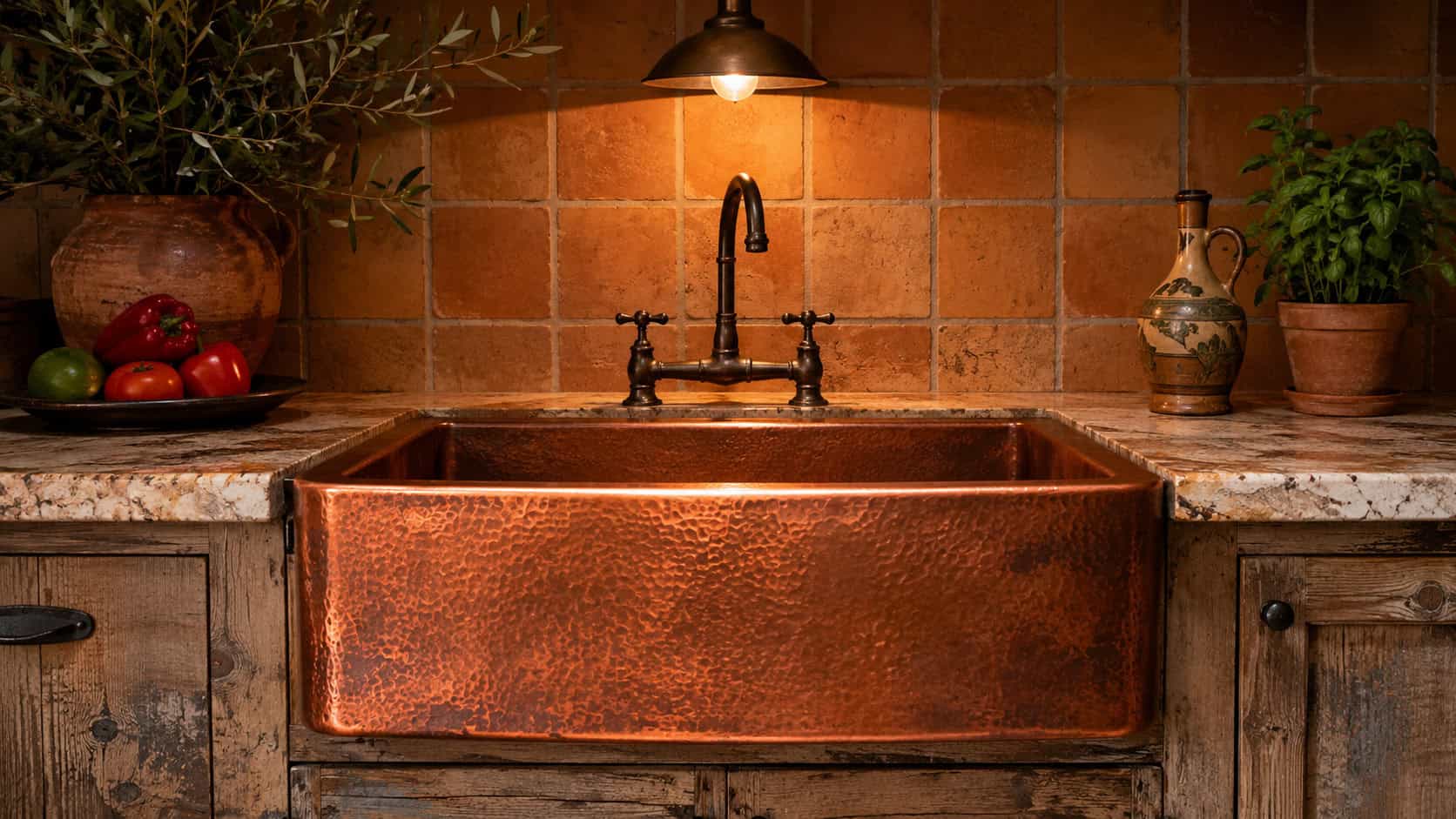
12. Copper Sink
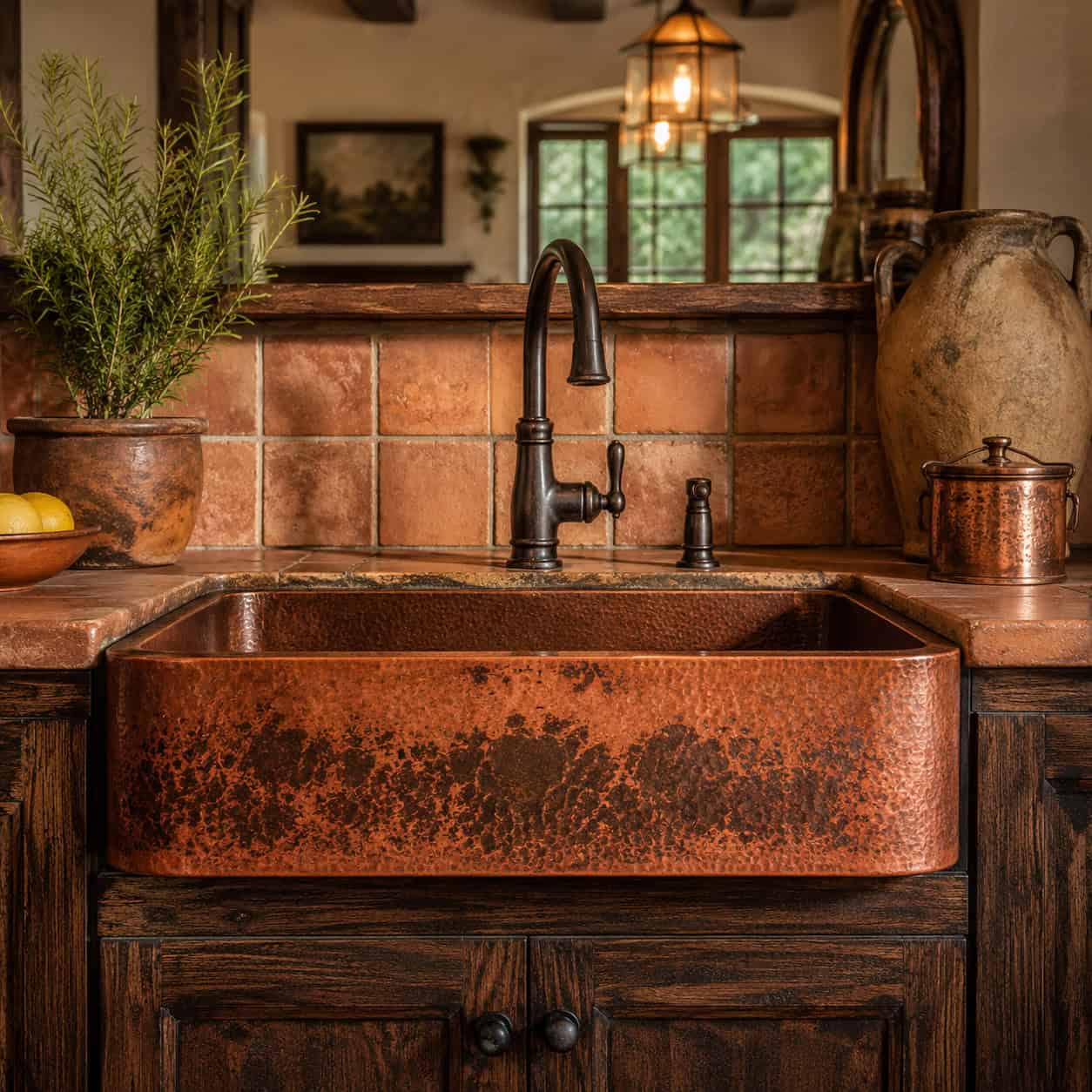
Warm reddish metal that never stays the same twice. Copper develops a living patina, darkening and shifting with every day of use.
It’s also naturally antimicrobial — the metal kills bacteria on contact.
No two copper sinks age alike, so yours becomes a genuine one-of-a-kind focal point. In a rustic or Mediterranean kitchen it reads like a hand-forged heirloom, glowing under warm light.
Hard water and acidic foods speed up the color changes, which some people love and some fight. Lean into the patina and it only gets better.
13. Enameled Cast Iron Sink
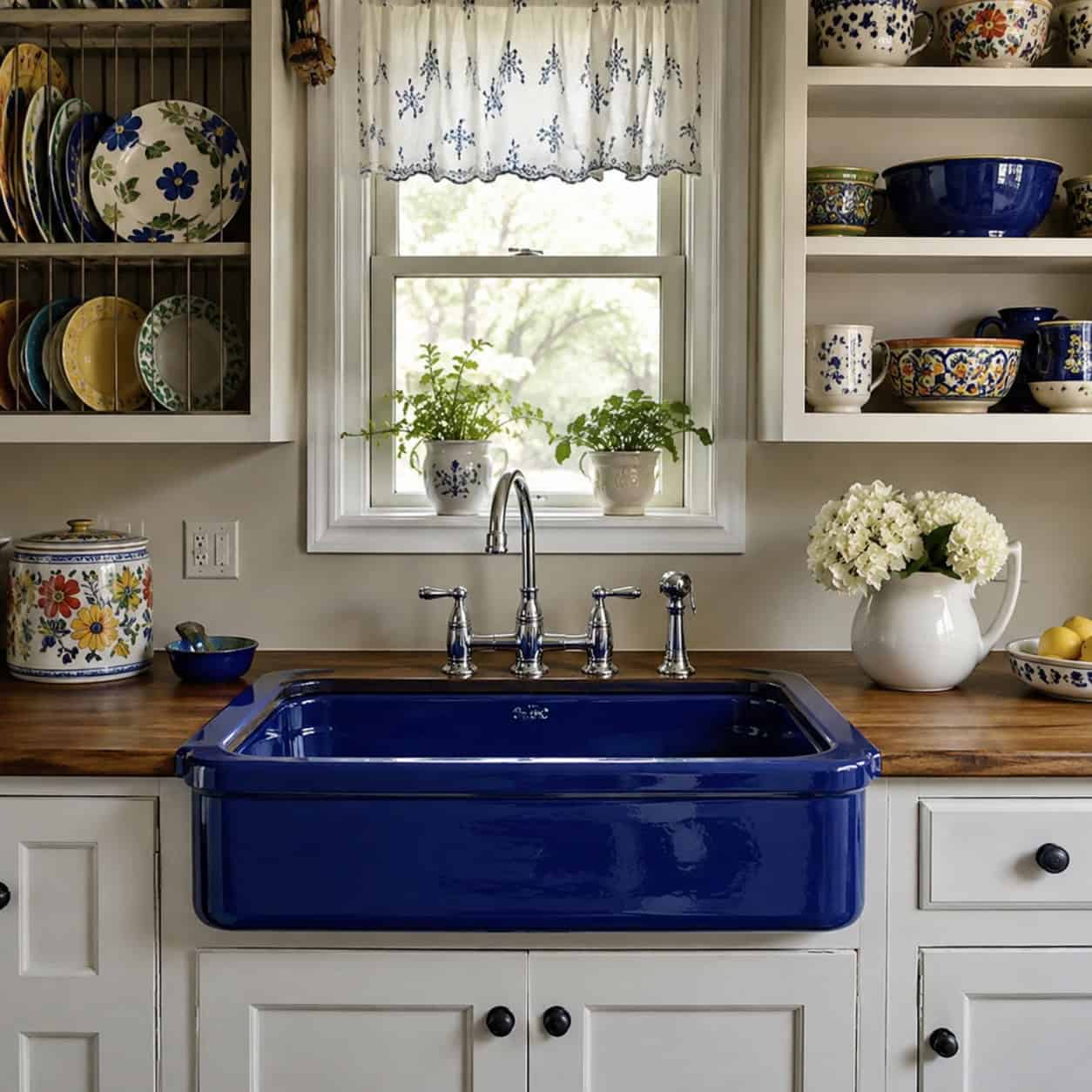
Solid iron coated in a thick layer of glossy enamel. The material behind those bold jewel-toned and colored basins.
This is a real nod to mid-century retro kitchens.
The enamel comes in colors stainless can’t touch — cobalt, red, sage, matte black — and it’s incredibly durable, often outlasting the kitchen around it. A colored cast-iron sink turns cleanup into a design statement.
Serious weight. And a dropped pot can chip the enamel down to the dark iron beneath.
14. Granite Composite Sink
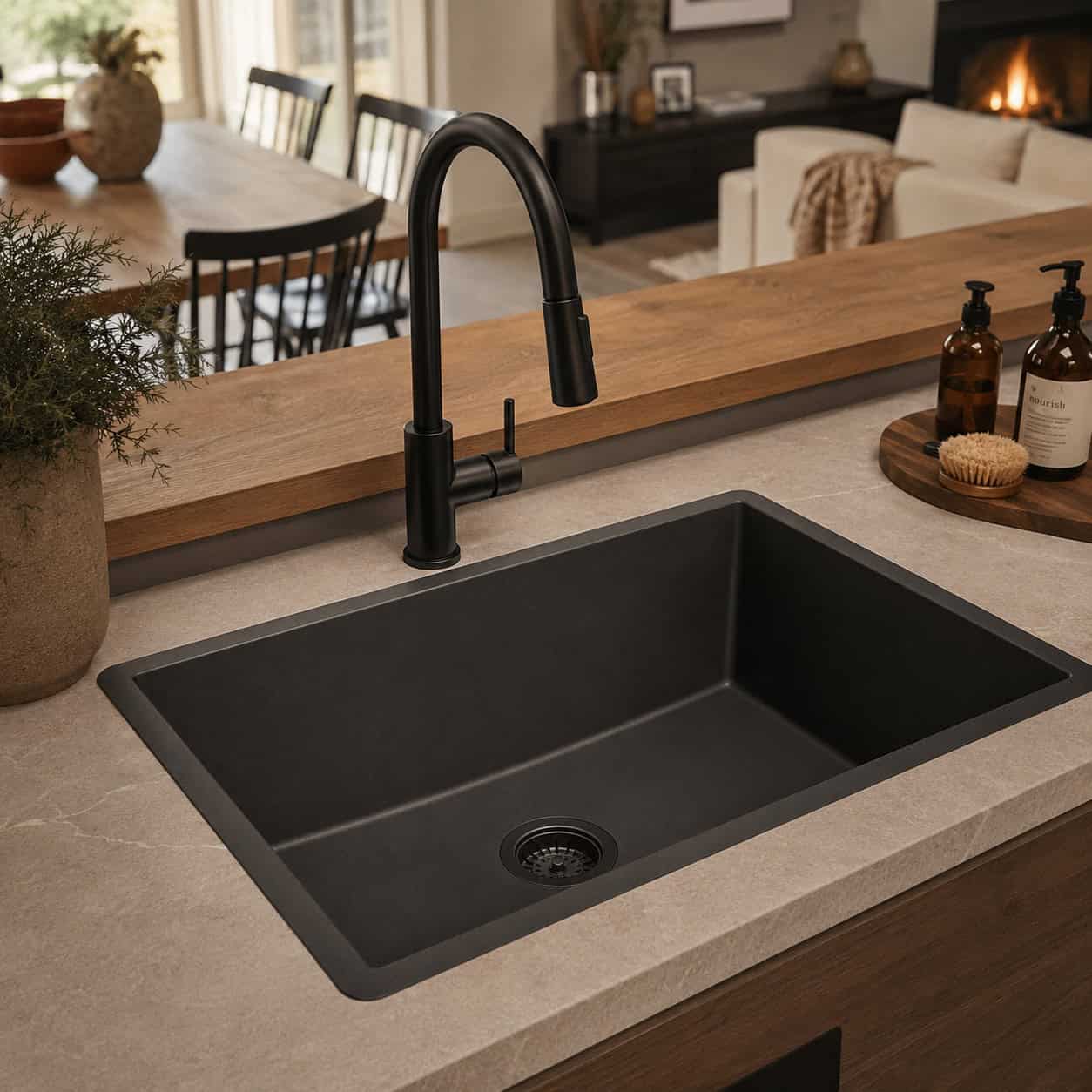
Crushed granite blended with resin, pressed into a dense matte basin. The contemporary answer to shiny metal.
Water spots vanish against the finish. Scratches barely show.
It comes in on-trend earth tones — charcoal, taupe, sand — that ground a modern kitchen instead of reflecting it. Busy family kitchens love how forgiving it is, since it hides the daily mess between wipe-downs.
Very hard, very heat-resistant, low fuss. One of the easiest materials to live with day to day.
15. Stainless Steel Sink
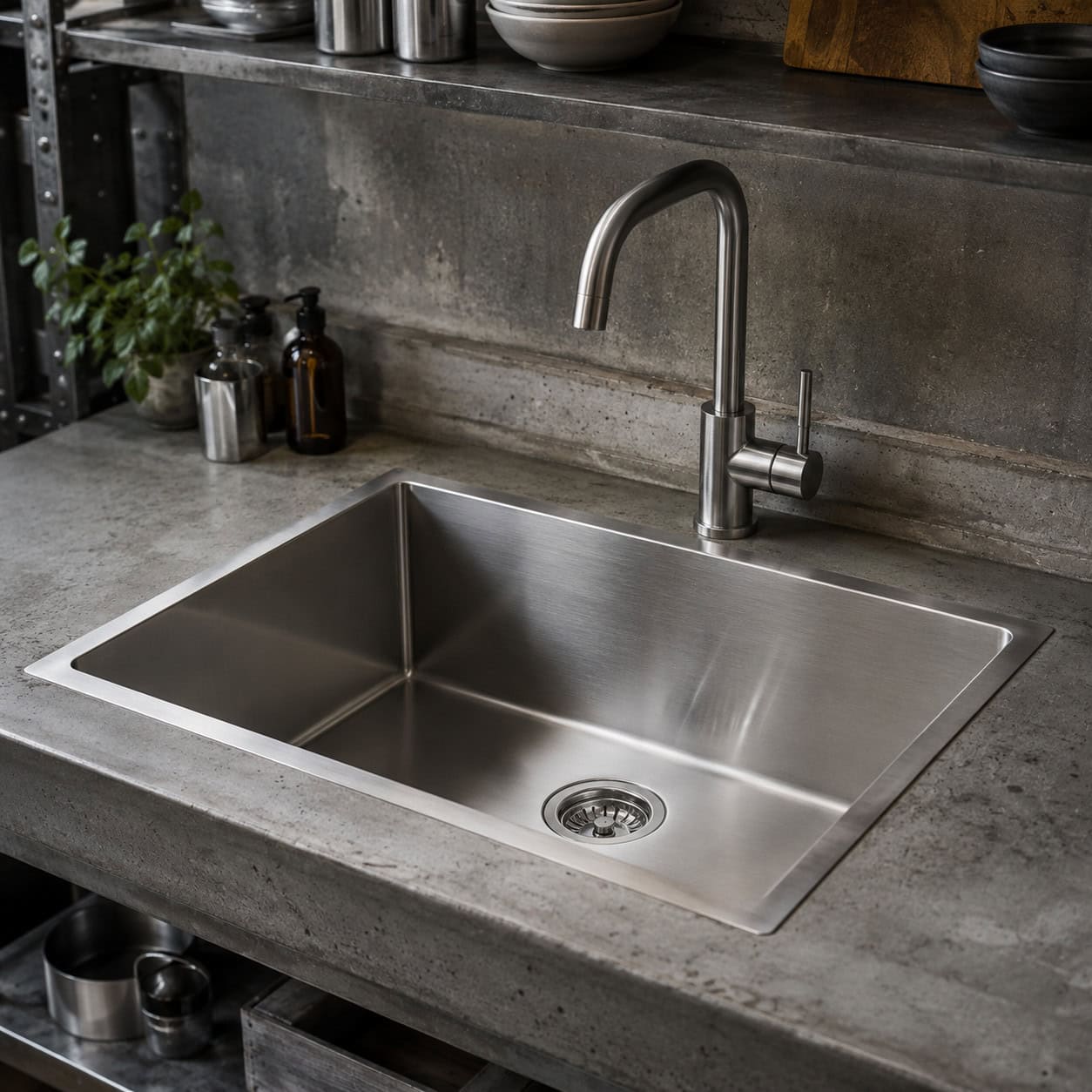
The versatile workhorse. Familiar, but far from boring when it’s done right.
Gauge is everything here. Thicker 16-gauge steel resists denting and dampens the clang of dishes, while thin builder-grade steel oil-cans and rings, and Elkay explains why the lower gauge number actually means heavier metal.
A thick satin or brushed finish reads premium and slots into anything from an industrial loft to a pro-style kitchen. Fingerprints show less than on a mirror polish.
It fits every budget and every style. That’s why it’s still the most common sink in America.
16. Concrete Sink
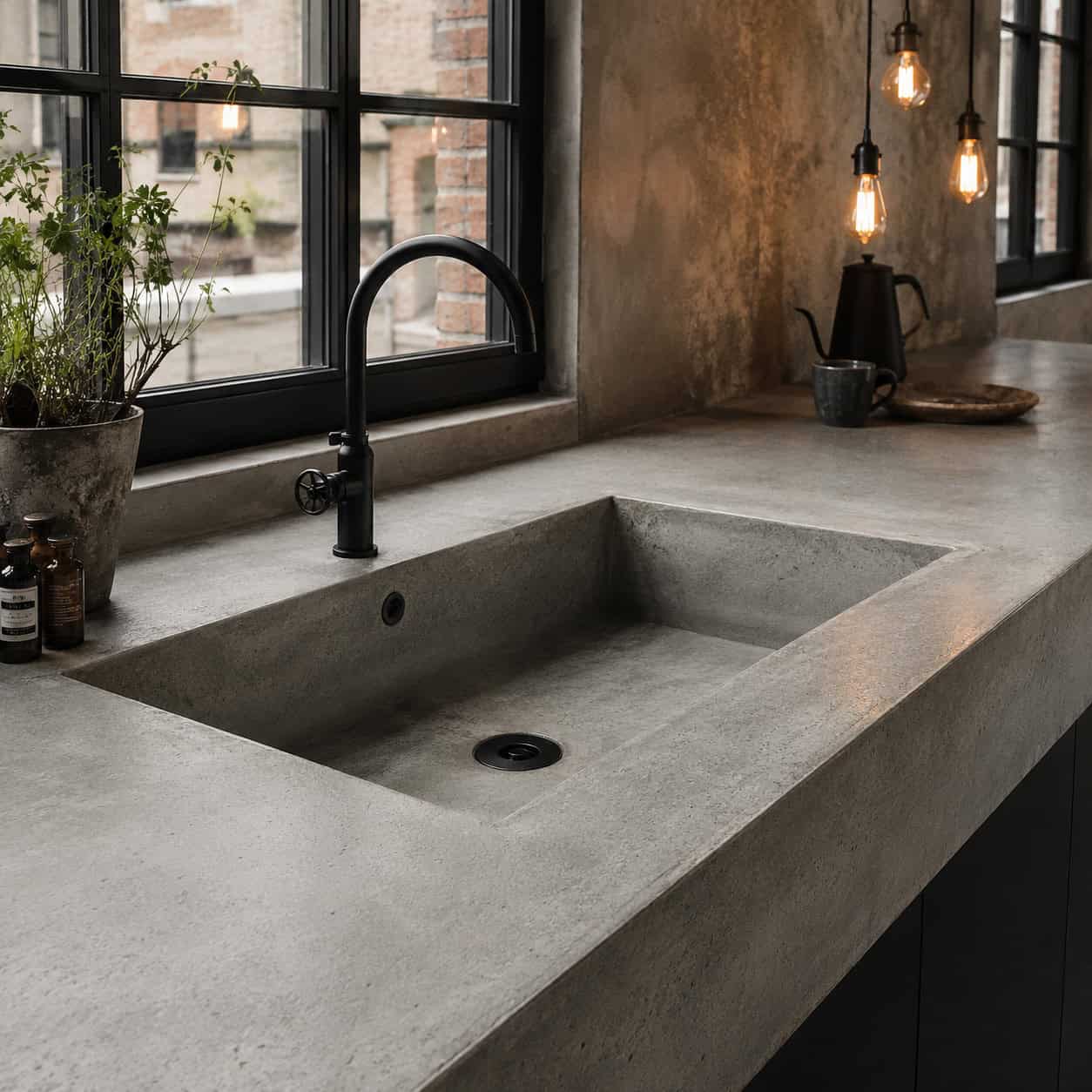
Poured to any shape you can build a mold for. Raw, heavy, and unapologetically architectural.
This is the ultimate industrial statement.
Cast integrated with a concrete counter, the sink and surface become one continuous slab of gray — the kind of monolithic look that stops people in a modern loft. Every piece is custom, so no two are identical.
It has to be sealed to fight stains, and it’ll want resealing over the years. Concrete rewards owners who treat it like a living material.
17. Natural Stone Sink
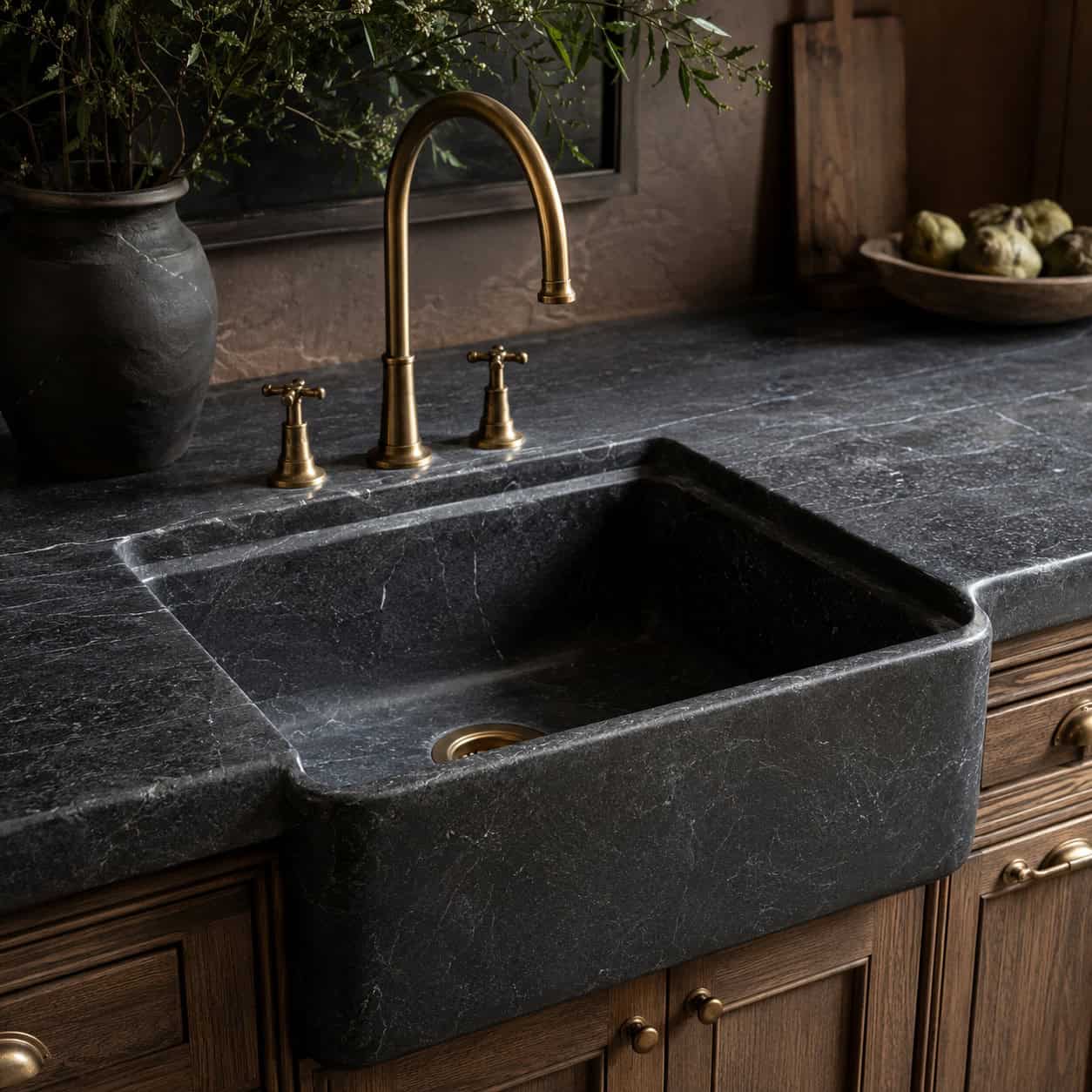
Carved from a single block of granite, marble, or soapstone. A true statement piece.
Match it to the same stone as your counter and the effect is quarried, seamless, expensive.
Soapstone in particular ages into a soft dark patina that suits a forever-home kitchen, warming as it wears. This is the choice for people building the last kitchen they’ll ever own.
Extremely heavy, and most stone is porous enough to need sealing. Marble stains if you look at it wrong. Worth it to the right owner.
18. Matte Black Sink
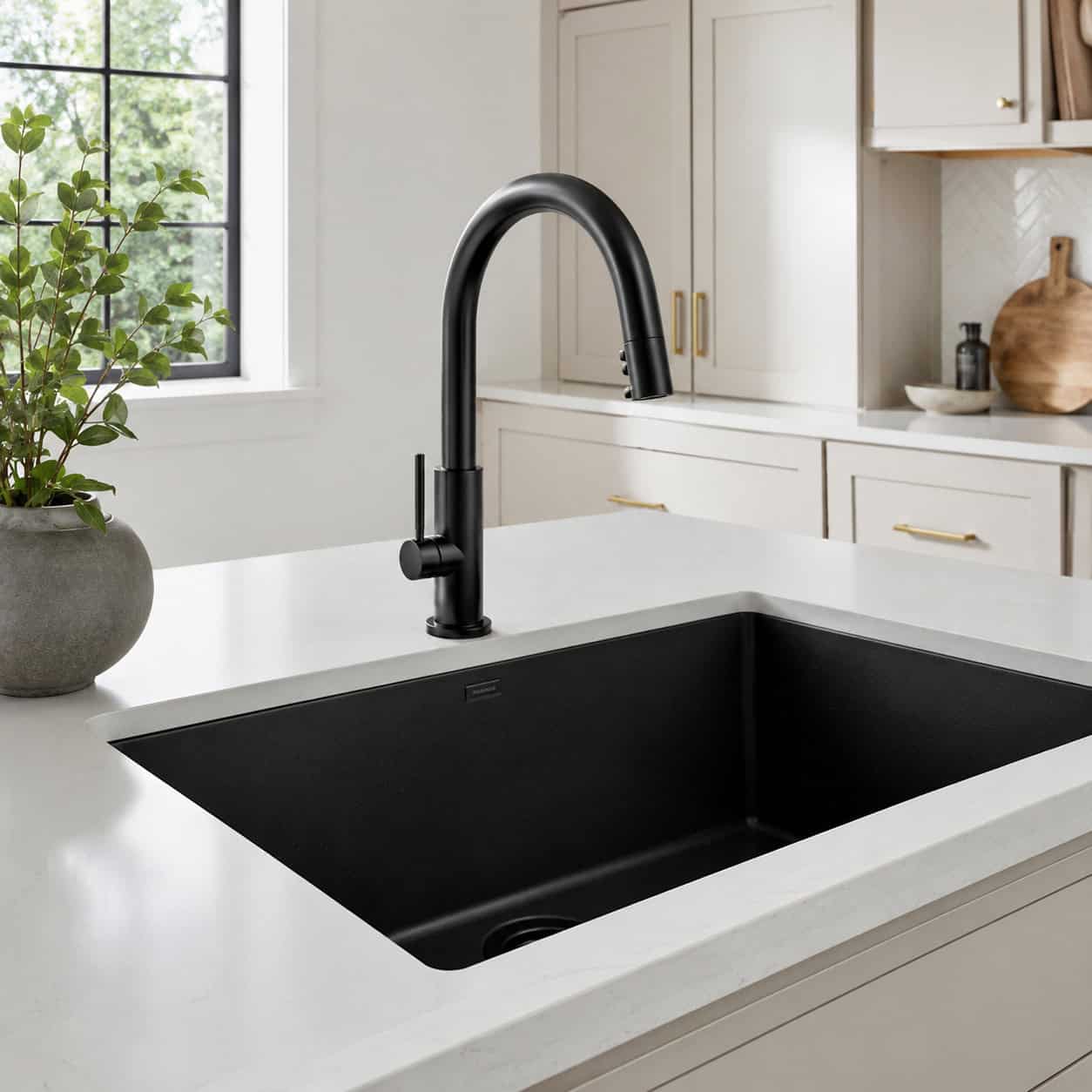
A black composite or gunmetal basin dropped into a light kitchen. Instant contrast.
The dark bowl anchors the whole room.
Against white counters and pale cabinets, a matte black sink reads as a deliberate design decision rather than a fixture you settled for. It’s one of the fastest ways to make the sink itself feel intentional.
Water spots and mineral film can show on some finishes, so it wants a quick wipe. The drama is worth the wipe.
19. Colored Composite Sink
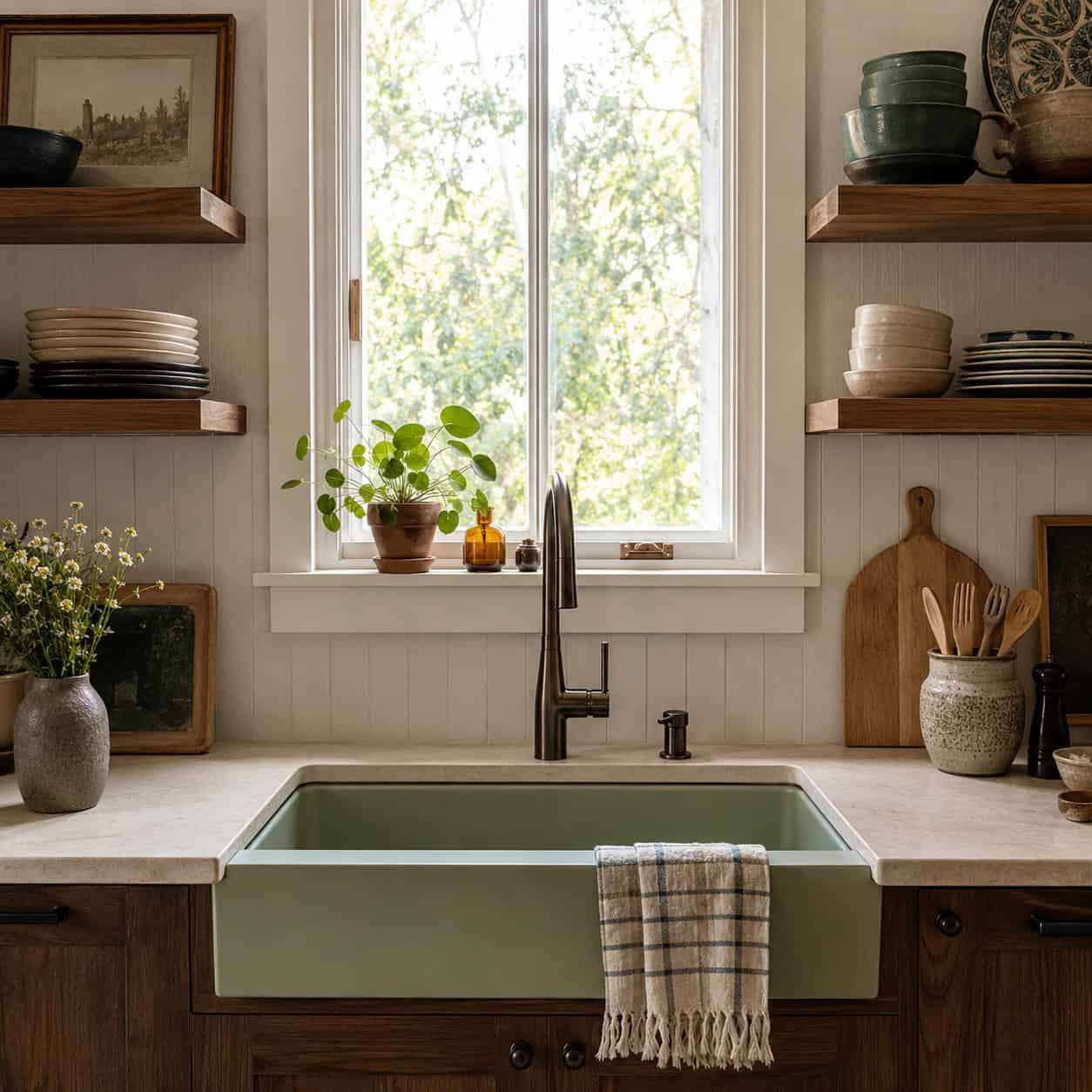
Soft, nature-inspired composite tones — sage, blush, sand, muted blue. A gentle color accent rather than a shout.
It injects personality without the full commitment.
Where a colored cast-iron basin makes a bold retro statement, a colored composite whispers instead. It nudges the palette of an eclectic kitchen without dominating it, and it keeps all the low-maintenance perks of granite composite.
A low-risk way to break out of the white-and-steel rut. Easy to love, easy to live with.
20. Metallic Finish Sink (Gold, Gunmetal, Brass)
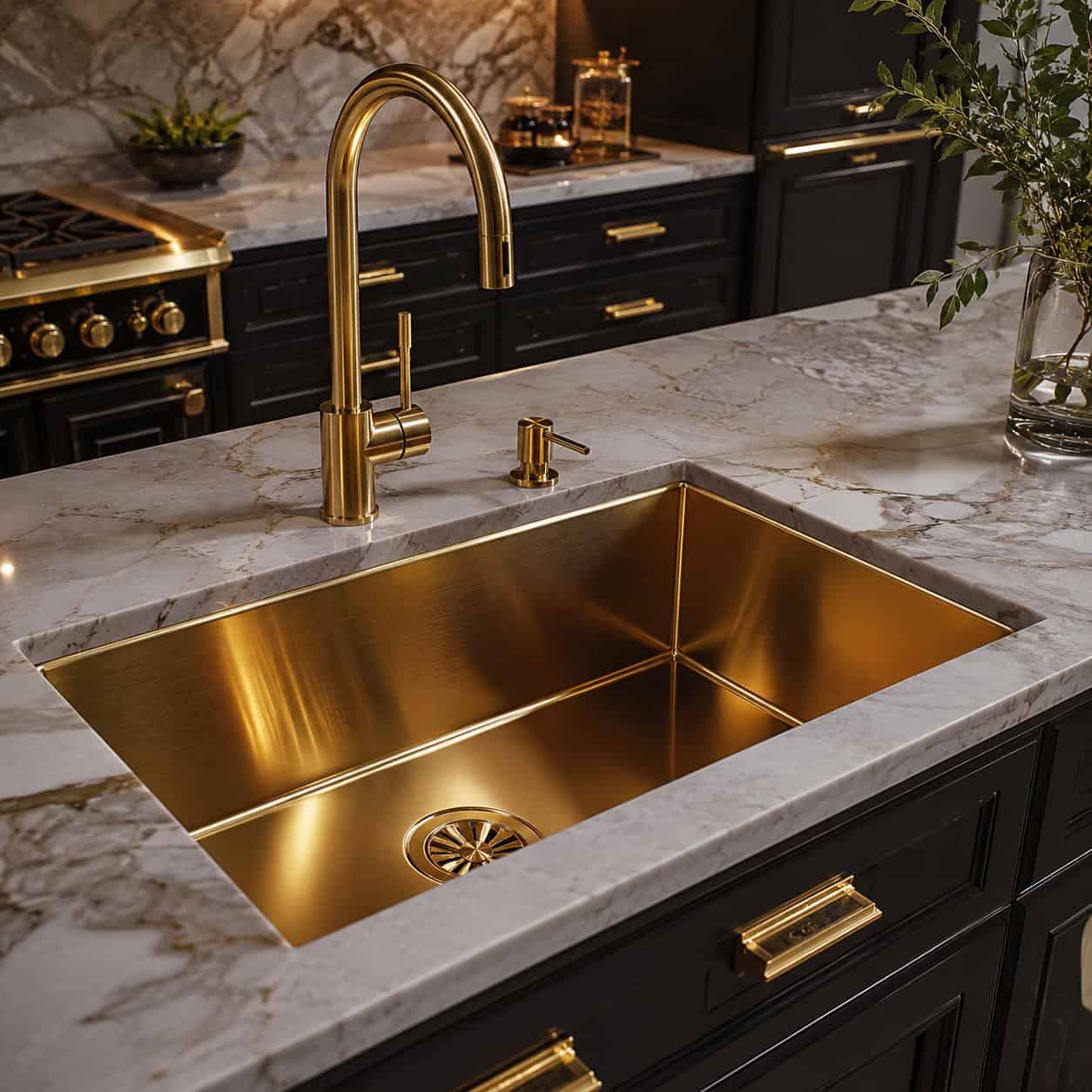
Brushed gold, warm brass, moody gunmetal. The sink as jewelry.
These finishes turn a basin into the shiniest object in the room.
Coordinate one with matching faucet and cabinet hardware and the kitchen reads instantly luxe, like a boutique hotel bar. It’s a fast-rising trend for a reason — few upgrades feel this glamorous for the footprint.
Quality matters enormously, since a cheap coating wears at the drain and around the faucet base. Buy a good one and it holds.
21. Zero-Radius Sink
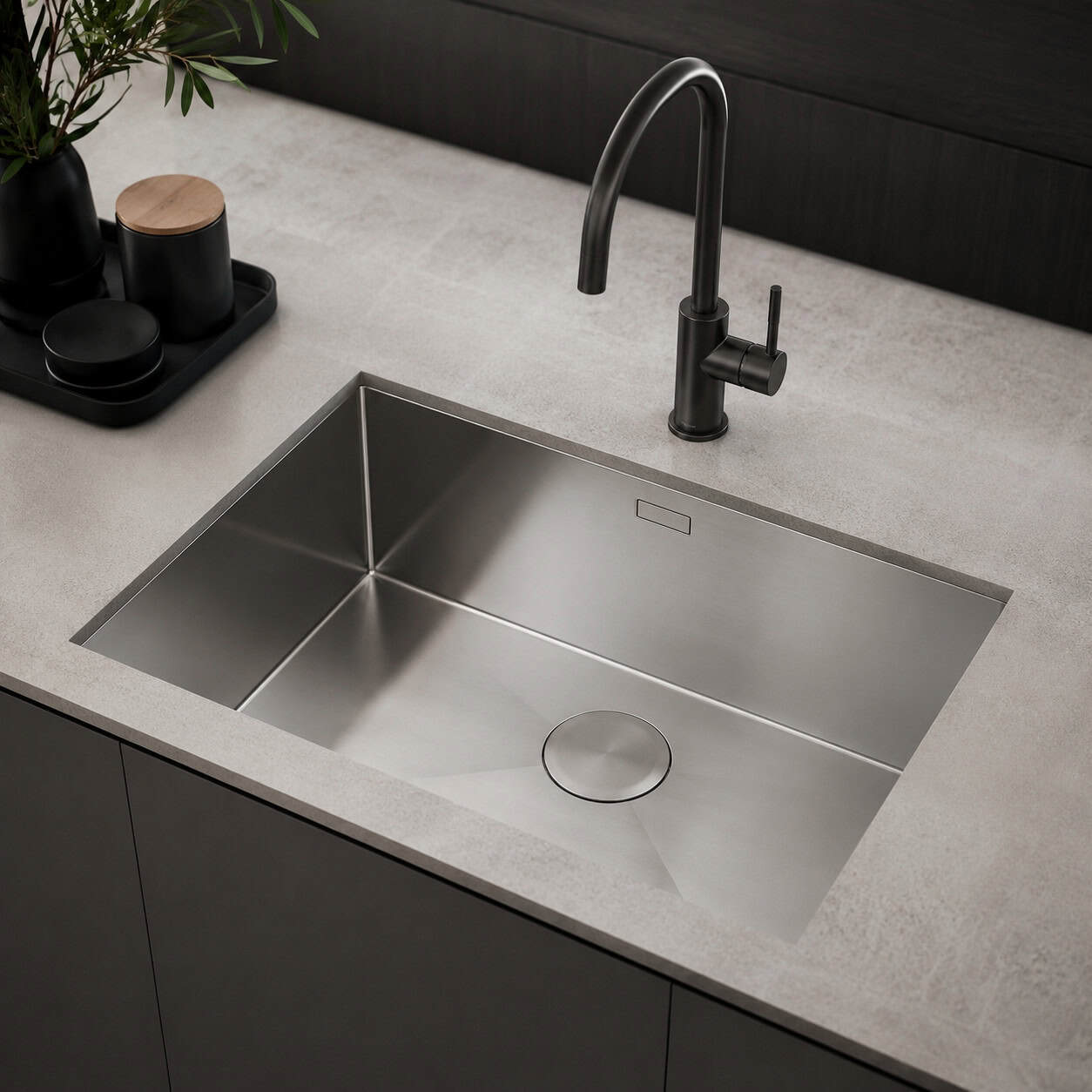
Sharp 90-degree interior corners instead of soft curves. Crisp, geometric, almost commercial.
The square corners maximize usable basin space.
That right-angle profile signals modern design the instant you look in the bowl — it’s the sink you see in restaurant kitchens and minimalist showrooms. Clean lines, no wasted curve.
Those tight corners take a little more effort to scrub than a rounded basin. The look pays for the extra swipe.
22. Bar / Prep Sink
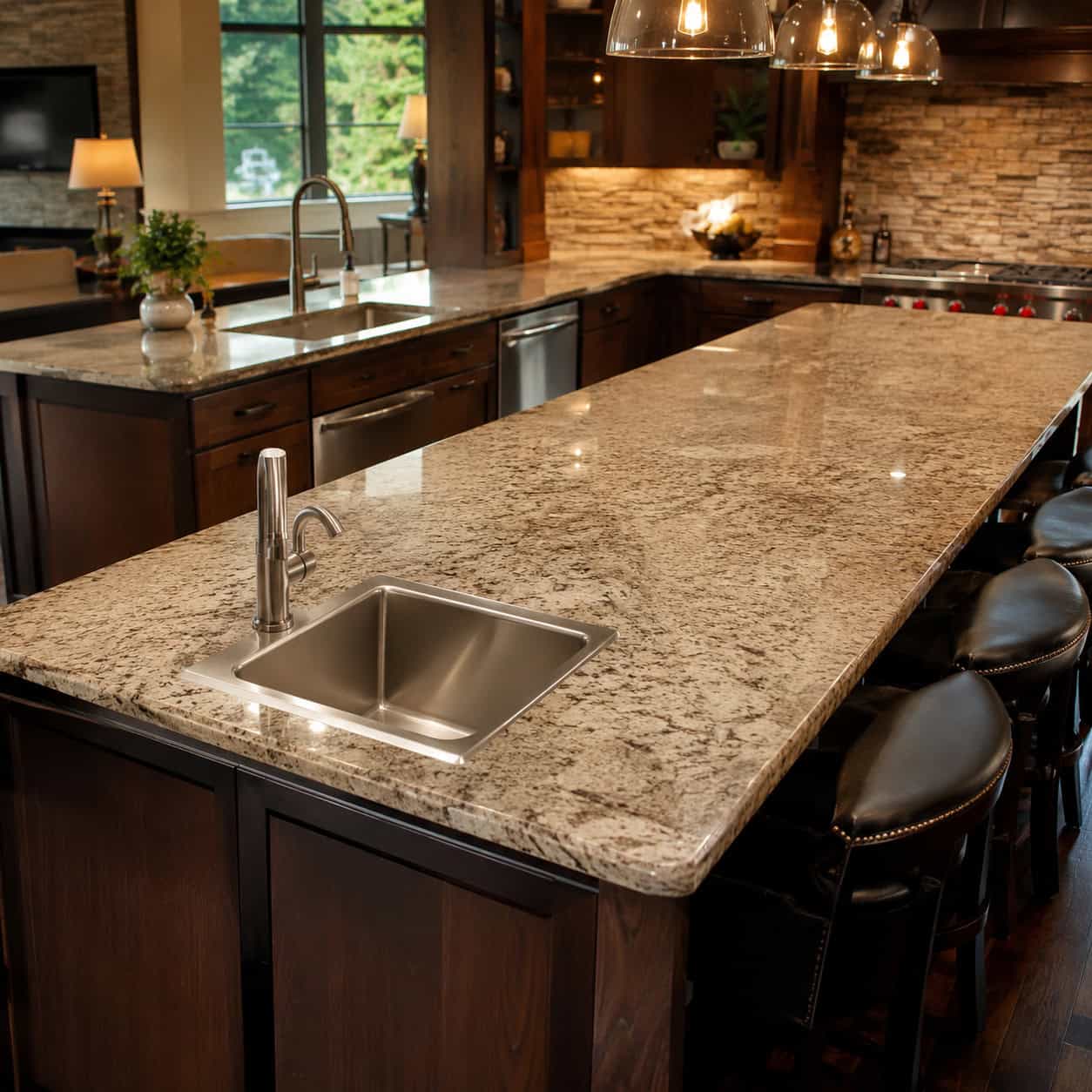
A small second sink on an island or bar. It changes how the entire layout feels.
Suddenly there’s a dedicated prep zone away from the main cleanup sink.
Two cooks can work at once — one washing dishes, one rinsing produce — without colliding. And a bar sink signals an entertainer’s kitchen, a room built for people milling around while food happens.
It needs its own plumbing run and eats a chunk of island cabinet. In a big kitchen, it transforms the flow. The National Kitchen & Bath Association guidelines cover the clearances a second sink needs so the traffic actually works.
23. Fluted / Curved Apron Farmhouse Sink
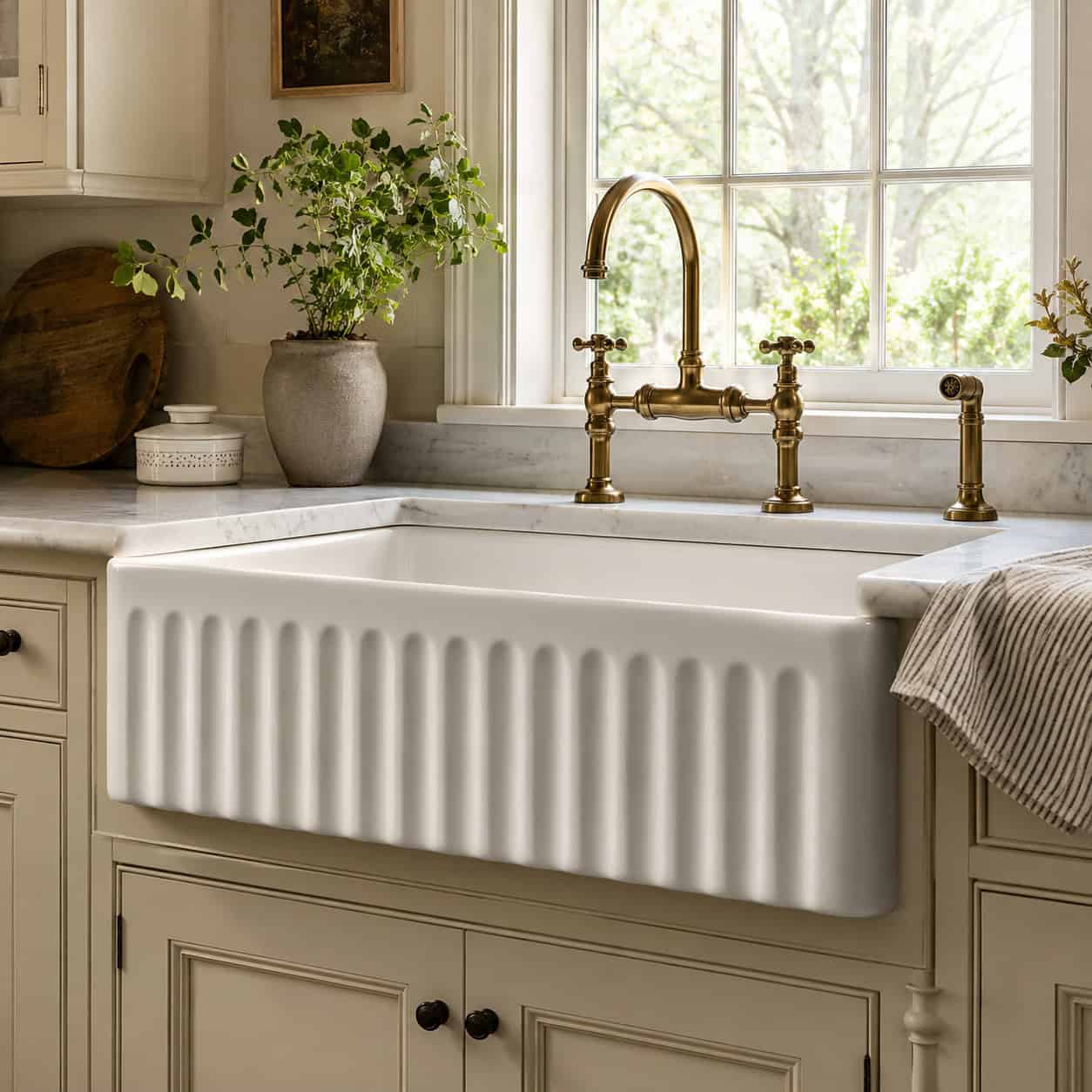
The apron front, but decorated. A ribbed fluted face or a gently arched curve instead of a flat panel.
It’s a third distinct farmhouse look.
Where a plain apron reads clean and a glossy fireclay reads bright, a fluted front adds French-country detail and shadow line. Those vertical ribs catch light and give the sink texture from across the room.
Best in a detailed traditional kitchen with millwork to match. It’s the farmhouse sink dressed up for company.
24. Retrofit Short-Apron Farmhouse Sink
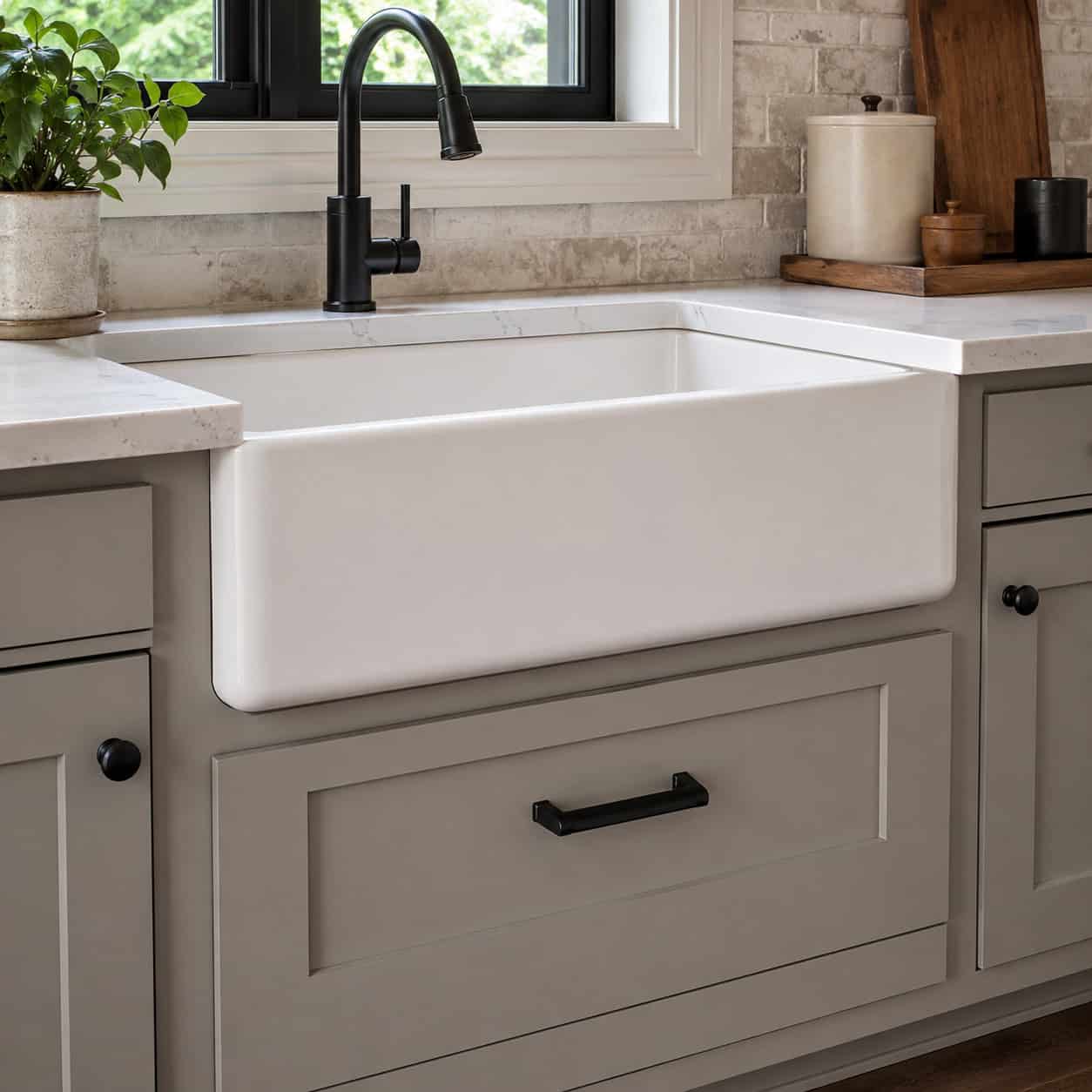
The farmhouse look without gutting your cabinets. A shorter apron — often around 6.5 inches — that drops into a standard 36-inch base cabinet.
You keep the drawer below in most cases.
Instead of custom cabinetry to carry a tall apron, this shallow front tucks into what you already have with minimal modification. It’s the practical, install-focused path to the exposed-front look on a normal remodel budget.
The apron shows less than a full-depth farmhouse sink. But most people never notice, and the wallet does.
25. Dual-Tier Workstation Sink
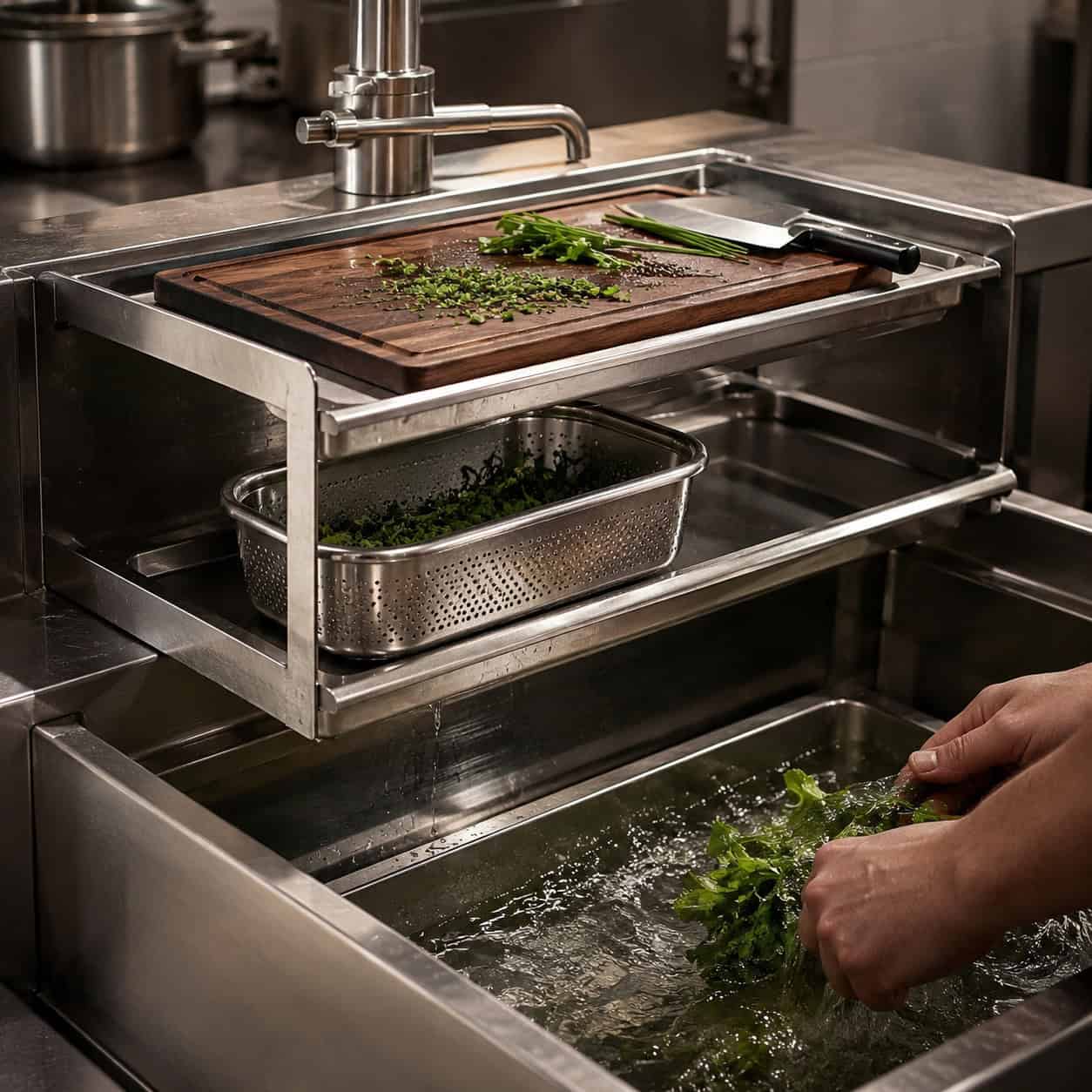
The workstation sink, leveled up. Two stacked ledges let accessories slide over each other for multi-level prep.
Cut on top, drain below, all at once.
A colander can sit on the lower track while a cutting board rides the upper one, so you’re prepping and draining in the same footprint. It’s the premium version for people who genuinely run a busy kitchen.
More expensive than a single-tier workstation, and it wants a deep basin to work. Serious cooks won’t blink at the price.
26. Waterfall-Edge Sink
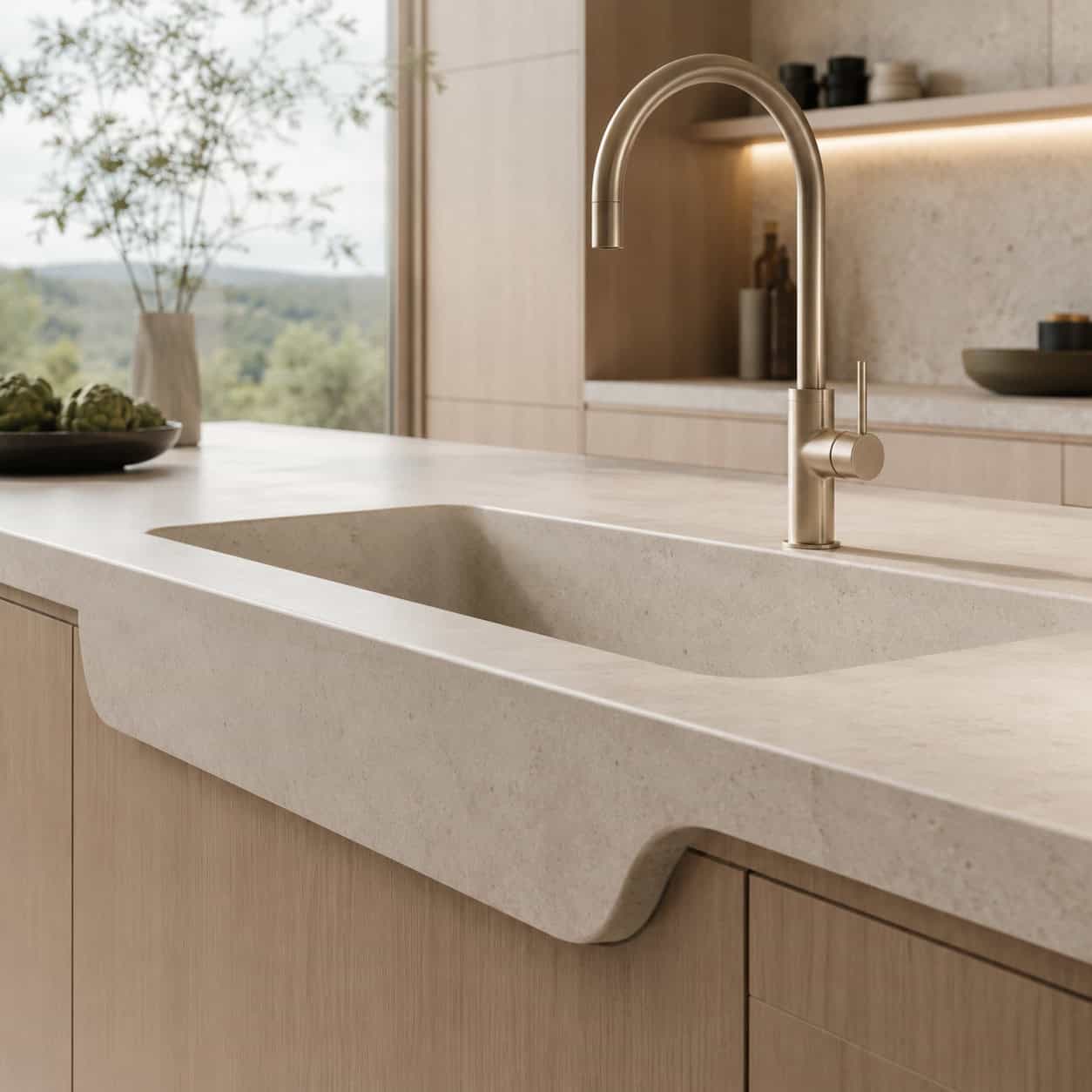
Smooth edges that flow into the surrounding counter instead of stopping at a rim. Everything reads as one fluid line.
The eye slides right off the basin edge.
Those rounded, unbroken lines emphasize easy cleaning and a spa-like calm — water and crumbs have nowhere to catch. It’s a niche modern detail, but a striking one in a sleek contemporary kitchen where every surface is meant to feel seamless. Moen’s own sink selection guide is a good starting point for matching an edge profile to your counter.
Pair it with an integrated or undermount install and the whole run feels poured, not assembled.
Pick the One That Sets the Tone
The sink isn’t a fixture you check off. It’s the piece your kitchen organizes itself around, and the one your hands return to more than any other.
Start with the look you want the room to have — rustic, minimalist, industrial, glam — and let that pick the mount, the material, and the finish. Bowl count comes last, not first.
Get it right and people feel the kitchen before they can say why.
Choose the sink, and the rest of the room falls in line behind it.