
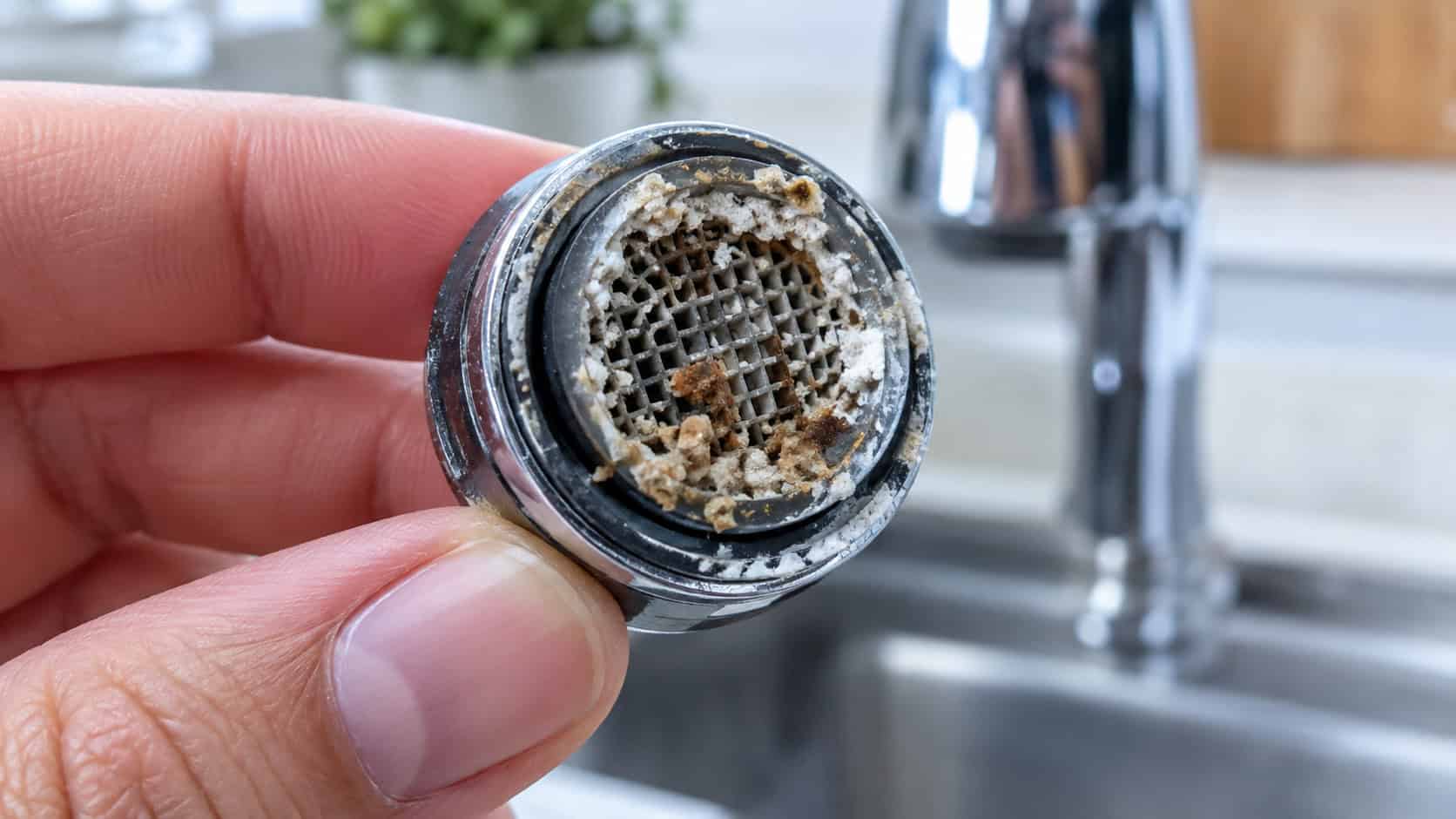
Most faucet aerators should be replaced every 1 to 2 years, and cleaned every 3 to 6 months in between. In hard-water homes, that replacement window shrinks to about once a year — sometimes sooner if the screen clogs faster than vinegar can dissolve it.
The part costs between $3 and $12. Swapping it takes less than five minutes with your bare hands.
So why does almost nobody do it? Because an aerator fails gradually. Flow drops a little each month, and your brain adjusts to the new normal without ever registering that something broke.
Then there’s the part health departments care about — which has nothing to do with water pressure at all.
What’s Actually Happening Inside That Little Screen
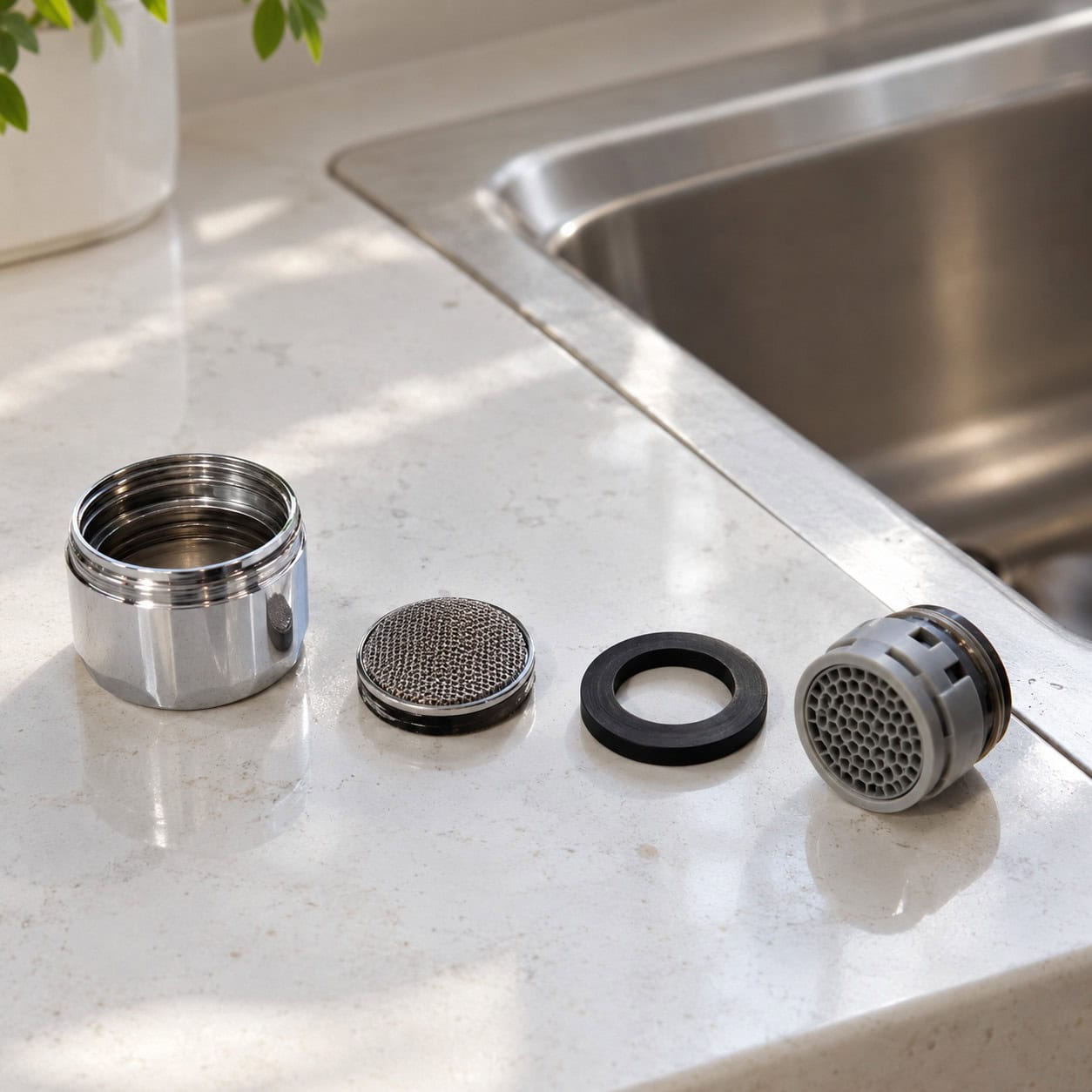
An aerator is a small mesh insert threaded into the tip of your spout. It splits the stream into dozens of thin jets and pulls air in alongside them.
That’s what makes the water feel soft instead of hitting the sink like a fire hose. It also cuts flow — a 1.5 GPM aerator on a 2.2 GPM faucet saves roughly 30% of the water without you noticing.
The mesh is the weak point. It’s catching sediment, pipe scale, rust flakes, and dissolved calcium every single day.
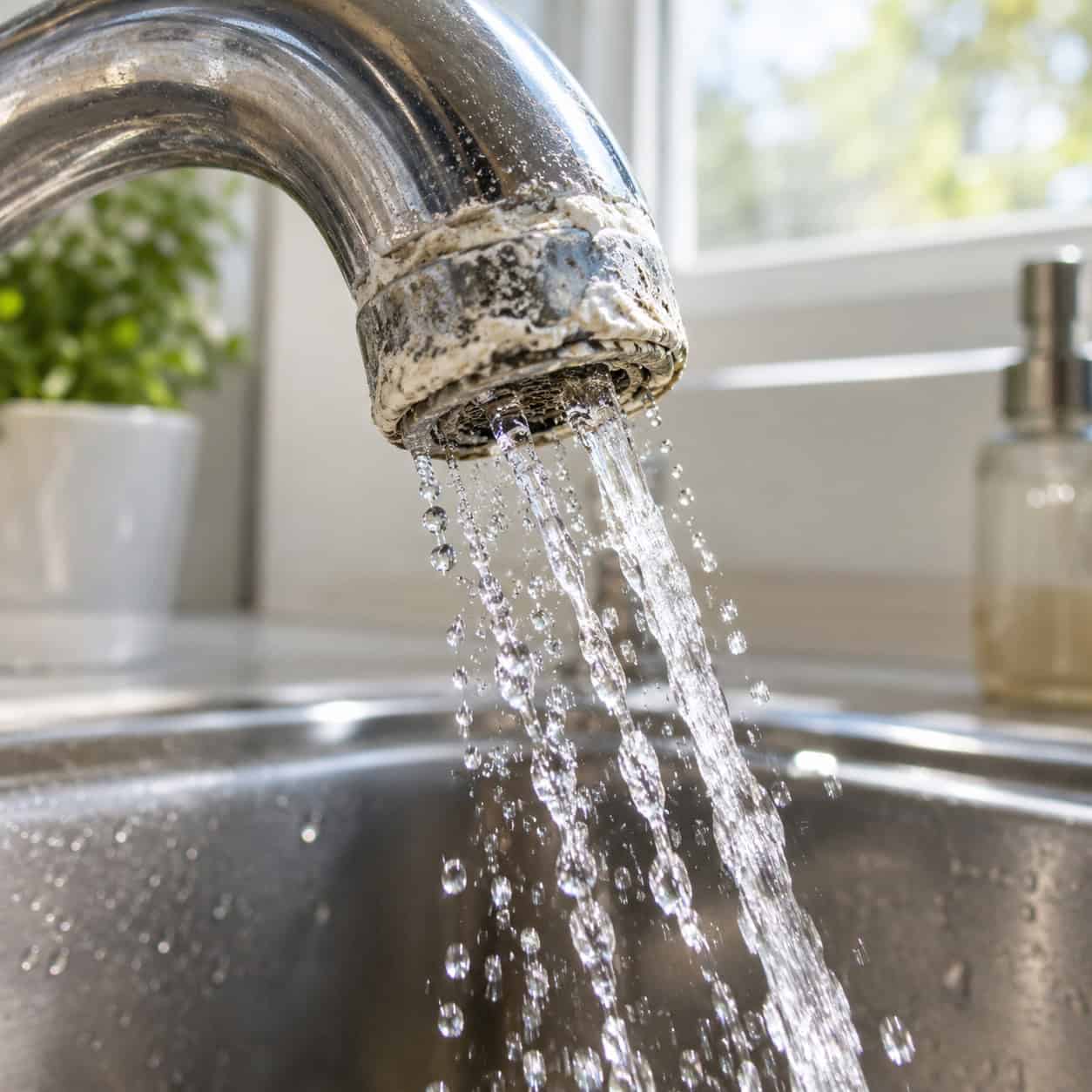
Over a year or two, those deposits narrow the openings until the screen is doing more blocking than aerating. Hard water speeds this up dramatically — calcium builds in visible white crust you can scrape with a fingernail.
Clean First, Replace Second
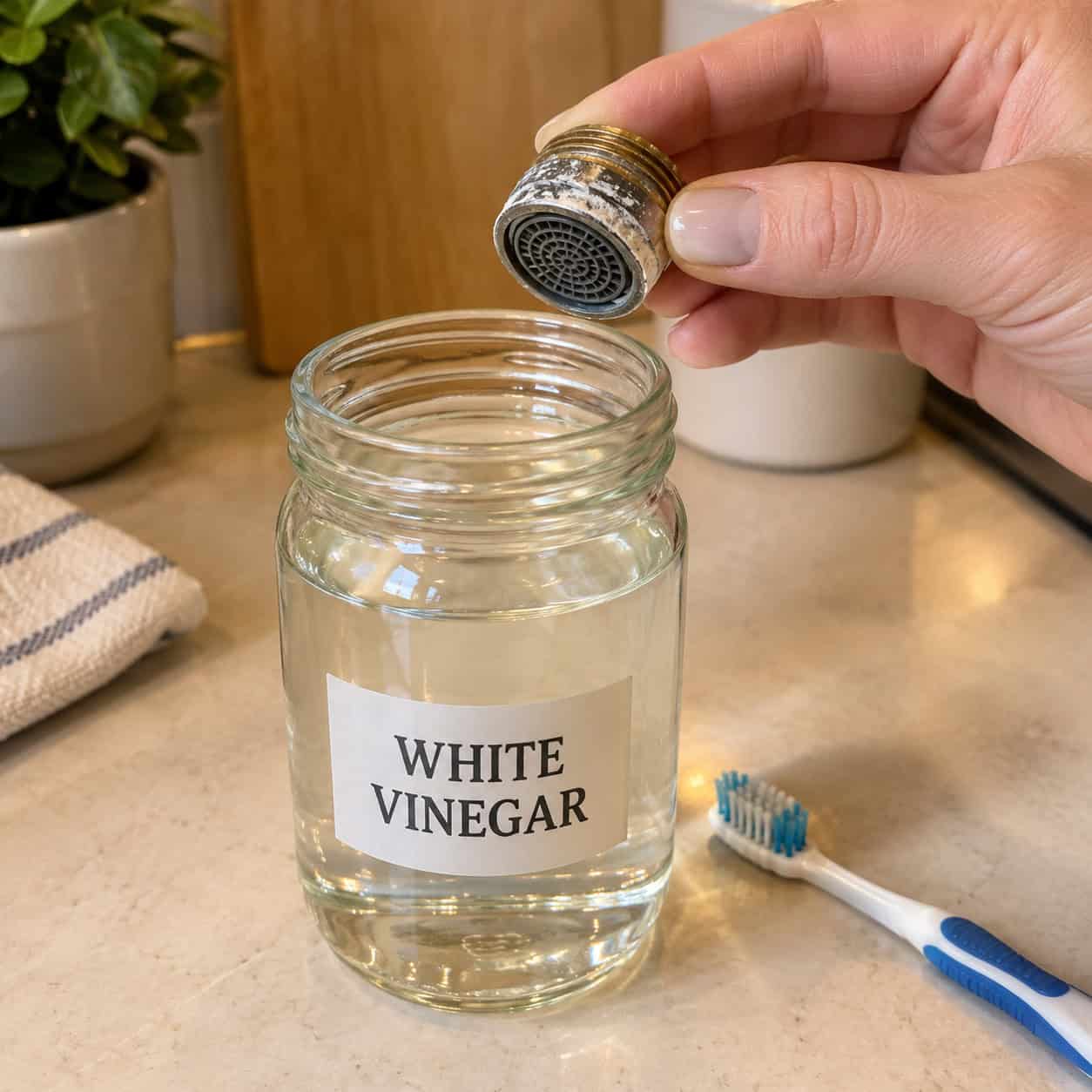
Cleaning buys you time. Unscrew the aerator, soak the pieces in white vinegar for an hour, scrub the screen with an old toothbrush, reassemble in the same order, and thread it back on.
Do that every three to six months and a decent aerator can last two or three years. Pittsburgh Water and Sewer Authority recommends a cleaning schedule like this for every faucet in the house, not just the kitchen.
But cleaning has a ceiling. Replace instead of cleaning when you see any of these:
- Mineral crust that won’t come off after a full vinegar soak
- A torn, warped, or corroded mesh screen
- Flow that’s still weak after cleaning
- Cracked or crumbling rubber washer
- Threads so chewed up the aerator won’t seat without dripping
Once the brass or plastic housing starts flaking, no amount of soaking brings it back. Buy the new one.
The Health Angle Nobody Mentions
Aerator screens are a known biofilm site. The mesh gives bacteria a textured surface to colonize, water sits in it between uses, and the tip of the faucet stays at room temperature — a nearly perfect combination.
The New Jersey Department of Health flags aerators specifically in Legionella guidance for healthcare settings, where routine cleaning and periodic replacement are standard practice.
In a healthy household, this is a low-risk issue. Nobody’s getting sick from a kitchen faucet with a dirty screen.
But if someone in the home is immunocompromised, recovering from surgery, or elderly, that annual swap is worth doing on schedule instead of waiting for the pressure to drop.
Hard Water Changes the Math
Water above roughly 10 grains per gallon is where aerators start failing fast. Phoenix, Las Vegas, San Antonio, Indianapolis — these are one-year-replacement towns.
Soft water or a whole-house softener? You can stretch to three or four years comfortably.
Well water adds a different problem: sand and iron particles that physically pack the screen rather than coating it. Those need cleaning quarterly, minimum.
A faucet you barely use is actually worse, not better. Stagnant water in a guest bath spout leaves deposits behind as it evaporates, and nothing flushes them out.
Common Misconceptions
“Low pressure means I need a plumber.” Usually not. If the pressure problem is in one faucet and not the rest of the house, the aerator is the first thing to check — before the cartridge, before the supply valve.
“All aerators are the same.” They’re not. Thread sizes vary, and kitchen aerators aren’t universal across brands. Standard male is 15/16″-27 and standard female is 55/64″-27, but Moen, Delta, and most European brands use their own.
“Removing the aerator boosts pressure.” It boosts flow, not pressure, and it turns your stream into a splashing mess. It also removes the one filter standing between pipe sediment and your drinking glass.
“Pull-down sprayers don’t have one.” They do — it’s built into the spray head, and on recessed designs you’ll need the little plastic key that came in the box or a workaround if you’ve lost it.
Buying the Right Replacement
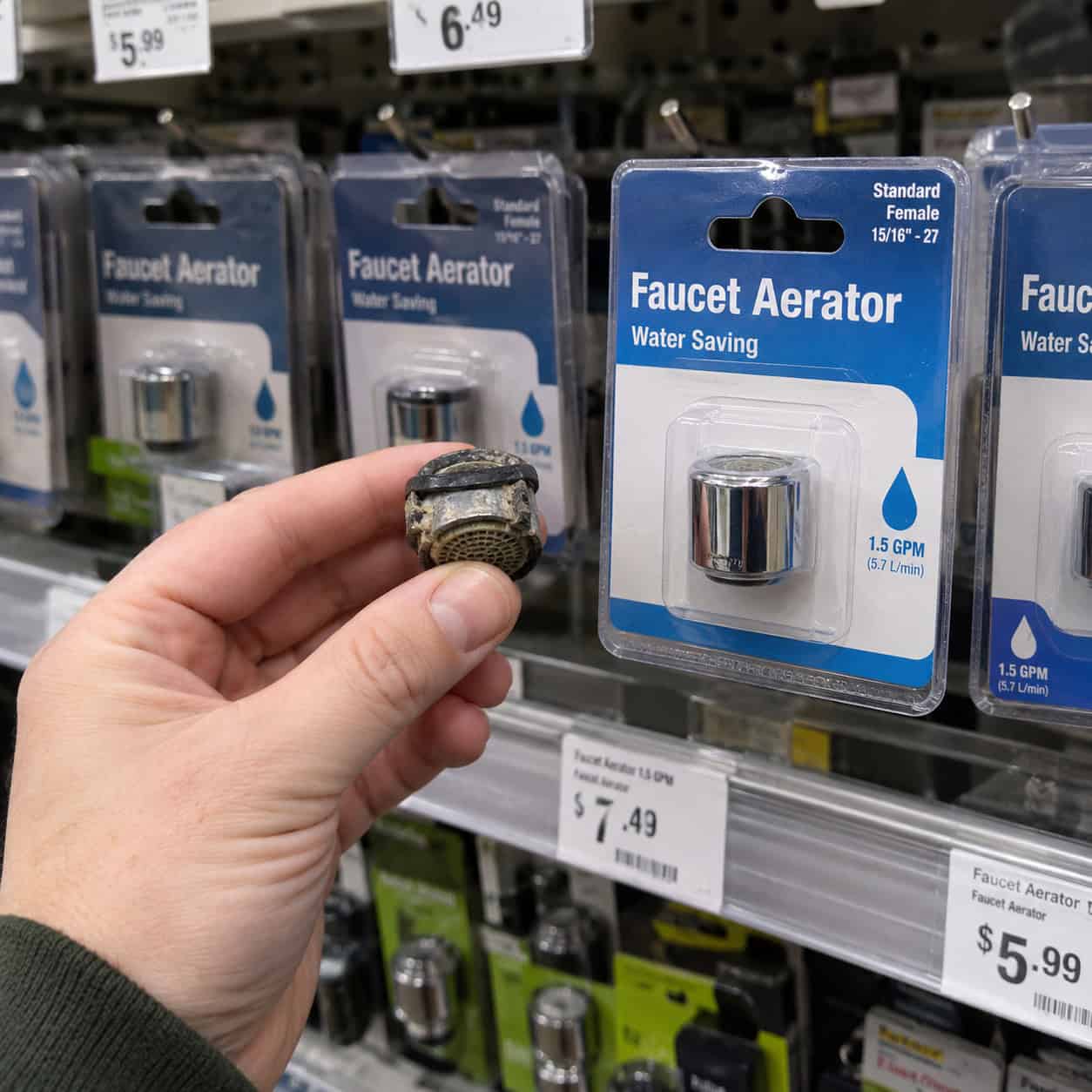
Take the old one to the store. Thread pitch isn’t something you eyeball successfully.
If the housing is intact and only the screen is shot, most brands sell the insert alone for a couple dollars. Moen, Delta, and Kohler all list aerator part numbers on their sites — you’ll need your faucet model number to match it.
Watch the flow rating stamped on the package. A 2.2 GPM aerator in a kitchen, 1.2 or 1.5 in a bathroom. Dropping a 0.5 GPM bathroom aerator into a kitchen faucet will make filling a pot feel like punishment.
Hand-tight is tight enough. If you need pliers, wrap the aerator in a rag first so you don’t chew up the chrome.
The Simple Rule
Clean it twice a year. Replace it every other year — annually if your water’s hard.
Set a reminder for the same weekend you change smoke detector batteries. It’s a five-minute job that keeps your faucet behaving like it did the week it was installed.