

Usually, yes — with real exceptions. If your drain line is metal or Schedule 40 PVC and you run the tap at the same time, a kettle of boiling water won’t hurt anything.
The trouble starts with PVC glue joints, porcelain and composite sinks, garbage disposals, and the grease you think you’re flushing away.
That last one matters most. Boiling water doesn’t dissolve grease. It melts it, carries it 20 feet down the line, and lets it cool back into a solid somewhere you can’t reach.
So the question isn’t just “will the pipe survive.” It’s whether you’re fixing a clog or building one.
What Boiling Water Actually Does to Drain Pipes

Water boils at 212°F at sea level. Schedule 40 PVC — the white pipe under most American sinks since the 1970s — is rated for continuous service up to about 140°F.
That rating is for pressurized supply lines, not open drain lines, so the pipe itself rarely deforms from one kettle.
The solvent-welded joints are the weak link. Repeated heat cycling softens the cement bond, and a joint that’s been hit with boiling water twice a week for three years can start to weep.
Cast iron, copper, ABS, and galvanized steel shrug it off entirely. If you can see black or metal pipe under your sink, heat isn’t your problem.
The Grease Problem Nobody Warns You About
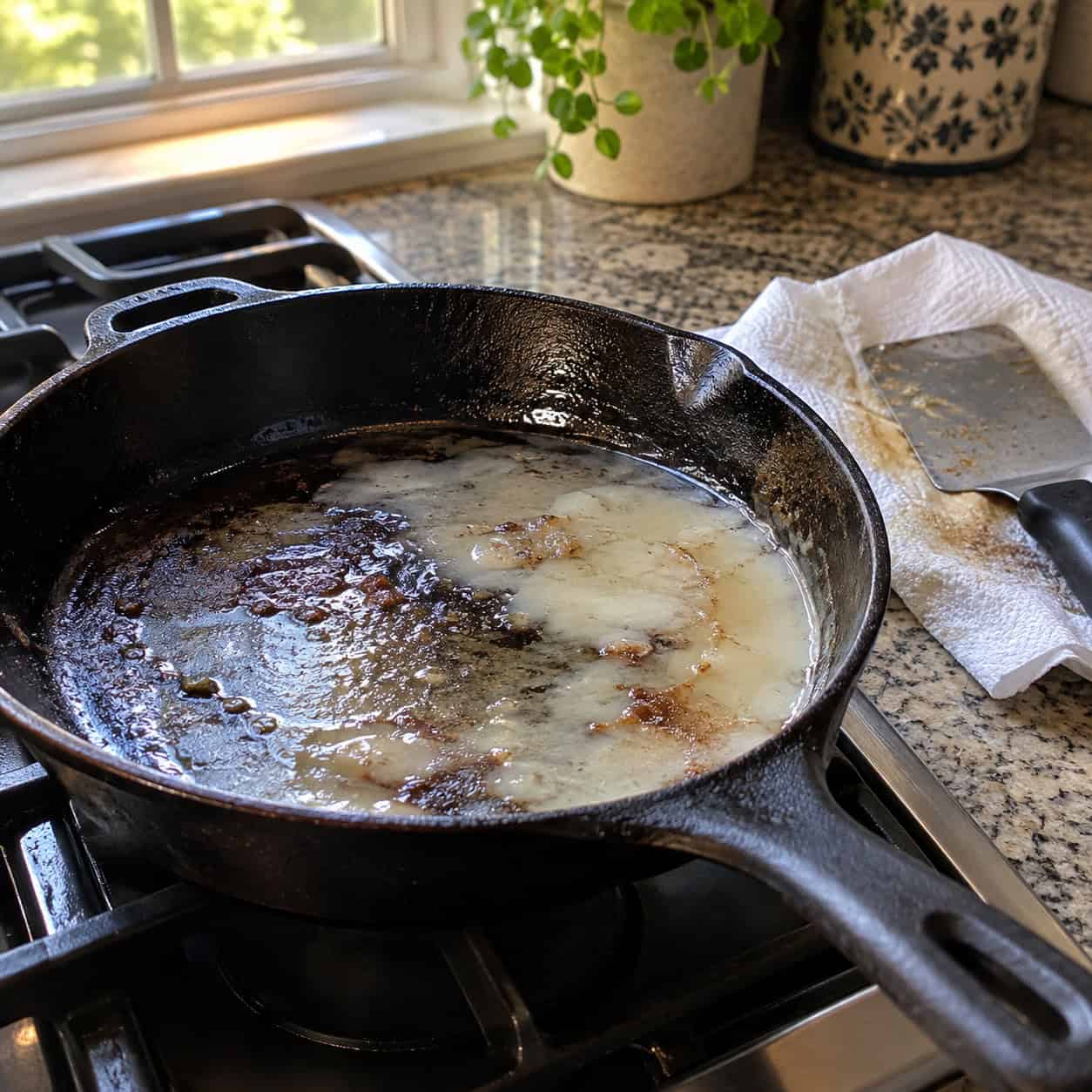
Here’s where the advice goes wrong. People pour boiling water on a slow drain, watch it clear, and call it a win.
It cleared because the fat liquefied. Then it traveled downstream, hit cooler pipe, and hardened again — now in your main line or the municipal sewer instead of your trap.
The Texas Commission on Environmental Quality is blunt about it: hot water and detergent only push fats, oils, and grease further into the system. Utilities running Protect Your Pipes campaigns say the same thing.
Scrape pans into the trash. Wipe them with a paper towel before they hit the sink. That one habit prevents more clogs than any amount of boiling water fixes.
If your drain is already backed up, the fix is mechanical — a plunger, a snake, or clearing standing water from a double sink the right way.
When Your Sink Material Is the Casualty

The pipe might survive. The basin may not.
Porcelain-enameled cast iron and fireclay crack from thermal shock — boiling water hitting a cold basin creates uneven expansion, and the glaze spiders. Once it crazes, it stains and never comes back.
Stainless steel doesn’t care. Granite composite handles roughly 535°F and doesn’t either. Acrylic and cheap plastic basins will dull, warp, or yellow.
Aim for the drain opening, not the bowl. Pour slow.
| Safe | Risky | |
|---|---|---|
| Basin material | Stainless, granite composite | Porcelain, fireclay, acrylic |
| Drain pipe | Cast iron, copper, ABS | PVC with glued joints |
| Fixture | Open drain, no disposal | Garbage disposal present |
| What’s in the line | Soap scum, coffee residue | Bacon fat, butter, oil |
Two or more items in the right-hand column, and you should skip the kettle entirely.
Garbage Disposals Change the Answer

A disposal sits directly under the drain opening, and boiling water hits it first.
Inside are rubber splash baffles, a neoprene-type gasket, and nylon or plastic components that weren’t designed for sustained 212°F contact. Repeated scalding makes the baffle stiff and brittle.
InSinkErator and Waste King both recommend cold water during grinding — cold keeps fats solid so the impellers can chop them into flushable bits.
If you’ve got a disposal and a sluggish drain, ice cubes and cold water do more good. Or skip to dealing with the smell directly.
The Right Way to Do It
Run the hot tap for 30 seconds first. That warms the trap and the first few feet of pipe so the temperature jump isn’t so violent.
Pour in stages — about a cup at a time, waiting several seconds between pours. Keep the stream centered on the drain opening.
Then flush with hot tap water for another 30 seconds. Tap water out of a residential heater runs 120 to 140°F, which is warm enough to keep things moving and cool enough to be harmless.
Doing this once a month is fine. Doing it daily to a PVC system is asking for a weeping joint under the cabinet.
Common Misconceptions
“Boiling water dissolves grease.” No. It melts it and relocates it. Cooling is inevitable, and so is the re-solidified plug. Sussex County, Delaware traces a large share of residential sewer backups to exactly this habit.
“Boiling water melts PVC.” Also no — not in one pour. The damage is cumulative and happens at the joints, not the pipe wall.
“Dish soap helps it work better.” Soap emulsifies fat temporarily. Once the mixture cools and the detergent dilutes, the grease drops right back out of suspension.
“Hot water sanitizes the drain.” Biofilm in a drain line survives brief heat exposure fine. If you want a clean drain, scrub it properly.
When to Stop and Call Someone
Water backing up after a boiling-water flush means the blockage is downstream of your trap. More heat won’t reach it.
A drip under the cabinet within a day or two of a hot pour points to a stressed PVC joint. Dry it, mark it, check it again after the next use.
Gurgling that shows up in a second fixture is a venting or main-line issue, not a grease clog. That’s a different diagnosis entirely.
Older homes on galvanized drain lines are the one place boiling water is almost always safe — and almost never effective, since those pipes clog from internal corrosion rather than fat.
The Short Version
Boiling water is a maintenance tool, not a clog remedy. Use it occasionally on a stainless sink with metal or well-aged PVC drains, pour it in stages, and chase it with hot tap water.
Keep grease out of the sink in the first place and you’ll rarely need the kettle at all.