

Pull the cover off a plumber’s own water heater and you’ll see things the spec sheet never mentions. A second anode rod. A brass mixing valve. A leak sensor zip-tied to the pan.
None of it costs much. All of it is deliberate.
The average homeowner buys a water heater the way they buy a furnace filter — fast, cheap, and never again until it floods the basement at 2 a.m. The average softener gets sized by a salesman who asked how many bathrooms you have and nothing else.
Meanwhile the trade quietly buys different equipment, installs it differently, and gets twice the service life out of it.
Here are 35 water heater and softener choices that come back to bite — and what gets installed instead when the plumber owns the house.
1. The Builder-Grade 6-Year Tank

Walk the aisle at any big box and you’ll see two tanks that look identical. One says 6-year warranty, one says 12. The price gap is usually $120 to $200.
Open them up and the shells are often the same. What changed is the anode rod — thicker, sometimes doubled — plus a better dip tube and heavier-gauge heating elements.
That’s the whole difference, and it’s the difference that decides whether the tank rusts through in year seven.
Builders and landlords buy the 6-year because it clears the inspection and isn’t their problem in a decade. Plumbers buy the 12-year for their own basement because the upcharge is roughly what one emergency service call costs.
2. Going Tankless in Hard Water With No Scale Protection

Tankless heaters move water through a maze of narrow copper or stainless passages. Hard water bakes calcium onto those walls every time the burner fires.
Flow drops. Ignition gets erratic. Eventually the unit throws a fault code and a technician quotes you a heat exchanger that costs more than the heater did.
Roughly 85% of the US is on hard water, which means most tankless installs are running a countdown nobody told the owner about. Chronomite is blunt about what scale does to the exchanger’s efficiency.
Put a softener or at minimum a template-assisted scale filter ahead of it. Know the difference between hard and soft water in your own supply before you spend $3,000 on a wall unit.
3. Sizing a Softener by Bathroom Count Instead of a Hardness Test

“Three bathrooms? You’ll want the 32,000-grain.”
That sentence has sold more wrong softeners than any other. Bathroom count tells you nothing about how hard your water is or how much of it you use.
The actual math: grains per gallon of hardness × gallons used per person per day × people in the house. That gives daily grain load, and the unit should regenerate roughly every three to five days at that load.
Get a real hardness number first — a $15 test kit or your utility’s annual report. Undersize it and the softener regenerates nonstop; oversize it and the resin sits stagnant between cycles.
4. Never Replacing the Anode Rod
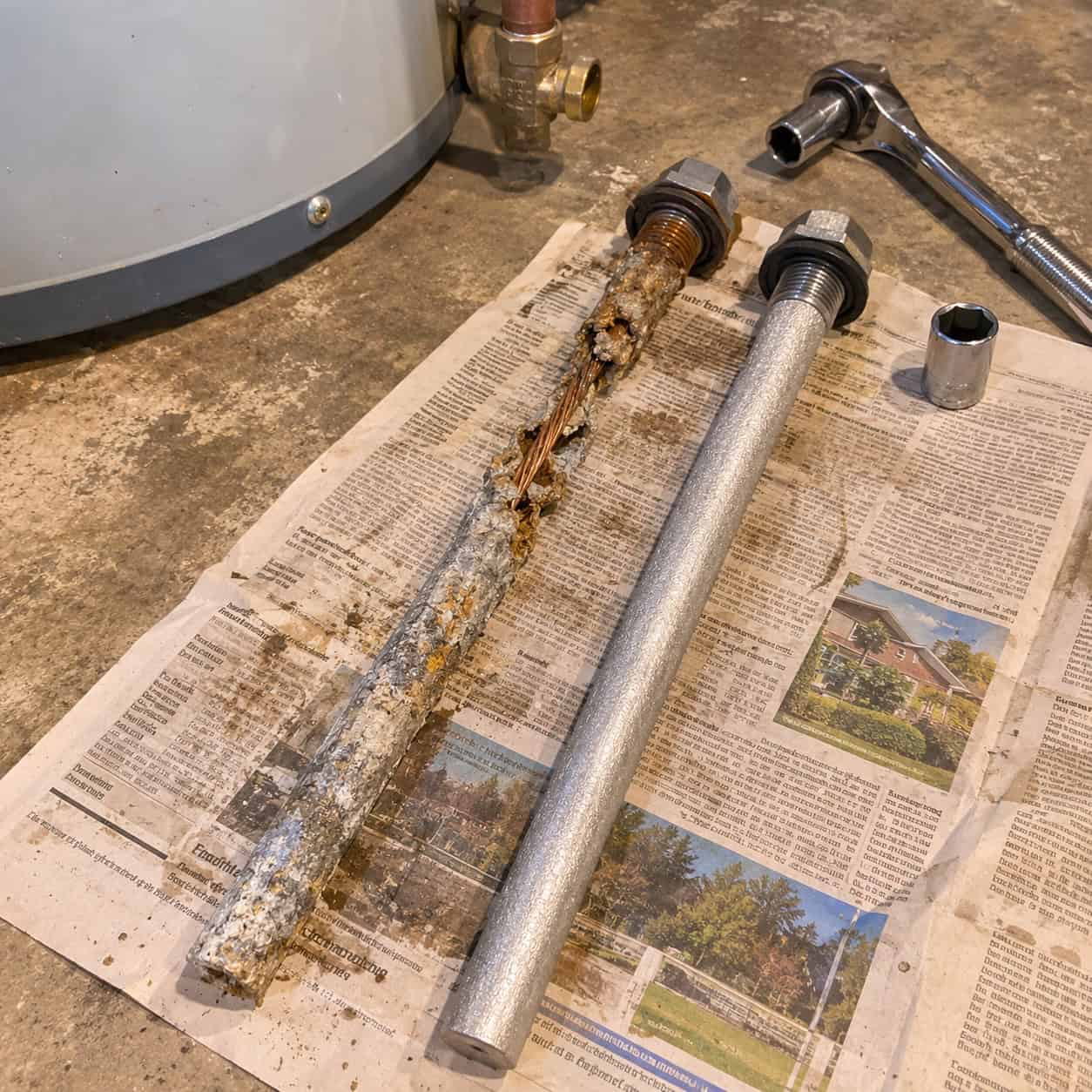
A steel tank full of hot water wants to rust. The only thing stopping it is a magnesium or aluminum rod hanging inside that corrodes instead.
It’s sacrificial. That’s the entire job description.
On hard or well water, the rod can be chewed down to bare wire in three years. Nobody checks it, the rod disappears, and then the tank starts corroding on schedule.
Plumbers pull theirs at year three and swap it for about $35. Two rod changes routinely stretch a 12-year heater to 18 or 20.
5. No Drain Pan or Piped Drain on an Upstairs Heater

A drain pan with no outlet is decoration. It holds maybe two gallons, and a failed 50-gallon tank doesn’t fail politely — it dumps the whole charge plus everything the supply line keeps feeding in behind it.
Attic and second-floor installs are where this gets expensive. Water finds the ceiling joists, runs the length of the bay, and comes through drywall three rooms away from where it started.
The pan itself needs to be the right size: at least two inches wider than the tank diameter, galvanized steel or heavy plastic, with a 1-inch minimum outlet. A pan that the tank barely fits inside catches nothing when the tank is leaking from a side seam.
That outlet has to go somewhere real. Code wants it routed by gravity to an approved location — outside the building where it’ll be noticed, to a floor drain, or into an indirect waste receptor. Not into the attic insulation. Not looped up over a joist, because the line has to fall the whole way.
Remediation on a second-floor tank failure regularly runs $8,000 to $25,000 once you count drywall, insulation, flooring, cabinetry and the mold protocol. That’s why no plumber puts a tank above finished space without a piped pan and a moisture sensor sitting in it.
If you have any choice about location, keep the heater on a slab or in a basement with a floor drain. The cheapest water damage is the kind that never leaves the mechanical room.
6. The Salt-Free ‘Conditioner’ Sold as a Softener

Template-assisted crystallization is real technology. It converts dissolved hardness into microscopic crystals that are less likely to stick to pipe walls and heat exchangers.
What it does not do is remove a single grain of hardness.
So your soap still won’t lather. Your glassware still spots. The shower door still films over in a week, and the salt-free owner feels lied to — because the box said “softener” in big letters and “conditioner” in small ones.
As scale protection ahead of a tankless, these units earn their keep. As a replacement for an ion-exchange softener, they don’t.
7. Skipping the Thermal Expansion Tank

Heat 50 gallons of water from 60°F to 140°F and it gains about a gallon of volume. In an open system that extra volume pushes back into the city main and nothing happens.
Add a pressure-reducing valve, a check valve, or a backflow preventer and the system is now closed. That gallon has nowhere to go.
Pressure spikes to 150 PSI and beyond every heating cycle. The T&P valve starts weeping, toilet fill valves fail early, and supply-line braids let go at the washing machine.
Expansion control has been required by the IRC on closed systems since the 2006 edition, for replacements as well as new installs, as How to Look at a House lays out. The tank costs $50. Install it.
8. Replacing Like-for-Like Instead of Sizing by First-Hour Rating

The 40-gallon tank in the basement was sized for whoever lived there in 1998. Possibly a couple. Possibly one guy and a shower.
Now there are five people, a soaking tub and a laundry schedule, and everyone’s arguing about who used all the hot water.
Tank gallons is the wrong number. First-hour rating is the one printed on the yellow EnergyGuide label, and it accounts for stored volume plus how fast the unit recovers — which is why a well-sized 40-gallon gas unit can out-deliver a 50-gallon electric. The University of Georgia Cooperative Extension walks through how to estimate your household’s peak hour.
Rheem lists improper sizing among the most common errors its installers see. Count your peak hour, then buy to it.
9. The Timer-Based Softener Head

A clock-based softener regenerates on a calendar. Every third night at 2 a.m., whether the house used 400 gallons that day or zero.
Go away for a week and it burns salt and roughly 50 gallons of water per cycle softening water nobody touched.
Then your in-laws visit, everyone showers, and the resin exhausts at 6 p.m. on a Saturday — three days before the clock says it’s time.
Metered, demand-initiated valves have been the trade standard for decades. They count gallons and regenerate when the resin is actually spent. If your softener has a dial with little pins around it, that’s the clock.
10. Hard-Piping the Heater With No Unions or Shutoff

Rigid copper soldered straight into the tank nipples looks tidy. It also means the next replacement starts with a hacksaw.
Flexible connectors or a pair of unions turn a two-hour job into a 45-minute one. That labor difference shows up on the invoice every single time.
Worse is the missing cold-side shutoff. When the tank starts leaking you want to isolate it at the heater, not kill water to the entire house while you sort it out.
And if you’re on PEX, there’s a reason the first 18 inches off the tank has to be metal — connecting PEX straight to a water heater cooks the tubing at the nipple.
11. Ignoring Iron in Well Water

Iron doesn’t behave like hardness. It fouls the resin beads, coats them in oxidized film, and the softener loses capacity permanently — not something a longer regeneration cycle brings back.
Sizing formulas add roughly three to five grains of equivalent hardness per ppm of dissolved iron. That’s fine up to about 2 ppm.
Above that, a bigger softener is the wrong answer. You need a dedicated iron filter — air injection or greensand — ahead of it.
Rust-colored staining in the toilet tank and that slick feel to well water are your first tells. Test before you buy anything.
12. A T&P Discharge Line Done Wrong

The temperature and pressure relief valve is the only safety device on a 50-gallon pressure vessel sitting in your house. Everything else is convenience.
Its job is to dump water before the tank becomes a rocket. That sounds dramatic until you watch a BLEVE test video — a failed tank can punch through a roof.
So the discharge line rules are not suggestions. It must be full-size — same diameter as the valve outlet, usually 3/4 inch — with no reduction anywhere along the run. No threads on the terminal end, because a threaded end invites somebody to cap it. No valve in the line. No PEX unless the manufacturer specifically rates it for the temperature.
It has to run downhill the entire way, terminating 6 inches or less above the floor or an approved receptor, where a person would actually see it discharging.
The ones inspectors find: capped off because it dripped. Run uphill into a ceiling. Reduced from 3/4 to 1/2 to fit an existing hole. Plumbed into a closed drain with no air gap.
Each of those converts a safety device into trim. The common failure isn’t the explosion — it’s a stuck thermostat heating the tank past 212°F while the only pressure escape is blocked, or a slow leak that was “fixed” with a cap and now fills a finished basement when the valve finally opens for real.
If yours is capped, threaded, or pointed upward, that’s a same-week fix.
13. Magnetic and Electronic Descalers

Two coils of wire, a plastic box, a hundred dollars, and a promise of softened water with no salt and no plumbing.
They’ve been sold online since the 1990s. Controlled testing has never reproduced the claimed results with any consistency.
What plumbers find in those houses is the same scaled heat exchanger and the same crusted aerators as the neighbor without one.
If the device doesn’t exchange ions or physically remove minerals, your water is as hard leaving it as it was going in. The meter doesn’t lie.
14. A Tankless Retrofit on the Old Gas Line and Vent

A 40-gallon atmospheric tank might draw 40,000 BTU. A whole-house tankless wants 150,000 to 199,000 BTU on demand.
That’s three to five times the input, and the existing 1/2-inch gas line feeding the old tank cannot deliver it. You’ll get nuisance lockouts and lukewarm showers when two fixtures run.
The vent is the other half. Condensing tankless units exhaust cool, acidic flue gas and need sealed PVC or stainless — not the old B-vent going up the chimney chase.
Rheem flags venting errors and undersized gas supply as two of its most expensive callbacks. Budget for a gas line upsize and new venting, or the “$1,200 heater” becomes a $4,500 project at the worst possible moment.
15. Rock Salt in the Brine Tank

Rock salt is the cheapest bag on the pallet for a reason. It carries a meaningful percentage of insoluble dirt and sediment.
That material settles into a sludge layer at the bottom of the brine tank and builds crusted salt bridges across the middle.
Here’s what’s deceptive about it: the tank still looks full. The softener still runs its cycle. But it’s drawing brine from a cavity under a salt bridge that’s holding nothing, so it regenerates with essentially plain water.
Months later the ring comes back in the tub and everyone blames the softener. Use solar or evaporated pellets and break up any bridge with a broom handle twice a year.
16. Leaving the Thermostat at Factory Default With No Mixing Valve

Most tanks ship set to 120°F. That’s the scald-safe number, and it’s good advice if you have small kids or elderly parents.
It’s also sitting right inside the range where Legionella is comfortable. The CDC recommends keeping storage temperature high enough to suppress bacterial growth, which pushes past 120.
The trade answer isn’t to pick a side. It’s a tank at 140°F with a thermostatic mixing valve at the outlet blending down to 120 for the house.
You get bacterial control, scald protection, and a bonus — a hotter tank blended down delivers noticeably more usable hot water from the same 50 gallons. The valve runs about $120.
17. Softening the Outdoor Spigots and the Drinking Tap
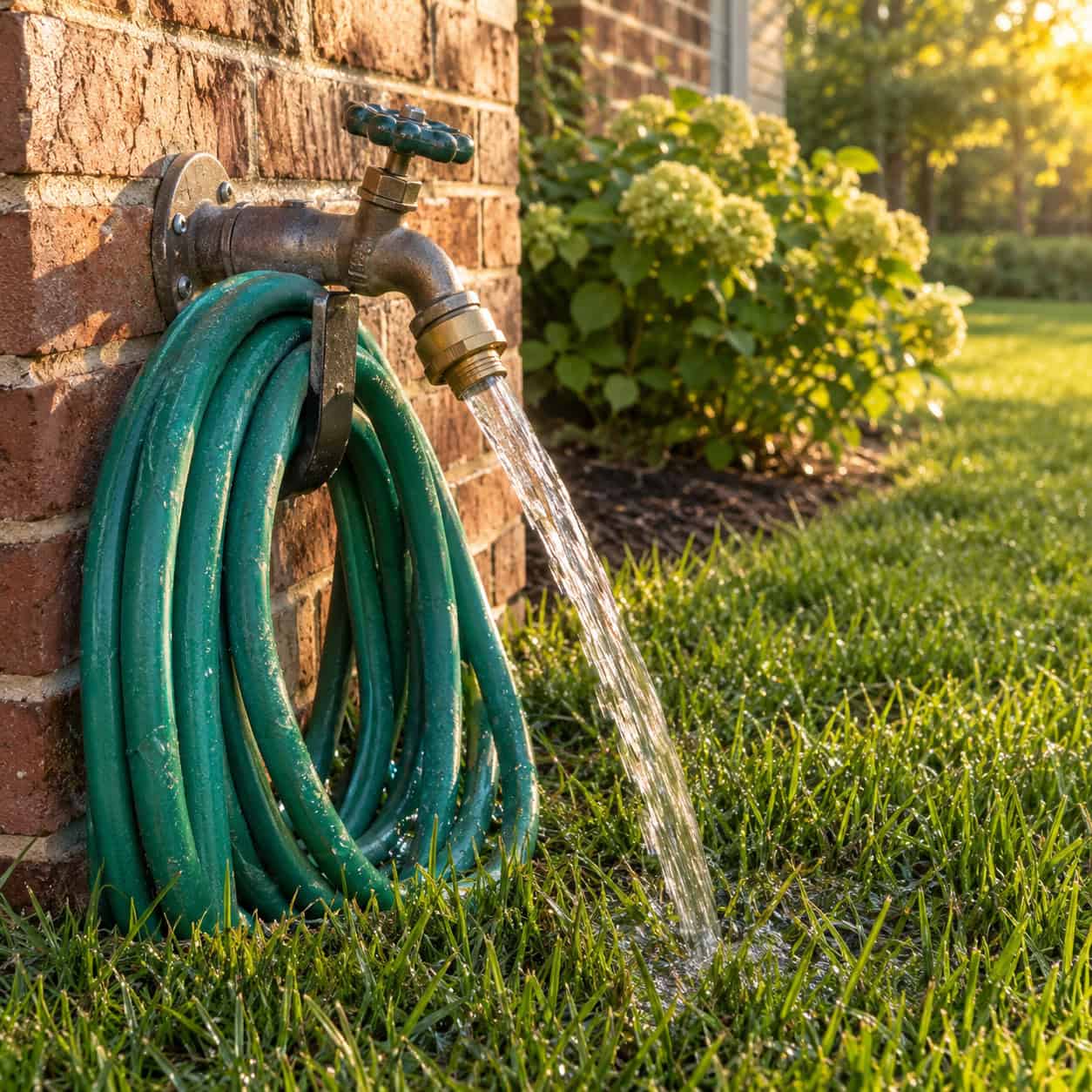
Ion exchange swaps calcium and magnesium for sodium. On very hard water that adds up to real sodium content at the kitchen tap.
It’s also pointless on the lawn, the garden and the car — plants don’t care about soap lather, and you’re paying salt to treat irrigation water.
A clean install leaves the hose bibs and the kitchen cold line on raw water, teed off ahead of the softener. Some plumbers run softened water everywhere and put a small RO unit under the kitchen sink instead.
Either approach works. Treating every gallon that enters the house is the one that doesn’t.
18. Putting the Softener Downstream of the Water Heater

It happens in tight mechanical rooms where the only open stretch of pipe is past the heater. The logic feels fine until you think it through.
Treat the water before it gets heated or the tank keeps scaling exactly as it did before. Heat is what drives calcium out of solution in the first place.
The softener goes after the main shutoff and the pressure-reducing valve, before the split to the heater.
And install a three-valve bypass loop while you’re there. Without one, the day the softener needs service is the day the whole house has no water — and there’s a reason to know how a softener affects water pressure before you pick a location.
19. A Heat Pump Water Heater in a Closet or a Freezing Garage

Heat pump water heaters pull warmth out of the surrounding air. That’s the whole trick, and it’s why they’re three times more efficient than resistance electric.
They need air to do it. Most manufacturers specify roughly 700 to 1,000 cubic feet of space, or ducting to supply it.
Stuff one in a 30-square-foot closet and it chills its own air supply, then falls back to resistance mode — at which point you’ve paid a premium for a standard electric heater that also hums.
Unheated garages in cold climates do the same thing below about 40°F ambient. And the compressor noise sits around 50 decibels, which nobody mentions during the rebate pitch and everybody mentions after.
20. Never Flushing Sediment or Descaling the Exchanger

That rumbling and popping from the basement isn’t the tank settling. It’s water trapped under a layer of hardened sediment, flashing to steam against the burner plate.
Sediment insulates the bottom of the tank. The burner runs longer, the steel overheats, and the glass lining cracks.
Drain a few gallons through the bottom valve once a year until it runs clear. On tankless, run a vinegar or descaler loop through the service ports annually.
It’s a 30-minute job. Skip it and you’re trading a decade of service for five or six years — plus you’ll start wondering why the heater is making noise in the first place.
21. The Leased Softener From a Door-to-Door Demo

The pitch is a show. A tech drops a reagent into a glass of your tap water, it turns an alarming color, and suddenly you’re signing something.
The demos are theatrical — most of them test for things a softener doesn’t address, or produce dramatic precipitate reactions that any hard water will give you.
Then comes the contract. Rental or financed, often $70 to $120 a month, sometimes with a term that follows the house to the next owner.
Run the total. A $3,000 lifetime lease buys equipment a plumber installs for $1,200 to $1,800 — and the plumber’s version uses a valve head you can get parts for.
22. Whole-House Electric Tankless on an Undersized Panel

The heater is $900. That’s the part people shop.
A whole-house electric tankless sized for a cold-climate inlet temperature can draw 27 kW — that’s four dedicated 60-amp double-pole breakers and a run of heavy copper to each.
On a 100-amp service, that math doesn’t work at all. You’re looking at a 200-amp service upgrade, which in most markets runs $2,500 to $5,000 before the plumber ever shows up.
Have an electrician do a load calculation before you fall in love with the idea. In cold-inlet regions, gas tankless or a heat pump tank almost always pencils out better.
23. A Proprietary Valve Head With No Local Parts
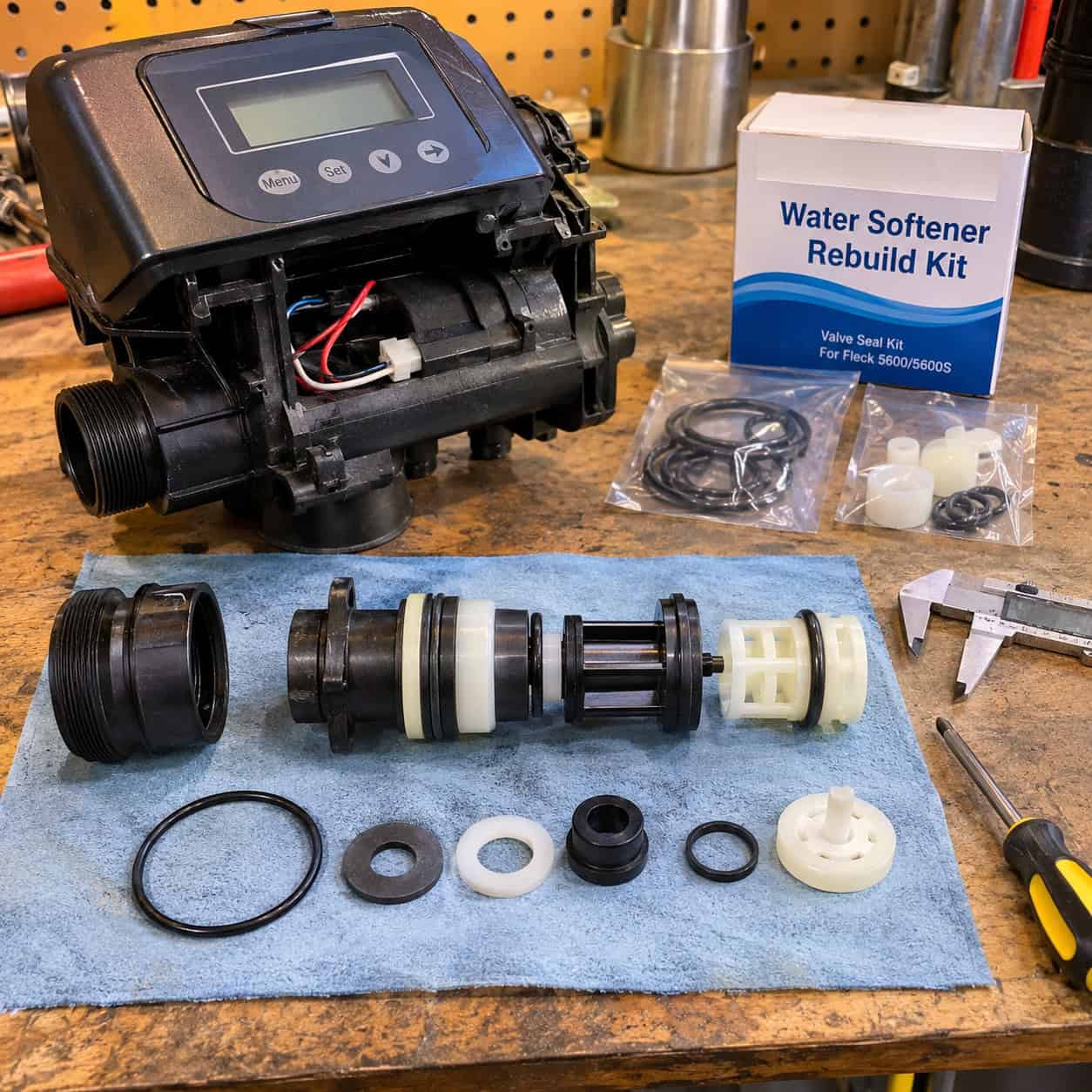
The control head is the brain of a softener — the valve that handles backwash, brine draw and rinse. It’s also the part that eventually needs seals, spacers or a piston.
Dealer-exclusive brands build their own heads. When yours fails in year eight, only that dealer can service it, and only at their price.
If the dealer sold the territory or went out of business, you’re buying a whole new softener.
Fleck and Clack valves are the trade default for exactly this reason. Any plumber can rebuild one from parts on the truck, and a seal kit runs about $40.
24. No Leak Detection or Automatic Shutoff

Water heaters rarely announce themselves. The tank corrodes from the inside, the seam weeps, and then the bottom opens up — usually while nobody’s home.
Fifty gallons hits the floor in minutes. Then the cold supply keeps feeding in at six to eight gallons a minute for however long it takes somebody to notice.
That’s the difference between a mopping job and a claim.
There are three tiers of protection and they’re all worth knowing. The cheapest is a standalone puck sensor in the drain pan — $25, battery powered, screams and pings your phone. Better is a sensor wired to a motorized valve on the heater’s cold inlet, which kills supply to the tank the moment it detects water. Best is a whole-home flow monitor on the main — Flo by Moen, Phyn, StreamLabs — which watches flow patterns, catches slow leaks anywhere in the house, and closes the main automatically.
The insurance angle is the part most homeowners miss. Non-weather water damage is now one of the largest homeowner claim categories in the country, and carriers have responded: many offer premium discounts in the 3% to 10% range for a certified automatic shutoff device, and some will waive or reduce your deductible on a water claim if one is installed.
A whole-home unit runs $500 to $800 installed. The discount alone can pay for it in under a decade, and that’s before you count the flood it prevents.
It’s the first thing plumbers put on their own heater. Not the last.
25. Cheap 8% Crosslink Resin on Chlorinated City Water

Softener resin is tiny polystyrene beads, and the crosslink percentage describes how tightly that polymer is bound. Standard is 8%.
Chlorine and chloramine oxidize those beads. The structure softens, the beads swell and mush together, and capacity falls off a cliff.
On chlorinated municipal water, 8% resin can be degraded in five or six years. Ten percent crosslink resin resists oxidation far better and routinely doubles that.
The upcharge is modest. Add a carbon prefilter ahead of the softener and you protect the resin and strip the chlorine taste at the same time.
26. Ignoring House Pressure Above 80 PSI

Most people have no idea what their water pressure is. A $12 gauge that screws onto a hose bib will tell you in ten seconds.
Code caps static pressure at 80 PSI for a reason. Plenty of municipal mains deliver 90, 110, even 130 — especially in neighborhoods downhill from a water tower.
Everything in the house pays for it. Supply braids fatigue and burst. The softener’s control valve seals wear through. Toilet fill valves hiss. Faucet cartridges fail in half the time, and the water heater’s glass lining takes every pressure spike the system produces.
Pinhole leaks in copper show up faster too, because high velocity scours the protective oxide layer off the pipe wall.
The fix is a pressure-reducing valve at the main — $300 to $500 installed, set to 60 or 65 PSI. One caveat, and it’s important: a PRV closes the system, which makes a thermal expansion tank mandatory. Install one without the other and you’ve traded a slow problem for a fast one.
Check pressure again after the PRV is in. And re-check annually, because PRVs drift as they age and fluctuating pressure is usually the first symptom of one going bad.
27. A Recirculation Pump Running 24/7

Instant hot water at the far bathroom is a genuinely nice upgrade. Running the pump around the clock to get it isn’t.
Constant circulation means the heater is reheating the same loop all night, every night. Standby losses go up measurably.
There’s a mechanical cost too. Continuously moving hot water erodes the protective film inside copper pipe, and erosion-corrosion pinholes start showing up at the elbows after a few years.
Put it on a timer for your morning and evening windows, add an aquastat so it only runs when the loop drops below temperature, or go on-demand with a button in the bathroom. Same convenience, a fraction of the damage — and it’s one of the better ways to get hot water faster at the sink.
28. A Brine Drain With No Air Gap

The softener’s drain line carries salty backwash to the sewer. Shoving it down a laundry standpipe and taping it in place is a cross-connection.
If the drain backs up or the house loses pressure, that waste can siphon back toward the brine tank and into your treated water.
Code wants a physical air gap — an unobstructed vertical space of at least twice the pipe diameter between the end of the discharge line and the flood rim of the receptor.
An air gap fitting costs about $8. Inspectors fail this one every time they see it, and they always see it.
29. Skipping Seismic Strapping and Garage Elevation

In seismic zones, two steel straps — one in the upper third of the tank, one in the lower third — are code. They keep a 400-pound full tank from walking off its base and tearing the gas line with it.
A gas leak and an open flame in the same room is the worst-case scenario in residential plumbing. The straps cost $20.
Garage installs have their own rule. Gas and electric heaters with ignition sources have traditionally been required to sit 18 inches above the floor, because gasoline vapor is heavier than air and pools low.
Newer FVIR-rated units relax that in many jurisdictions, but the platform is cheap and the reasoning hasn’t changed.
30. Acidic Well Water With No Neutralizer

Low-pH water is an entirely different problem from hard water, and a softener does nothing about it.
Below roughly 6.5 pH, water becomes aggressive. It dissolves the anode rod fast, attacks the brass fittings and dip tube, and eats copper pipe from the inside.
The tells are specific: blue-green staining in sinks and tubs, a metallic taste, and pinhole leaks appearing in copper lines that are only fifteen years old.
The fix is a calcite neutralizer tank — a media bed that slowly dissolves to raise pH. It goes ahead of the softener, and the media needs topping up every year or two.
31. The DIY Swap With No Permit or Inspection

Swapping a water heater looks like a weekend job, and mechanically it often is. The permit is what people skip, and it’s the part that comes back.
Most jurisdictions require a permit for a water heater replacement — gas, electric, tank or tankless. The fee is usually $50 to $150 and the inspection takes twenty minutes.
Here’s where it surfaces. At resale, the inspector flags an obviously newer heater with no permit on file, and the buyer’s agent turns it into a negotiating item or a demand to bring it to code on your dime. Title companies in some states check permit history directly.
The insurance side is worse. If an unpermitted gas heater causes a fire or an unpermitted install floods the house, the carrier has grounds to investigate whether the work met code — and claims have been reduced or denied over it. You’re also personally exposed if a future owner is injured by work you did without inspection.
The inspection itself catches real things: missing expansion tank, improper T&P discharge, inadequate combustion air, a vent connector with the wrong rise. A second set of eyes on a gas appliance is worth the fee even if nothing’s wrong.
Pull the permit. It costs less than one sheet of the drywall it might save.
32. Waiting Until the Old Tank Fails

A storage heater’s realistic life is 8 to 12 years, and a well-maintained one with fresh anodes can go further. What it doesn’t do is warn you politely.
When it goes, you get whatever’s on the truck. Whatever size, whatever efficiency, whatever brand the supply house had at 7 p.m. on a Sunday.
Emergency pricing is typically 40% to 60% above a scheduled swap. And that assumes you got lucky on the water.
Check the date code on the serial sticker. If it’s past year ten, start planning — because the plumbers who tell you this are the ones who replaced their own tank on a quiet Saturday in year eleven, for list price, with the new mixing valve and leak sensor already sitting on the bench.
33. No Sediment Prefilter Ahead of the Softener

Well water carries sand, silt and fine grit that city water doesn’t. It ends up in the resin bed.
Sediment packs into channels through the resin, so backwash water takes the easy path and the rest of the bed never gets properly rinsed. Capacity drops and the valve’s internal seals get scored by abrasives.
A spin-down filter or a 20-inch 5-micron cartridge ahead of the softener handles it for under $150.
Cartridges run $8 and get changed every three to six months. Resin beds cost several hundred and don’t come clean.
34. Point-of-Use Heaters Chasing a Long Hot-Water Run

This one cuts both ways, which is why it belongs here.
A small under-sink electric heater at a remote bathroom or a detached office is a legitimate plumber move. It kills a 60-foot wait, costs $200, and plugs into a standard outlet.
What goes wrong is scope creep. Someone decides a point-of-use unit at every fixture will replace the main heater, and ends up with six small tanks that each have their own failure mode, their own anode, and nowhere near the flow for a shower.
Use them to solve a specific long run. Don’t use them to solve a house.
35. Softener Brine Discharge Into a Septic System
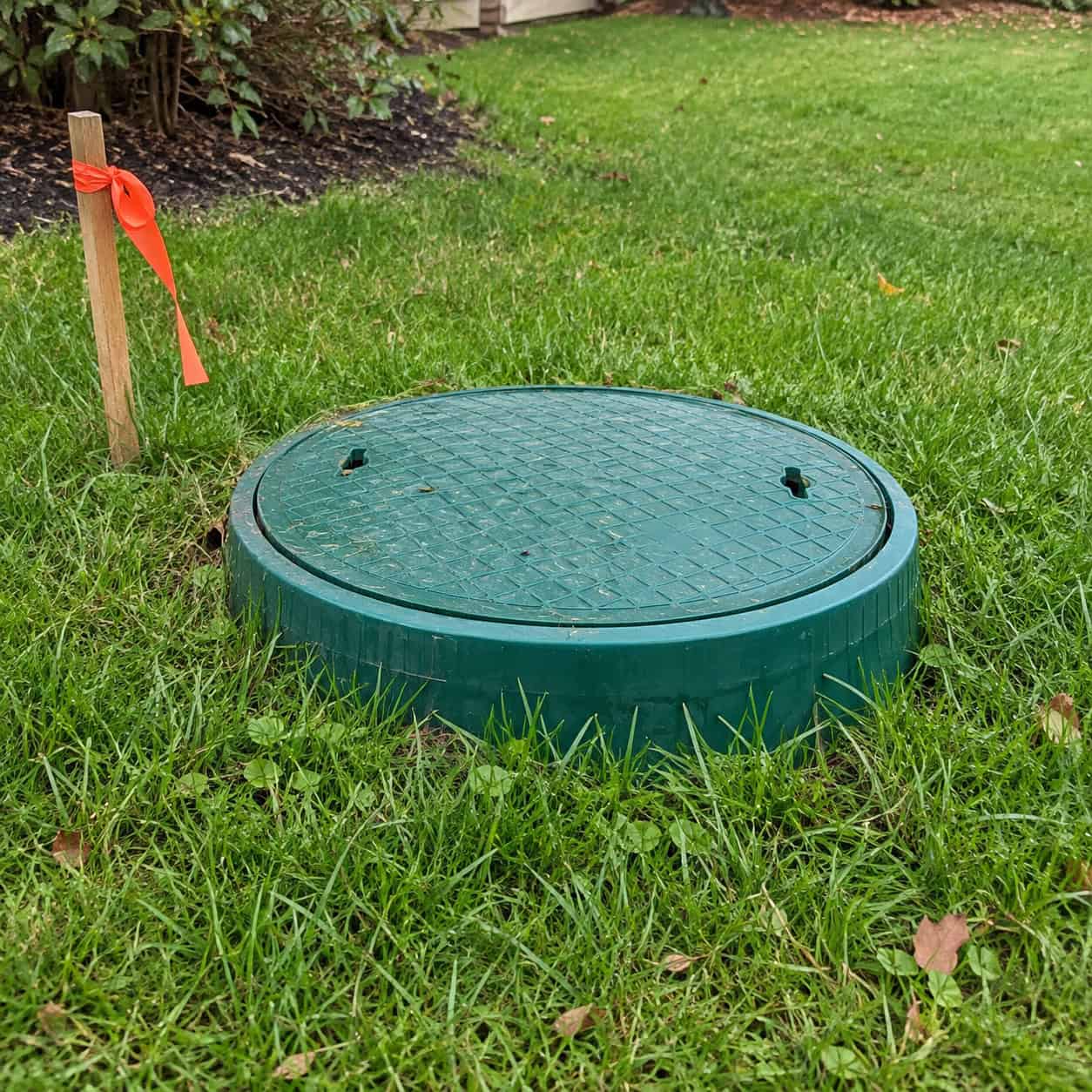
You’ll hear that softener backwash kills a septic system’s bacteria. The research is more complicated than that.
Multiple studies — including work backed by the wastewater industry — found that typical brine volumes don’t meaningfully harm bacterial activity, and the added calcium may slightly improve sludge settling.
But the extra 50 gallons per regeneration is real hydraulic load on the drainfield, and that matters on a marginal or undersized field.
The practical position: a properly sized, metered softener discharging to a healthy septic system is generally fine, an oversized clock-based one is not, and some jurisdictions restrict it outright. Call your county health department before you plumb it — the answer is local, not universal.
Almost none of this is expensive. A better anode, a mixing valve, an air gap fitting, a $25 leak puck, a permit — the whole list of upgrades on a plumber’s own system might add $600 to a $1,500 install.
What it buys is a heater that goes 18 years instead of 8, a softener you can get parts for, and a basement that stays dry when something eventually lets go.
Go read the sticker on your tank tonight. If the date code starts with a year you’d describe as “a while back,” you already know what the next move is.