

Walk into a kitchen and your eyes go to the sink before you even notice the cabinets.
It’s the busiest corner of the room. It’s also the spot that gives away a kitchen’s age faster than anything else.
A faucet finish, a bowl shape, a little plastic sprayer poking out of the deck — these are the details that quietly time-stamp a room to a specific decade. You can pour money into countertops and still land in 2004 because of the fixture standing over the sink.
Some of these were builder defaults nobody chose. Some were trends people paid a premium for. All of them read as dated now, and a few will surprise you.
Here are 23 sink and faucet choices that age a kitchen fast — and what’s taking their place.
1. High-Shine Polished Brass and Bright Gold Faucets
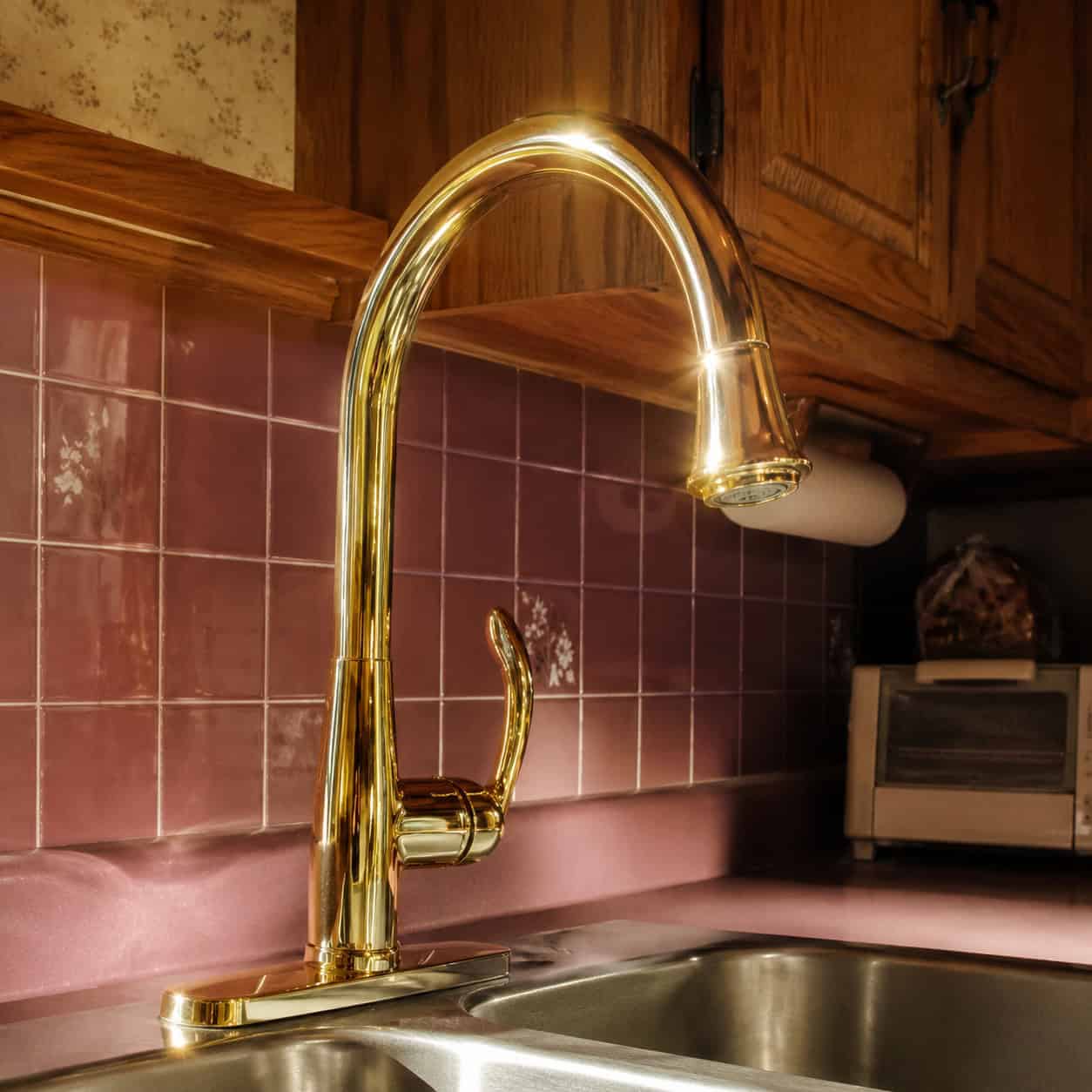
Bright brass dates a kitchen twice over.
There’s the original 1980s wave — mirror-gold everything, paired with oak and mauve. Then there’s the 2018 Instagram gold rush, when warm metals came roaring back and every remodel reveal glinted with shiny gold.
That second wave already feels tired. Designers now steer clients toward softer, aged, or unlacquered brass that dulls to a living patina instead of a loud reflective shine. Better Homes & Gardens has quoted designers saying the high-polish version peaked and is on its way down.
The mirror finish is the tell. Warm metal isn’t the problem — the glare is.
2. Oil-Rubbed Bronze “Tuscan” Faucets
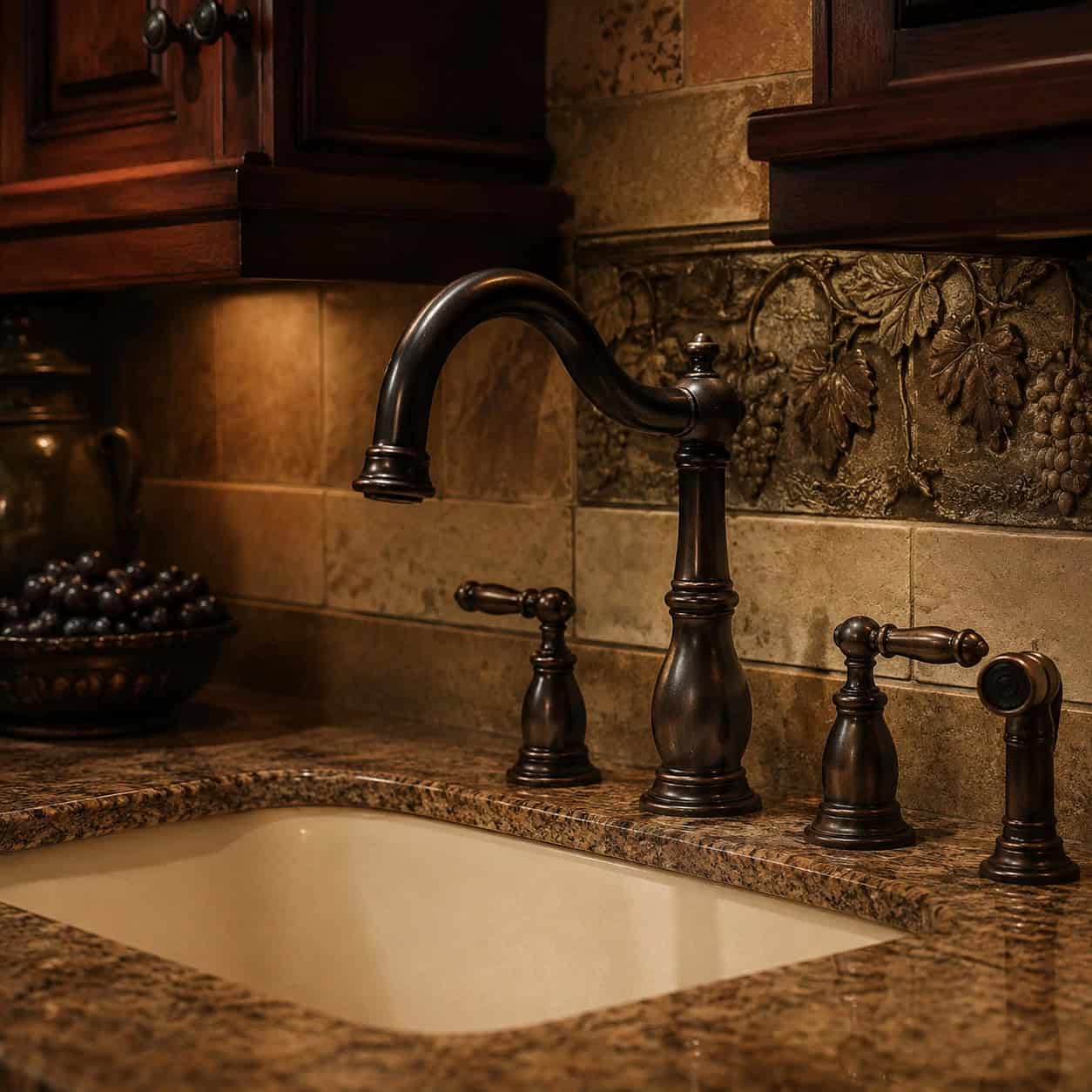
Dark bronze was the crown jewel of the Old World kitchen.
You know the look. Cherry cabinets, speckled granite, a heavy bronze faucet arching over a bisque sink, maybe a grape-vine backsplash for good measure.
It pins a kitchen straight to the McMansion years, roughly 2002 to 2012. Against today’s lighter, cooler palettes, that deep brown reads muddy and dark.
Oil-rubbed bronze isn’t dead everywhere — it still works in a genuinely traditional or transitional space. But paired with the full Tuscan package, it’s a costume. And the finish itself is high-maintenance; a lot of owners end up wondering why the bronze finish is wearing off their faucet after a few years of scrubbing.
3. Wall-to-Wall Polished Chrome
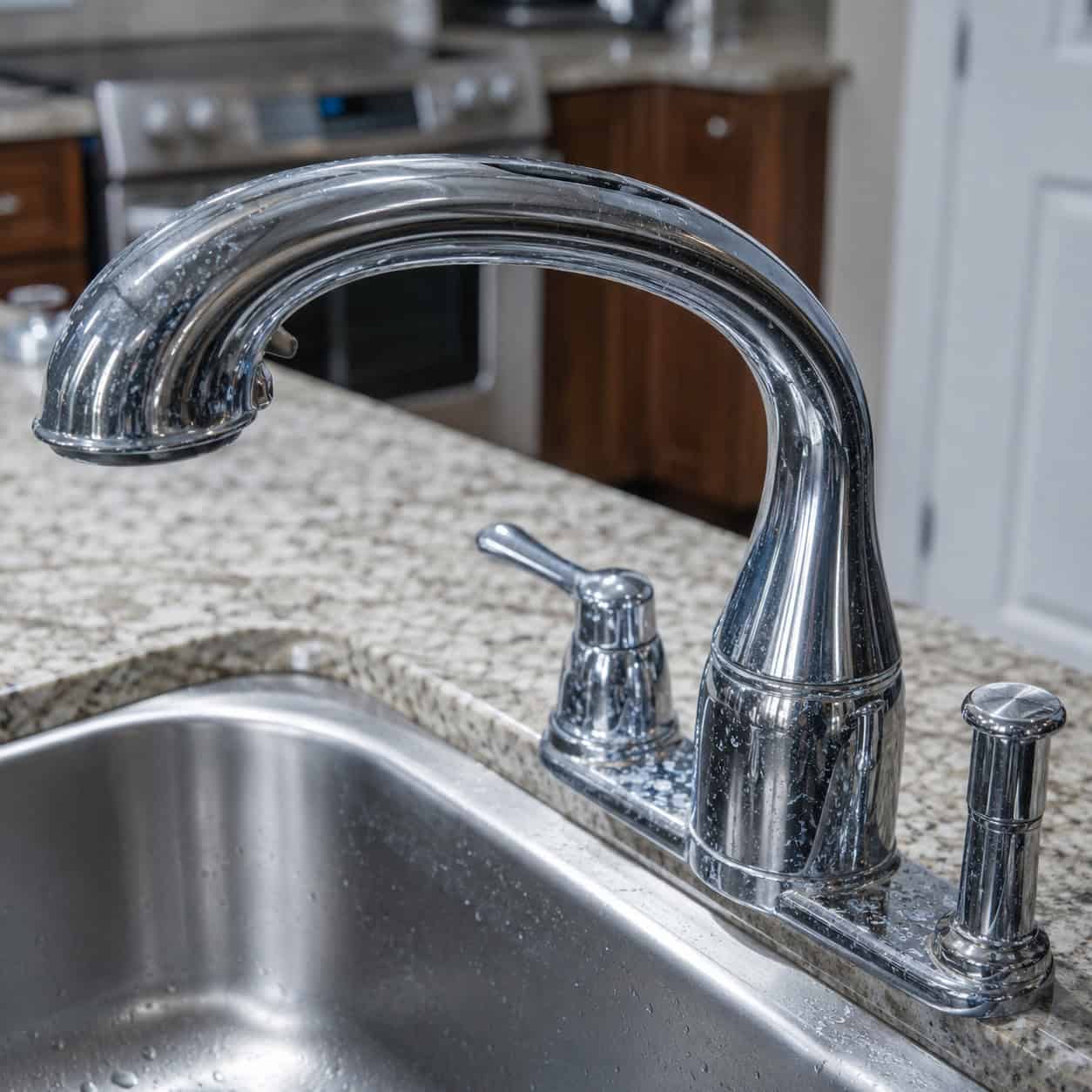
Chrome was the safe bet for thirty years.
Builders defaulted to it because it was cheap, matched anything, and offended no one. That’s exactly why it now reads generic — the finish of a kitchen nobody made a decision about.
Good Housekeeping has flagged overly shiny silver hardware as a look that’s quietly falling out of fashion. Polished chrome shows every water spot, too, so it looks smudged more often than clean.
Brushed nickel and stainless read warmer and hide spots better. If you’re torn between finishes, the chrome vs. stainless steel comparison lays out where each still makes sense.
4. The All-Matte-Black Faucet
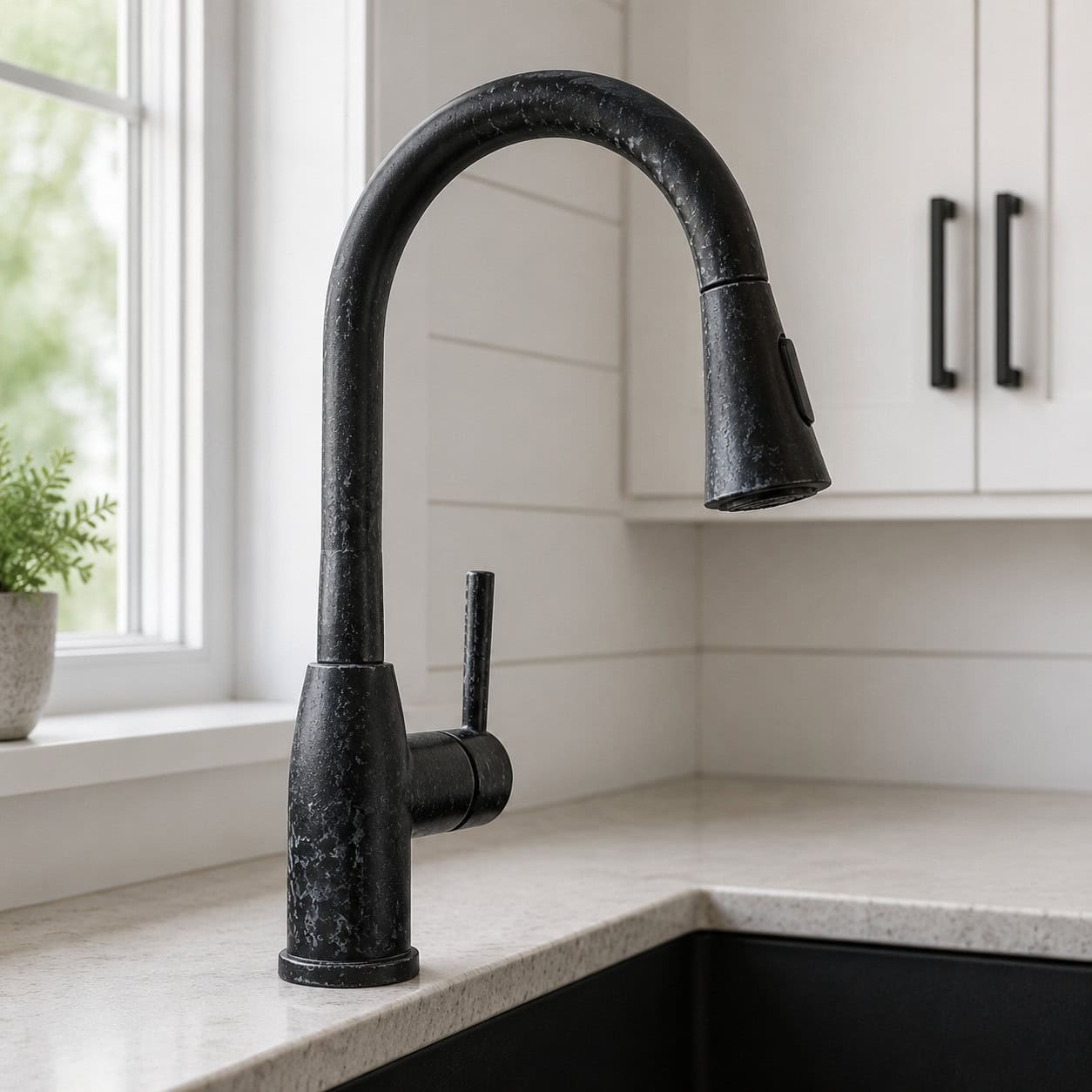
Matte black was the modern-farmhouse handshake.
Around 2016 it was everywhere — black faucet, black pulls, black pendant lights, shiplap somewhere in the frame. It felt bold and current for about five years.
Now designers list all-matte-black hardware among the trends on the way out. Worse, matte black is a fingerprint and water-spot magnet — hard water leaves chalky rings that show against the dark surface and never quite wipe clean.
One black accent still works. A whole kitchen of it is a snapshot of one specific year.
5. Bold Colored or Painted Faucets
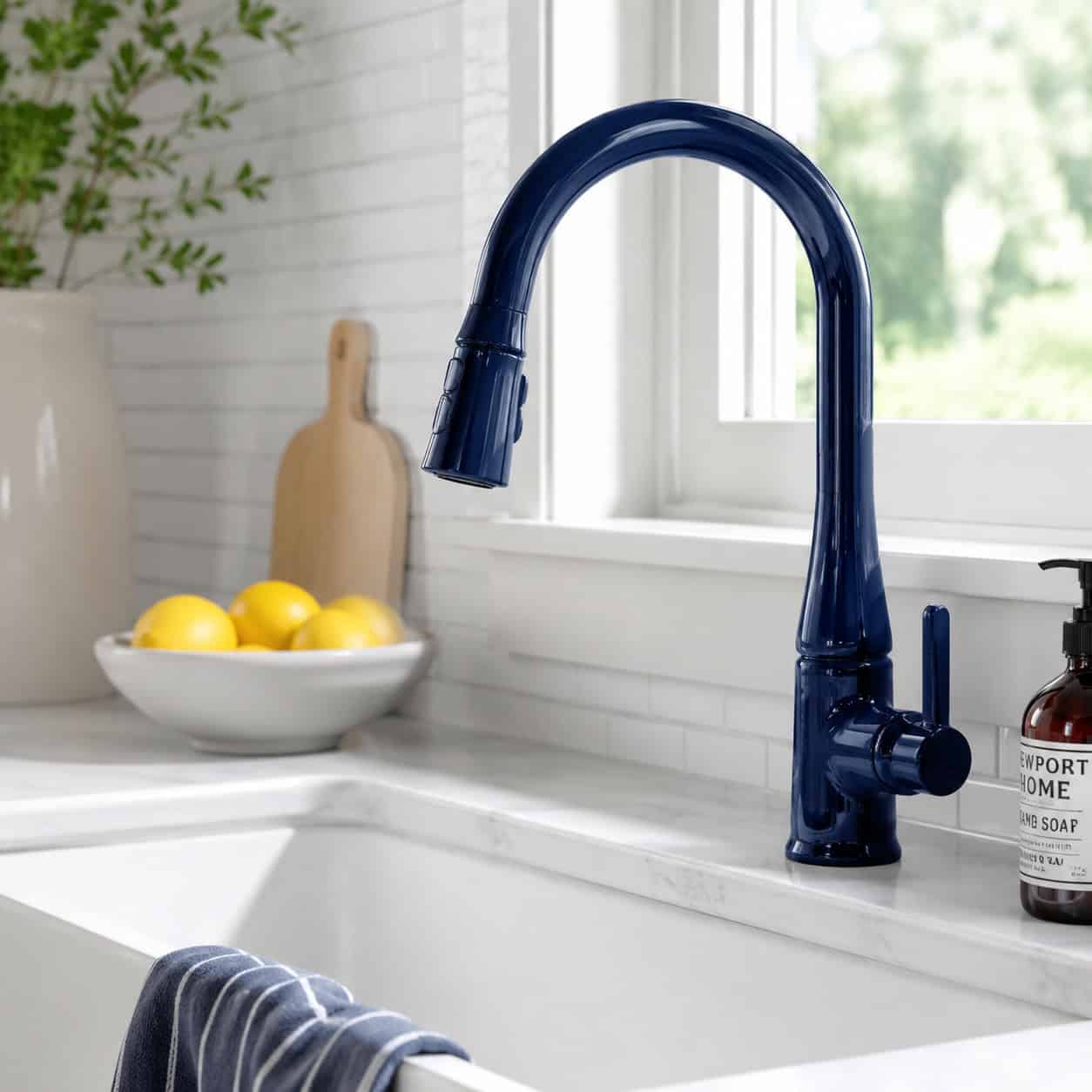
Deep green. Navy. A pop of red.
Colored faucets photograph like a dream and feel daring in the showroom. Eighteen months later they’re the thing owners quietly regret and the thing buyers nervously eye at resale.
A faucet is a long-term fixture in a way a throw pillow isn’t. Tying it to a color trend locks the whole sink area into a moment that passes fast.
Put the color somewhere cheap to swap instead — cabinet hardware, a rug, a bowl of lemons. Keep the faucet in a neutral metal. Skip the colored faucet.
6. The Low-Arc Two-Handle Deck-Mount Faucet
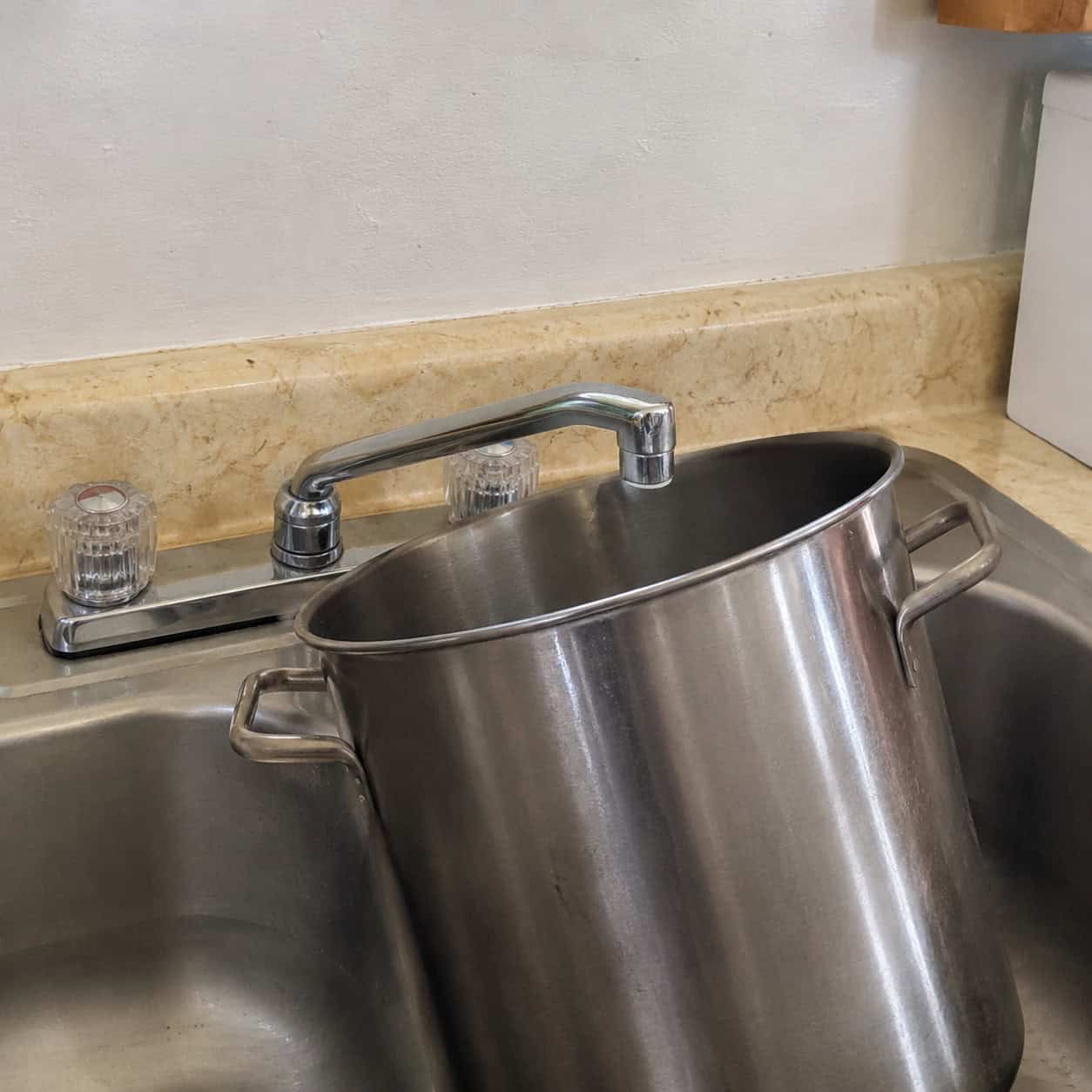
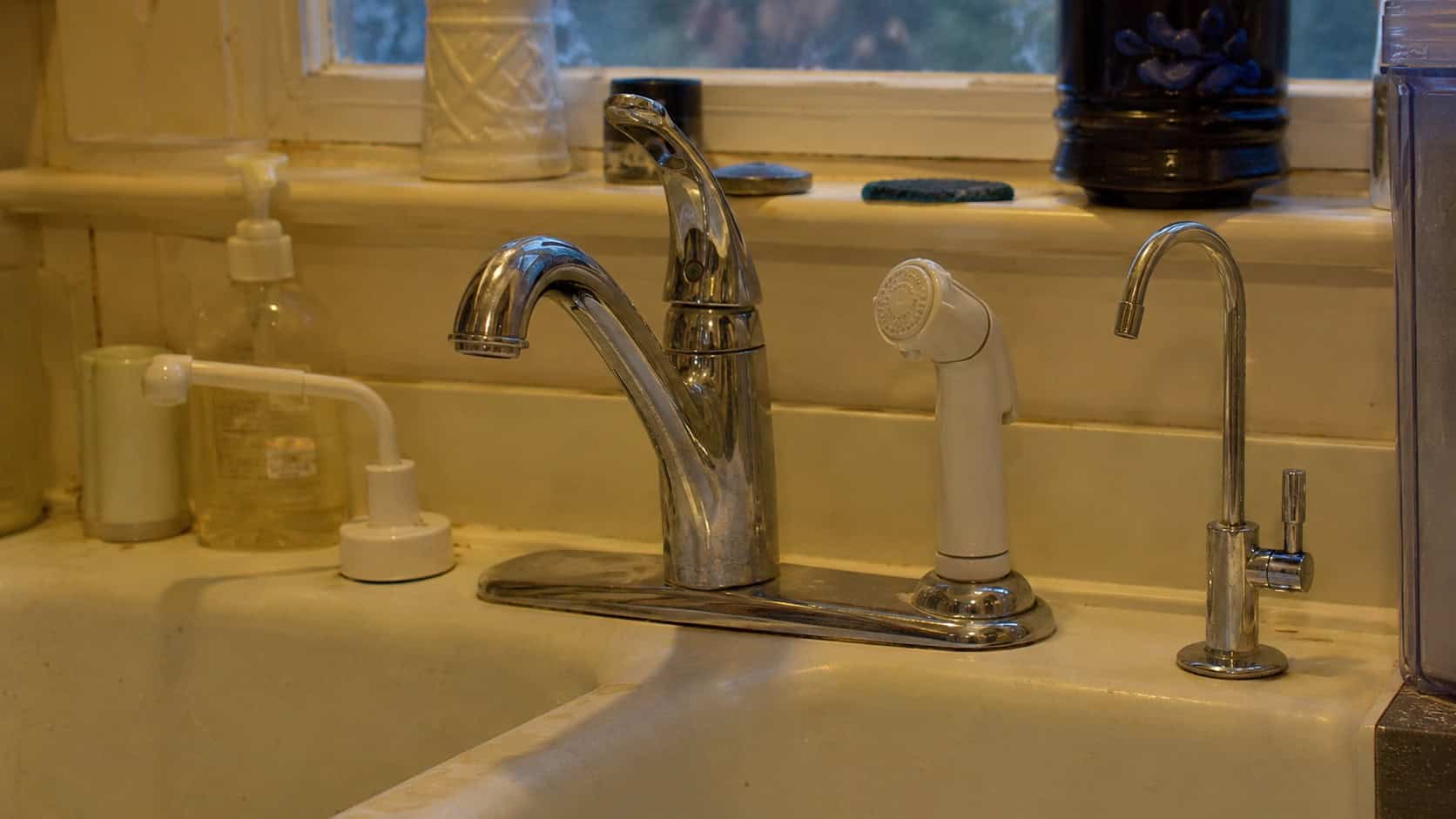
Short spout. Separate hot and cold knobs. A deck plate spanning three holes.
This is the definitive builder-grade faucet of the 80s and 90s, and it fails at the one job that matters most now. It can’t clear a tall stockpot. You end up tilting pots sideways to fill them.
The separate knobs also mean two chances to leak and a fussier temperature dance every time you turn it on.
A tall single-handle pull-down solves both. If a two-handle setup is springing leaks, the two-handle leak fix is straightforward — but a swap is usually the better use of your afternoon.
7. The Separate Side Sprayer
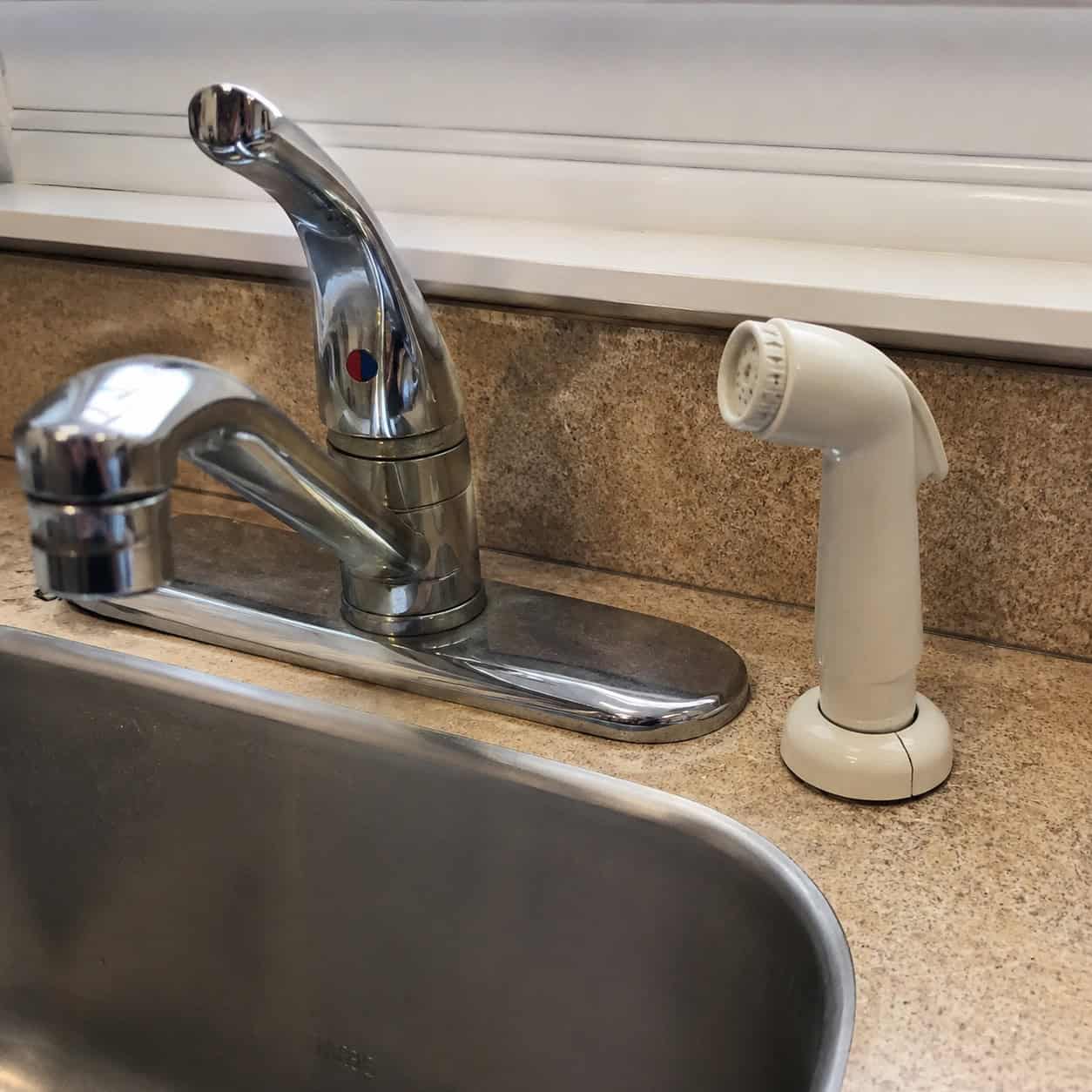
That little matching sprayer in its own deck hole is a dead giveaway.
For years it was standard — a separate hose and nozzle, often plastic, sitting beside the faucet. It dates a setup on sight.
The plastic ones also crack, gum up, and leak at the base. Retailers now push single-hole pull-downs precisely because they fold the spray function into the spout and free up a deck hole.
If you’re keeping the sink but ditching the sprayer, you can cap off the sprayer hole or fit a soap pump there instead. Clean deck, current look.
8. The Built-In Deck Soap-Dispenser Pump
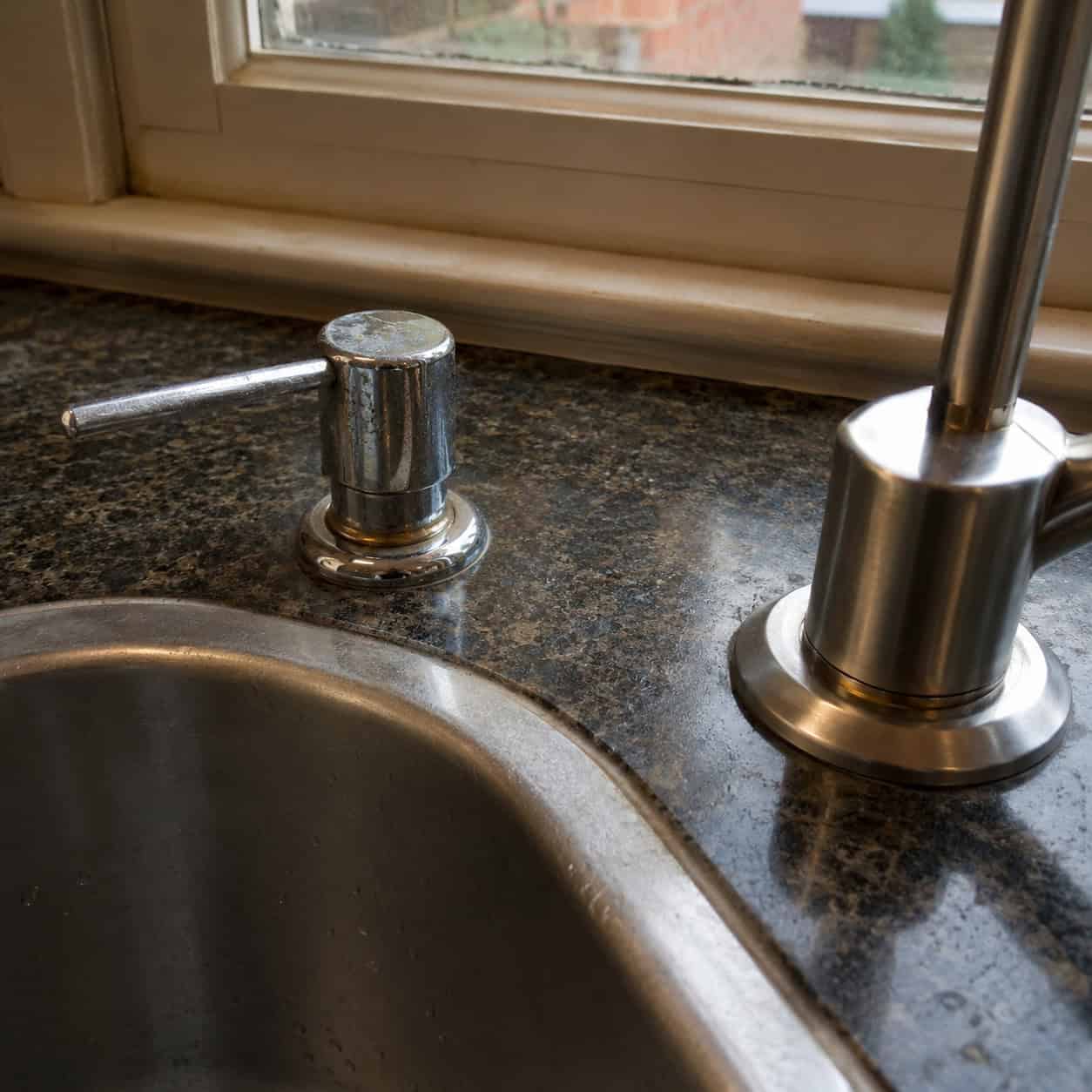
The permanently mounted chrome pump in the corner of the sink deck screams late-90s.
It seemed clever — refill from below, no bottle on the counter. In practice the pump clogs, the finish rarely matches the faucet a decade later, and it clutters the deck it was meant to tidy.
It also outlives its own coating. You end up with a worn chrome nub next to a brushed-nickel faucet.
A simple countertop pump you can move and replace looks less locked-in. And if you keep a deck pump, at least mind how far the dispenser sits from the faucet so it doesn’t crowd the spout.
9. The Dishwasher Air-Gap Cylinder
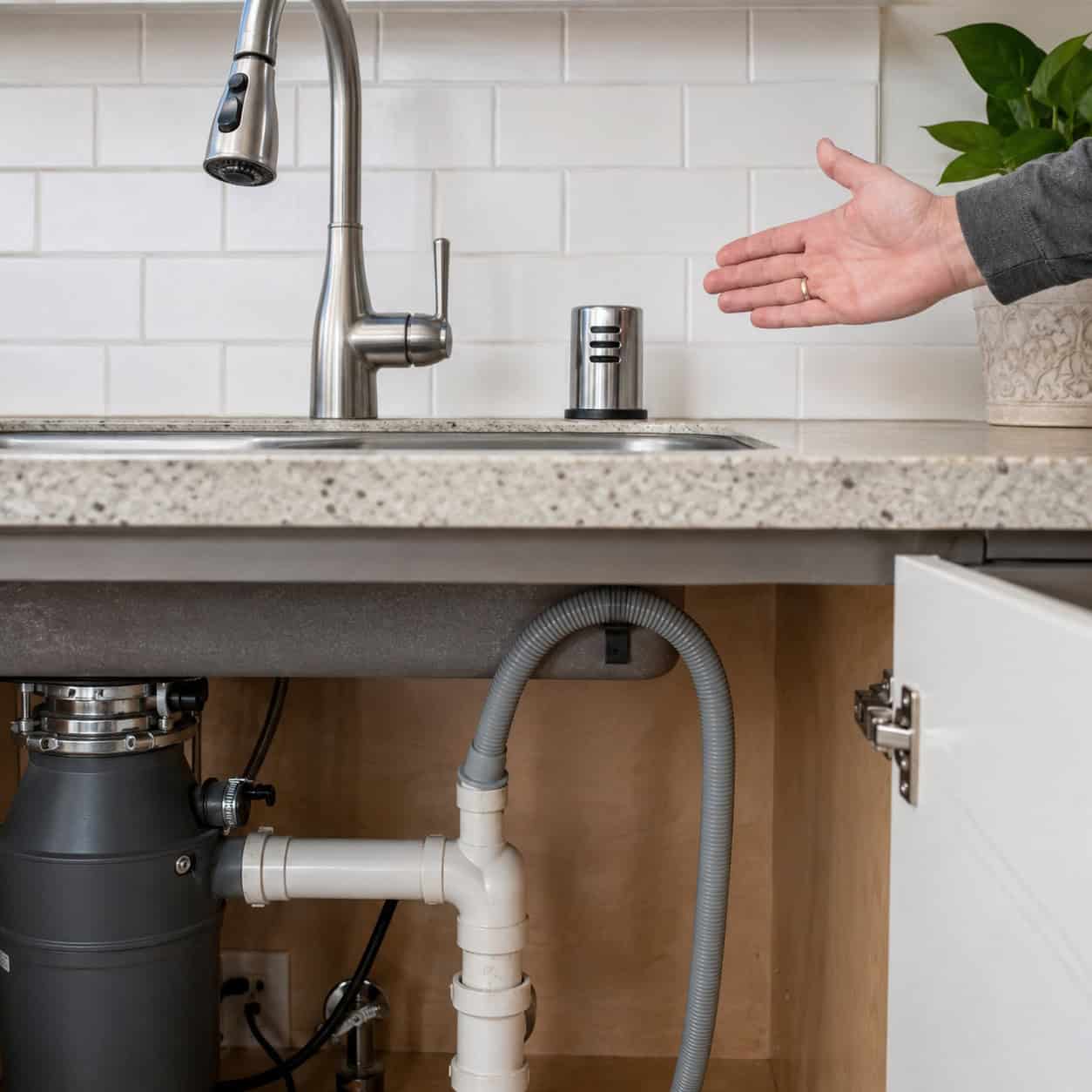
See that little chrome cylinder poking up beside the faucet? That’s a dishwasher air gap, and it instantly reads utilitarian and old.
Here’s what it actually does. The air gap is a backflow device — it keeps dirty drain water from siphoning back into your clean dishwasher. Water from the dishwasher drain hose rises into it and drops down into the disposal or drain, with an air break in between so nothing flows the wrong way.
A lot of jurisdictions require it. California, in particular, mandates a physical air gap on dishwasher installs, and plenty of local codes follow suit. Others allow a “high loop” — the drain hose looped up high under the counter and strapped near the top of the cabinet — as an alternative that hides the whole thing.
So before you yank that cylinder off the deck, check your local plumbing code. Removing a code-required air gap and relying on a high loop can fail an inspection and, in a rare failure, actually let contaminated water back into the dishwasher.
If code in your area permits the high loop, that’s the clean fix — the device disappears from your sightline entirely. If it requires the air gap, you can at least buy a low-profile or brushed cap that blends with your faucet instead of the shiny builder chrome. Don’t guess on this one. A quick call to a plumber or your local building department settles it, and the rundown of that thing next to your faucet covers the basics if you’re not sure what you’re looking at.
10. Cheap App-Dependent “Smart” Faucets
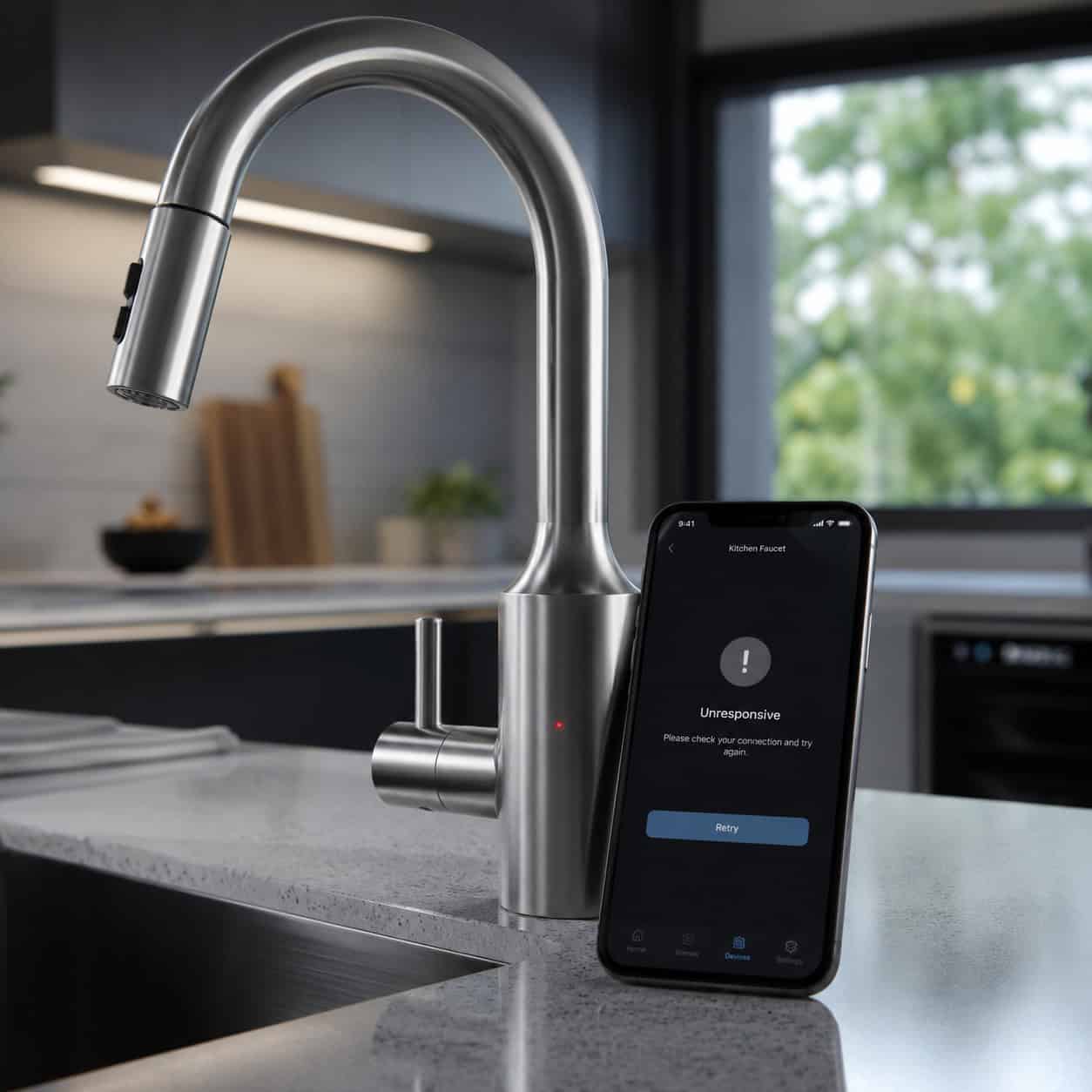
A faucet that needs an app to run is a countdown clock.
The cloud server gets shut off. The app stops updating. The sealed battery dies and can’t be swapped. Suddenly your premium fixture is a very expensive manual faucet with dead lights.
The tech ages far faster than the brass and stainless underneath it. Sources tracking faucet trends into 2026 flag gimmick smart features as the mark of a trend-chasing remodel.
A good touchless or touch faucet earns its keep — those work off a simple sensor and a battery you can replace. If yours acts up, most issues trace back to a dead battery you can swap yourself. It’s the app-locked, cloud-tethered models that turn into e-waste.
11. The Everything-Matches Single-Finish Suite
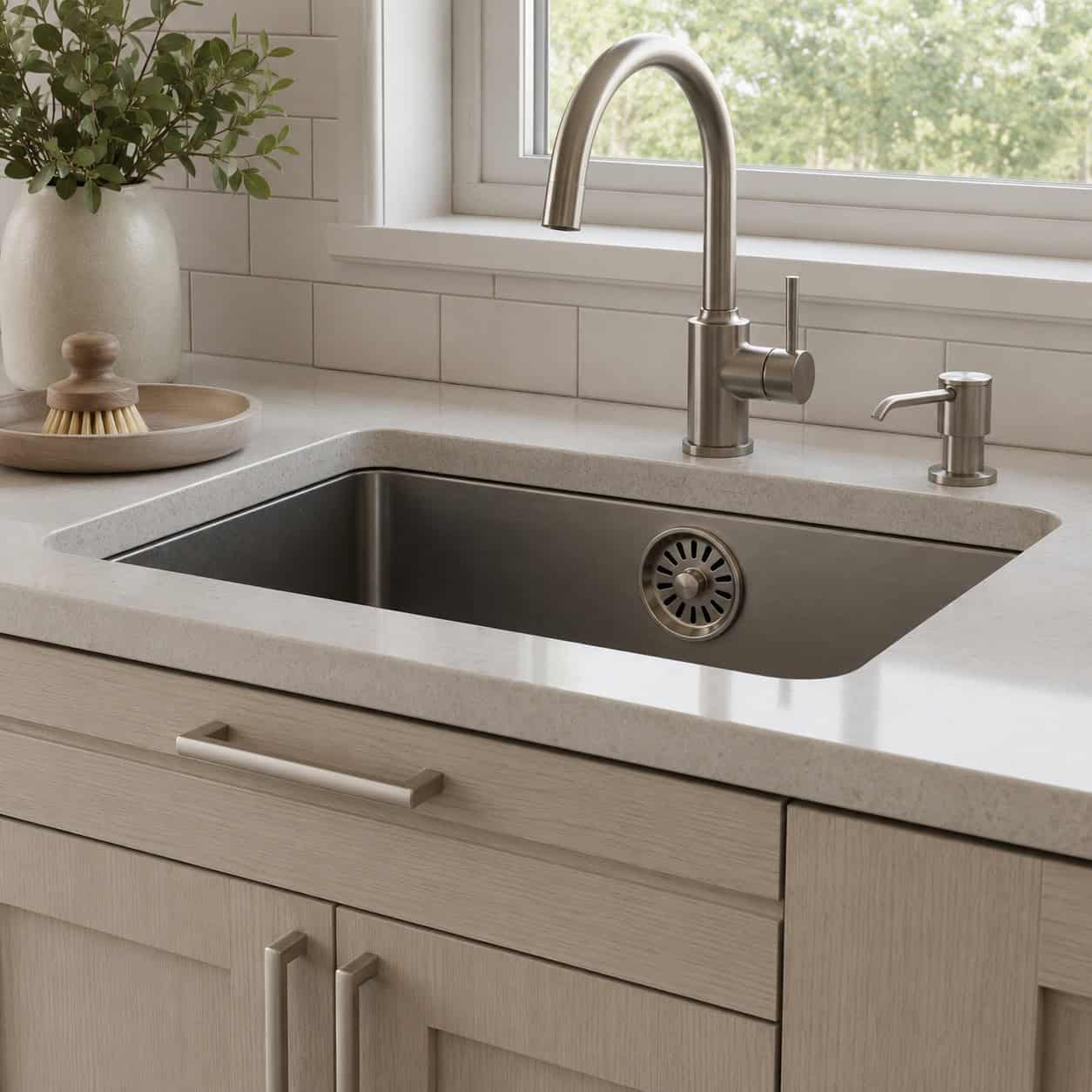
Faucet, strainer, soap pump, cabinet pulls, appliance handles — all one identical finish.
That’s the signature of a package remodel, where everything got picked off the same big-box display in a single afternoon. It looks coordinated in the store and flat in the room.
The current move is intentional mixed metals. A warm brass faucet over a stainless sink, black hardware on the cabinets, nickel lighting — layered, not matched.
It doesn’t have to be a free-for-all. There are rules of thumb for whether your pulls should match your faucet, and the short answer is: pick two finishes, repeat each one twice, and stop matching everything to everything.
12. Almond, Bisque, and Biscuit Colored Sinks
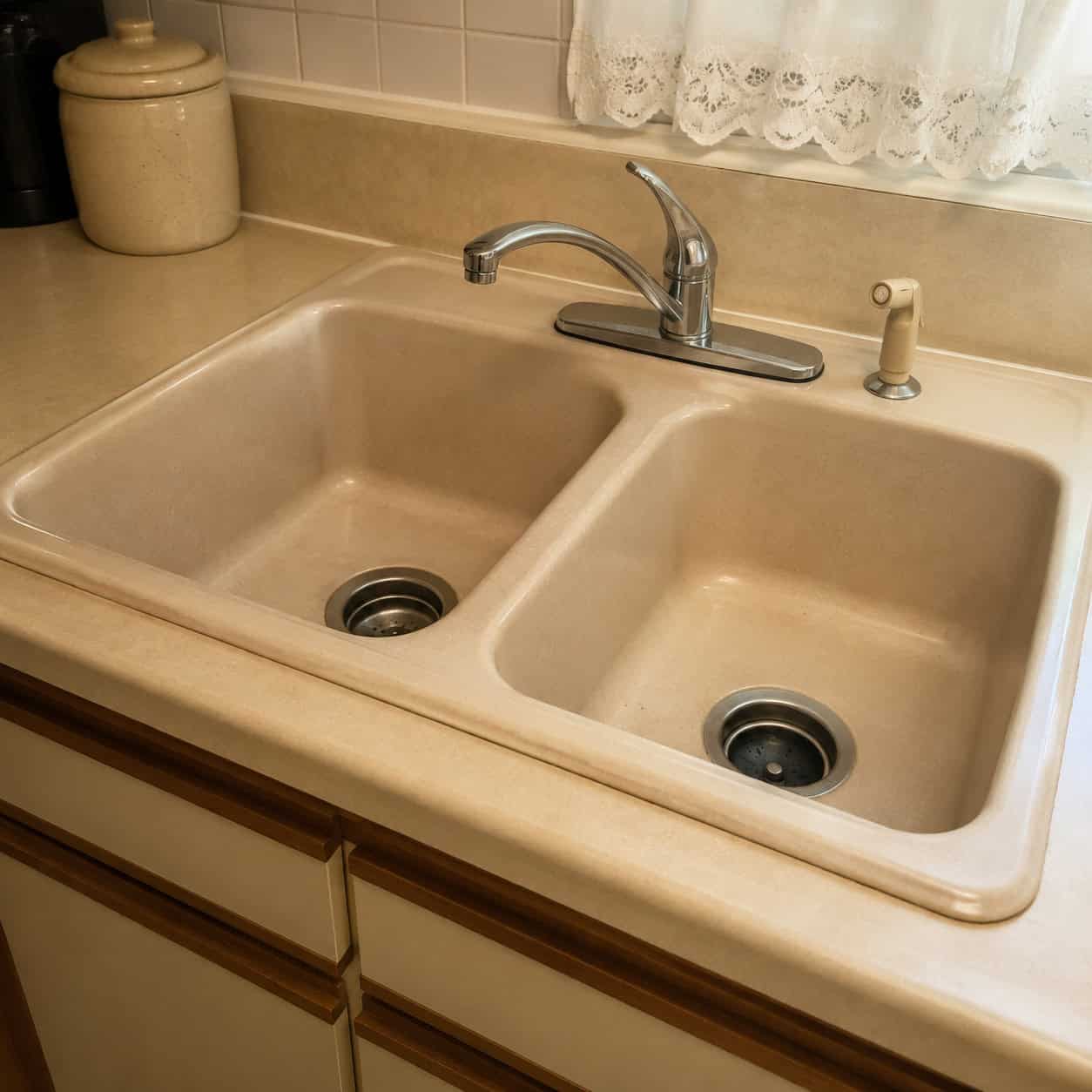
The beige-toned sink was built to disappear into an almond laminate counter.
It’s pure early-90s. Enameled or composite, in that soft nothing-color meant to blend with the whole warm-neutral kitchen of the era.
Manufacturers themselves now group these tones with avocado and harvest gold — gone the way of the rotary phone. Against a white or gray kitchen, biscuit looks dingy, like a white sink that didn’t get clean.
A crisp white or a stainless bowl reads current. If white’s on your list, weigh whether a white kitchen sink is a good idea for how you actually cook before you commit.
13. The Corian Integrated One-Piece Molded Sink
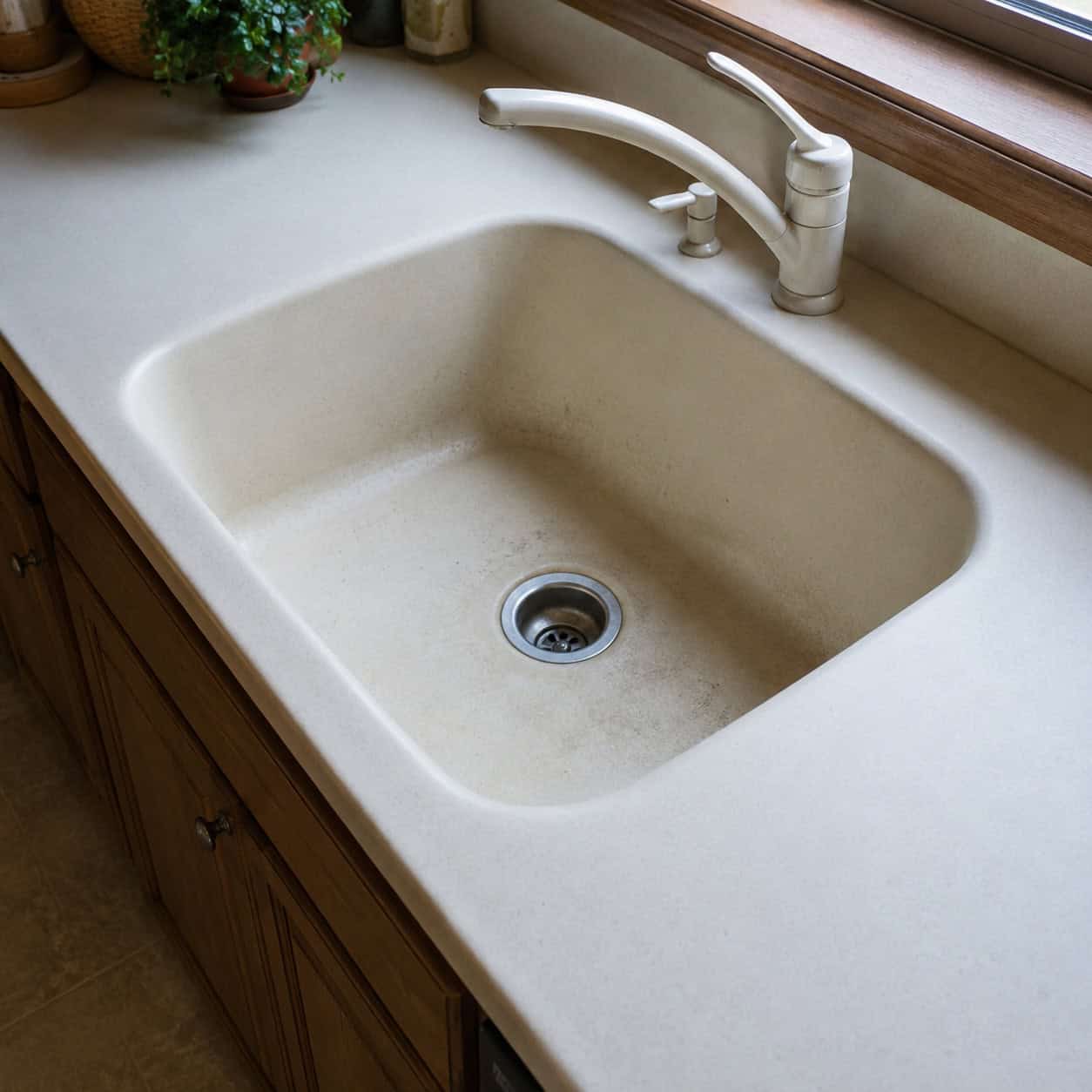
In the 90s, a seamless molded sink-and-counter felt like the future.
No seam, no lip, no grime line — the bowl flowed right out of the countertop in one continuous piece of solid surface. It was genuinely clever.
It also stained, scorched under a hot pan, and came in a narrow band of styles. Today that one-piece look flags a kitchen as untouched since the Clinton years.
The current version of that seamless dream is an undermount bowl in quartz or stone. Same clean wipe-down, none of the dated softness.
14. The Drop-In (Self-Rimming) Stainless Steel Sink
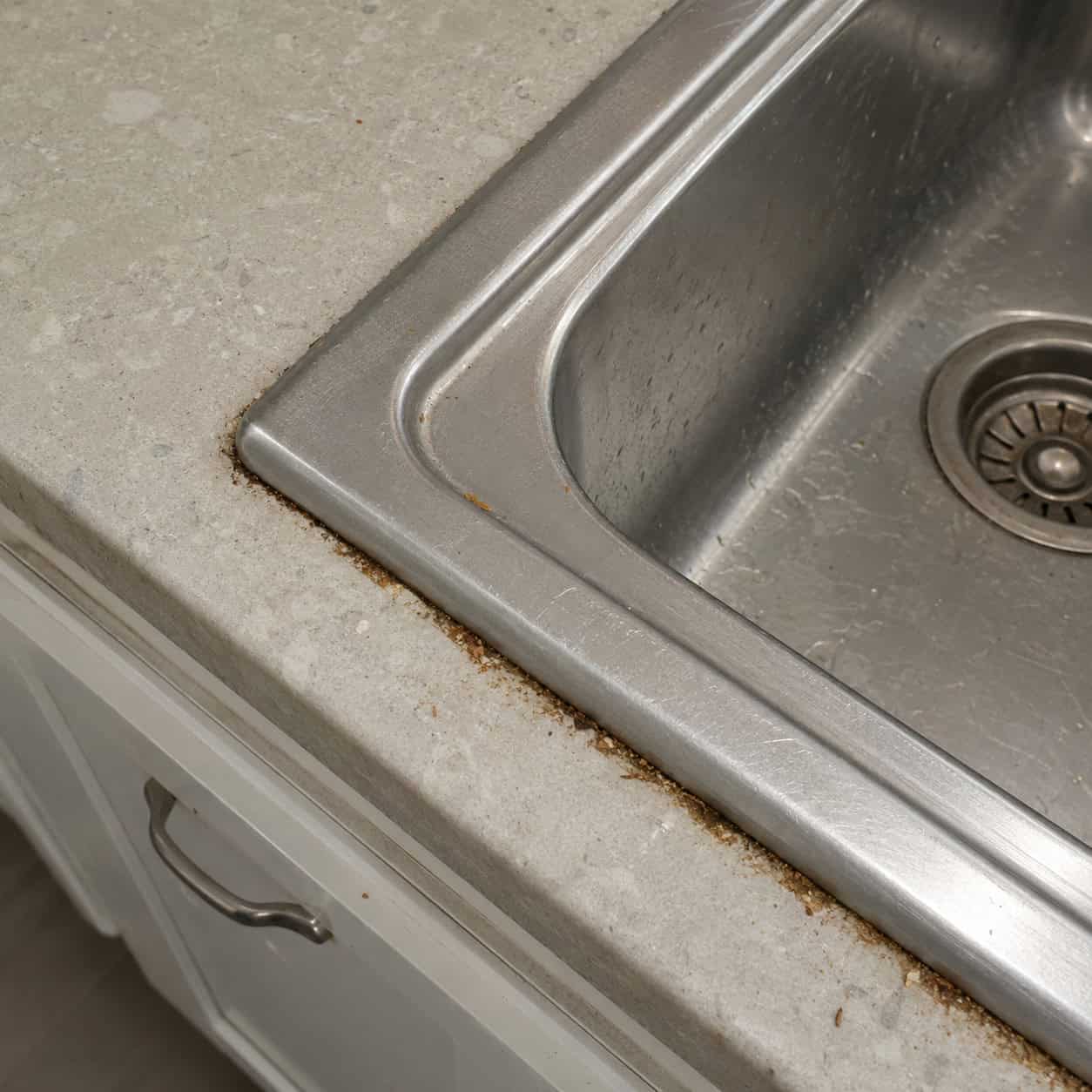
The raised lip sitting on top of the counter is the classic older install.
Crumbs collect in the seam. Grime rings the rim. You’re forever wiping up to a metal edge instead of straight into the bowl.
Even BLANCO markets drop-ins mostly as the budget or retrofit option now. The look that reads current is the undermount — bowl mounted below the counter, no lip, wipe crumbs right in.
Switching isn’t always a weekend job, but it’s doable. If your counter allows it, installing an undermount sink is one of the highest-impact updates you can make at the sink.
15. Big Rounded-Corner Sink Bowls
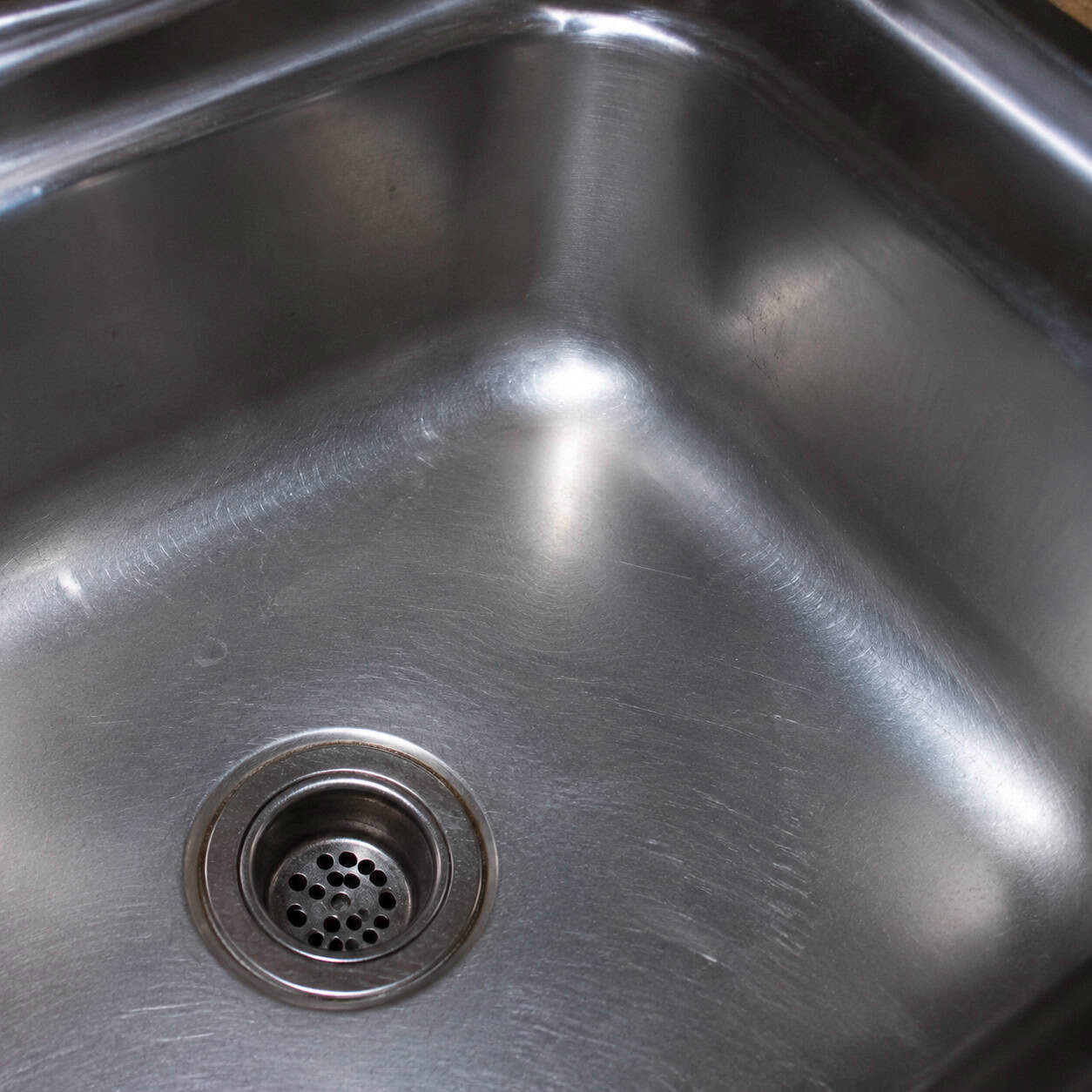
This one’s subtle. Once you see it, you can’t unsee it.
Older stainless bowls have deeply rounded interior corners — big soft curves where the walls meet the floor of the sink. It was easier to stamp and easier to clean, so it was everywhere before 2010.
Modern sinks use tight zero-radius or near-square corners. The result is crisp and architectural, like the difference between a rounded old TV and a flat-screen.
Nothing’s wrong with a rounded bowl functionally. But side by side, the soft corners date instantly.
16. The Shallow 50/50 Double-Bowl Sink
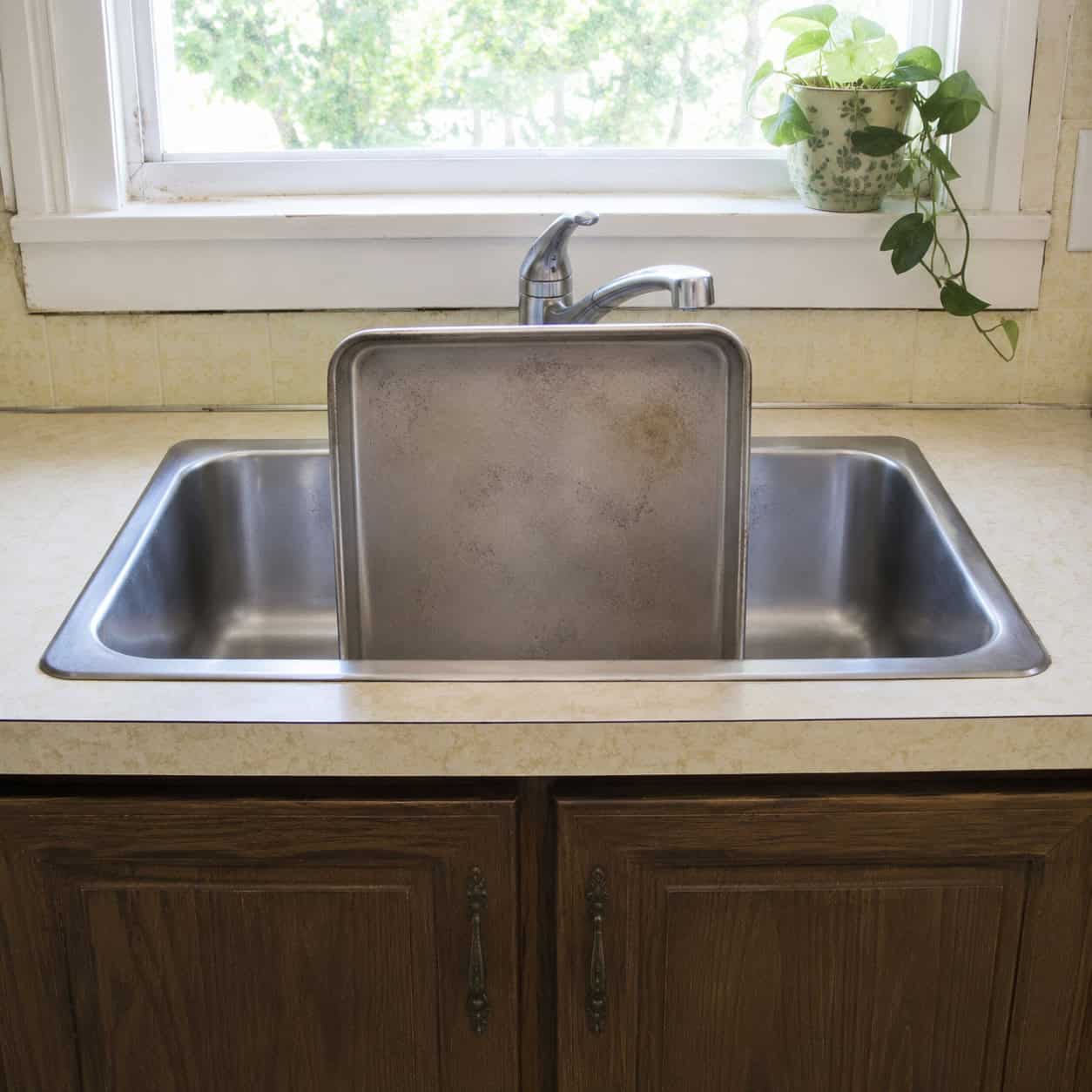
Two even bowls, both on the small side, both shallow.
The 90s loved this split — one side to wash, one to rinse. The trouble is neither bowl fits a stockpot or a sheet pan, so you’re washing big items at an awkward angle in a basin that’s too small.
Today’s kitchens lean to a big single bowl or an offset low-divide layout with one large working side. If you’re deciding, the single vs. double sink breakdown and the 70/30 vs. 60/40 comparison both help you pick a split that actually fits your cookware.
An even 50/50 in a shallow depth is the giveaway. It says the sink was chosen before anyone thought about the pans.
17. The Tiled-In / Tile-Rimmed Sink
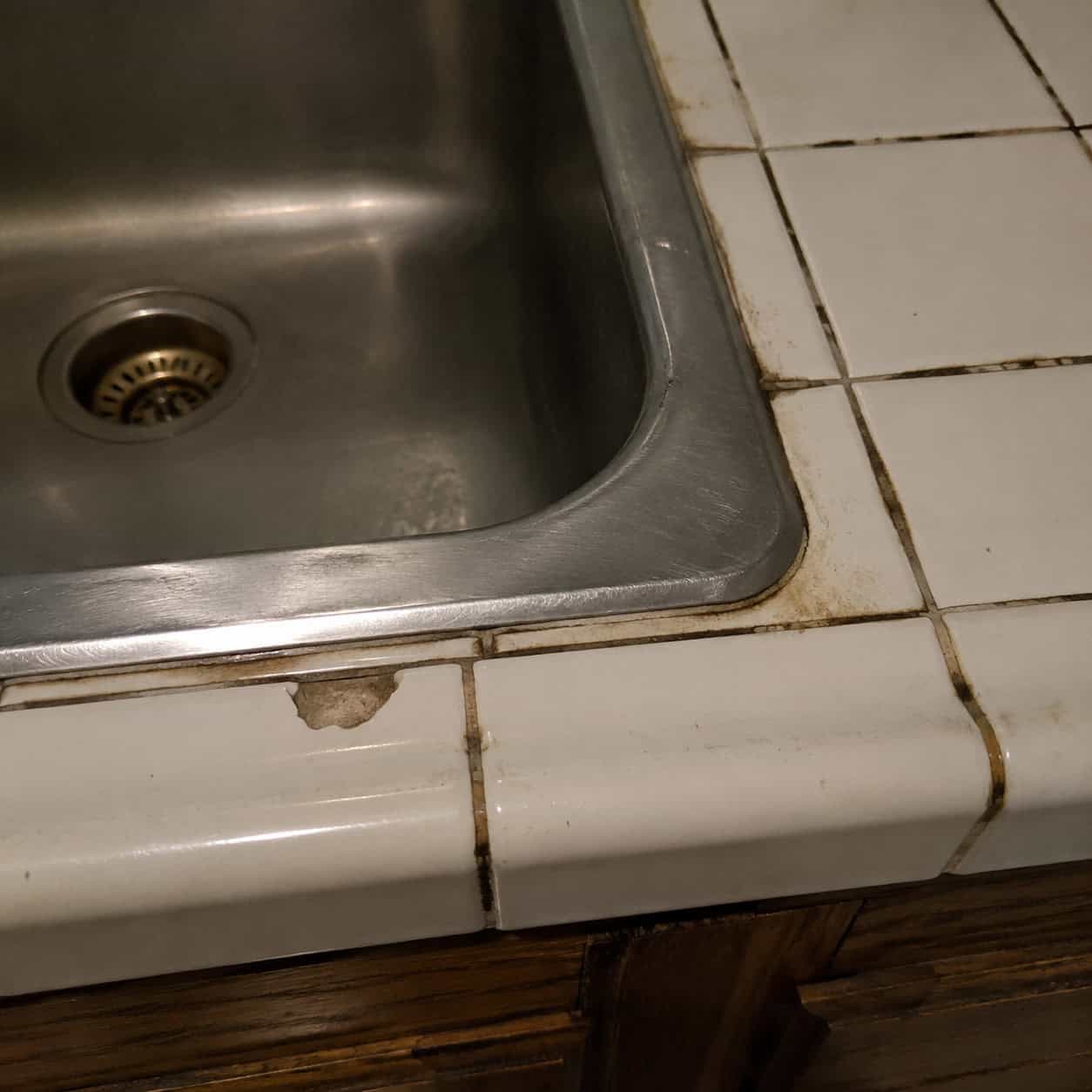
A sink framed by grout lines is a hard time-stamp.
Tile countertops with a tiled-in sink edge were big in the 80s. The problem is everything that happens next — the grout stains dark, the tile chips at the rim, and the whole assembly starts looking grimy no matter how hard you scrub.
The seam between tile and sink is impossible to keep clean and a magnet for mildew. It reads dated the moment you walk in.
A solid-surface counter with an undermount bowl erases all of it. One smooth run, no grout to police.
18. The Separate Filtered-Water / Instant-Hot Mini Tap
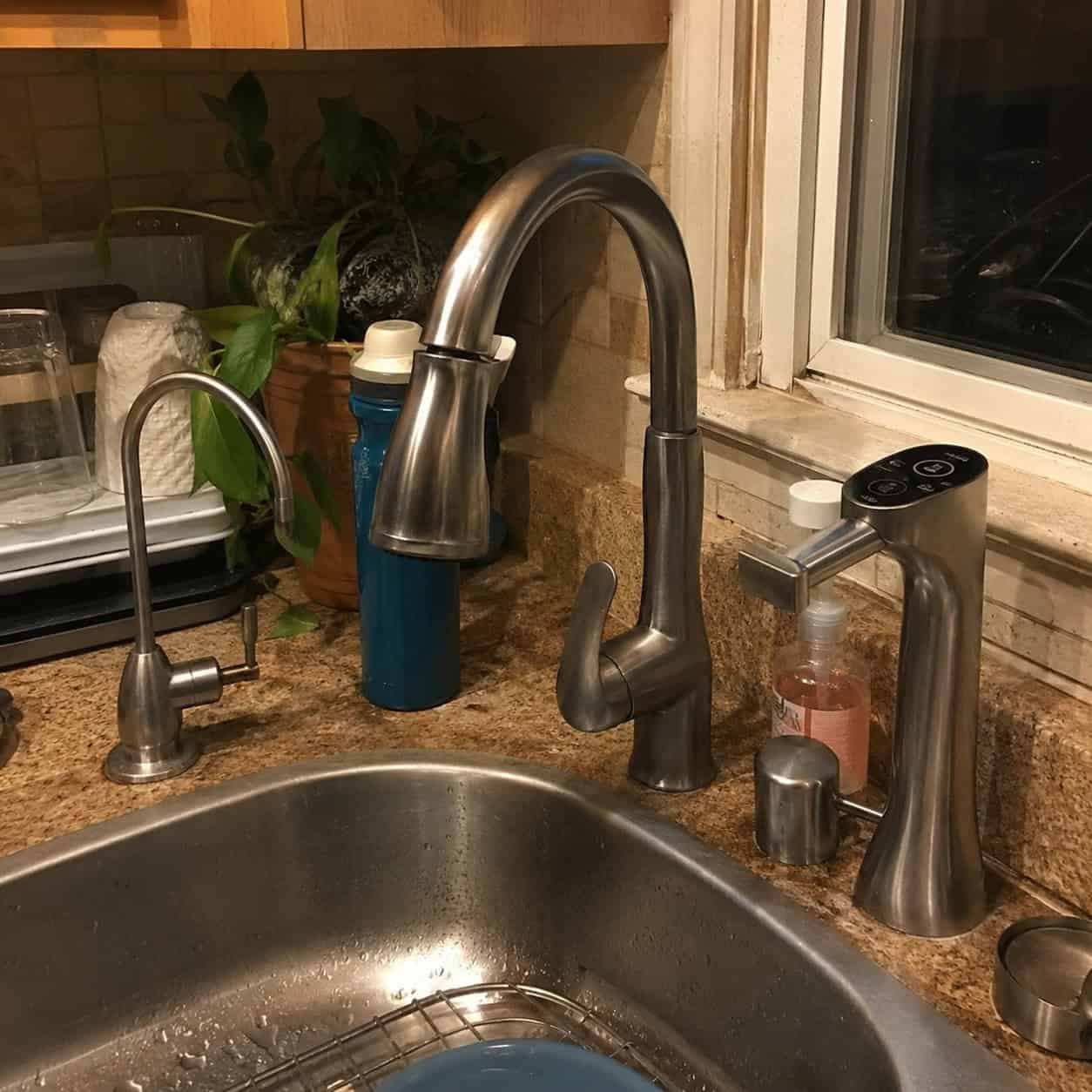
The little dedicated spigot beside the faucet used to be a status touch.
A skinny cold-filtered-water tap. Or a matching instant-hot for tea. In the 90s and 2000s, having a second, smaller fixture on the deck signaled a kitchen that had thought of everything.
Now it mostly reads as clutter — an extra hole, an extra finish to keep matched, a small tap crowding the deck around the main faucet. And the technology behind it has moved on entirely.
Here’s where the choice gets interesting. Filtration used to demand its own fixture. Today you have cleaner options that don’t add a spout to your sightline. A faucet-integrated filter runs the treated water through the main spout, so there’s nothing extra on the deck at all. A simple carrier filter — a Brita or PUR unit — clips onto a pull-out faucet if you want the cheapest path; the guides on installing a Brita filter or a PUR filter on a pull-out faucet walk through both.
The best-looking modern setup hides the whole system below the counter. An under-sink cartridge filter or a reverse-osmosis unit lives in the cabinet and feeds either the main faucet or a single discreet tap — one that’s chosen to match, not the mismatched afterthought of the 90s. If you’re keeping a dedicated tap, at least make it intentional. And if you’re wondering whether you even need one, it’s worth knowing whether your kitchen tap water is safe to drink straight from the line before you commit to hardware.
The dated version is two or three little taps fighting for deck space. The current version is filtration you can’t see.
19. The Over-Styled Hammered Copper Apron Sink
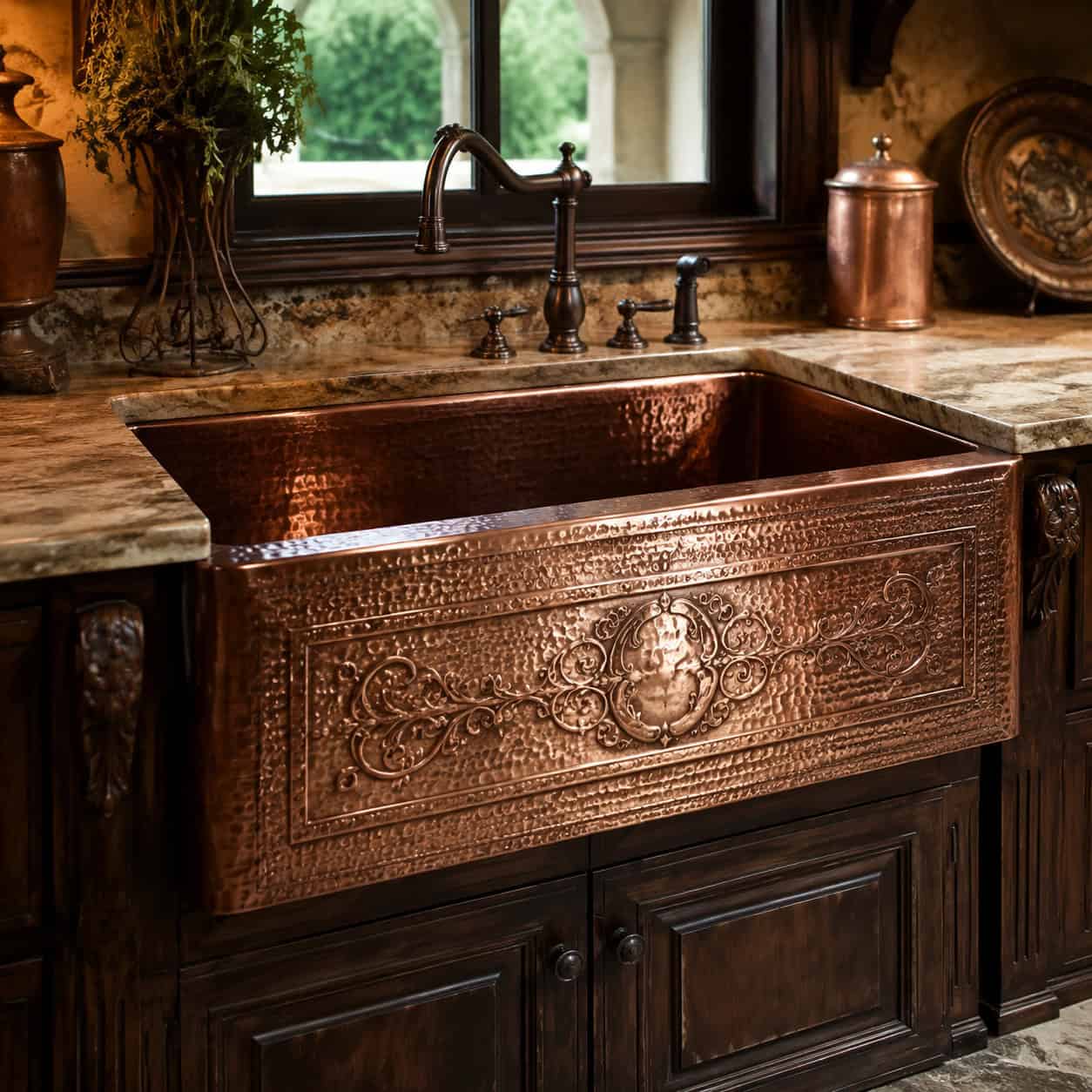
Copper is genuinely back — but not this version.
The 2000s rustic craze gave us the heavily ornate, high-shine hammered copper apron sink, usually with a decorative front panel and a mirror finish. Paired with the rest of the Tuscan package, it tries very hard.
That effort is exactly what dates it. It pins a kitchen to a specific rustic-glam moment that’s long over.
The current copper move is restraint — a simpler bowl, a softer living patina, less bling. If you have a copper sink you love, the fix might just be letting it age; the guide on restoring patina on a copper sink leans into the quieter look that reads current.
20. An Undersized Faucet Swamped by a Huge Sink
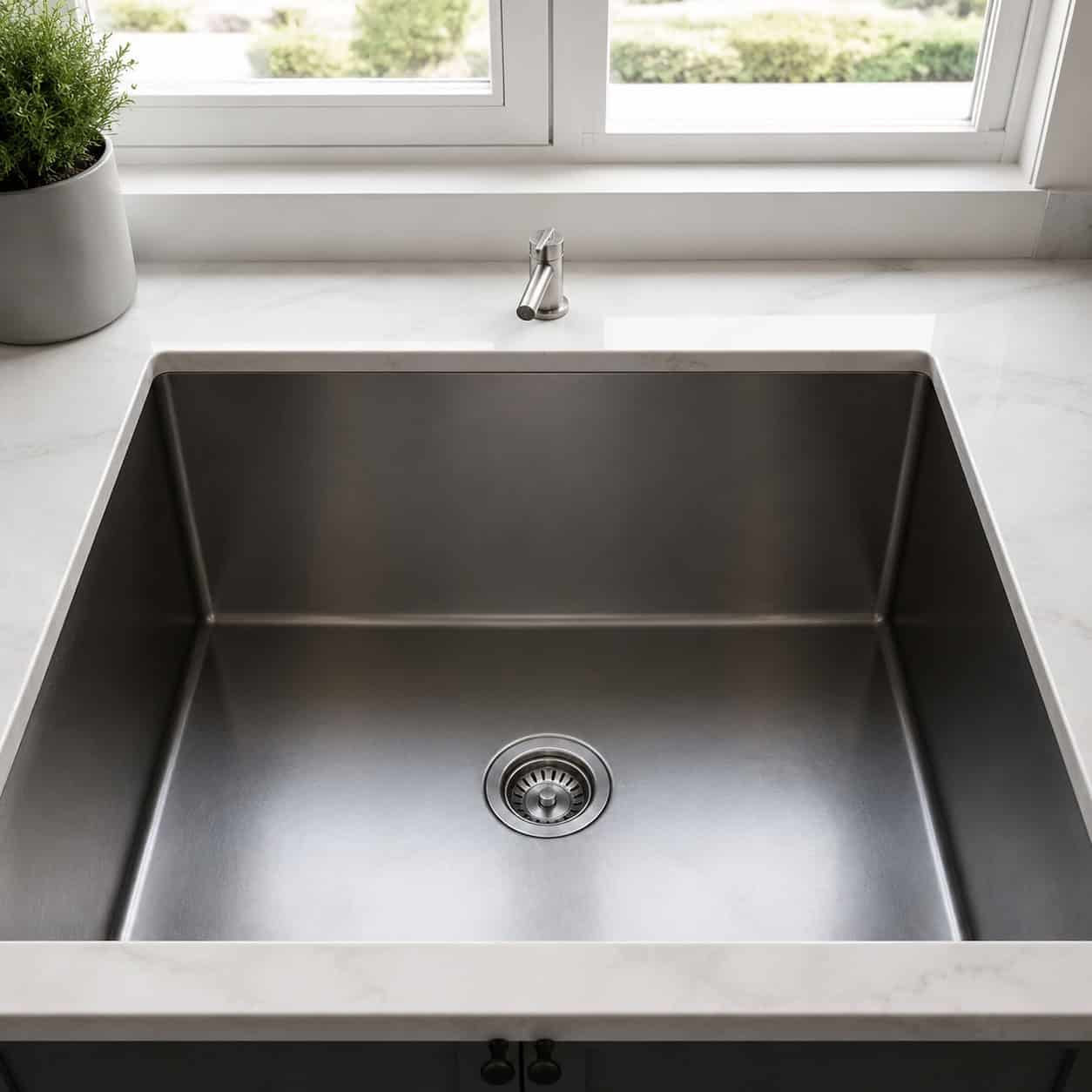
Proportion is a trap people fall into during a partial update.
You buy a big beautiful modern single bowl. Then you keep the short old faucet, or grab a cheap small one to save money. Now a tiny spout hovers over a cavern of a sink, and the whole thing looks like a mismatched afterthought.
Scale matters more than almost any single feature. A large sink needs a faucet tall and long enough to reach the drain and clear the bowl.
Check the numbers before you buy. The faucet size chart and the rule on how far a faucet should extend into the sink keep you from cheapening a good bowl with the wrong spout.
21. The Gooseneck Bridge Faucet — Actually Safe
Here’s the twist entry.
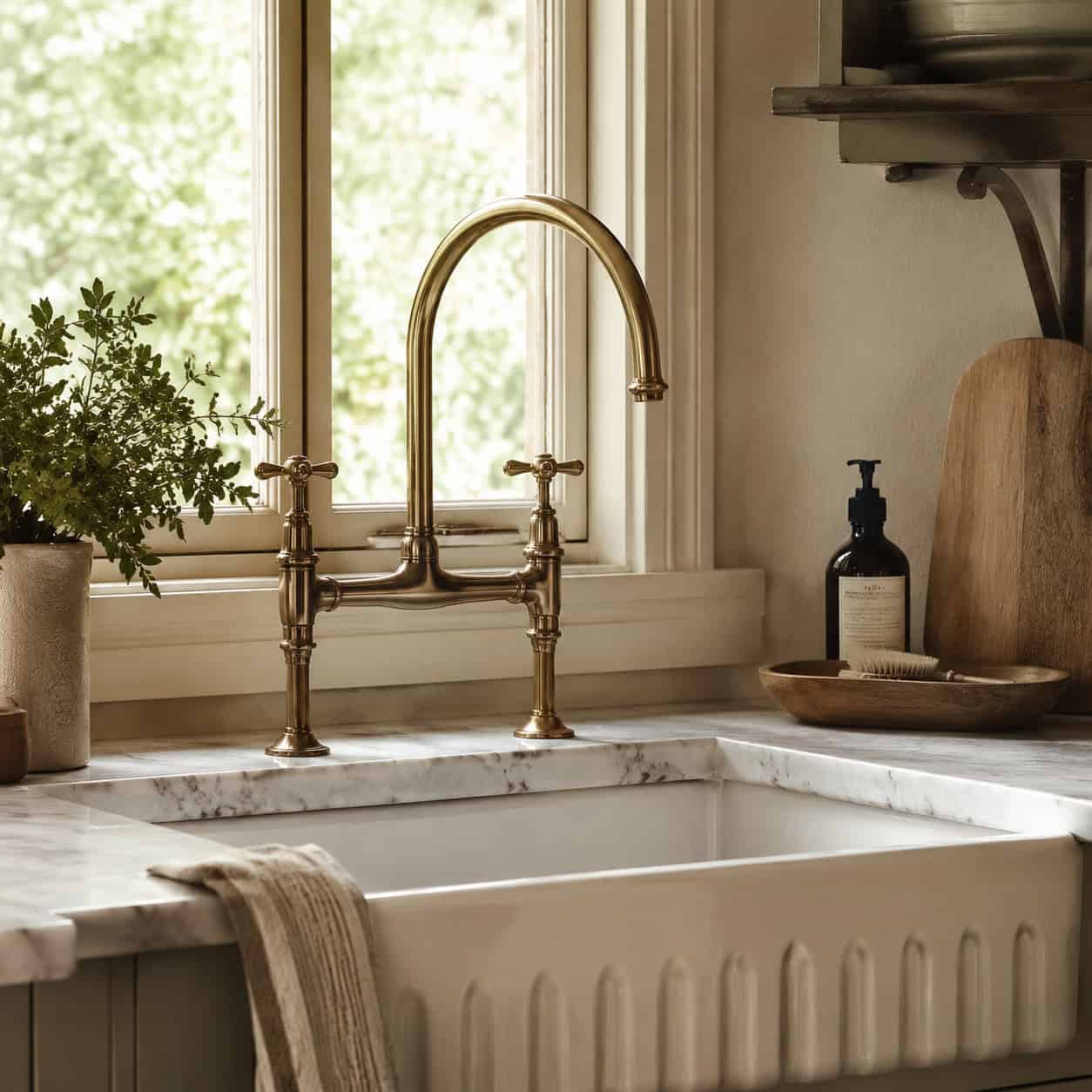
A two-handle bridge faucet — the kind with the exposed horizontal pipe joining hot and cold above the deck, arching into a tall gooseneck — looks old. A lot of people assume it dates a kitchen instantly.
It doesn’t. This one’s timeless.
The bridge faucet reads as intentional heritage, not dated builder-grade. In a farmhouse or a classic kitchen it looks considered and expensive, the opposite of the squat two-handle deck faucet at number six.
The difference is design intent. A cheap low-arc two-handle faucet is a default nobody chose. A bridge faucet is a deliberate style statement — and it ages gracefully. Keep it.
22. Small Standalone Bar/Prep Sink
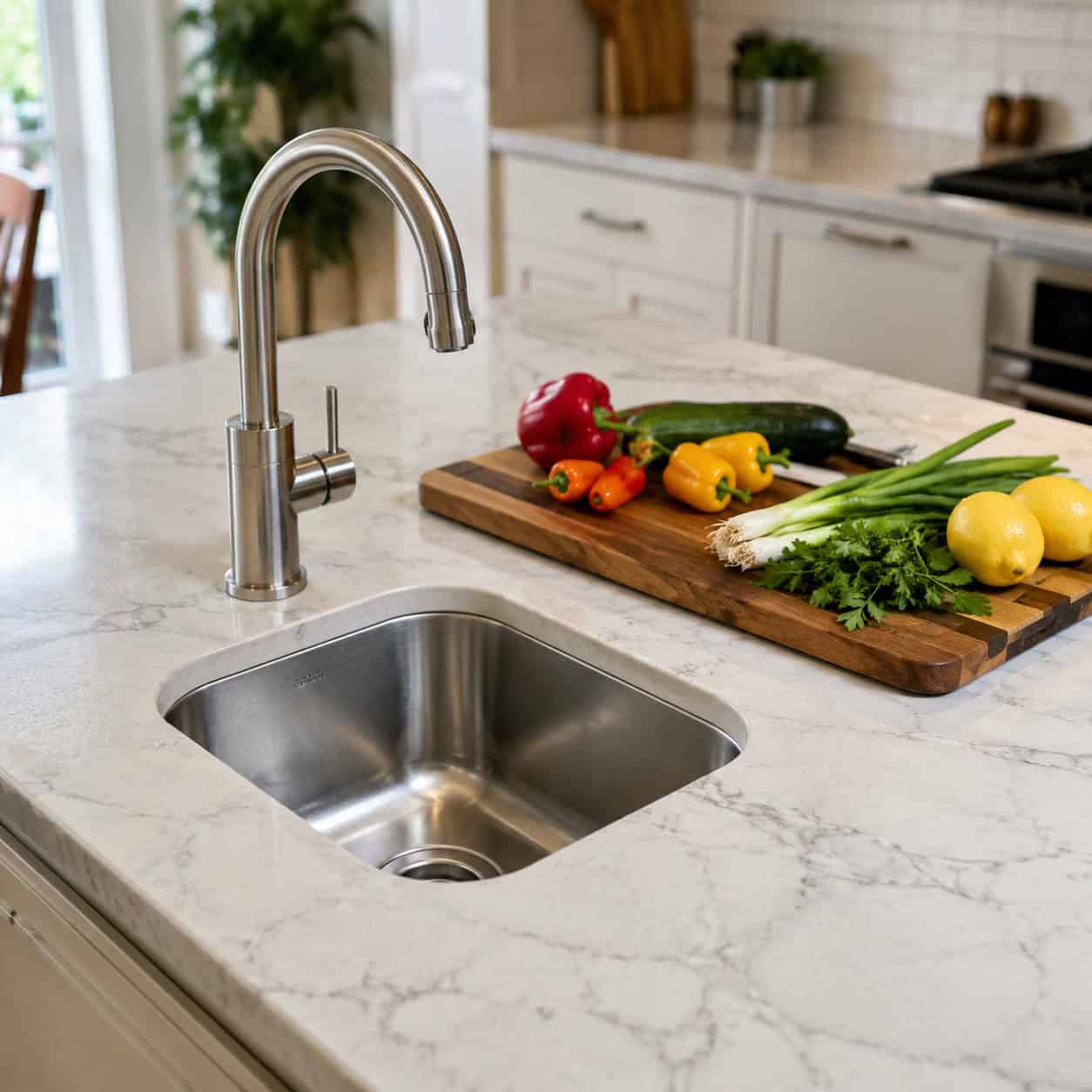
The tiny second sink in the island had its moment.
In the 2000s, a prep sink signaled a big, serious kitchen — a spot to rinse vegetables away from the main basin. Then people actually lived with it.
The little bowl gets used a few times a year while permanently eating prime island counter space and adding a second faucet to keep matched. Homeowners are increasingly reclaiming that surface for a clean, uninterrupted prep zone.
A prep sink still earns its spot in a genuinely large kitchen with two cooks. In a normal island, it’s a dated feature that steals the counter you actually need. If yours is really a bar setup, the bar faucet vs. kitchen faucet difference is worth a look before you replace anything.
23. Rope-Trim and Fluted Ornate Faucet Bodies
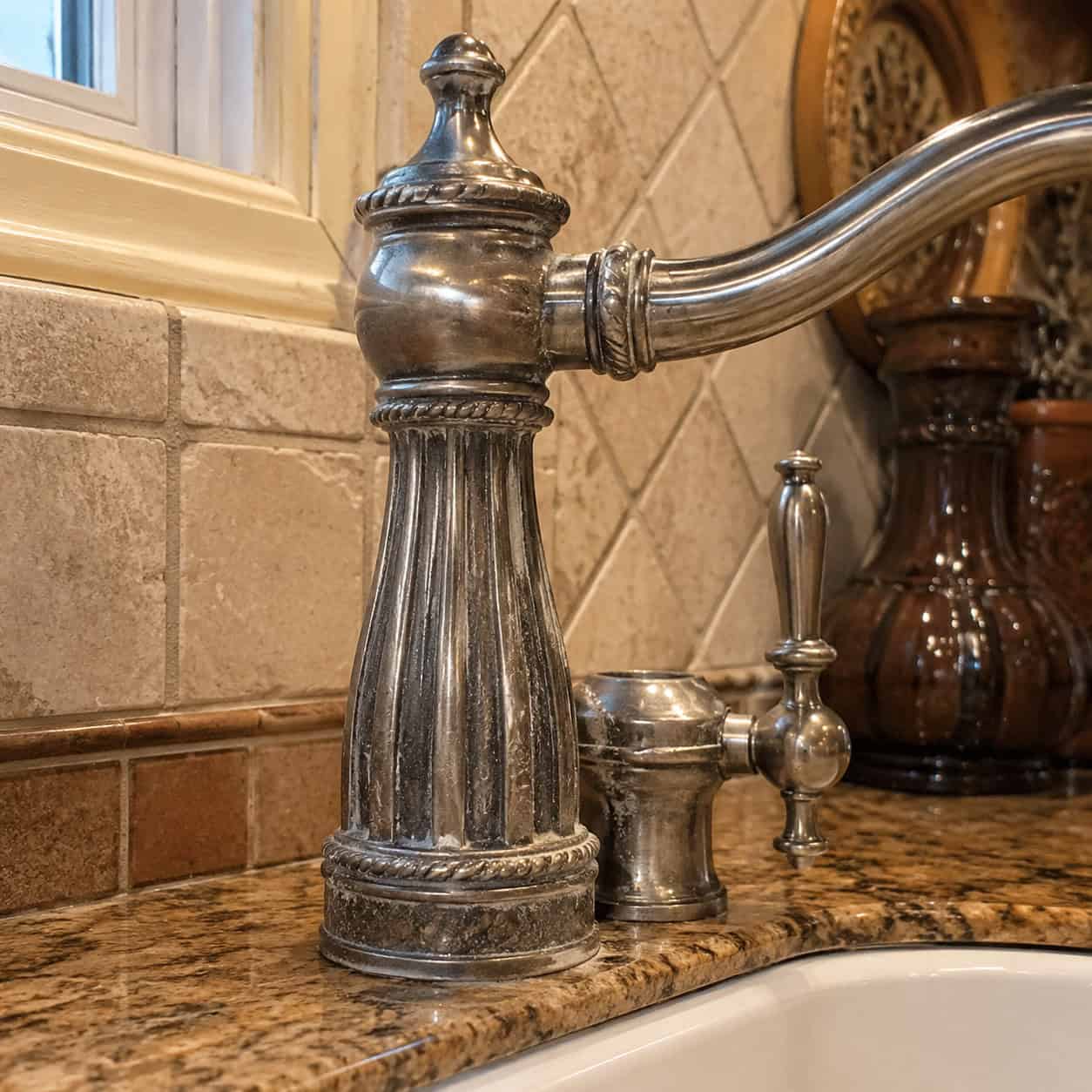
Some 90s and 2000s faucets came dressed up.
Rope trim around the base. Fluted columns on the body. Little decorative scrolls where a plain metal shape would do.
Below is the quick read on why the ornate silhouette dates while the clean one holds up.
| Ornate / fluted body | Clean modern line | |
|---|---|---|
| Reads as | Dated, fussy | Current, calm |
| Cleaning | Grime in the detail | Wipes flat |
| Pairs with | One narrow style | Almost anything |
| Ages | Fast | Slowly |
The decoration is what dates it. All that surface texture also traps hard-water scale and grime in the grooves, so it looks dirty faster than a smooth body.
A clean gooseneck or a simple pull-down carries any style and ages slowly. Let the sink and the counter carry the character. The faucet’s job is to work and get out of the way.
Conclusion
Notice the pattern. Almost every dated choice here was either a builder default nobody picked or a loud trend somebody paid extra for.
The stuff that ages well sits in the middle — clean lines, neutral warm metals, an undermount bowl, a faucet scaled to the sink. Quiet choices that don’t shout a year.
You don’t have to fix all 23. Swapping the faucet alone, or dropping the plastic side sprayer, resets a whole sink corner for surprisingly little.
Look at your sink like a stranger would. Whatever your eye lands on first is probably the thing giving away the year.