

You wipe the counters. You light a candle. You fluff the throw pillows. And then someone walks straight to your kitchen sink to rinse their glass.
That corner of your kitchen is doing more talking than you think.
Guests won’t say a word about it. But their eyes land on the basin, the sponge, the towel on the faucet, and they quietly file it away. Cleaning pros will tell you the sink is a status report — a five-second read on how the whole house is run.
The good news? Most of what gives you away is cheap or free to fix. A wipe here, a swap there, ten minutes before company shows up.
Here are 25 things around your kitchen sink that guests secretly notice — and exactly what to do about each one.
1. The Pile of Dishes in the Basin
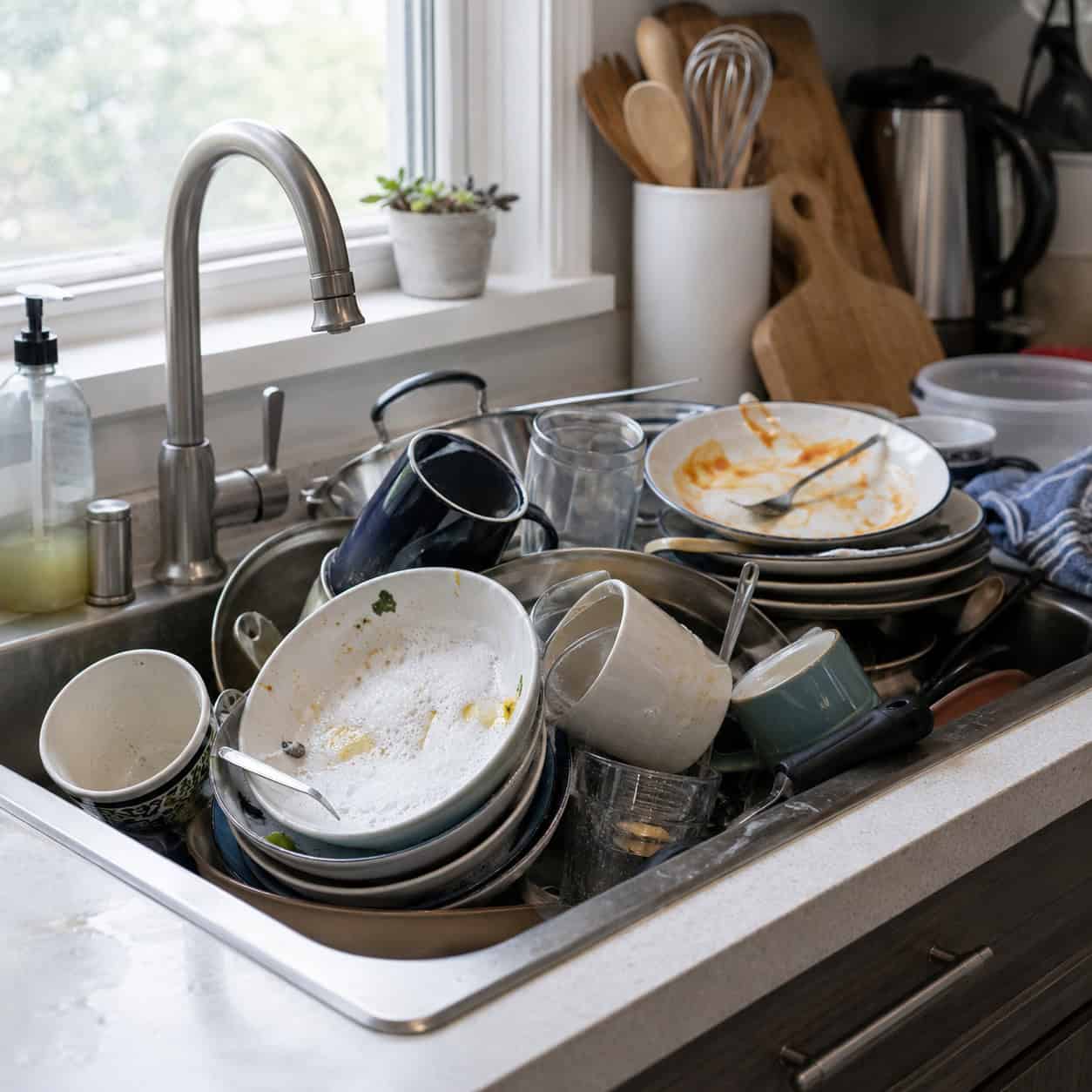
This is the first thing anyone sees. Before the faucet, before the counter, before anything.
An overflowing basin reads instantly as “housekeeping standard,” and it’s not a flattering read. Cleaning pros rank it as the single most-noticed thing at the sink, according to The Kitchn.
You don’t have to wash everything. Just clear the basin.
Stack the dirties in the dishwasher or hide them in the oven if you have to. An empty sink makes the whole kitchen look pulled together, even when it isn’t.
2. Your Kitchen Sponge
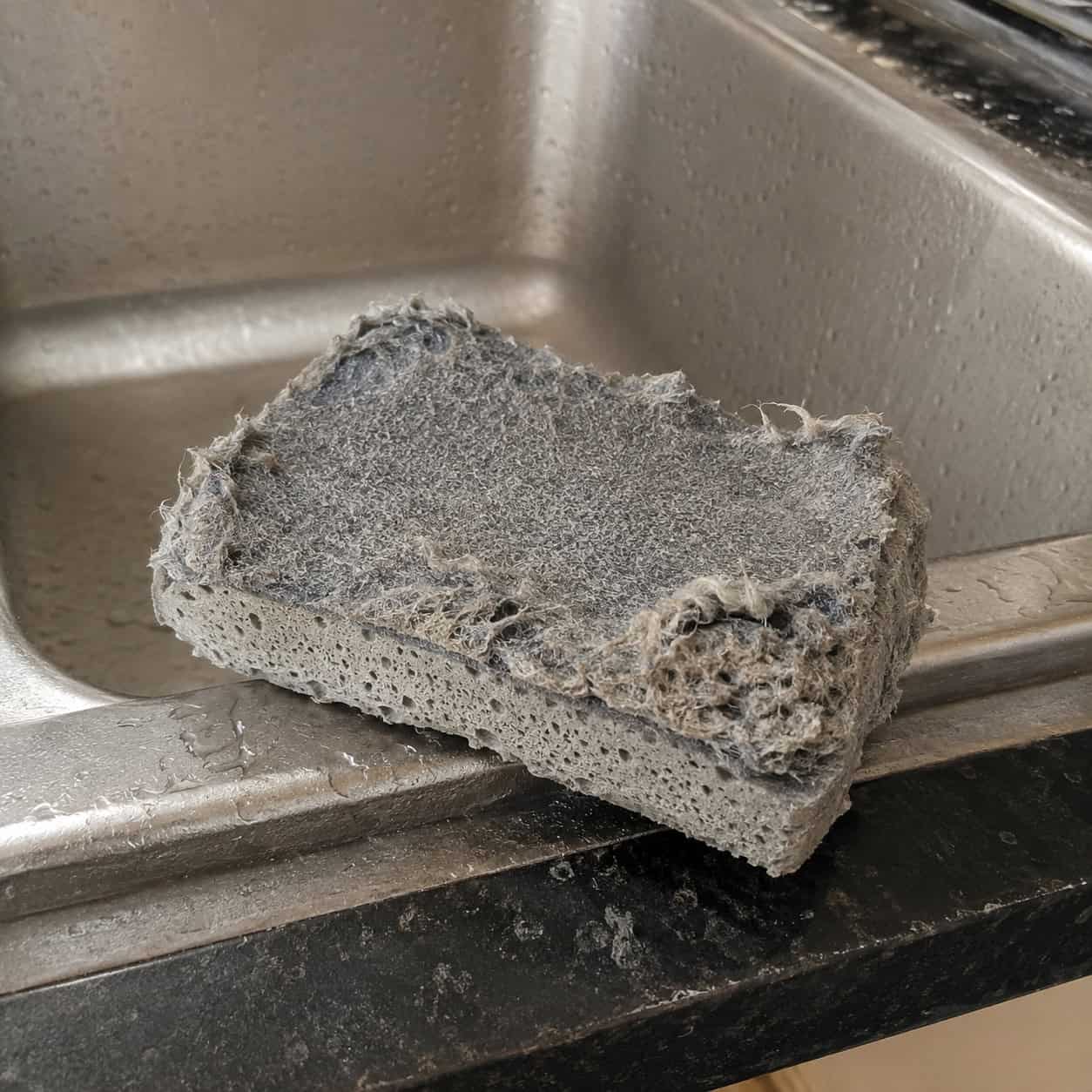
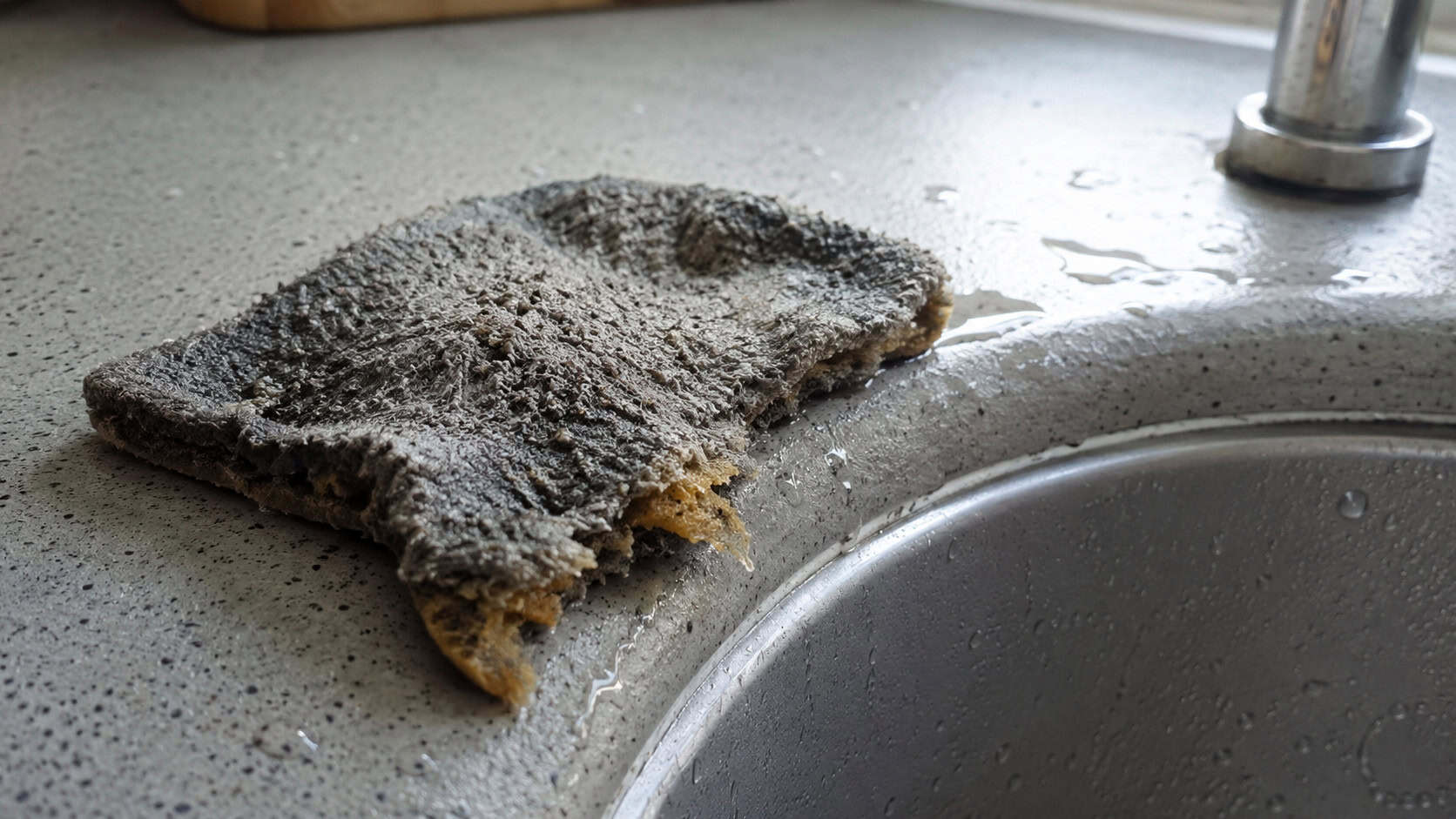
Nothing gets judged harder than a gray, slimy, torn-up sponge slumped by the faucet.
And it deserves the side-eye. That sponge is very likely the dirtiest object in your entire house — dirtier than your toilet seat, according to lab work summarized by Clemson University’s Home & Garden Information Center.
The warm, damp, food-flecked surface is a bacteria hotel. Guests can’t see the germs, but they can see the gray.
Swap it out often. Microwave a damp one for a minute between swaps, and toss it the second it starts to smell or fall apart.
3. The Dish Soap Bottle
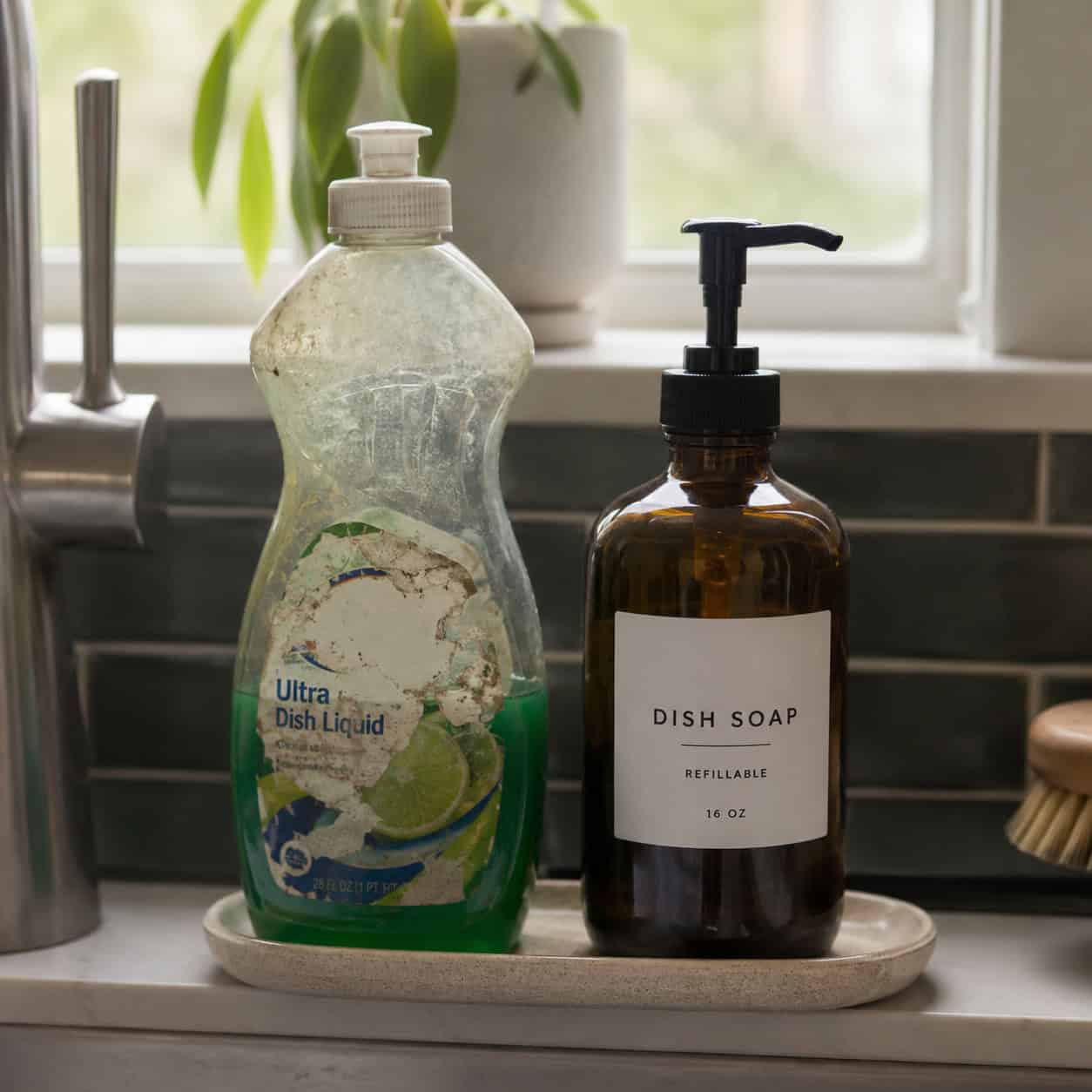
A crusty Dawn bottle with a peeling label and dried green goo around the cap says one thing. A refillable glass dispenser on a little tray says something else entirely.
Same soap. Completely different impression.
You don’t need anything fancy. Even wiping the drip off the bottle helps.
But a $15 amber-glass pump dispenser is one of the cheapest upgrades in the whole kitchen, and it makes the sink corner look considered instead of chaotic.
4. The Towel Hanging Off the Faucet
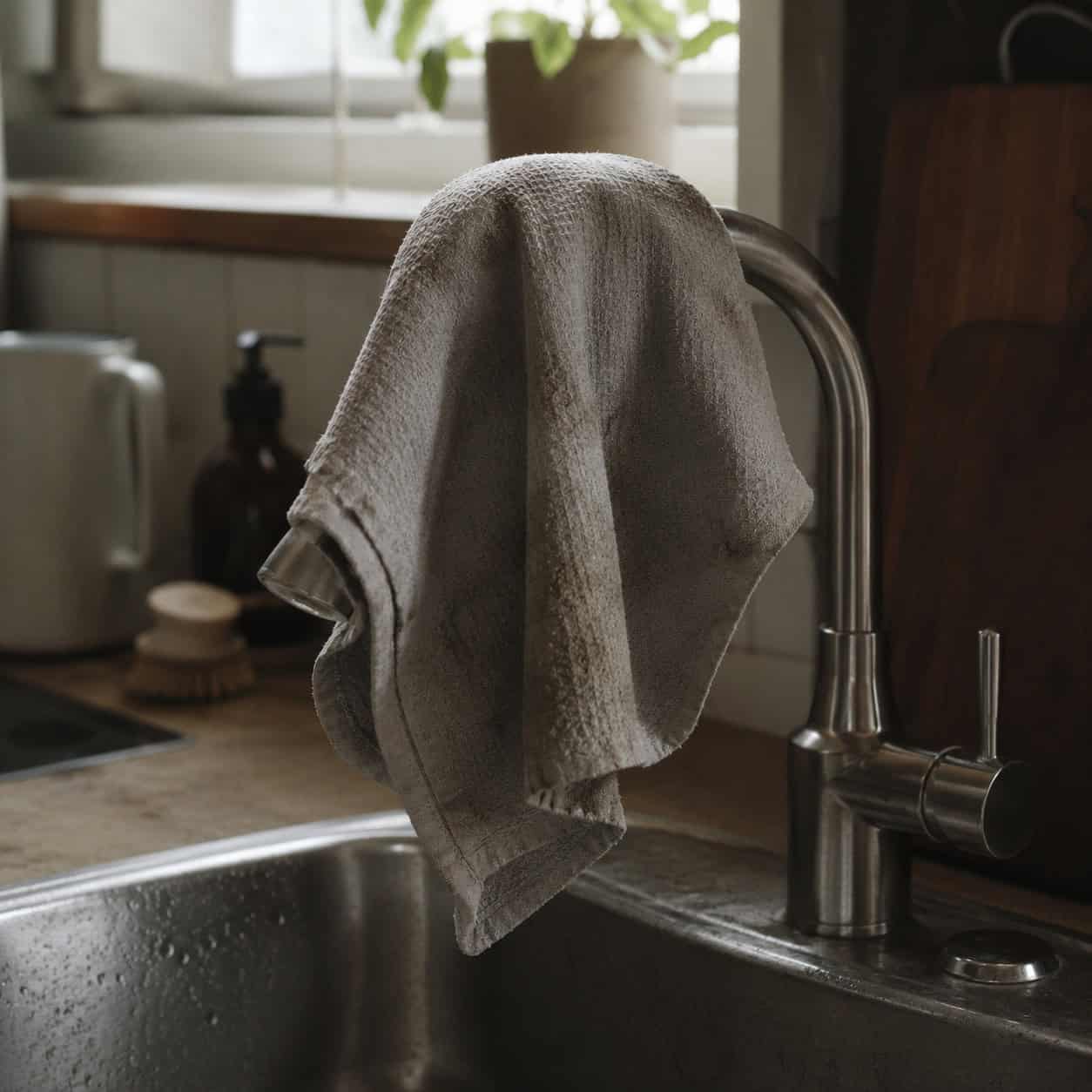
That damp, dingy dish towel draped over the spout is a tell you can both see and smell.
A cloth that stays wet grows bacteria fast, and a musty smell means it’s already happening. Guests recoil without quite knowing why.
Hang a clean, dry towel before company comes.
And swap your towels more often than you probably do — every day or two with heavy use, per the University of Nebraska–Lincoln. A crisp towel reads clean before anyone touches a thing.
5. The Faucet Itself — Style and Finish
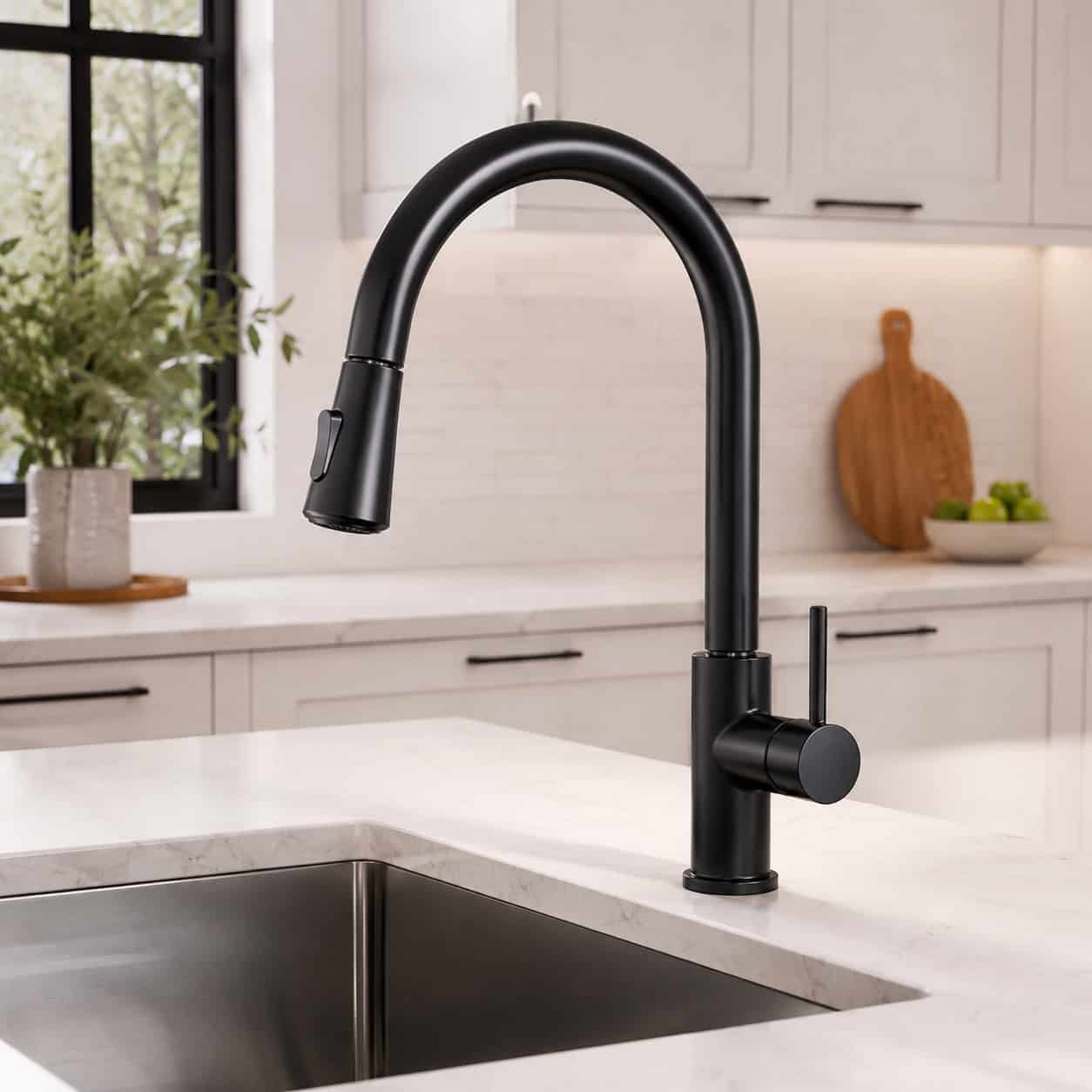
The faucet is the centerpiece of the whole sink zone. It’s also a dead giveaway of the kitchen’s age.
A stubby chrome faucet with two crystal-look handles screams a certain decade. A tall pull-down spout in matte black or brushed nickel reads current, no matter how old the cabinets are.
Here’s the sneaky part. Swapping the faucet is one of the highest-impact updates you can do yourself.
A $150 pull-down faucet can modernize the entire sink area in an afternoon. Spot-resist stainless finishes even hide fingerprints, which fixes the next problem before it starts.
6. Water Spots and Fingerprints on the Faucet
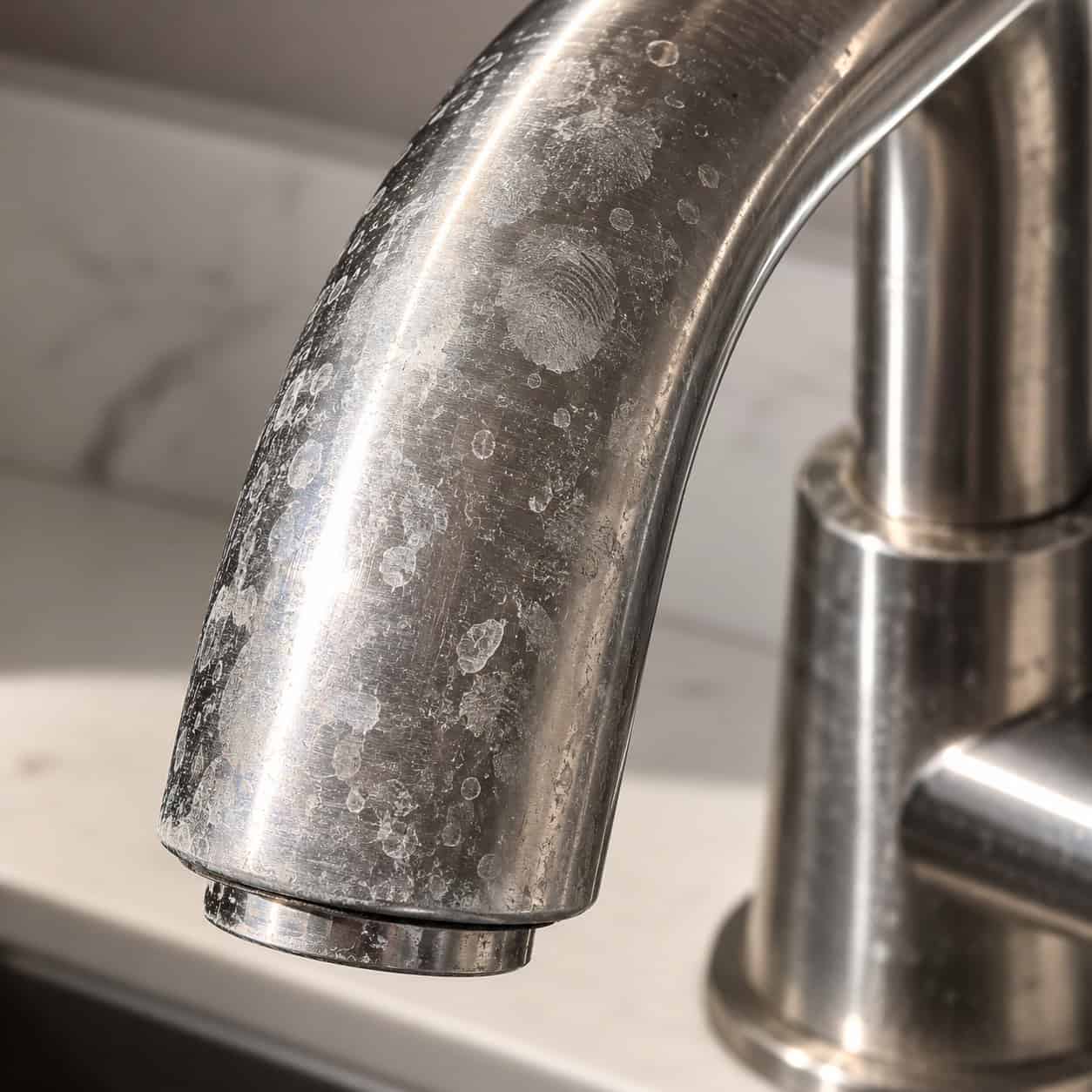
Up close, a cloudy, smudged spout looks grimy even when it’s technically clean.
Blame your water. As it evaporates, hard water leaves behind calcium and magnesium — those little white speckles and streaks all over the finish.
The fix takes seconds. Wipe the faucet dry with a cloth after you use it.
For built-up spotting, mist it with a 50/50 mix of white vinegar and water, wait a minute, then buff it clear. A gleaming faucet does a lot of quiet heavy lifting.
7. The Crusty Ring Around the Faucet Base
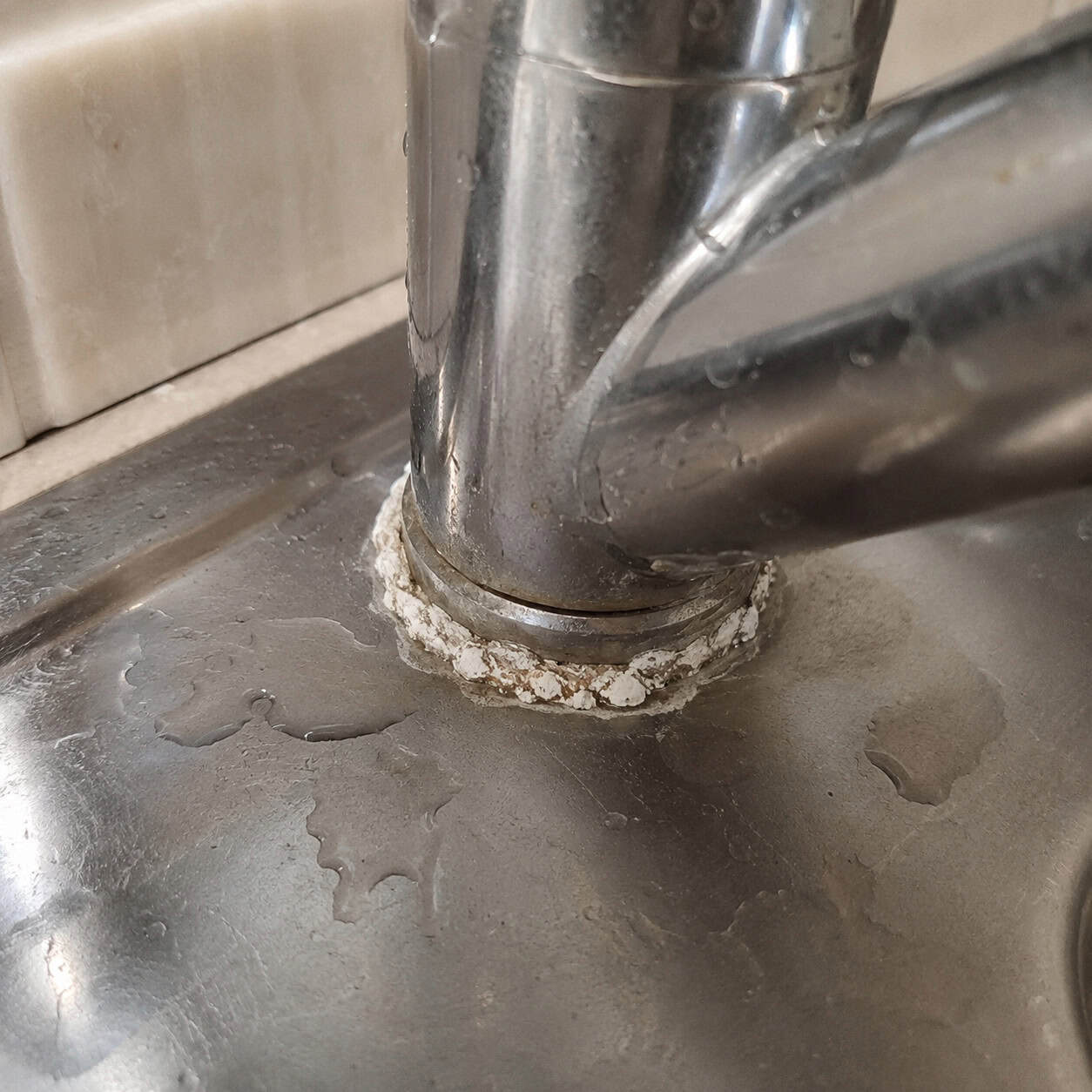
Even when the spout shines, the seam where the faucet meets the sink often doesn’t.
Water pools right there and nobody wipes it. So it turns into a chalky white crust of limescale that guests clock the moment they lean in.
Lay a vinegar-soaked paper towel around the base for 10 to 15 minutes.
Then scrub the softened crust with an old toothbrush and rinse. That crevice is small enough to ignore for months — which is exactly why it builds up.
8. The Cloudy Film on Your Drinking Glasses
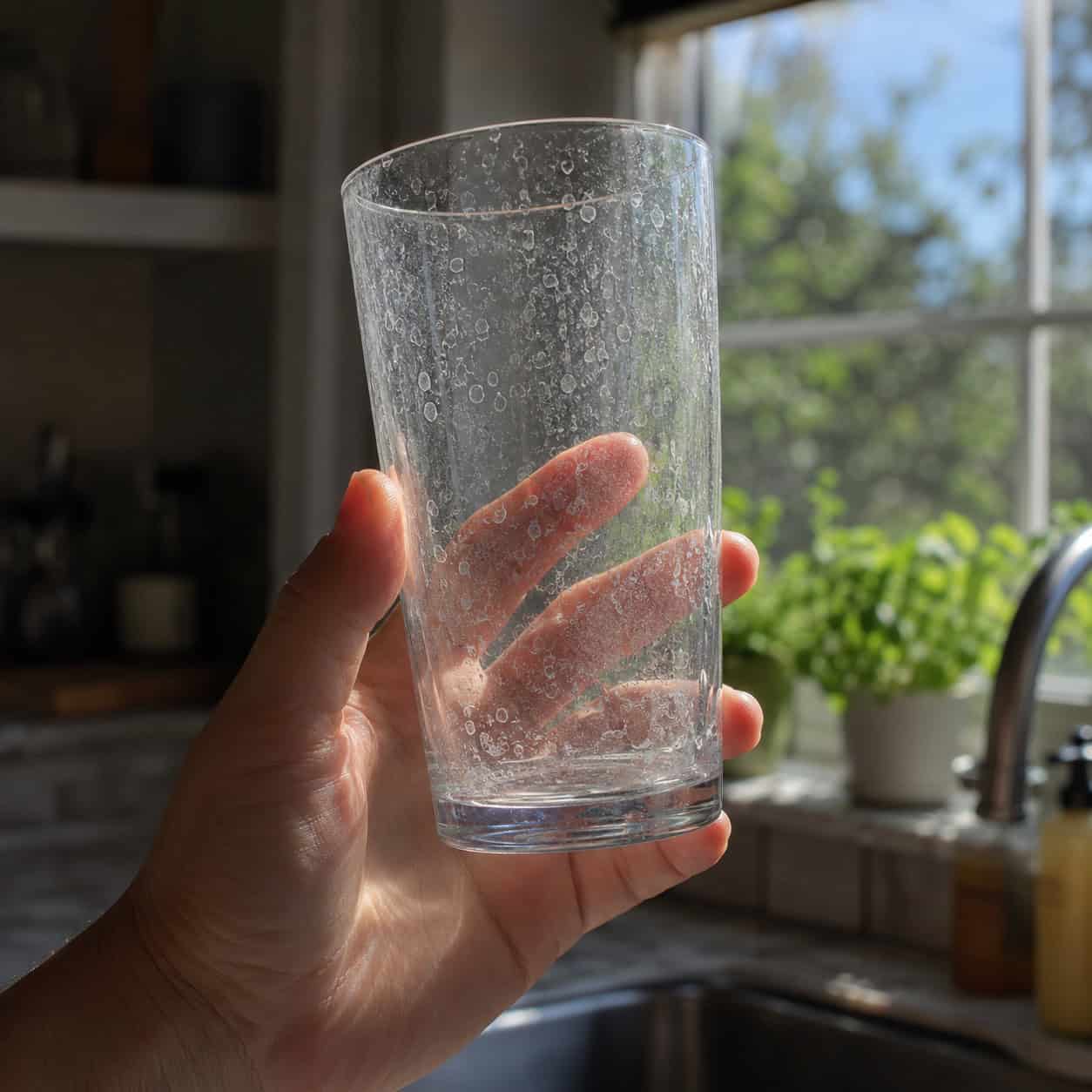
Nothing lands harder than handing a guest a glass they’re about to drink from and it’s covered in a foggy film.
It looks dirty even though it just came out of the dishwasher. Again, hard water is the villain, coating the glass in mineral residue as it dries.
A rinse aid in the dishwasher helps a lot.
For glasses already clouded, soak them in white vinegar for a few minutes and rewash. The water feeding your sink is literally touching your guest’s lips — worth getting right.
9. The Dish Drying Rack
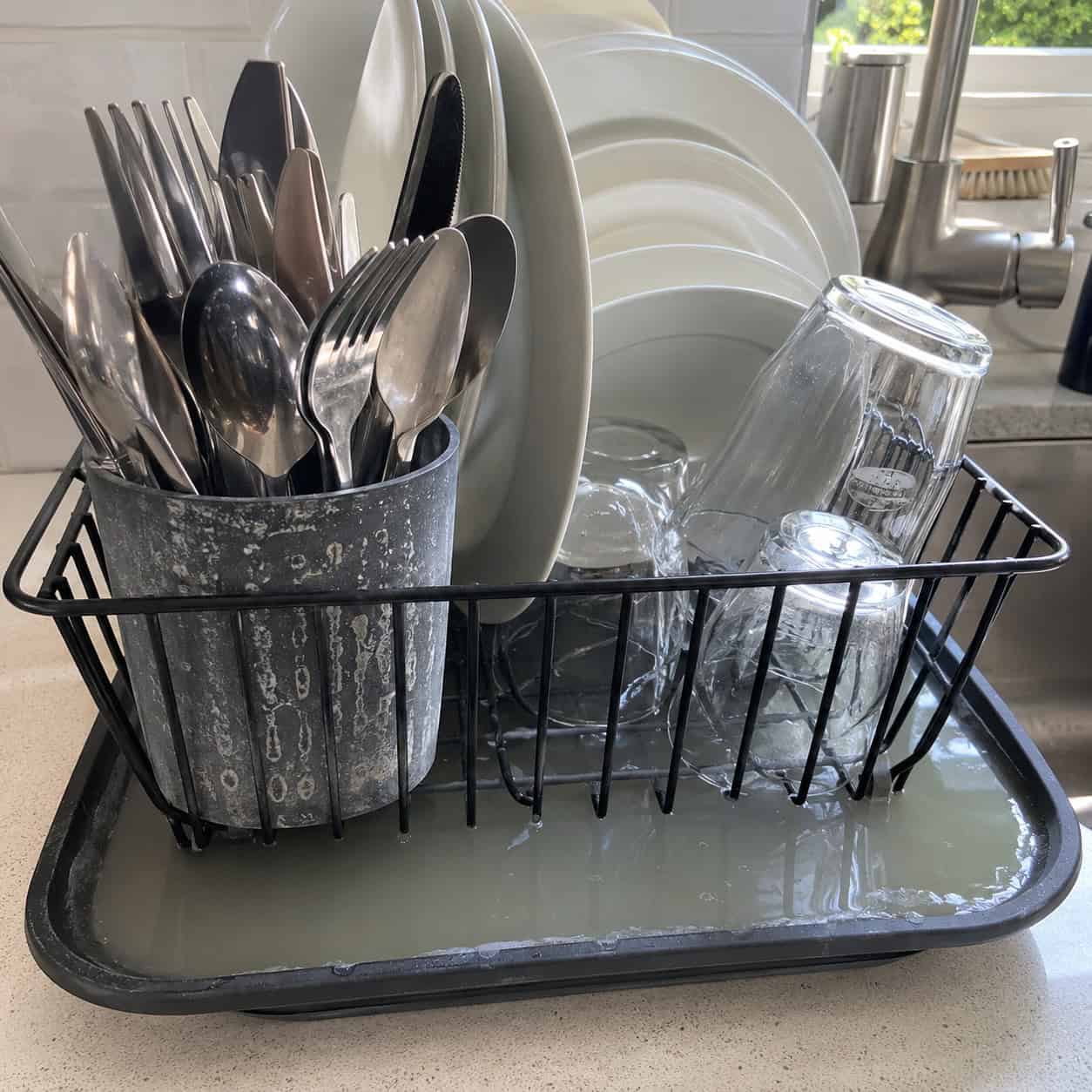
Everyone assumes the rack is clean. Only clean dishes go in it, right?
Wrong. Racks are notorious for trapping moisture and growing mold, mildew, and hard-water crud, and America’s Test Kitchen points to the silverware cup as the grossest spot of all.
That murky gray water sitting in the drip tray? Guests notice it.
Empty and dry the tray daily. Run the whole rack through the dishwasher or scrub it with vinegar once a week.
10. The Sponge Caddy or Sink-Side Holder
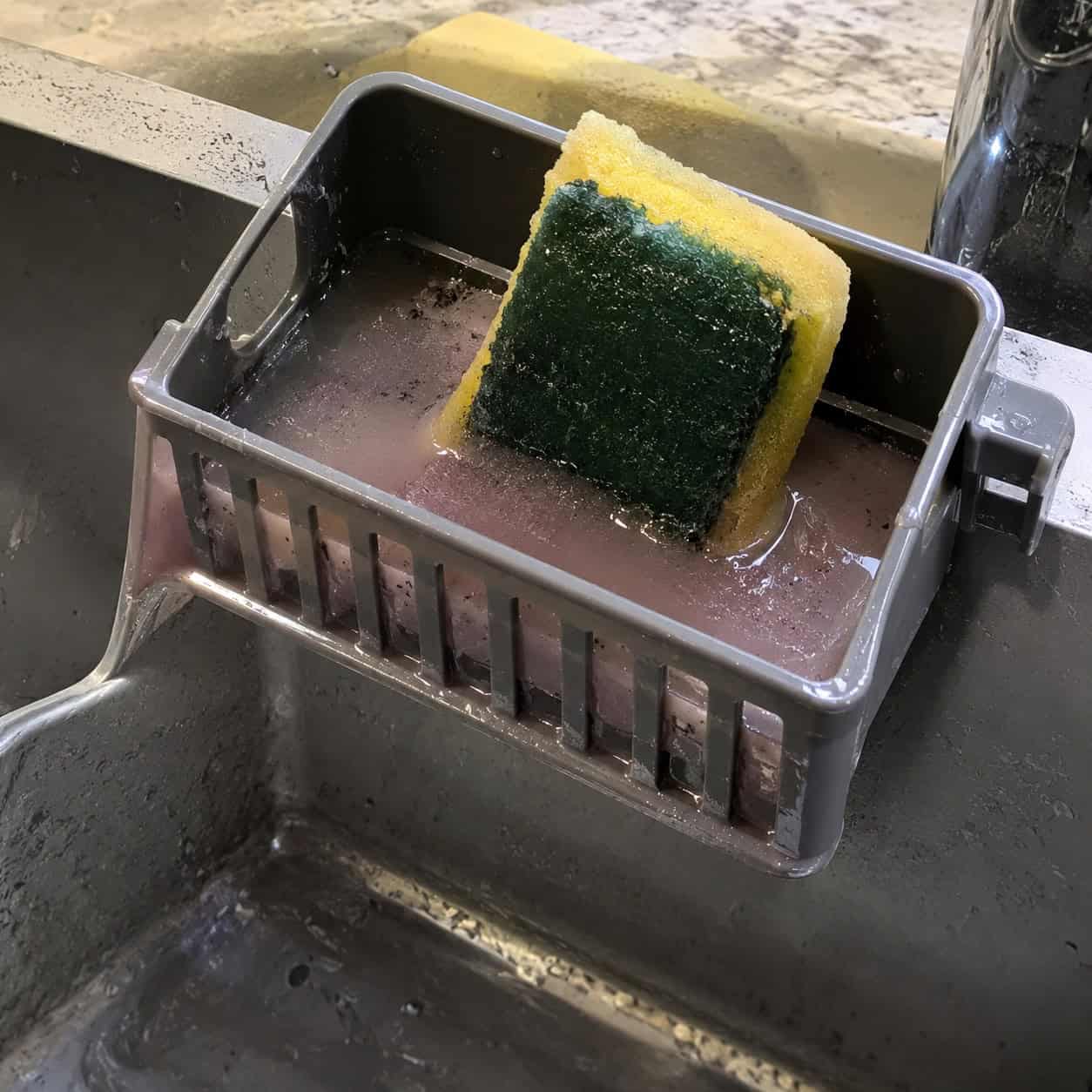
The little tray or caddy by the sink is a secret swamp.
Water drips off the sponge and pools in the bottom, where it turns pink or black. Guests see the scum even if they don’t say anything.
Ditch the solid tray.
Switch to a wire or suction holder that lets the sponge dry from all sides. A dry sponge grows fewer germs and leaves no puddle behind.
11. The Dish Brush or Scrubber
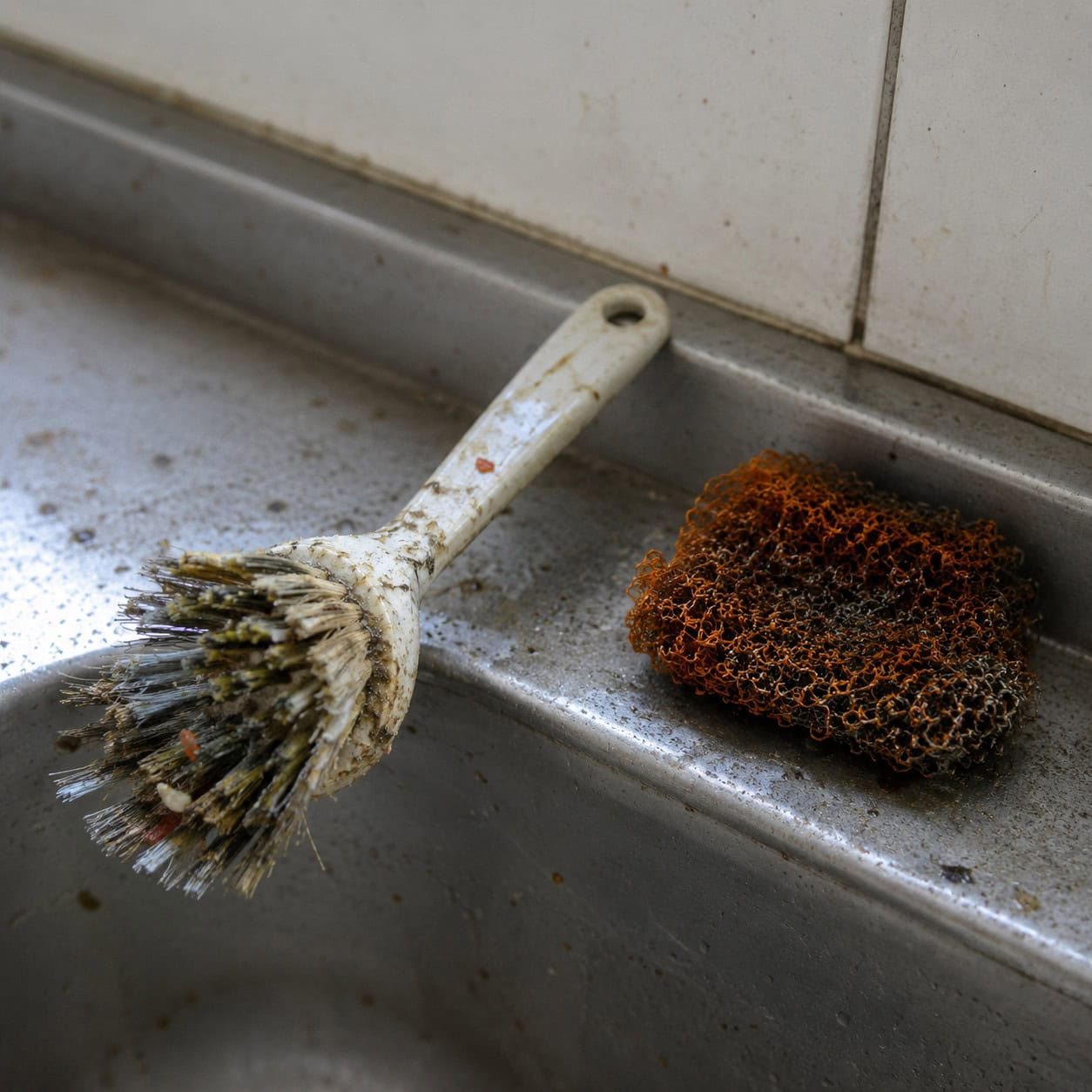
The brush gets none of the sponge’s attention and half the scrutiny.
A splayed dish brush caked with food flecks, or a steel-wool pad rusting into an orange lump, sits right there in view. It’s a quiet little “nobody cleans the cleaners” moment.
Rinse the brush after every use and stand it up to dry, bristles up.
Toss the rusty pad. Those disintegrate fast and leave grit in the sink anyway.
12. The Condition of the Sink Basin
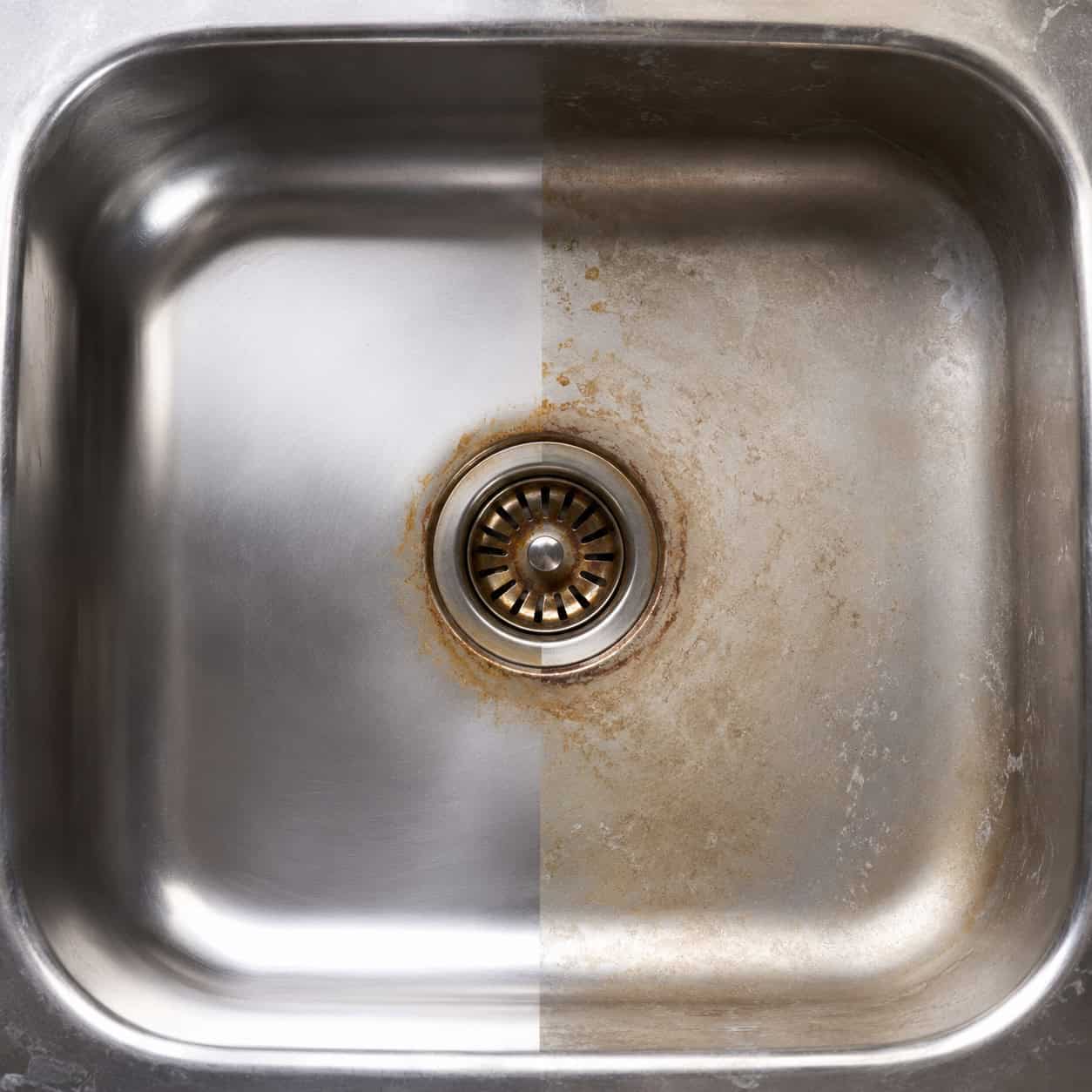
Beyond the dishes, guests read the basin itself.
Rust-colored mineral rings around the drain. A dull, filmy bottom that never looks clean no matter how you scrub. Water stains dull the finish, and left long enough, they become permanent.
Bring it back with Bar Keepers Friend or a vinegar-and-baking-soda scrub.
Work with the grain on stainless, rinse well, and dry it. A bright basin makes the whole sink look brand new.
13. The Drain and Strainer
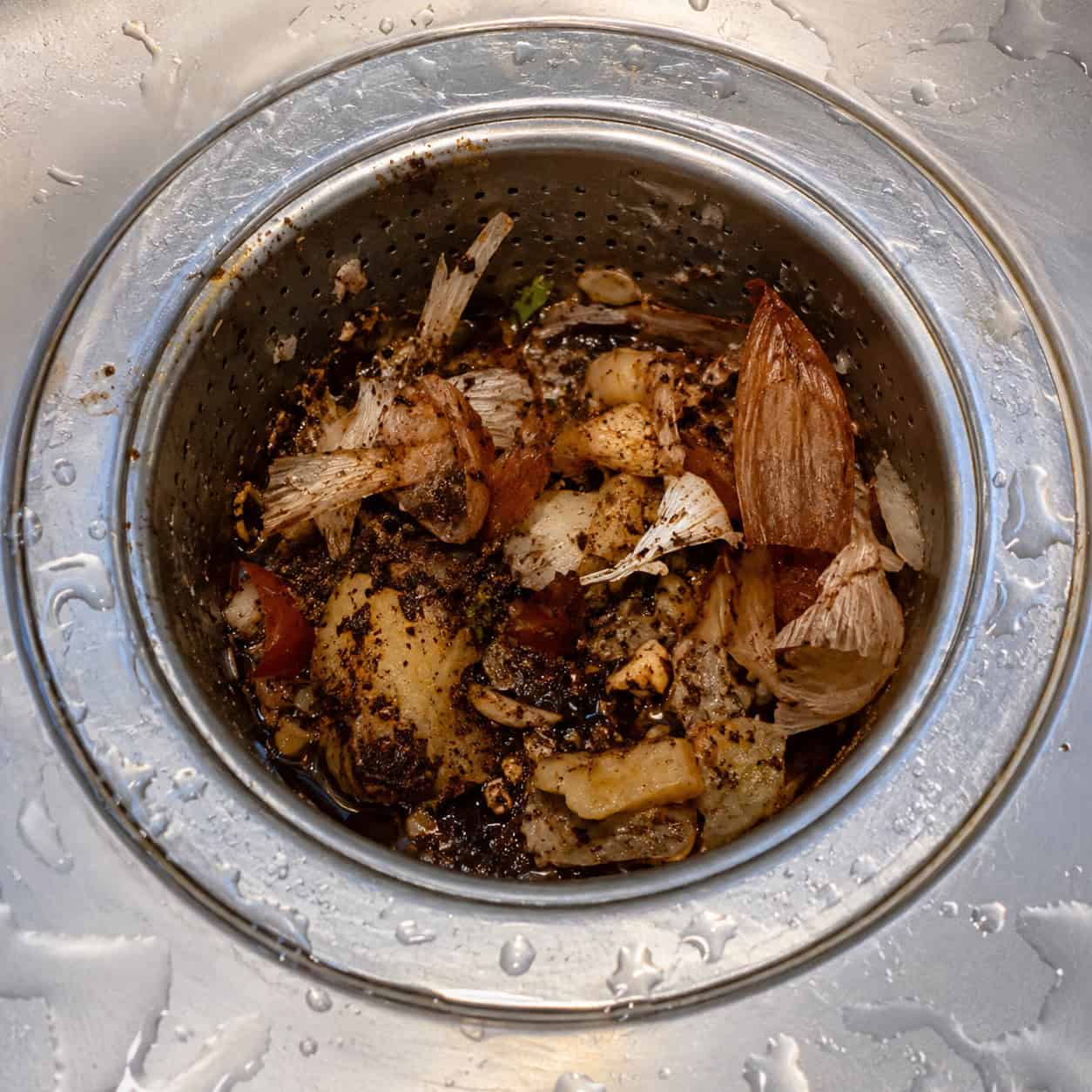
A strainer basket full of soggy food scraps is a tiny detail that guests absolutely catch — usually the second they lean over to rinse a cup.
Coffee grounds, onion skins, that one piece of pasta. It’s all right there under the tap.
Empty the strainer after you cook. Every time.
Keep it in place while you rinse so scraps never make it down the drain. Which sets up the next one.
14. The Smell Rising From the Drain
Guests smell your sink before they ever inspect it. And a foul drain is impossible to hide.
That smell has a few common sources, and knowing which is which saves you a lot of guessing.
Most often it’s decaying food and grease built up inside the pipe and disposal. Rotting scraps and rancid fat produce that sour, garbage-y funk that drifts up whenever water runs.
A rotten-egg or sewage smell is a different animal. That usually means sewer gas is getting into your kitchen — and there are two usual culprits, per MT Drains & Plumbing.
The first is a dried-out P-trap. That’s the U-shaped bend under the sink that holds a little water to block gas from creeping back up. If a sink goes unused for a while, that water evaporates and the seal breaks. Run the tap for 30 seconds and the smell often disappears on its own.
The second is a blocked or faulty vent pipe, which lets gas back up into the sink instead of escaping through the roof. That one you usually can’t fix yourself.
Start simple. Flush the drain with boiling water, then baking soda and vinegar, then more hot water. Clean the disposal — that’s coming up next.
If the sewage smell keeps coming back after you’ve refilled the trap and cleaned everything, call a plumber. Persistent sewer gas points to a venting or drain-line problem, and that’s not a candle-and-vinegar situation. It’s a health and safety one.
15. Under the Garbage Disposal Splash Guard
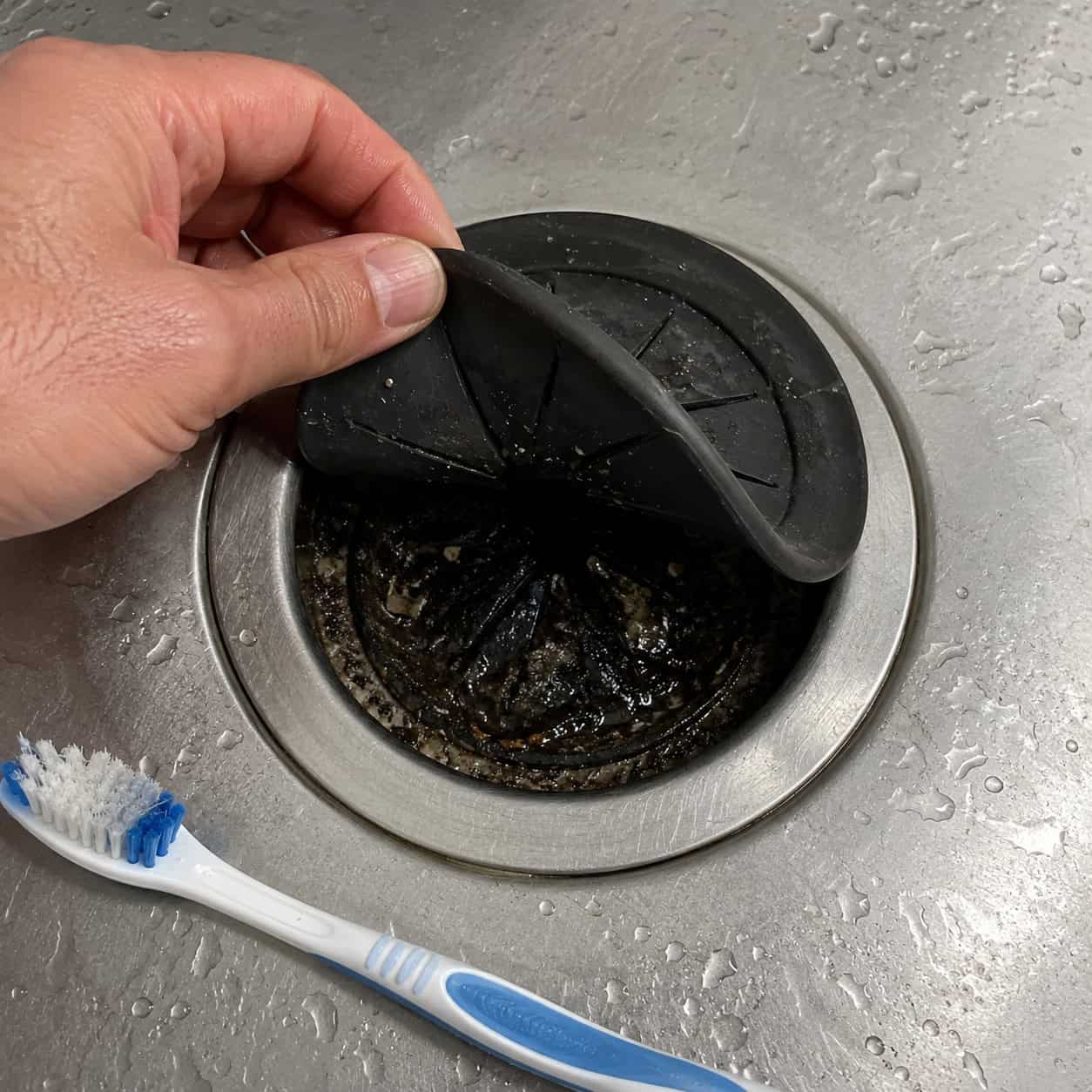
The rubber flap in the drain looks perfectly clean on top. Flip it over and you’ll wish you hadn’t.
The underside of that splash guard is one of the most neglected spots in the whole kitchen. It’s warm, dark, and constantly wet, with food packed into every ridge — the exact conditions mold and bacteria love.
Most people have never cleaned it. Not once.
That black or pink gunk isn’t just ugly. Mold spores getting kicked into the air near where you prep food is a real reason to deal with it, especially if anyone in the house has allergies or asthma.
Here’s how to clean it. Cut the power to the disposal at the wall switch first — always.
Then peel the flap back with your fingers and scrub the underside with an old toothbrush dipped in dish soap or a vinegar solution. Get into every groove where the black stuff hides.
Some splash guards pop right out for a run through the dishwasher, per Affresh. Check yours — it makes the job far easier.
Do this monthly and the mystery smell that came back after you cleaned the drain? Often it was living here the whole time.
If the flap is cracked, torn, or won’t come clean no matter what you do, replace it. And if you’re seeing mold spreading beyond the disposal onto cabinet surfaces, that’s worth a pro’s eyes.
16. The Faucet Aerator and Weak Water Flow
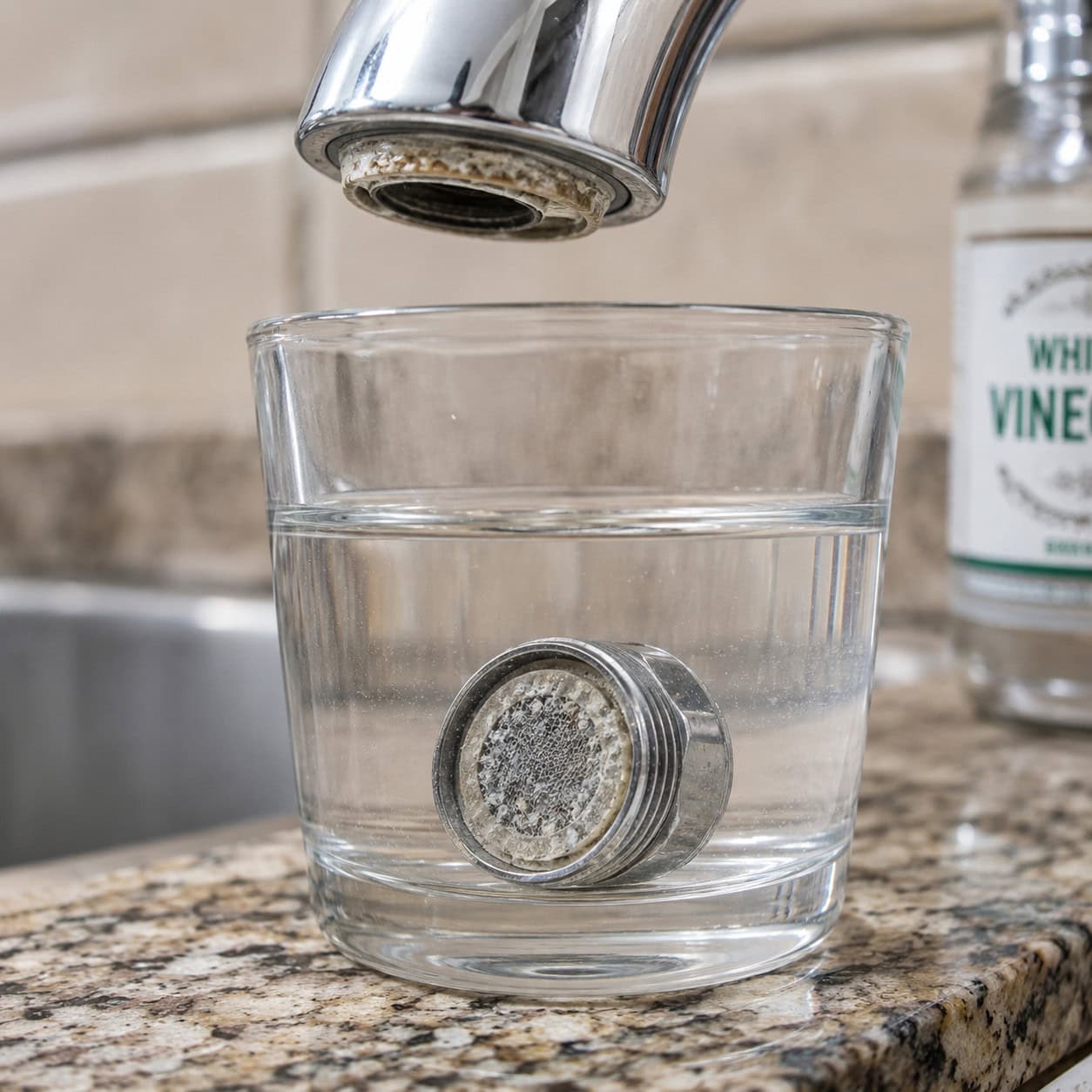
Turn on the tap and watch the stream. Does it spit sideways or trickle out weak and uneven?
That’s the aerator — the little screen at the tip of the spout — clogged with mineral deposits and grit. A guest feels it the instant they wash their hands.
The fix is easy and satisfying. Unscrew the aerator by hand or with pliers wrapped in a cloth.
Soak it in white vinegar for an hour, brush the screen clean, rinse, and screw it back on. Full, straight flow again — and one more piece of the hard-water puzzle solved.
17. The Windowsill Above the Sink
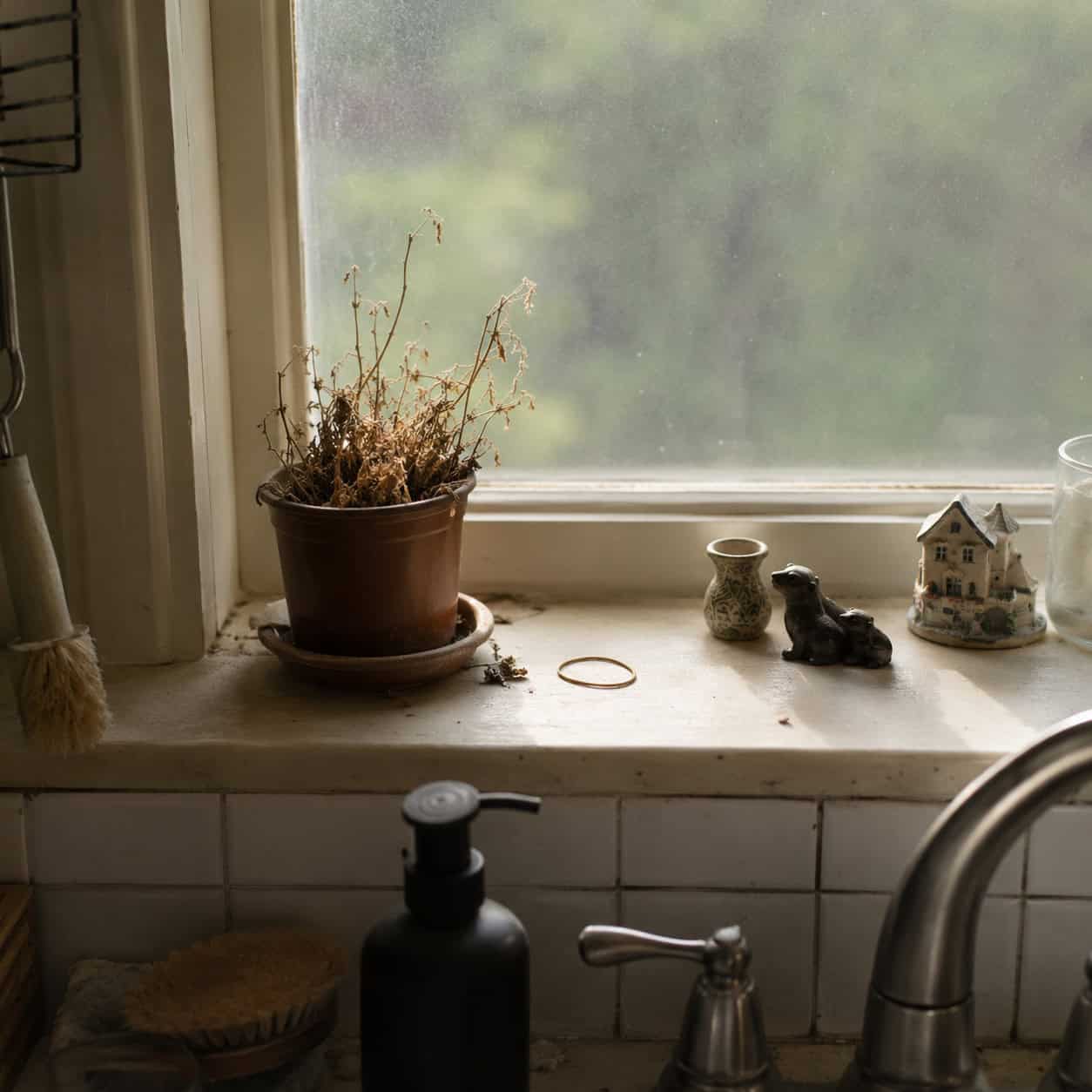
The ledge over the sink sits right in a guest’s eyeline while you both chat.
It’s also a magnet for sad little things. A shriveled herb pot. A lone rubber band. A layer of greasy dust on a knickknack nobody’s moved in a year.
Clear it down to a few things you actually like.
One healthy plant beats three dead ones. A clean sill can read as charming; a cluttered one reads as forgotten.
18. Cabinet Fronts and Handles by the Sink
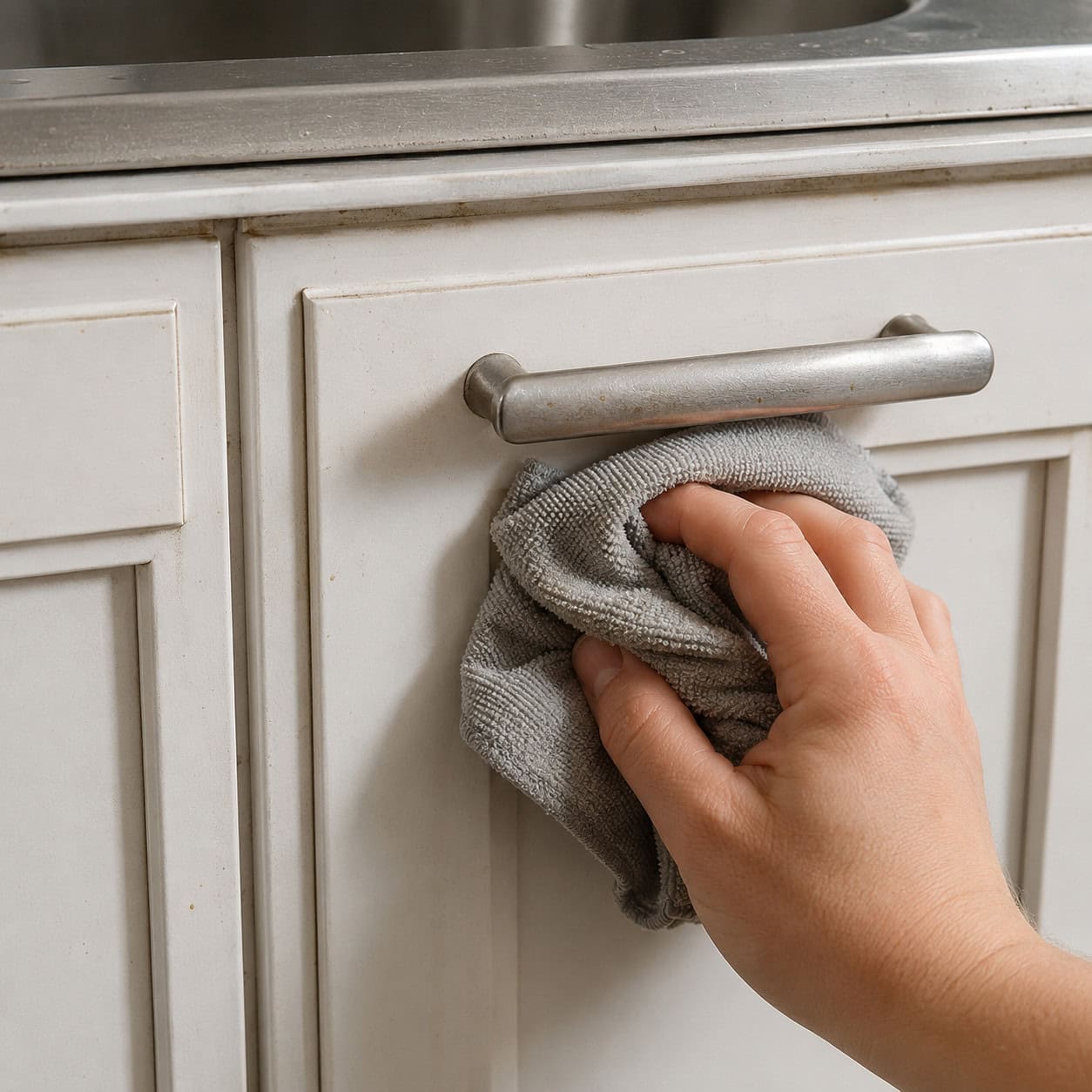
The sink cabinet takes more abuse than any other in the kitchen.
Design pros point out that cabinet fronts collect dust in the grooves plus a fine mist of grease and food splatter. And the handles? Those are germ hot spots, touched constantly with wet, food-covered hands, as Best Life notes.
Wipe the fronts with a damp cloth and a drop of dish soap.
Give the pulls a real scrub, since that’s what guests actually touch. Sticky handles are the kind of thing people remember.
19. The Countertop “Drop Zone” Beside the Sink
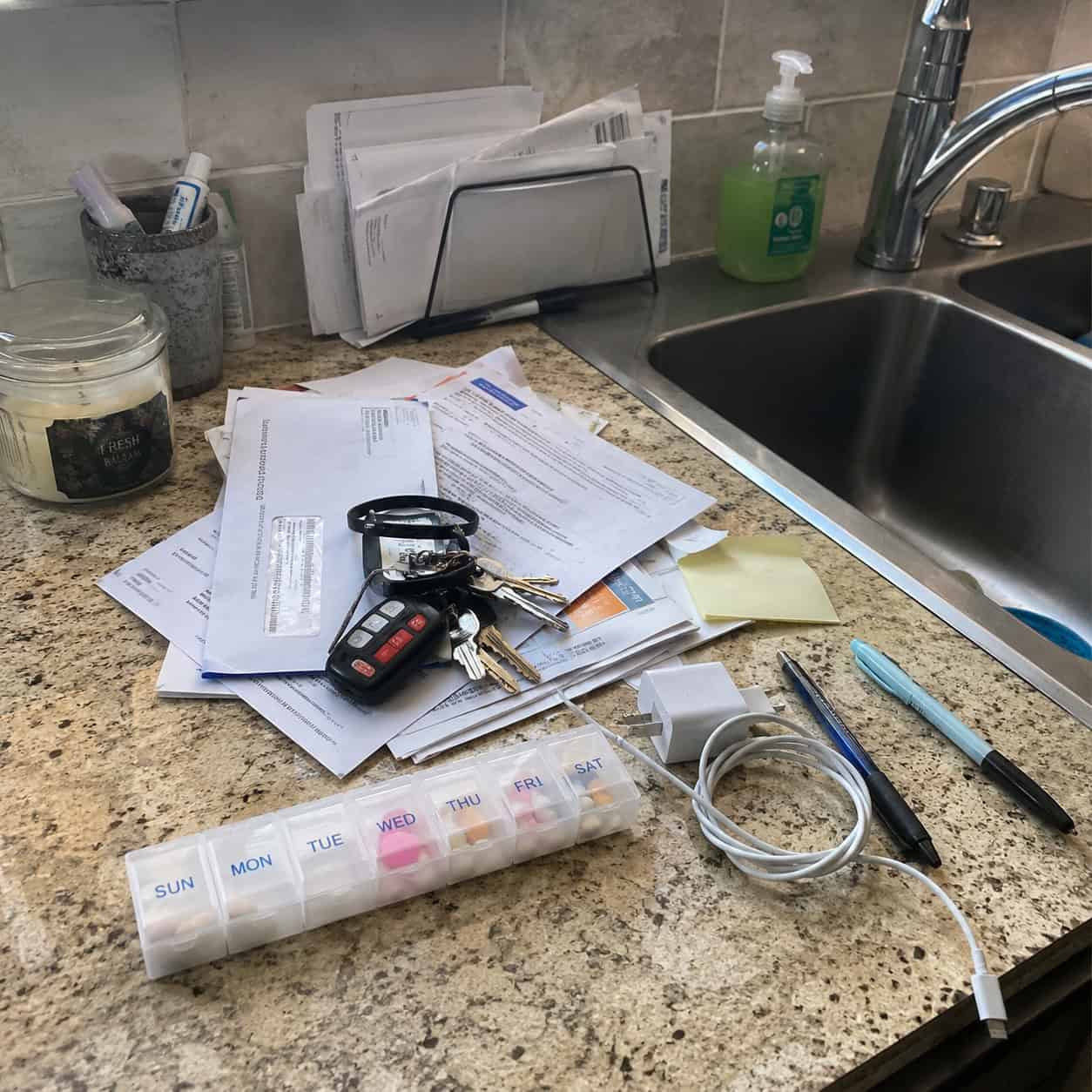
Every kitchen has that strip of counter where life piles up.
Mail. Keys. A pill organizer. Three pens, a receipt, and a phone charger. It all lands right next to the sink, and guests notice everyday clutter far more than you’d guess — it quietly signals how organized the household is.
You don’t need a system. You need a basket.
Sweep the debris into one catch-all bin before company arrives. A clear strip of counter next to the sink does more for the look of the room than a full deep clean.
20. Cleaning Products Lined Up on the Edge
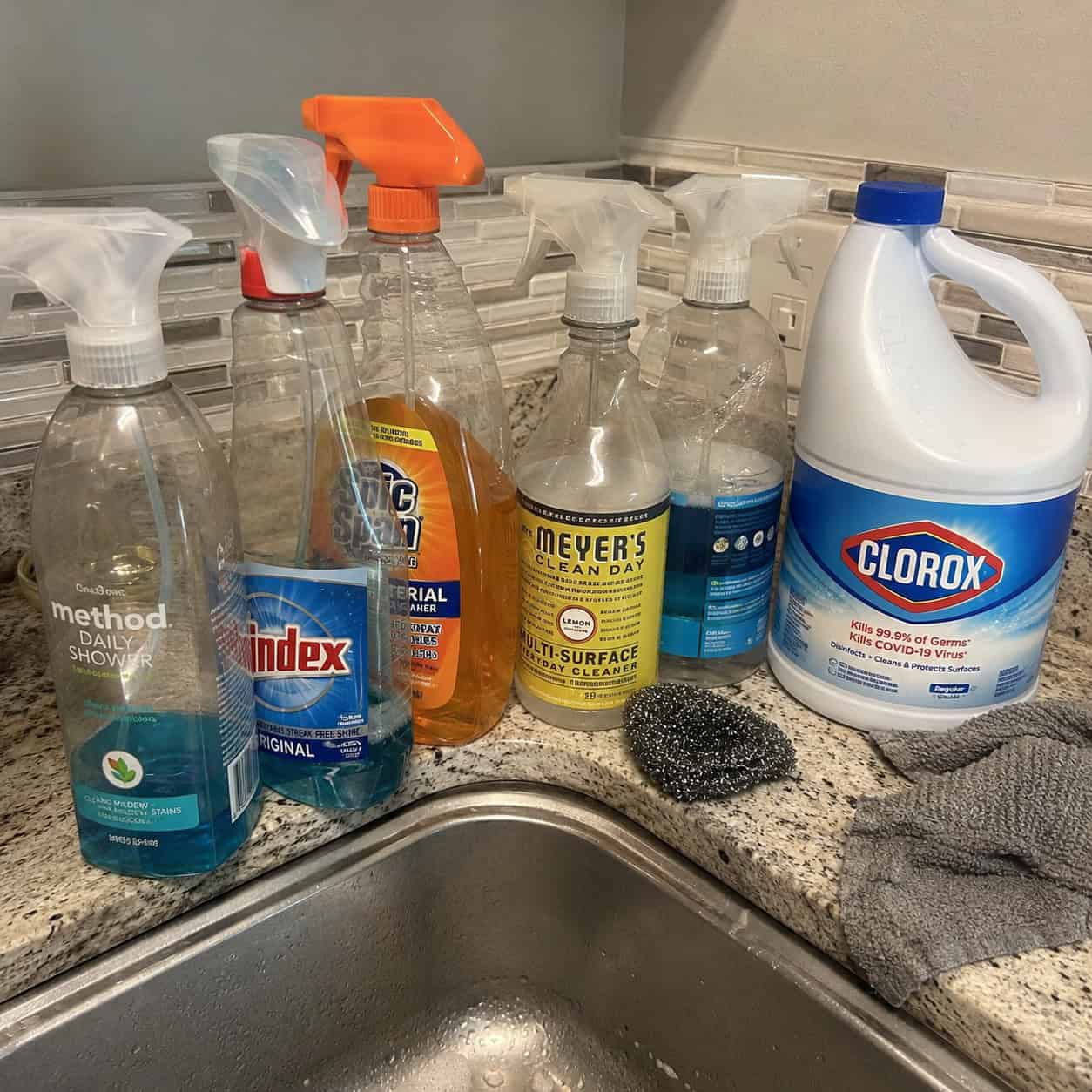
A row of half-used spray bottles, a bleach jug, and a scrubby pad crowding the sink corner sends an odd message.
It reads as perpetually mid-clean. Like the kitchen is a project that never quite finishes.
The fix couldn’t be simpler. Stash them under the sink.
That’s literally where they belong, and clearing them off the edge instantly opens up the whole counter.
21. The Trash Can Right Beside the Sink
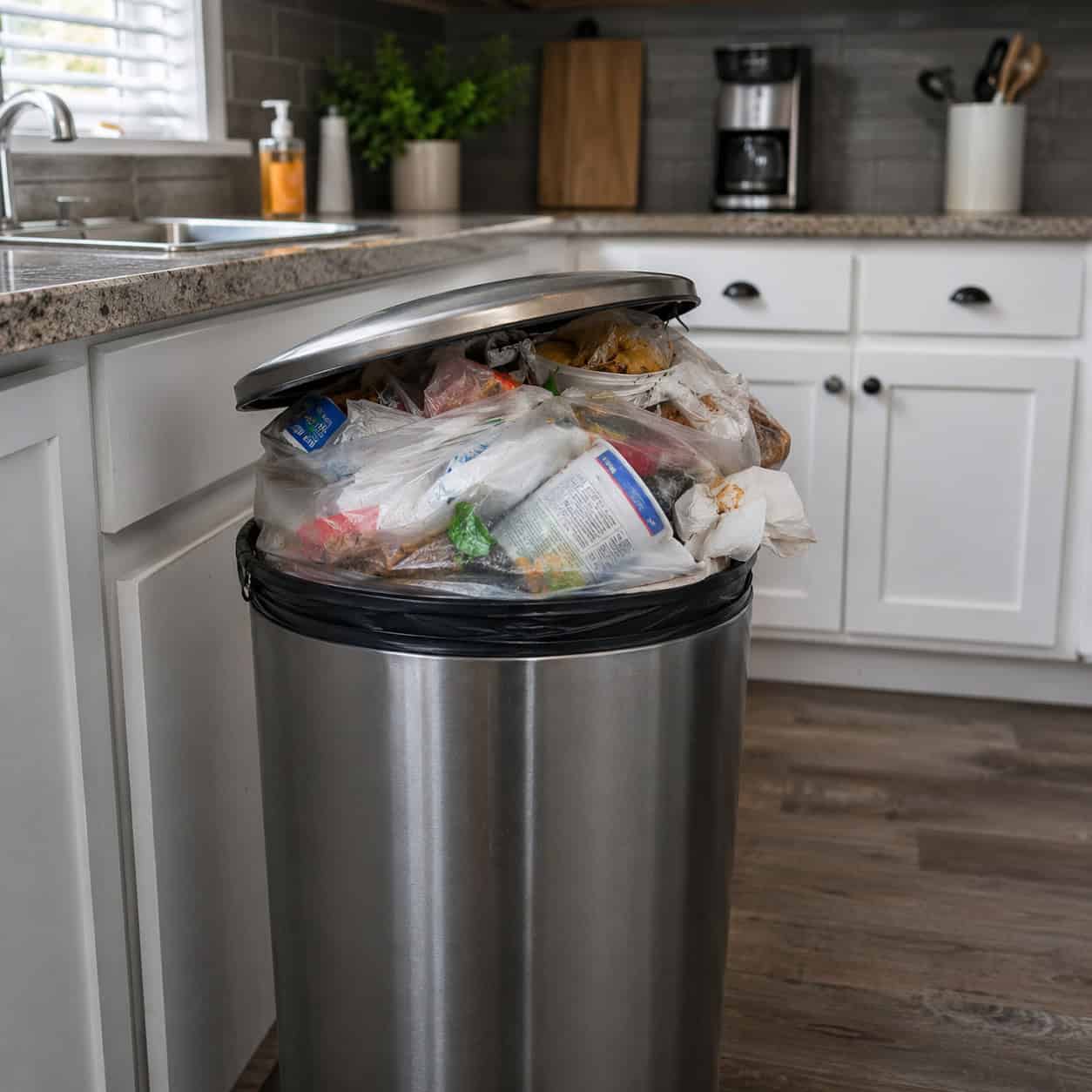
The bin next to the sink is part of the sink zone whether you think of it that way or not.
Guests see an overflowing lid. Worse, they smell it — cleaning experts flag garbage and pet odors as the top thing to kill before company shows up.
Take the trash out before guests arrive, even if the bag’s only half full.
Drop a scented liner or a pinch of baking soda in the bottom to catch odor. A fresh-smelling kitchen forgives a lot of small sins.
22. The Sink Protective Grid or Mat
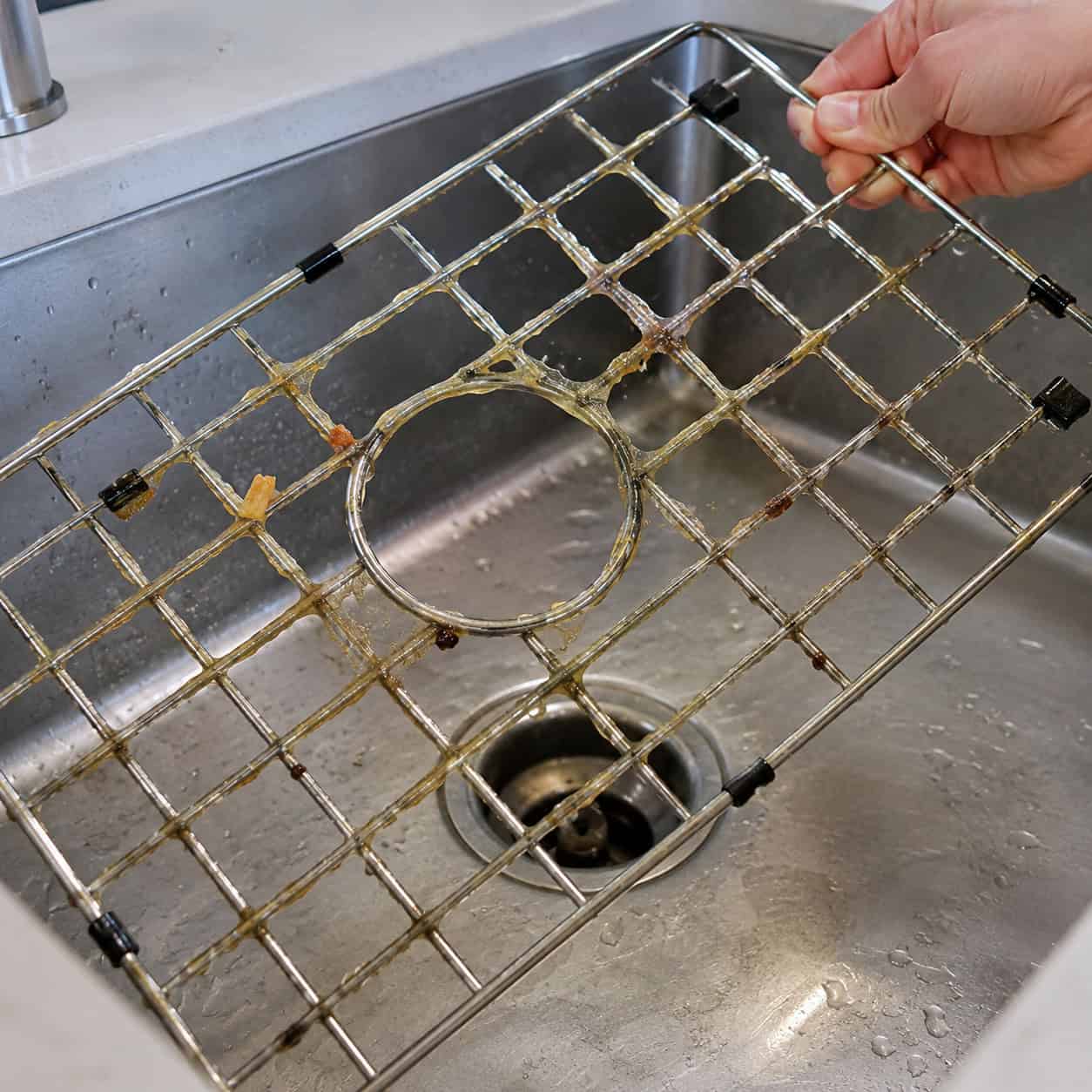
That stainless grid or silicone mat sitting in the bottom of the basin protects your sink. It also hides a mess.
Food and water get trapped underneath, and the underside grows a slimy film you never see until you lift it.
Pull it out and flip it over now and then.
Scrub both sides, let it dry fully, and you’ve dealt with a gross spot most people forget exists.
23. Rubber Gloves Draped Over the Faucet
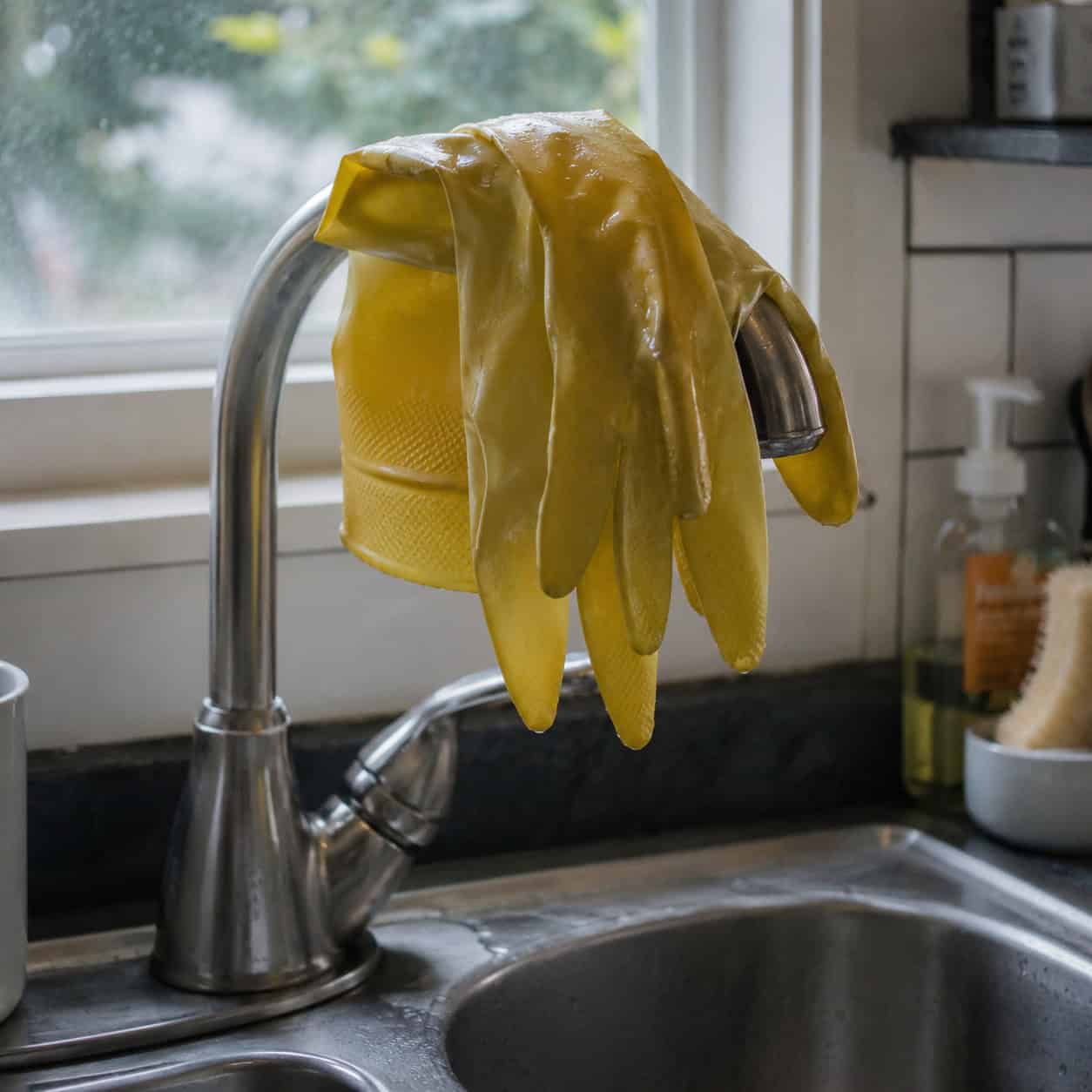
Clammy yellow dish gloves flopped over the spout are a strong visual, and not a good one.
They look damp, personal, and a little medical hanging there. Not the vibe when someone’s about to fill the coffee pot.
Tuck them under the sink or hang them on a hook out of sight.
The faucet is the star of this whole area. Don’t drape laundry on it.
24. The Paper Towel Situation
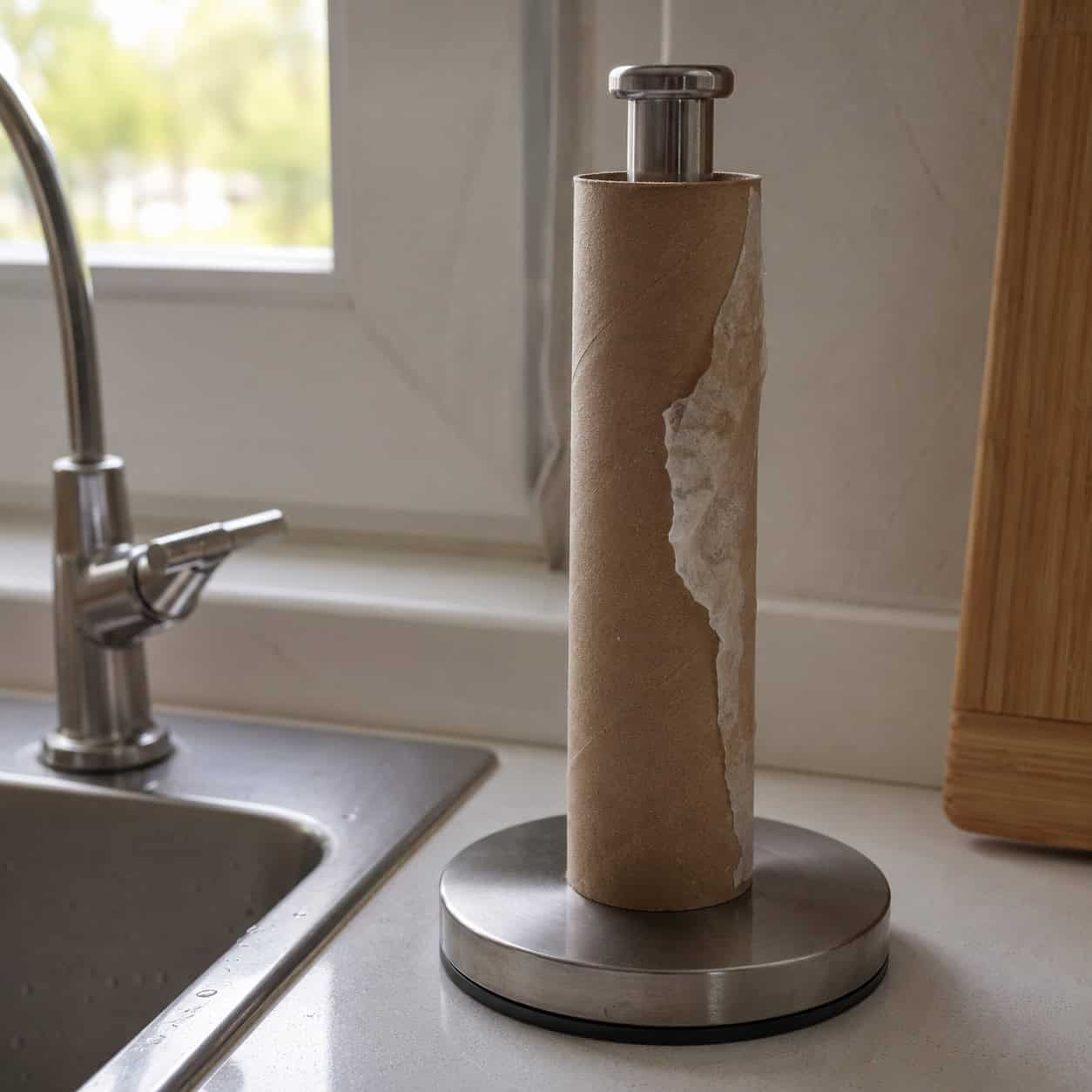
Guests reach for a paper towel at the sink almost on instinct.
A bare cardboard tube, or one sad soggy sheet clinging to the roll, is a tiny letdown they’ll clock without comment.
Keep a fresh roll loaded before company comes.
A simple standing holder or an under-cabinet mount keeps them handy and off the counter. Small thing, but it’s the small things this whole list is about.
25. An Under-Sink Water Filter Tap or Instant-Hot
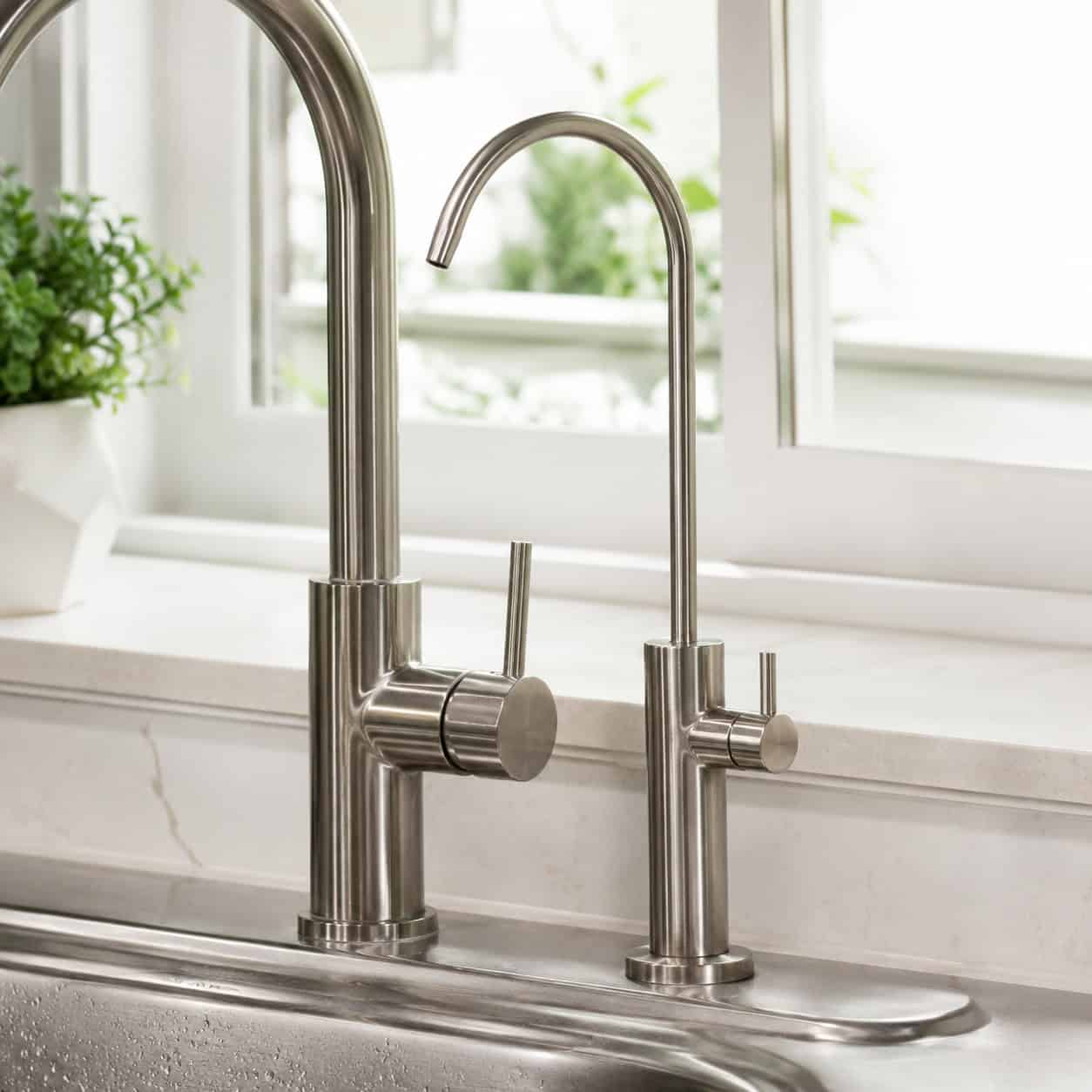
Not every sink detail is a gotcha. Some earn you points.
A slim filter tap or an instant-hot spout beside the main faucet signals a kitchen that’s been thought about and upgraded. Guests read it as “these people have it together.”
If you’ve got the extra hole in your sink deck — or an air-gap spot from an old soap dispenser — a filter tap is a satisfying add.
It’s the rare sink feature people notice and quietly admire instead of judge.
The Takeaway
None of this is about scrubbing your kitchen into a magazine spread. It’s about the five-second read your sink gives every guest who walks up to it.
Most of these fixes cost nothing and take minutes. An empty basin, a dry towel, a clean spout, a trash can that doesn’t announce itself.
Do the quick ones before company comes and the deeper ones — the splash guard, the drain, the aerator — on a lazy Sunday.
Your guests will never mention any of it. That silence is exactly the point.