

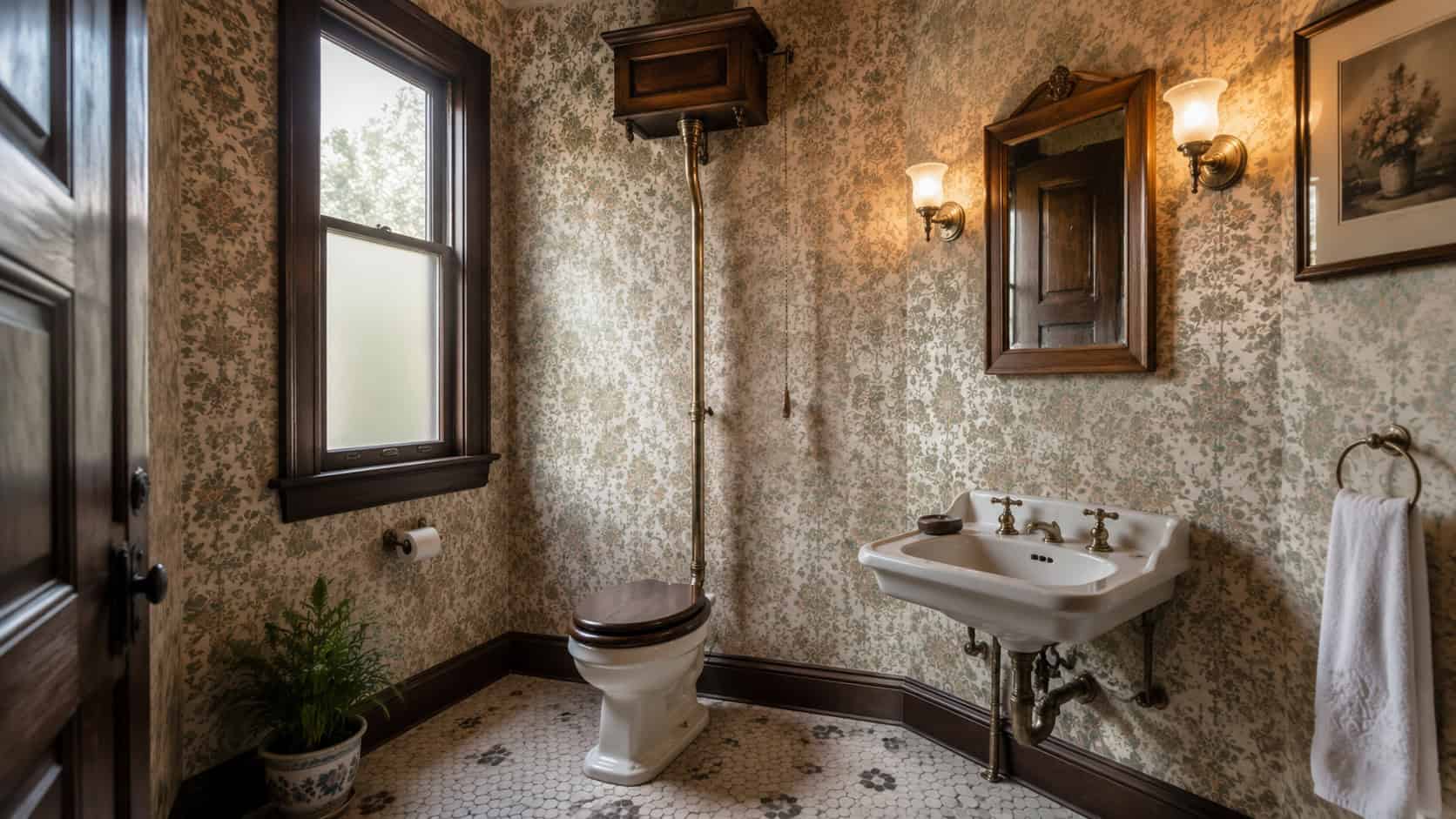
There’s a certain smell to an old bathroom. Warm porcelain, a little rust, the ghost of talcum powder that soaked into the plaster decades ago.
Most people walk into a house like that and see a demo project. A gut job. Something to rip out before the paint’s even dry on the offer.
But the salvage crowd sees something else. They see cast iron poured before the war, glazes in colors nobody makes anymore, faucet handles stamped with words instead of symbols.
The bathroom fixtures your grandparents took for granted are quietly worth real money now. Some of them a few hundred dollars. A few of them five figures.
Here are 24 bathroom items from old houses that collectors chase — and why the ones we stopped making are the ones everybody wants back.
1. Cast-Iron Clawfoot Tub
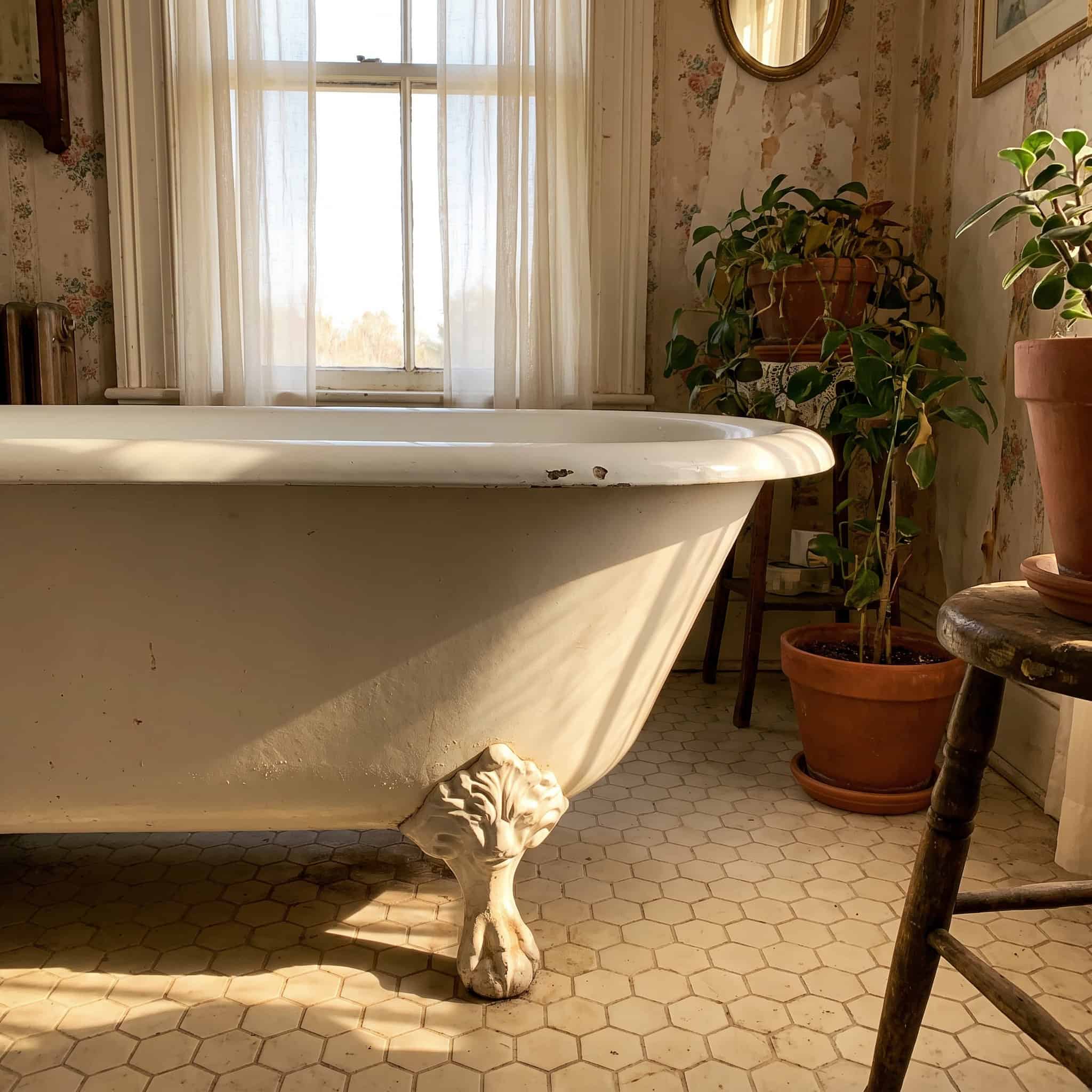
This is the one everybody pictures. The heavy white oval sitting up on four little feet, deep enough to disappear into.
Genuine antique clawfoots were cast iron coated in fired porcelain enamel, and they weigh a few hundred pounds. That heft is exactly why they’ve survived — and why they’re a nightmare to move, which keeps supply low.
A tub stamped by a historic maker changes everything. Names like Crane, J.L. Mott, Kohler, Standard Sanitary, or L. Wolf carry a premium a plain tub never will. Good marked examples move for a few thousand dollars.
The form fell out of fashion after World War II, when built-in alcove tubs took over and clawfoots got hauled to the curb by the thousands. That’s the whole story of collecting in one sentence. What we threw away, we now hunt.
Now the money question. A rusty, chipped original still has value, but the “restore vs. sell as-is” math trips people up. Re-enameling the interior typically runs $300 to $800. Refinishing the exterior — that painted or ornamental outside — adds roughly $500 to $1,500 on top.
According to LoveToKnow, condition, maker, and original feet drive the value more than anything else. So do the math before you touch it. A tub you found for free might net more restored — or you might spend $1,000 restoring something a purist would rather buy raw and do themselves.
If you’re weighing whether to keep one at all, it’s worth reading up on whether bathtubs are outdated before you commit either way. The Craftsman Blog has a full breakdown on the history of the clawfoot tub if you want to date yours.
Keep it if it’s marked. A maker’s stamp is money in the enamel.
2. Original Ball-and-Claw and Lion-Paw Tub Feet
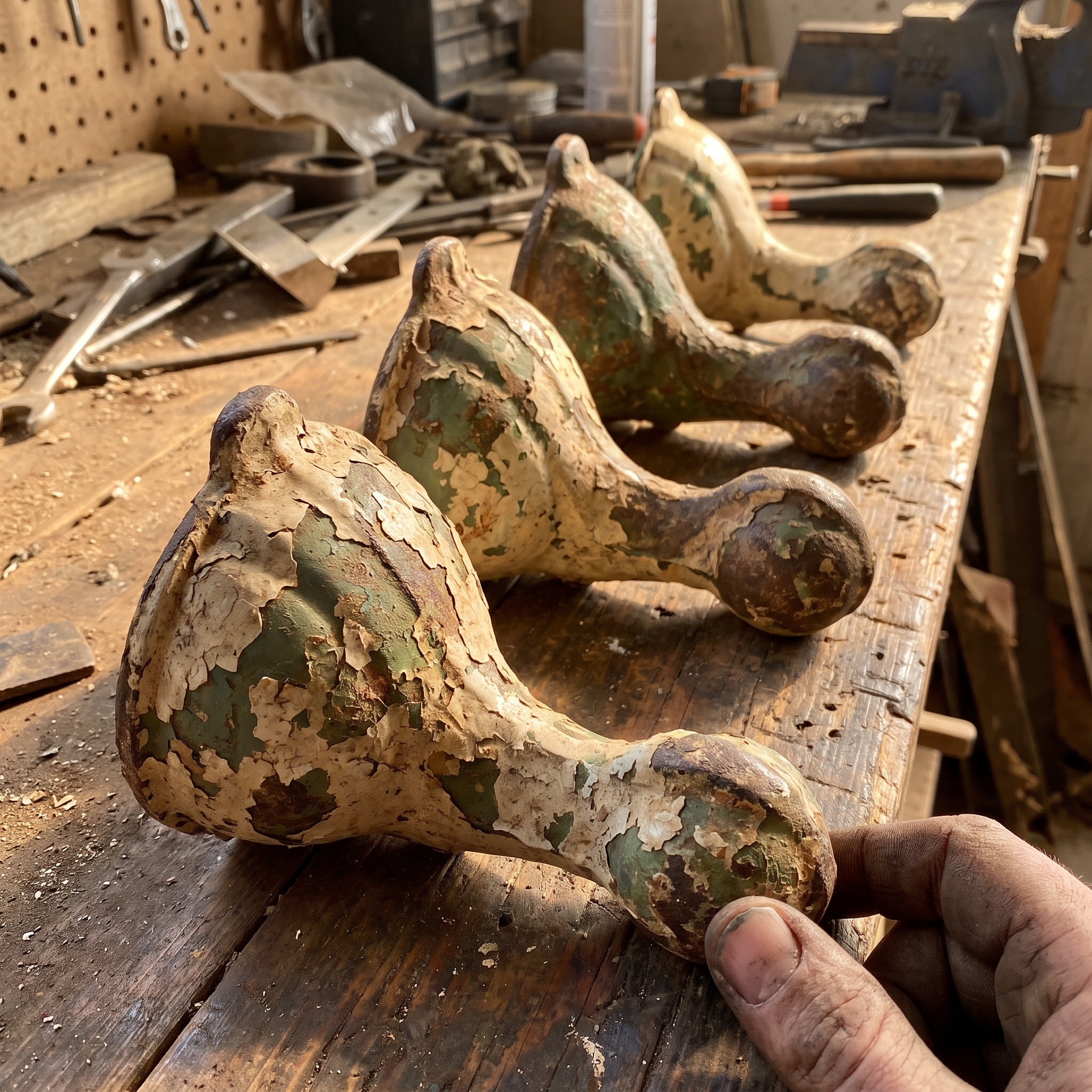
The feet get separated from the tub. Constantly.
Somebody moves the tub, loses a foot, swaps in a mismatched set, or scraps the whole thing and keeps the pretty castings. Decades later, a complete matched original set is salvage gold.
Dealers describe rare cast feet as “rare as hens’ teeth,” and they mean it. The elaborate lion-paw and ball-and-claw designs — where the foot grips a sphere — are the ones people fight over.
A tub without its original feet loses value. A set of four correct feet, alone, can be worth hunting across three states. That’s the surprise here: the legs can be the treasure, not the tub.
3. Copper Soaking Tub
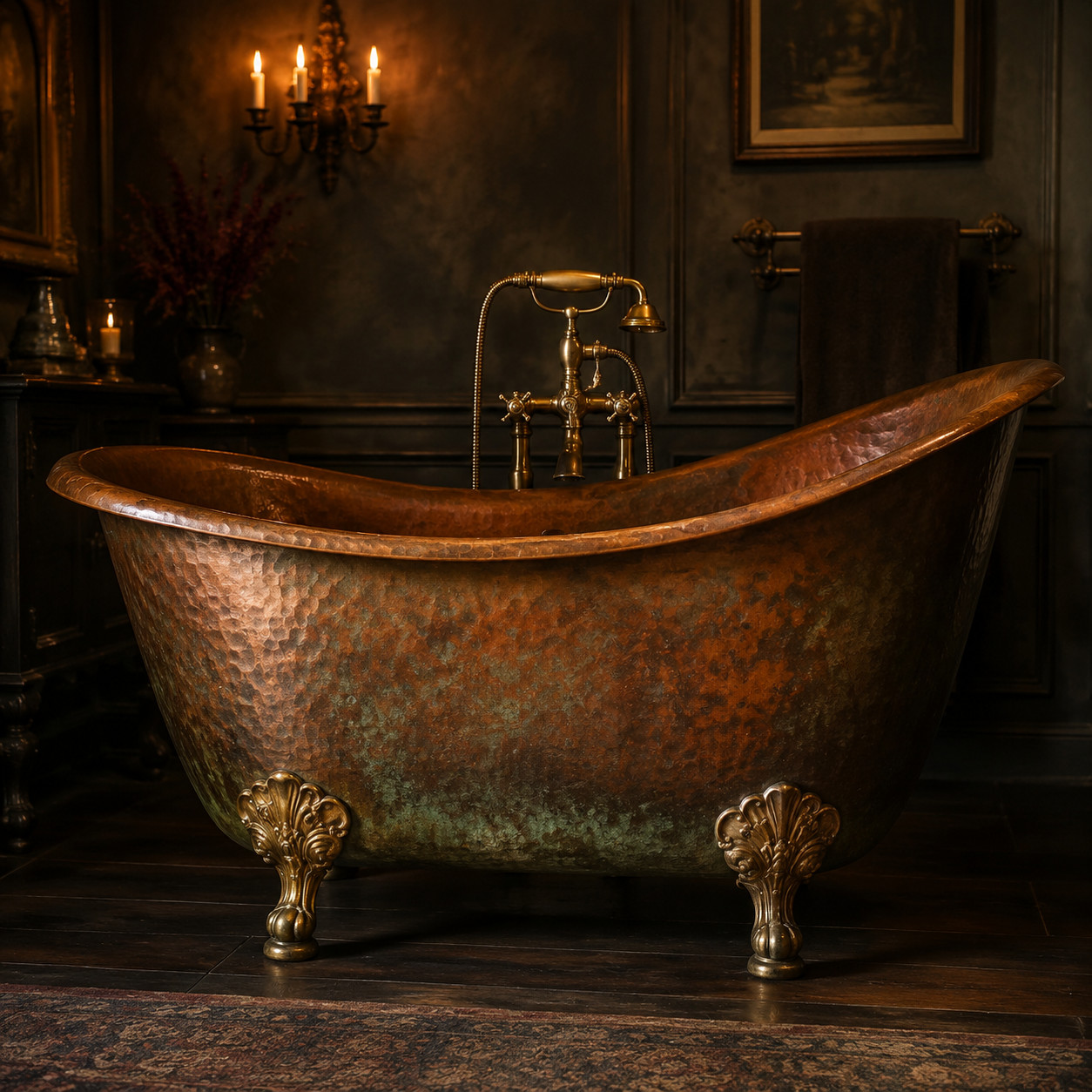
Copper reads as pure luxury, and it always has.
Hand-formed copper tubs from the 19th and early 20th century were built by hammering sheet metal into shape, sometimes set on gilded feet. The labor alone put them out of reach for most households, which is why so few exist.
They’re rarer than porcelain by a wide margin. And copper ages into a living patina — that soft brown-green bloom no factory can fake.
On architectural-salvage sites they’re a high-ticket item, sold as much for the material and the craftsmanship as for the function. Find a real one and you’ve found a wall of hand-hammered metal that took someone weeks to make.
4. Hand-Carved Marble Bathtub
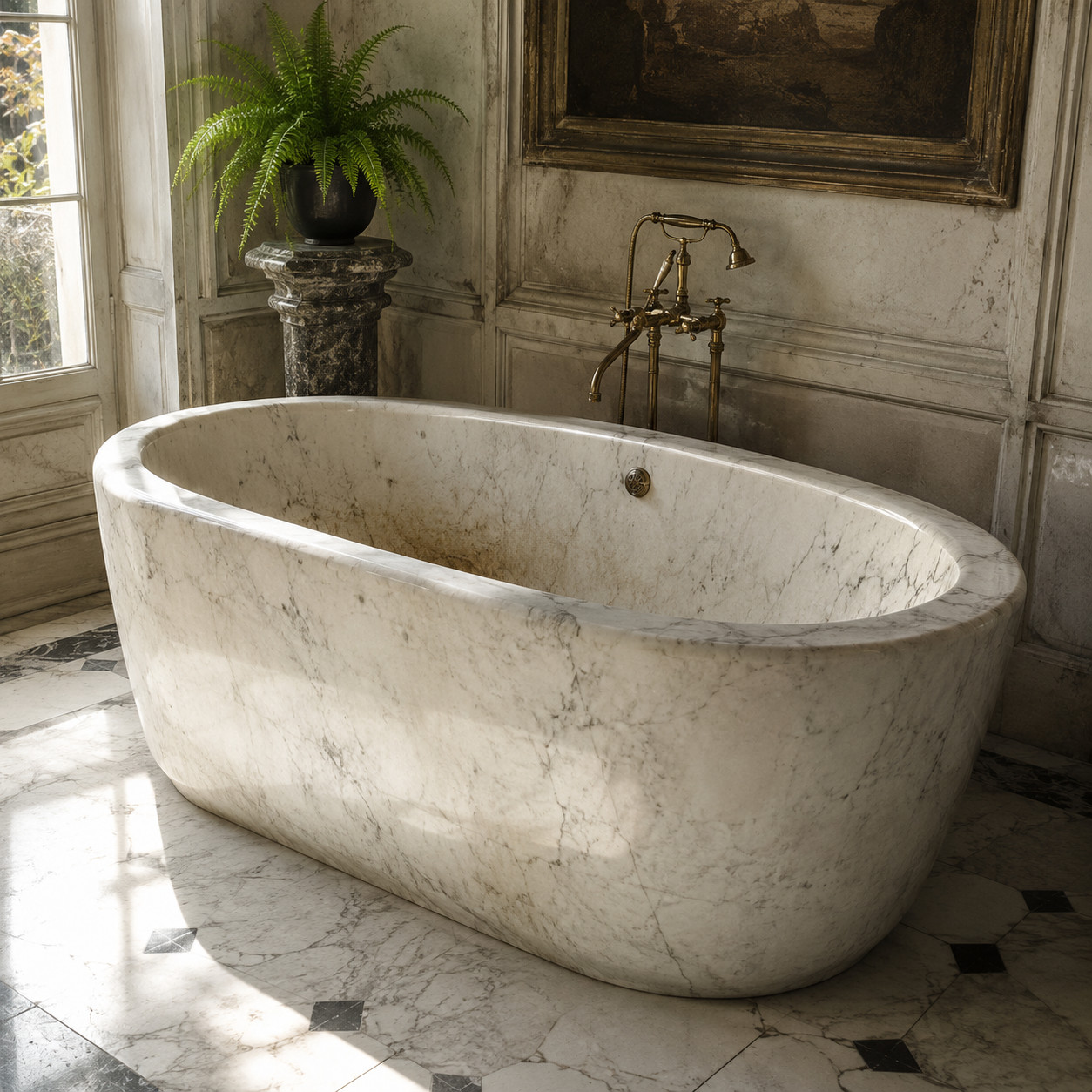
This is the top of the market. Not near the top — the top.
Early 20th-century marble tubs, often European and frequently Italian, were carved from a single block of stone. One block. One tub. No seams, no mold, no second chance if the chisel slipped.
Provenance sends the price into five figures. Some dealers note pieces that “survived two World Wars,” and survival is its own credential when the object weighs half a ton and can’t be replaced.
You won’t stumble on one in a suburban ranch. But in an old estate, behind a locked door nobody opened for forty years — that’s where they turn up.
5. High-Tank Pull-Chain Toilet
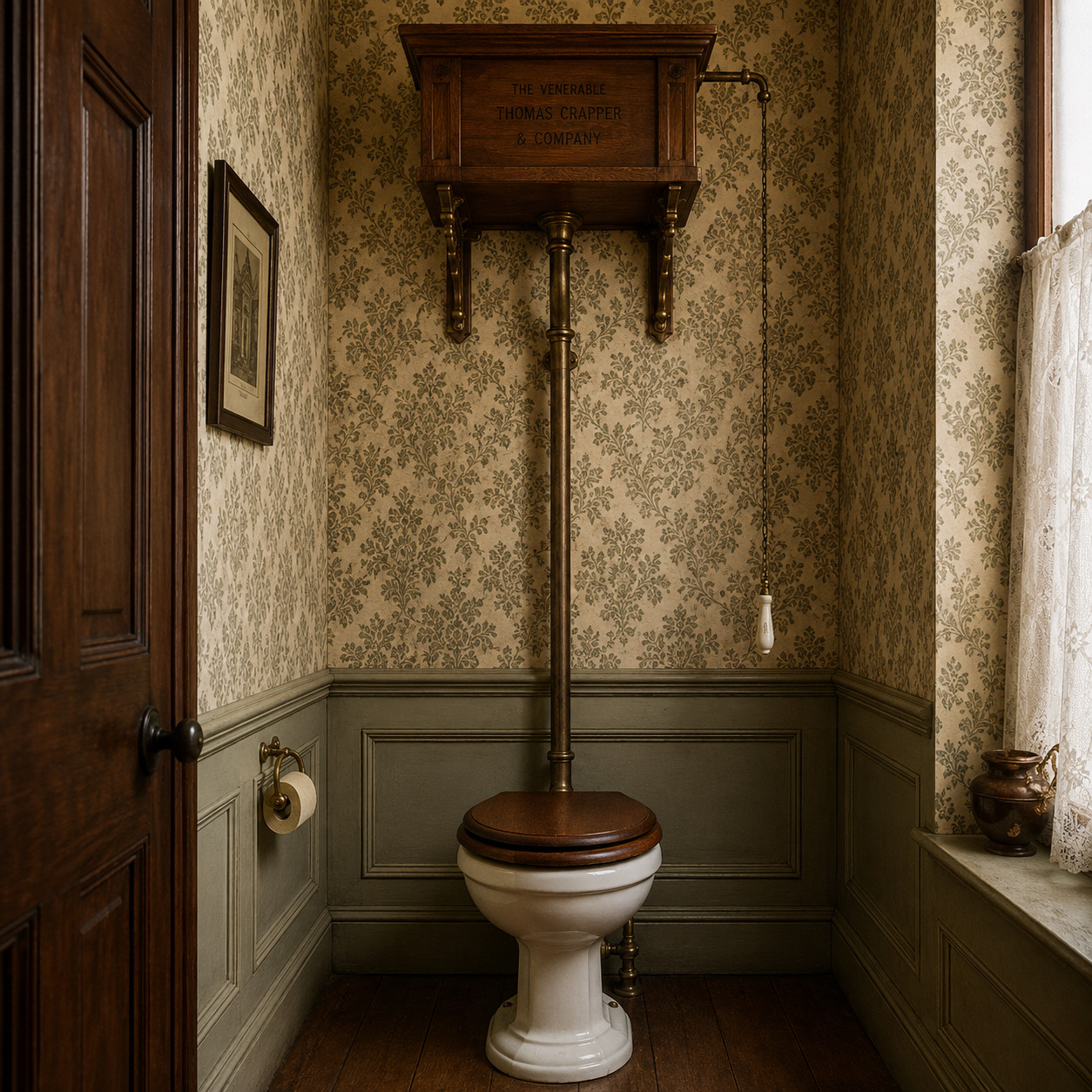
The wall-mounted tank up near the ceiling, the long chain, the satisfying yank. If you’ve seen one, you never forget it.
These ran from the Victorian era through the 1920s, roughly 1880 to 1930. The best ones paired a porcelain bowl with a wooden cistern — oak, usually, sometimes copper-lined inside to hold the water.
You can tell the originals are desirable by how heavily they’re reproduced. Nobody bothers faking something nobody wants.
Even the parts sell separately. A salvaged oak tank on its own, or an ornate Victorian pull handle, moves as a standalone piece. The complete working setup is the prize.
6. Colored Porcelain Fixture Suites
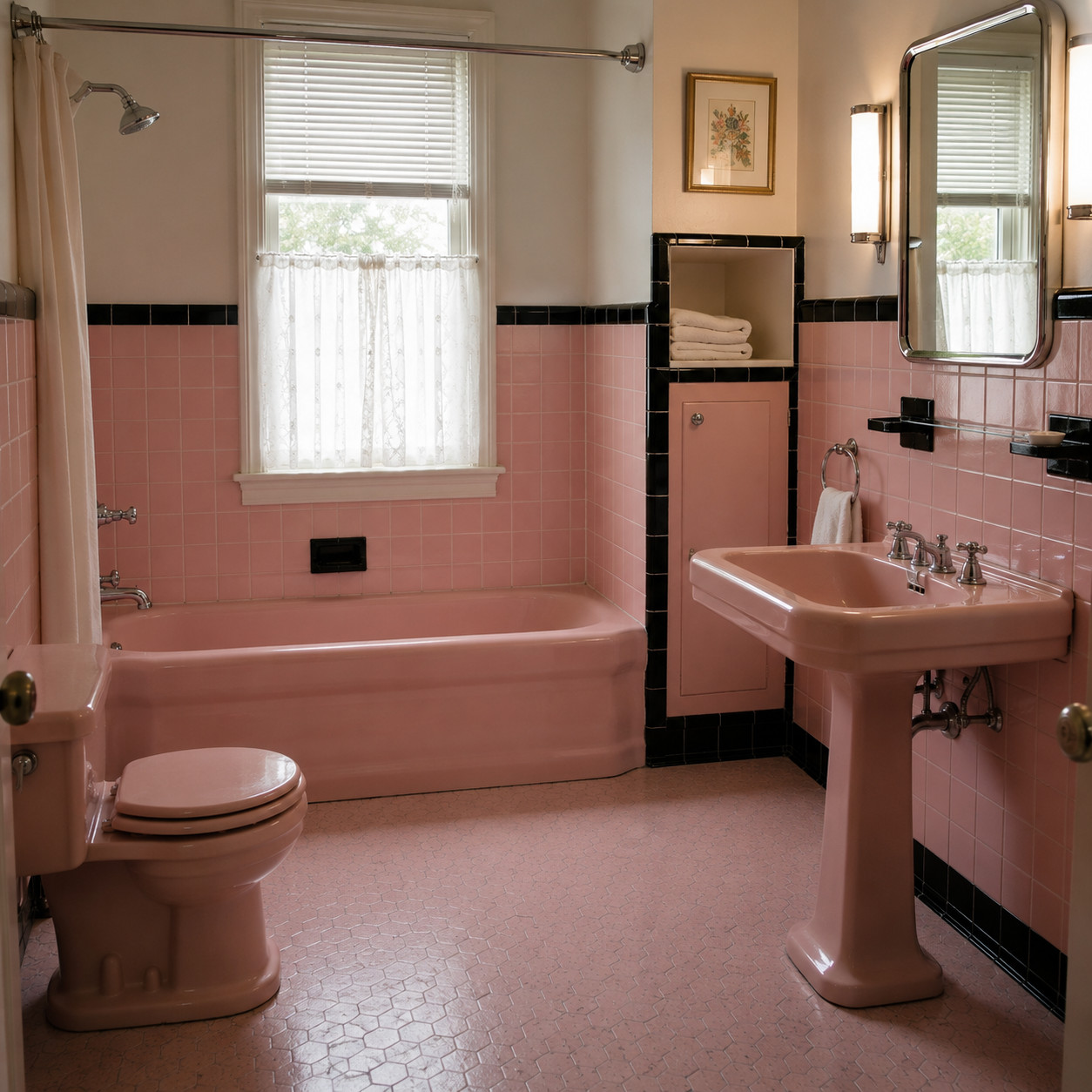
Somewhere along the way, bathrooms got scared of color. White, white, and more white.
But from the 1920s through the 1960s, the bathroom was a canvas. Whole suites — tub, sink, and toilet — came glazed in pink, mint, jade, lavender, coral, seafoam. Manufacturers like Standard, Crane, Kohler, and Eljer made color a selling point.
Pink hit hardest in the 1950s. Mamie Eisenhower loved it so much the shade got nicknamed “Mamie Pink,” and the look swept the country. Retro Renovation has spent years documenting the movement to save these bathrooms instead of gutting them.
Here’s why collectors care: matching an original color is brutally hard. Every maker mixed its glazes a little differently, and the shades shifted year to year. A mint sink from Crane won’t match a mint sink from Kohler, and neither matches the tub already bolted to your floor.
So sourcing a complete, color-matched suite becomes a treasure hunt with a real budget attached. Reglazing a fixture to a custom color runs a few hundred dollars per piece and never quite matches an original fired glaze. That gap — between a reglaze and the genuine article — is exactly what drives demand for untouched originals.
If you’ve got a pastel bathroom you were about to demolish, slow down. Those retro bathroom features that disappeared are the ones people now pay to bring back. And before you make any changes, it’s worth knowing which bathroom updates quietly age your home instead of adding value.
Save the pink. You can’t buy it back once it’s in the dumpster.
7. Colored Toilet Tank Lids
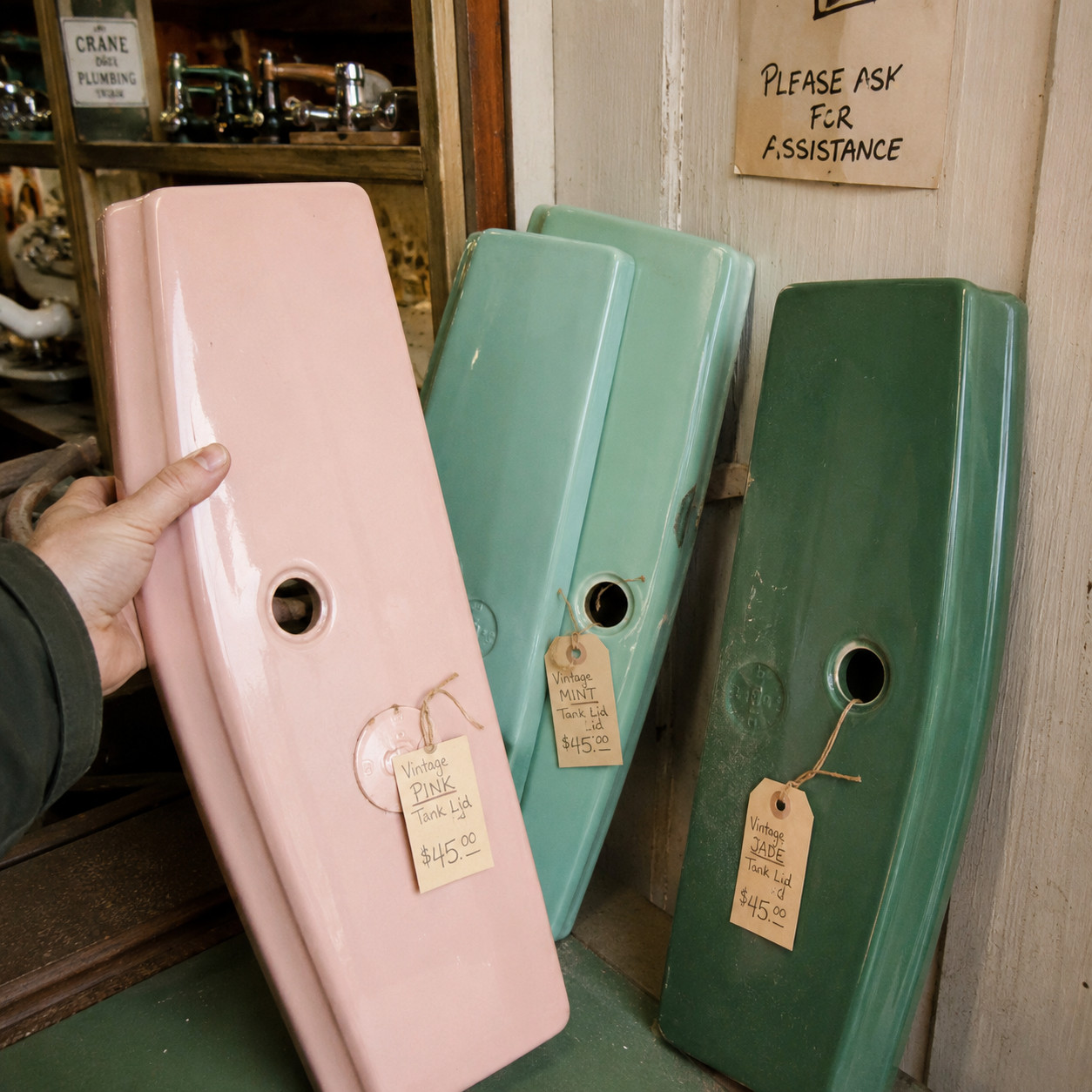
Small object. Outsized value.
Of everything on this list, the colored tank lid might be the single most-requested small salvage item. The reason is simple and a little sad: lids break. They get dropped, cracked, chipped on a corner. And the tank underneath usually survives.
So somebody ends up with a perfectly good pink toilet and no lid to match it. Manufacturers changed their shades constantly, discontinued colors, retooled molds. Matching a specific vintage lid gets described as finding “the Holy Grail.”
People will pay real money for a piece of ceramic the size of a serving tray. Not because it’s beautiful — because it’s the one missing thing standing between them and a complete original bathroom.
8. Art Deco Peg-Leg Pedestal Sink
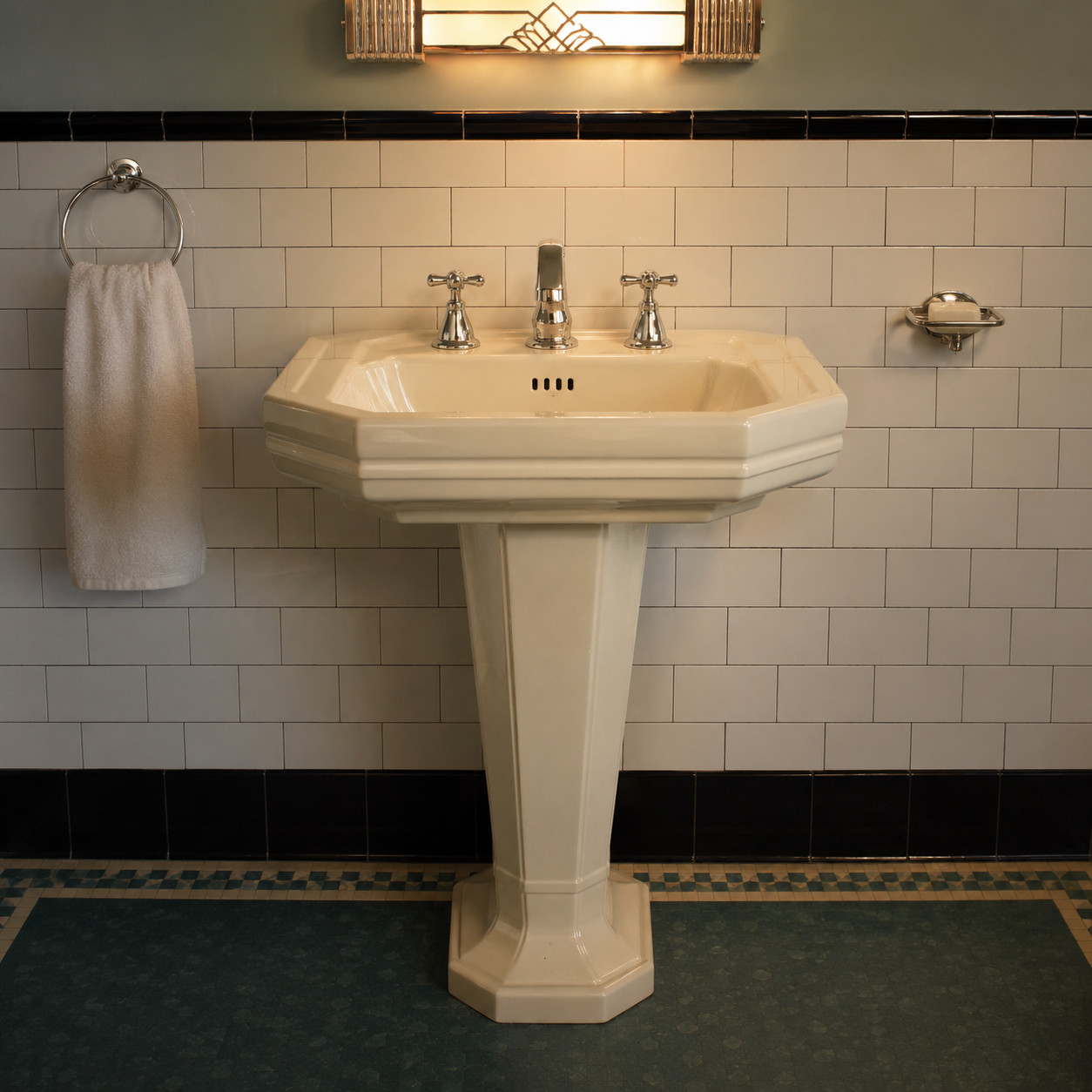
Crane made a pedestal sink with a tapered, fluted column that dealers still call the “peg leg.” It’s about as Art Deco as plumbing gets.
These ran from roughly 1919 through the 1930s, when clean lines and geometry were taking over from Victorian fuss. Period renovators prize them for exactly that — they anchor a room to a decade.
A matched pair carries a premium. So does any example in an original color rather than plain white.
The pedestal hides the plumbing and takes up almost no floor, which is partly why the style keeps coming back. But the originals have a weight and a glaze the modern copies just don’t.
9. Victorian Marble Washstand Basin
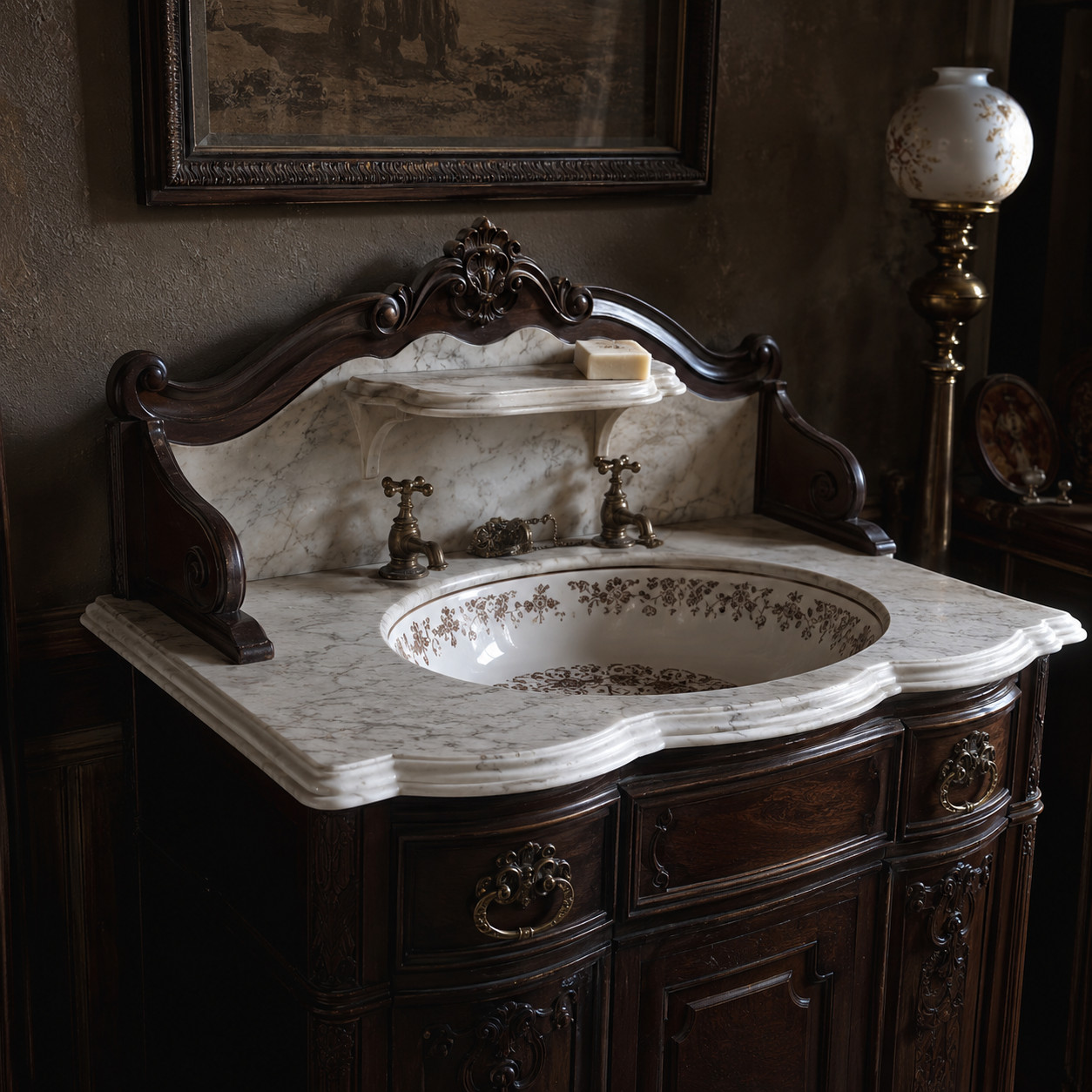
Before the built-in vanity, there was the washstand. A slab of marble, a porcelain bowl set into it, and enough ornament to make washing your hands feel like an occasion.
These date to roughly 1890 through 1910. British makers like John Bolding and John Shanks turned out heavy, elaborate basins with scalloped soap ledges and deep bowls.
Size drives price. Oversized examples and corner “Trone” models — built to tuck into a corner — command the strongest numbers because so few survived intact.
They’re heavy, they’re ornate, and they don’t fit modern plumbing without work. None of that has slowed the demand.
10. Console Sink With Metal Legs
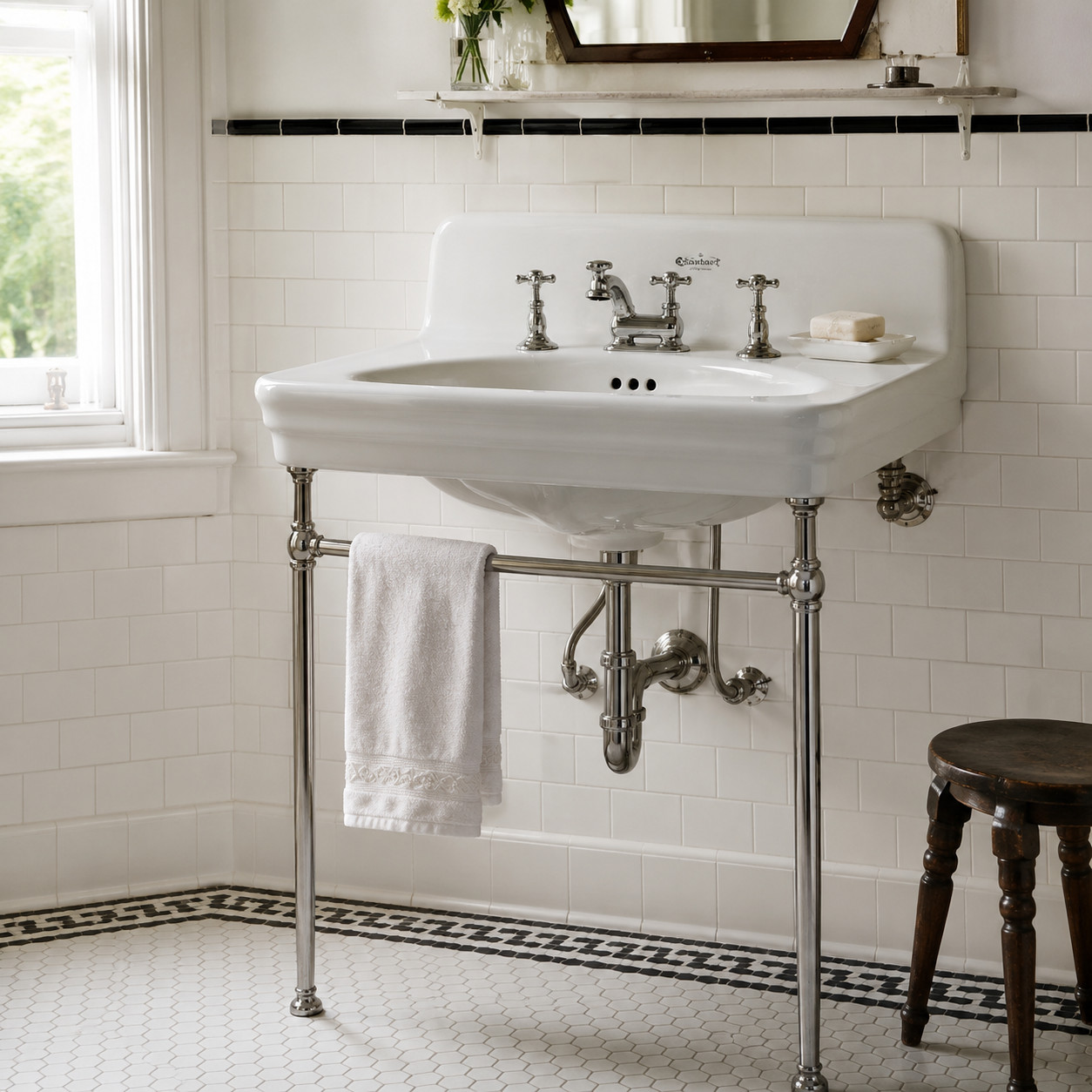
A porcelain basin resting on slender chrome or brass legs. Open underneath, a towel bar often built into the front. Light and airy in a way old plumbing rarely was.
The style runs from the Belle Époque into the early 20th century, and it’s reproduced endlessly today. That’s your tell. When a form gets copied this much, the originals are worth something.
Cast-iron double consoles — two basins on one frame — and French Porcher deco versions sit at the top. Authentic-restoration buyers want the real leg castings, not the reproduction stamped metal.
If you’re piecing together a period bath, the console strikes a balance between the ornate Victorian washstand and the plain modern pedestal.
11. Sherle Wagner Marble & Onyx Sinks
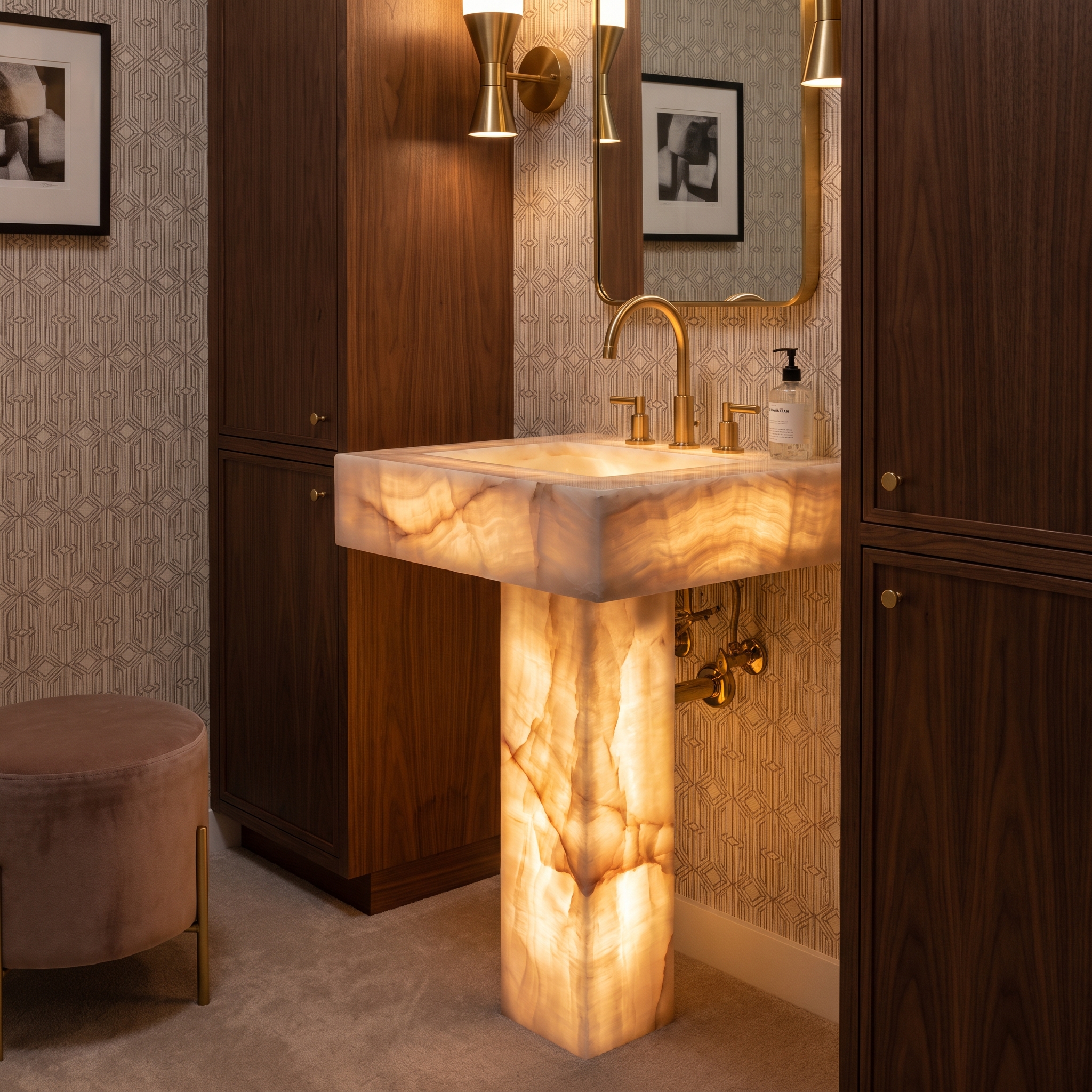
Attach the right name and a sink stops being a fixture and becomes a design object.
Sherle Wagner built a mid-century luxury empire on hand-carved sinks in rose onyx and Rose Aurora marble. These carried five-figure prices when they were new, in the middle of the 20th century.
They still trade as collectible design, not plumbing. Buyers aren’t sourcing a sink — they’re buying a signed piece of a specific era’s idea of glamour.
The onyx ones glow when light hits them. That’s the whole point, and it’s why they’ve held value for sixty years.
12. Gio Ponti & Italian Designer Sanitaryware
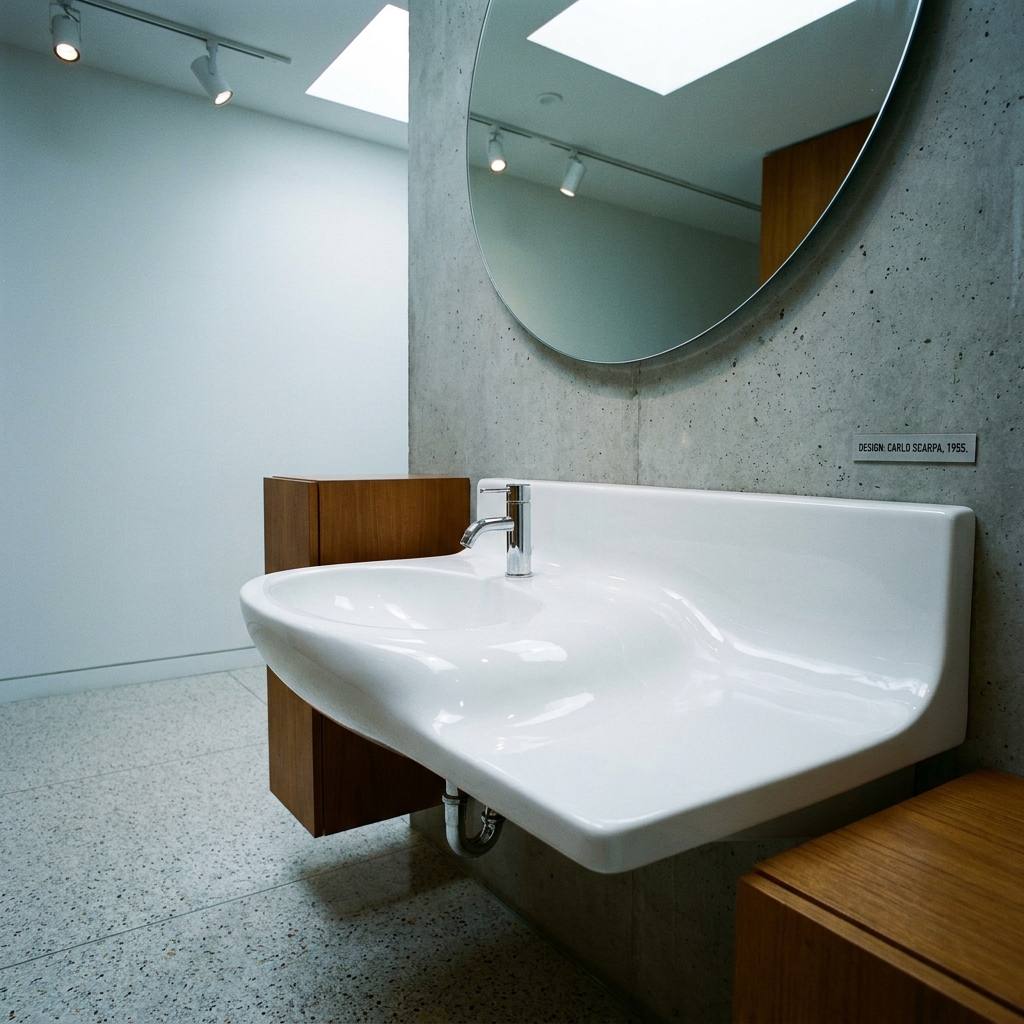
A big name turns a humble sink into an auction piece.
Gio Ponti — one of the towering figures of Italian mid-century design — designed sanitary ware for Ideal Standard in the 1950s. Collectors chase it the way they chase his furniture and lighting.
Attribution is everything. The same shape without the Ponti connection is a nice old sink. With it, it’s industrial design history you can wash your hands in.
It’s the high-design surprise of the whole category. Nobody expects the toilet to have a pedigree.
13. Nickel-Plated Brass Accessory Sets
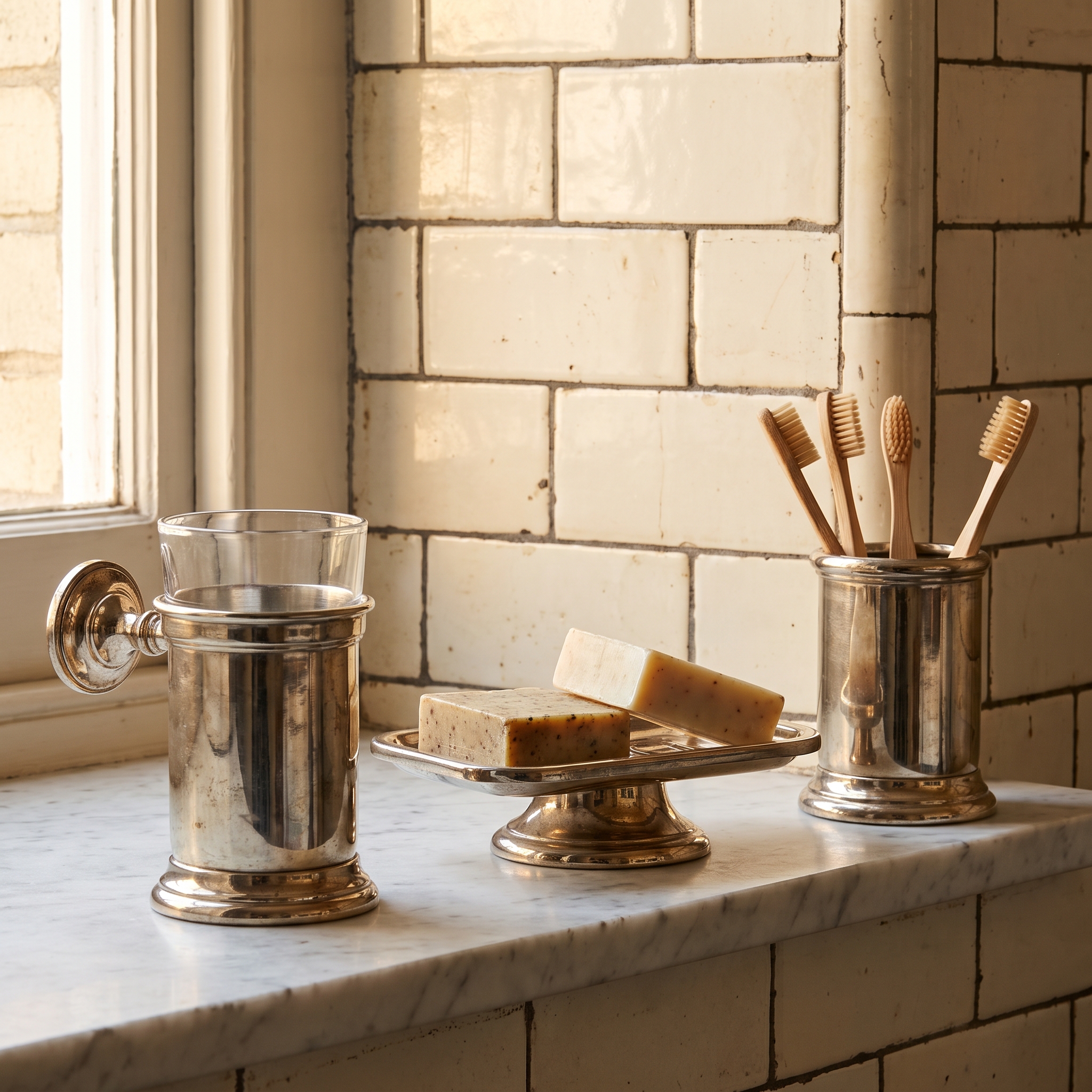
Weight tells you what you’re holding. The old accessories were solid brass, then nickel-plated, and they feel like it.
Around 1902 and onward, makers like the Art Brass Co. of Philadelphia produced matched sets: cup holders, double soap dishes, toothbrush holders, towel rings. All in the same finish, all built to last a century.
Collectors buy them by maker’s name. A branded Art Deco set, complete and matched, sells as a group for hundreds to low thousands.
The key word is matched. A single soap dish is nice. The whole coordinated set, still together after all these years, is what moves the needle.
14. Porcelain Cross-Handle Hot & Cold Faucets
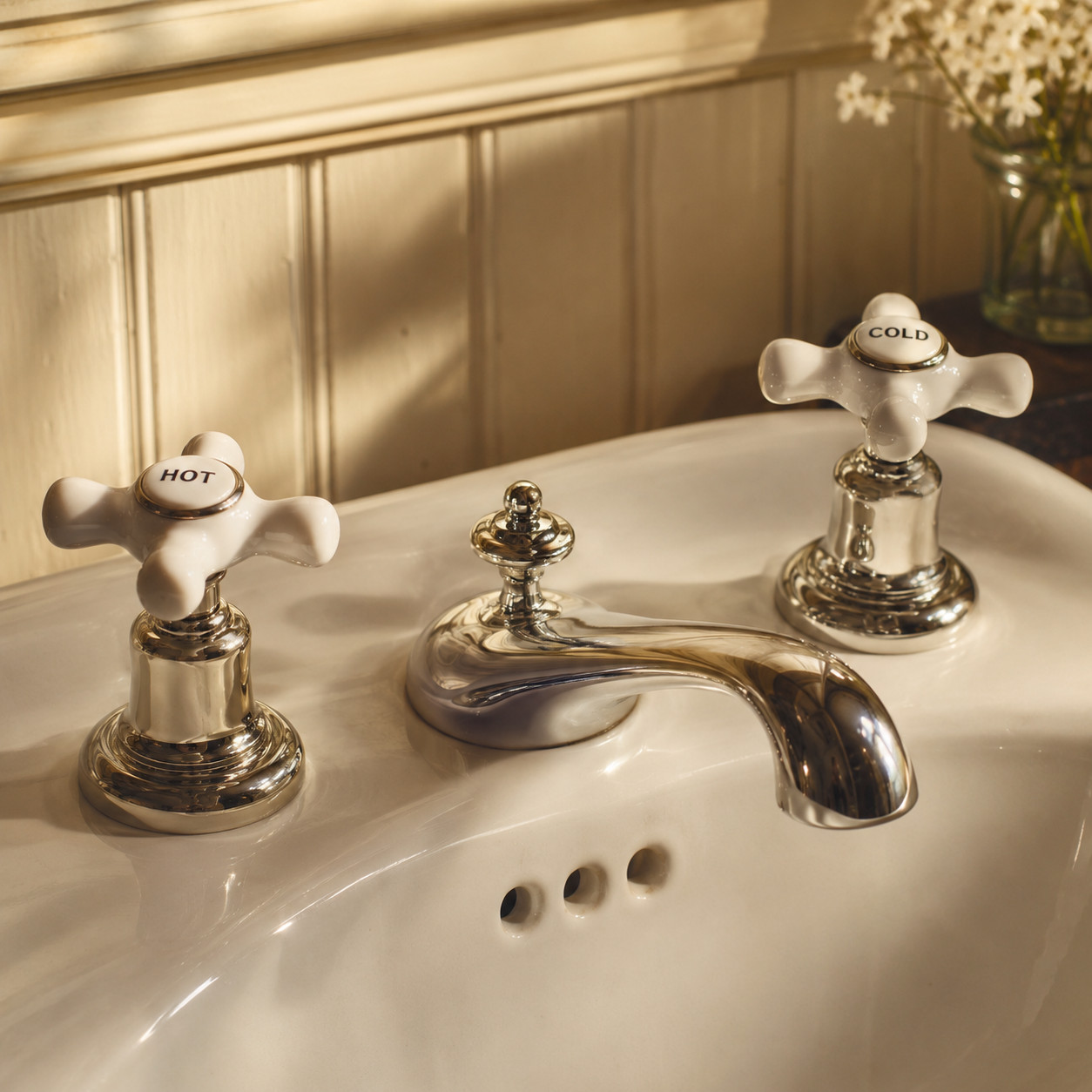
White porcelain handles, four spokes each, the words HOT and COLD glazed right into the buttons. Simple. Instantly readable as old.
These are the small part everyone needs to finish a period bathroom, spanning the Victorian era through mid-century. Original pre-1960 sets and cleanly restored pairs run roughly $50 to $125 a set.
Single matched handles get surprisingly dear when someone’s short exactly one. DEA Bathroom Machineries stocks original replacements precisely because the demand never dries up.
If you’re restoring a period faucet and the handles are your holdup, know that pulling old handles without visible screws takes a little finesse. The lettering is what people want. A symbol says nothing; a handle that says COLD says 1935.
15. Antique Brass & Bronze Bridge Taps
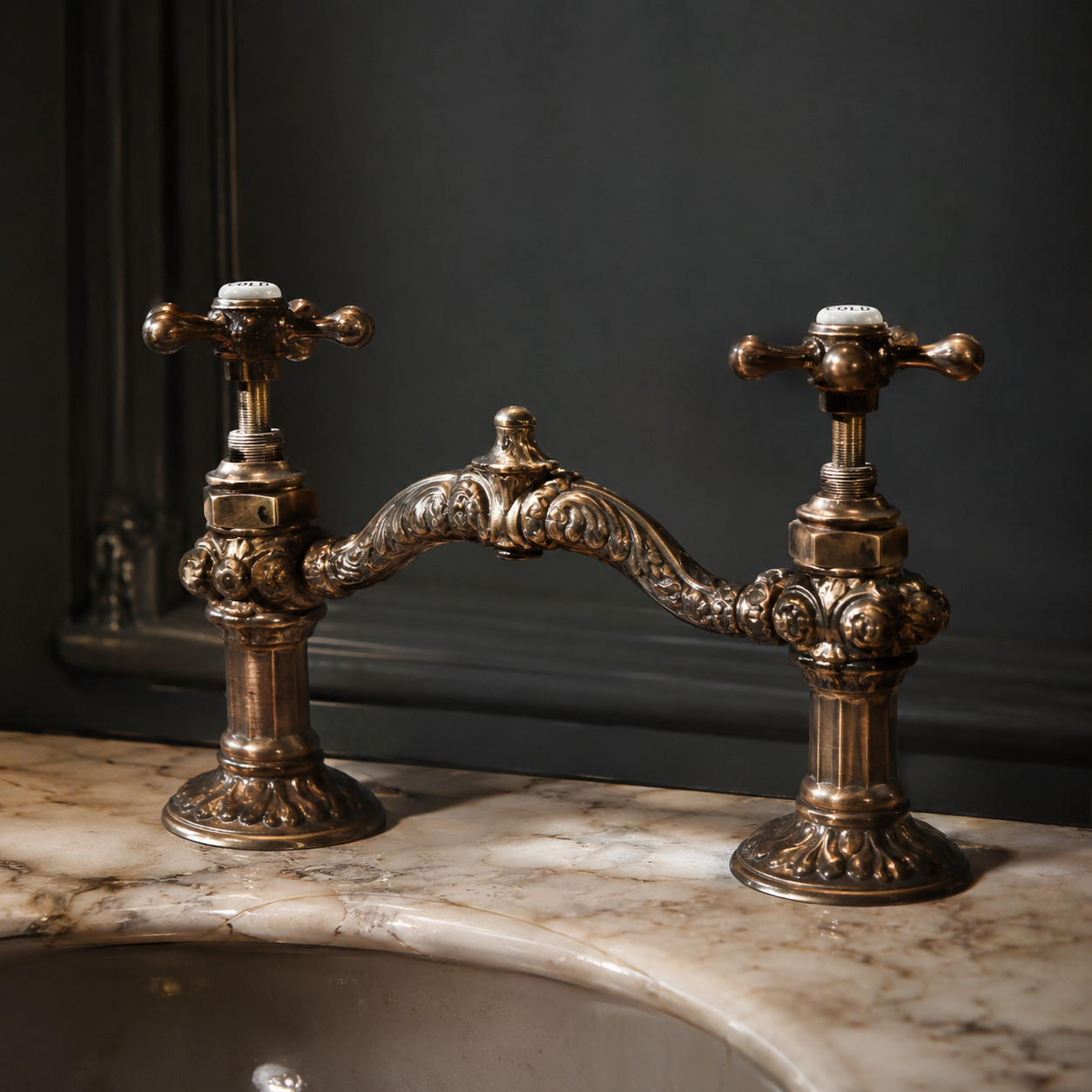
This is the sculptural end of the faucet world. Monumental bronze-and-brass taps from 19th-century English country houses, with the hot and cold lines arching up and over to meet in the middle.
Bridge faucets get their name from that arch — the pipe that bridges the two supplies. The genuine old ones are heavy, ornate, and genuinely rare.
They sell as statement hardware. Someone building a high-end period bath will pay for a survivor because a reproduction, however well made, doesn’t have the casting quality or the wear of the original.
Curious how modern versions compare? The difference between high-arc and low-arc faucets traces straight back to forms like these.
16. Recessed Medicine Cabinet With Beveled Mirror
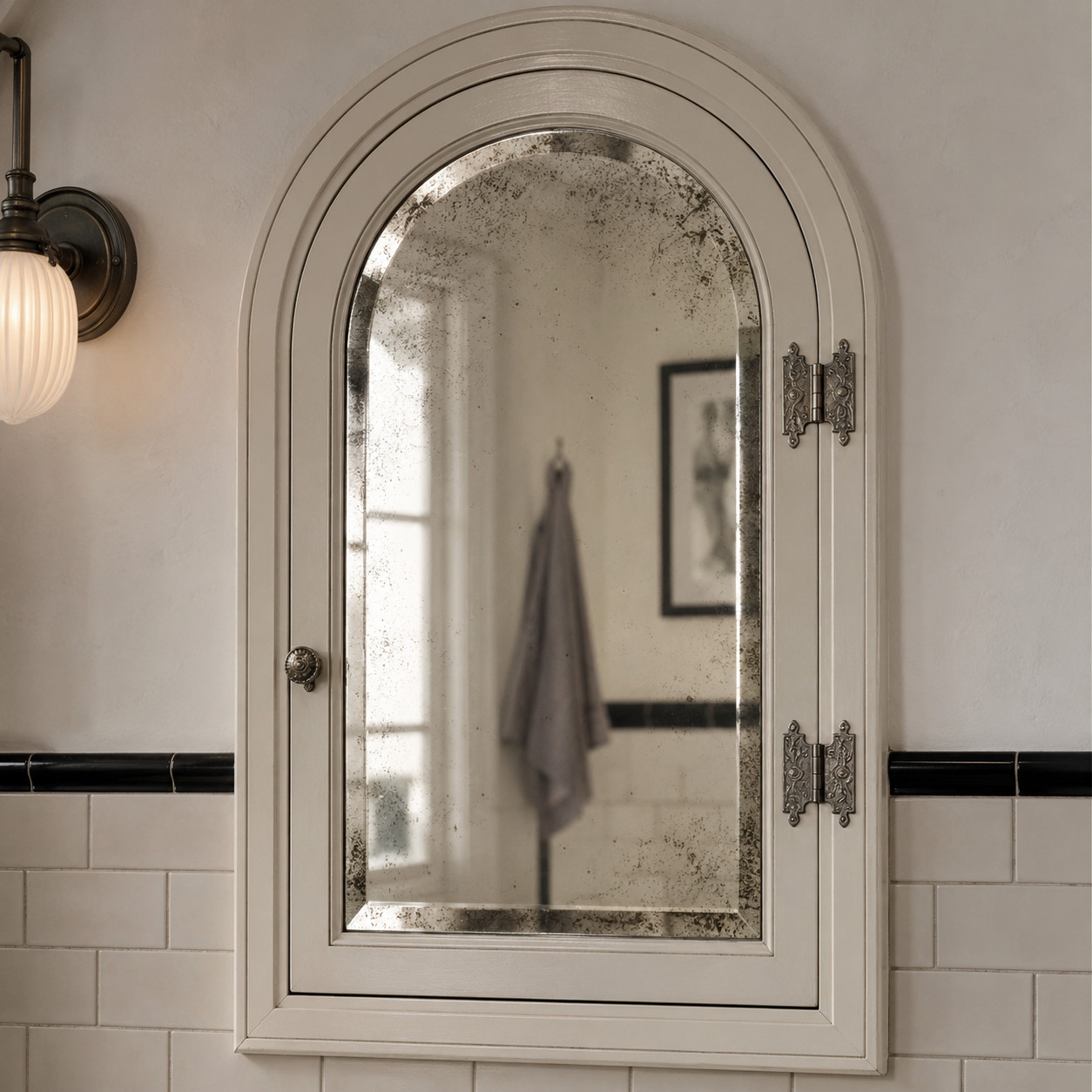
The arched-top cabinet set into the wall, with a beveled or etched mirror and little ornamental hinge plates. Peak production ran through the 1920s to the 1940s.
Recessed into the studs, they saved space and looked built-in because they were. The beveled edge on the mirror catches light in a way flat modern glass doesn’t.
Both wood-and-glass and steel originals from that stretch are actively collected. Restorers want them because a period bathroom with a big-box cabinet screams that something’s off.
Check the mirror for that silvery speckling around the edges. It’s oxidation — and to the right buyer, it’s proof, not damage.
17. Wall-Mount Shaving Mirror
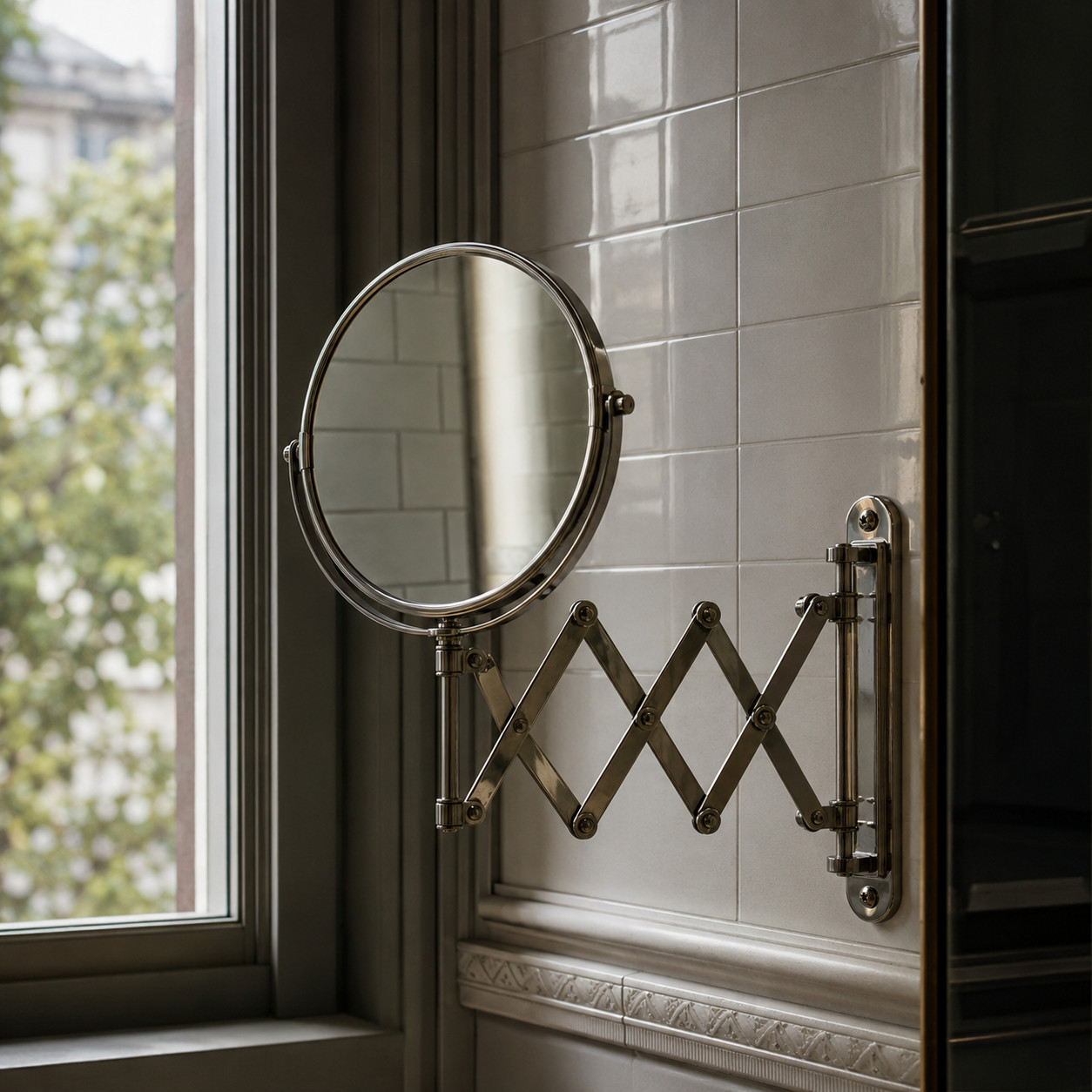
The extending, pivoting mirror on a scissor arm that folds flat to the wall and swings out over the sink. Nickel or brass, early 20th century.
Salvage dealers keep these in steady stock, which tells you the market is real and ongoing. They’re small, shippable, and desirable — a rare combination in architectural salvage.
One side is usually magnifying, for the close work of a straight-razor shave. That detail dates it instantly to a slower morning ritual.
For a period bath, it’s the finishing touch that costs less than a tub but does a lot of the storytelling.
18. Built-In Ceramic Soap Dishes & Toothbrush Holders
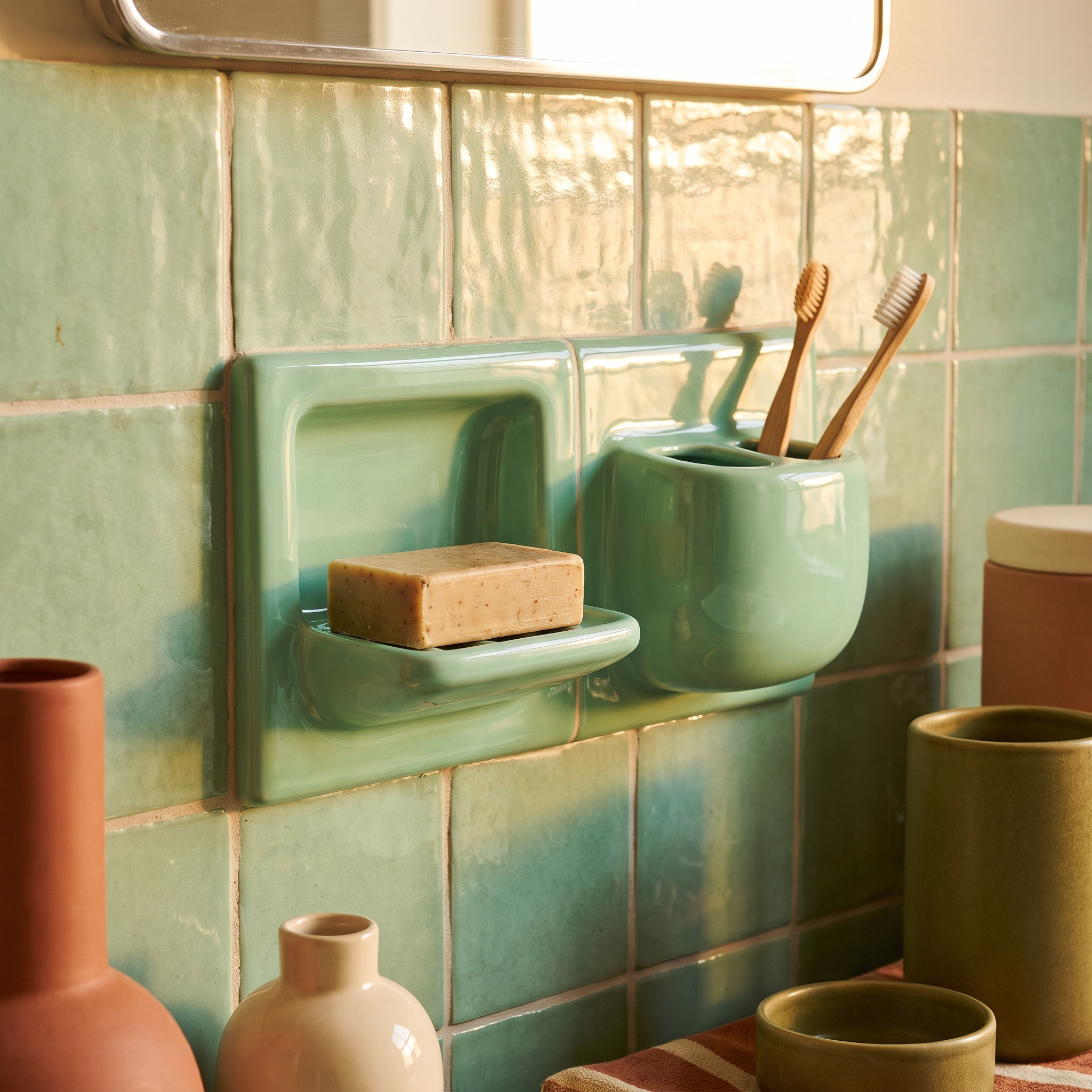
Set flush into the tile, glazed to match the wall — the soap dish and the toothbrush-and-tumbler holder that were part of the surround, not stuck on afterward.
These ran from the 1920s through the 1950s. The white ones turn up regularly. The colored ones — glazed to match a pink or mint or jade suite — are the hard finds.
That’s what drives the price. A restorer patching a colored tile wall needs a soap dish in the exact shade, and there’s no store that sells 1953 seafoam.
Chip a colored one out of a wall carefully and you’re holding a small piece of leverage.
19. Glass-Rod Towel Bars
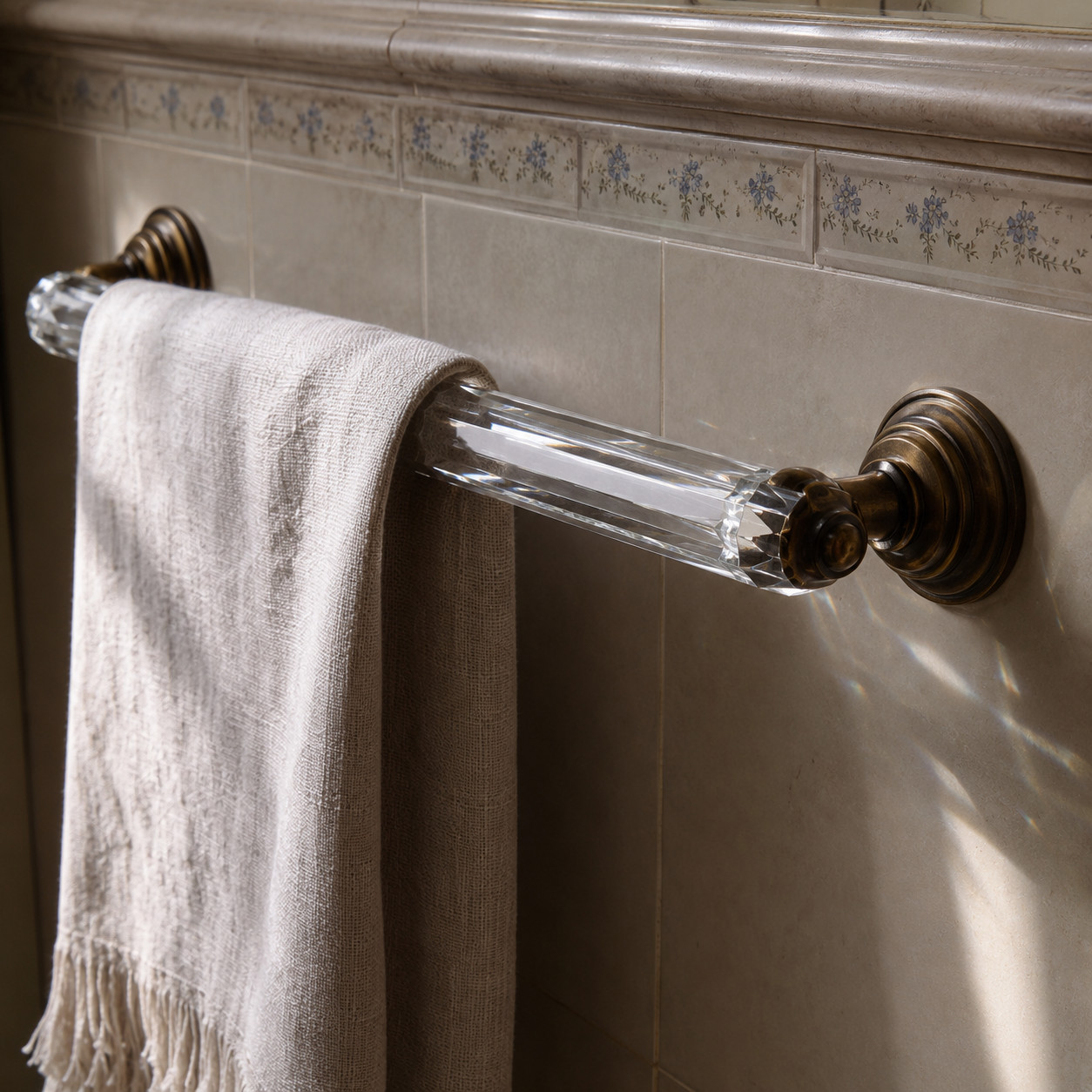
A thick glass bar, sometimes faceted, held by darkened brass or nickel ends bolted to the wall. Victorian through the early 20th century.
They look delicate and they aren’t — that solid glass rod has outlasted a century of wet towels. Long examples, the ones spanning a real towel’s width, show up on high-end dealer sites as genuine collectible hardware.
Not junk-drawer parts. Real fixtures with real value.
The glass picks up the light and the metal ends age dark, and together they read as a specific kind of old-world quality. If you’re deciding whether such details should coordinate, there’s a case for matching towel bars to the faucet finish — the Victorians certainly thought so.
20. Bakelite Switch Plates & Accessories
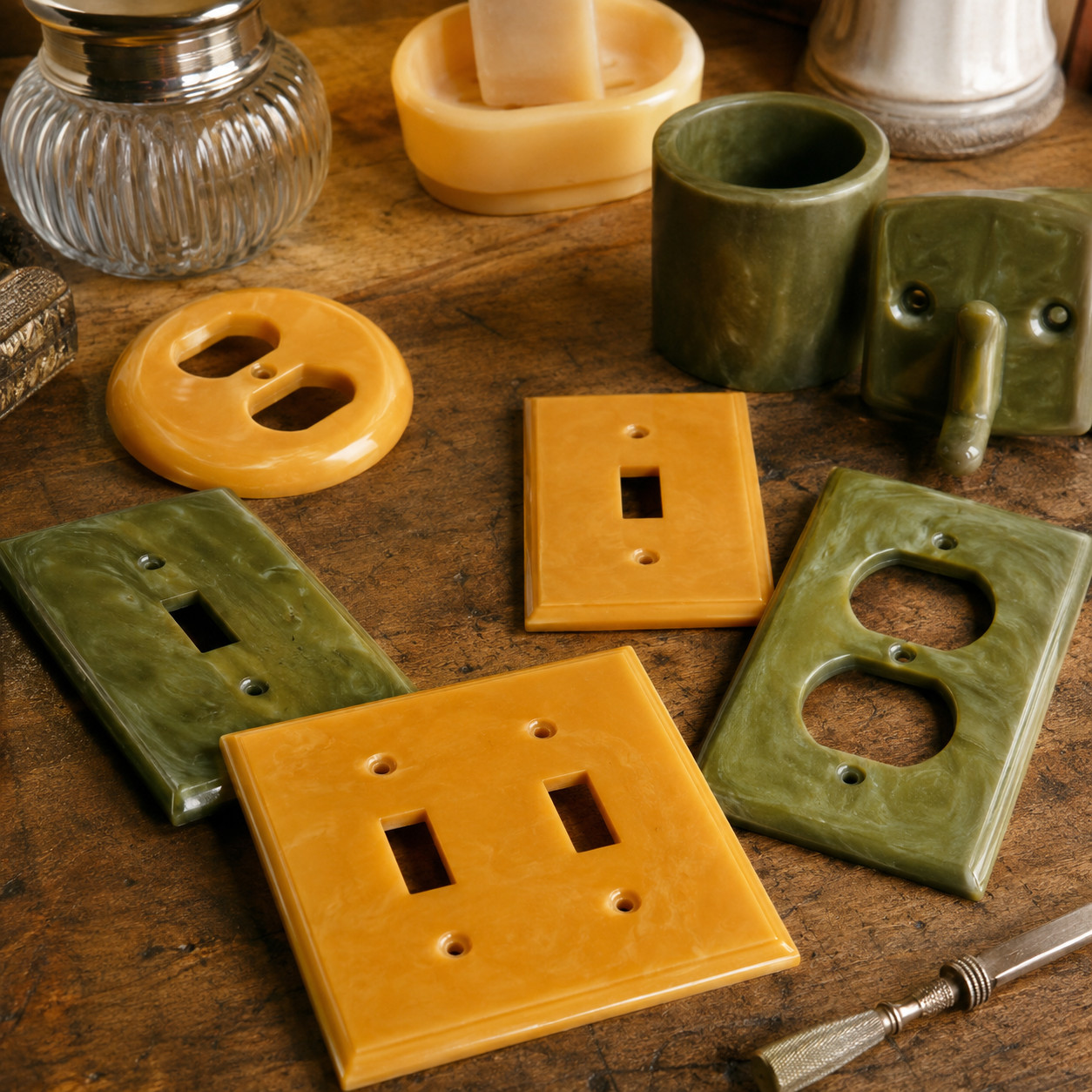
Bakelite was the wonder plastic of its day — durable, heat-resistant, and moldable into rich colors. From the 1930s through the 1950s, it showed up as switch plates and small bathroom accessories.
Two crowds want it. Period restorers matching a color scheme, and plastics collectors who chase Bakelite for its own sake.
It came in shades meant to coordinate with a room, so matched examples in butterscotch, green, or marbled swirl carry a premium over plain brown. Run a warm cloth over real Bakelite and it gives off a faint chemical smell — that’s the old collector’s test.
Tiny, cheap to ship, and easy to overlook in a demo. Which is exactly why they slip out the door for pennies and resell for real money.
21. Antique Residential Urinal
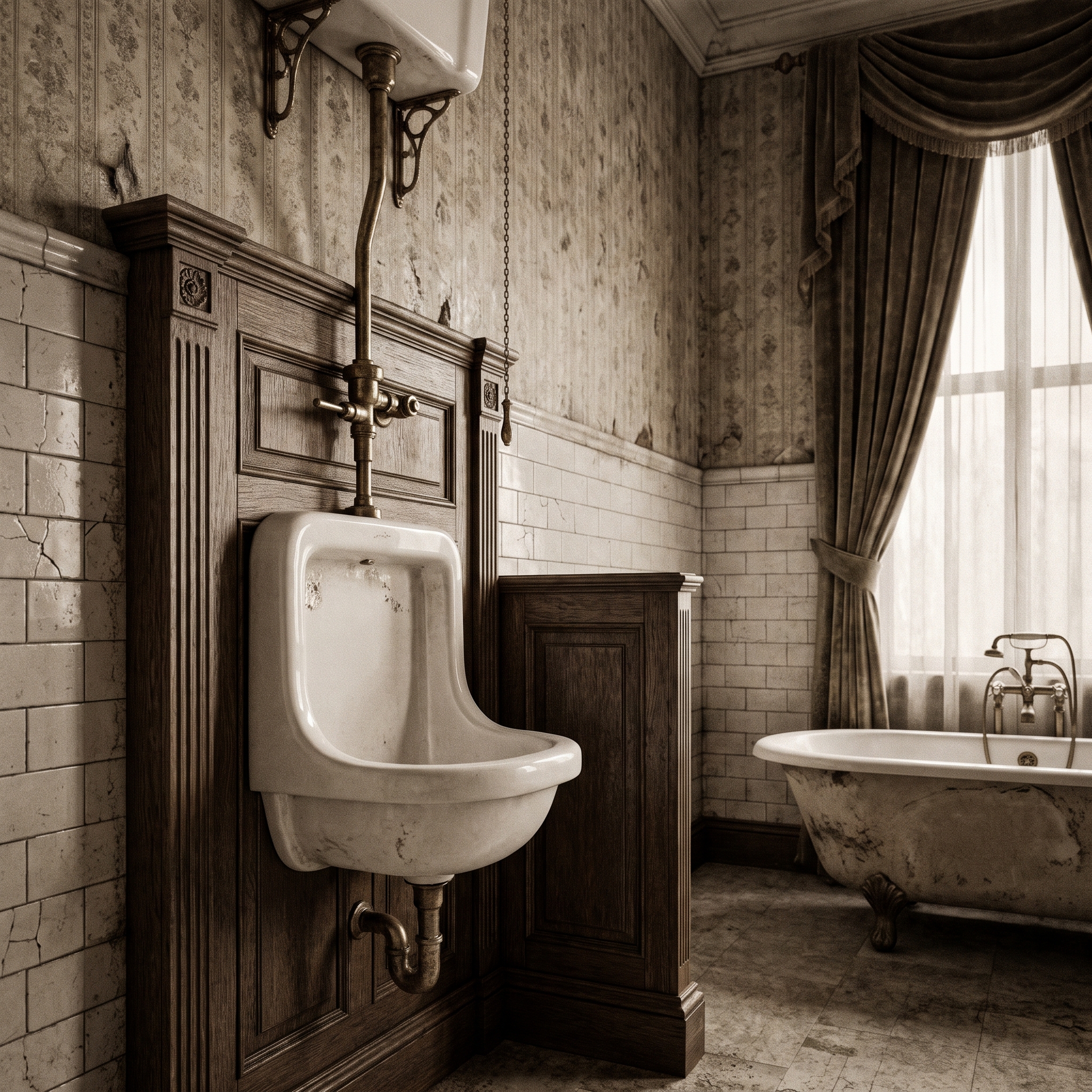
The one nobody expects.
Wall-mounted residential urinals, some copper-lined oak, some porcelain, turn up in the grand old homes of the early 1900s. A gentleman’s house of a certain rank sometimes had one right in the bathroom.
They’re genuine salvage rarities, and they sell to collectors precisely because they’re so unusual. Scarcity plus a story equals demand.
Here’s a quick sense of who buys what across this whole category, because the audiences don’t fully overlap:
| Period Restorer | Design Collector | |
|---|---|---|
| Wants | Matching original pieces | Named designers |
| Top priority | Correct color/era | Provenance |
| Chases | Tank lids, handles | Sherle Wagner, Gio Ponti |
| Pays for | Completeness | Rarity and name |
The restorer needs the exact soap dish. The collector needs the signature. A residential urinal, oddly, appeals to both — it’s rare enough for one and period-correct enough for the other.
22. Salvaged Hex and Subway Wall Tile
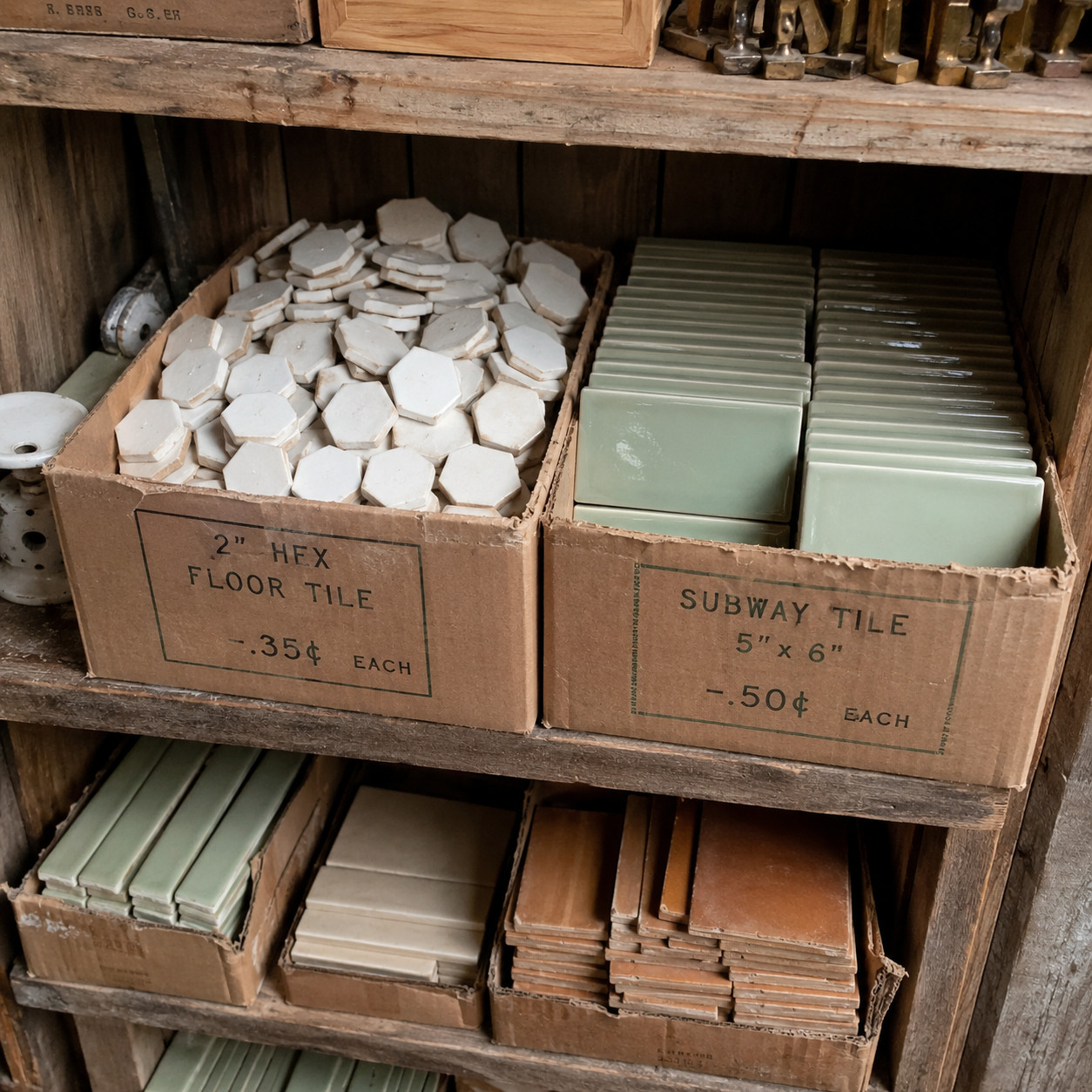
Original tile in period colors gets hunted down for one reason: patch-matching. You crack a few tiles pulling out an old vanity, and suddenly you need eight square inches of a color they stopped making in 1948.
Small hexagon floor tile and glossy subway wall tile from the 1900s through the 1950s is the workhorse of period restoration.
It’s more building material than discrete collectible, so it trades in lots and boxes rather than as showpieces. But a box of the right color in the right glaze can be worth a small fortune to the one person who needs exactly it.
Never toss the leftover tile in an old house. Someone, someday, will need to match it.
23. Cast-Iron or Enamel Bathroom Scale
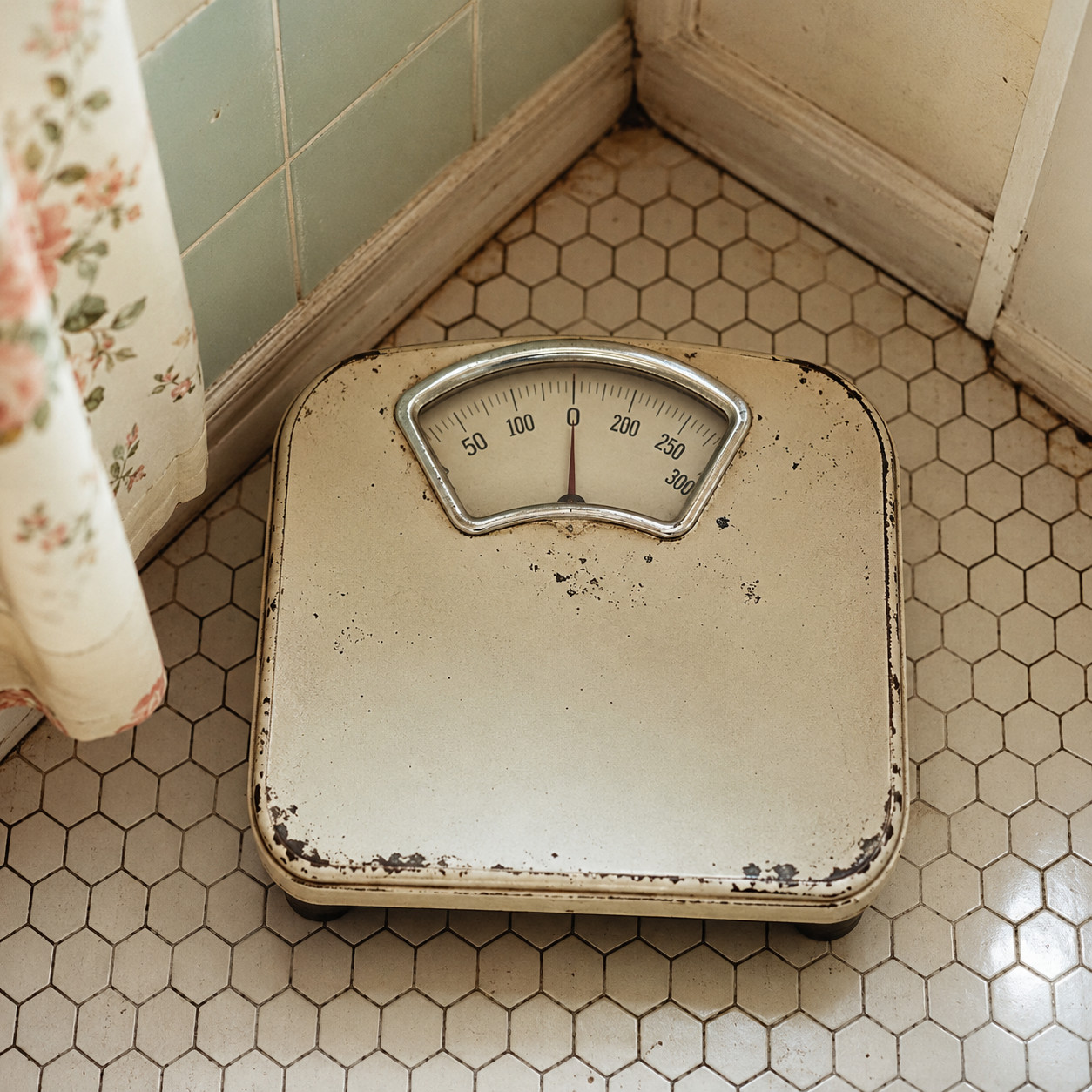
The heavy platform scale with the sweeping dial and the enamel finish, standing in the corner of a mid-century bathroom.
Values here are modest — this is nostalgia more than treasure. It’s arguably a furnishing rather than a fixture of the house.
Still, a clean example with intact enamel and a dial that reads true has real charm, and charm sells. The cheerful colors and the chunky mechanical feel are the draw.
Not the piece that funds your remodel. But the kind of thing that makes a restored bathroom feel lived-in instead of staged.
24. Wooden Apothecary / Bathroom Storage Cabinet
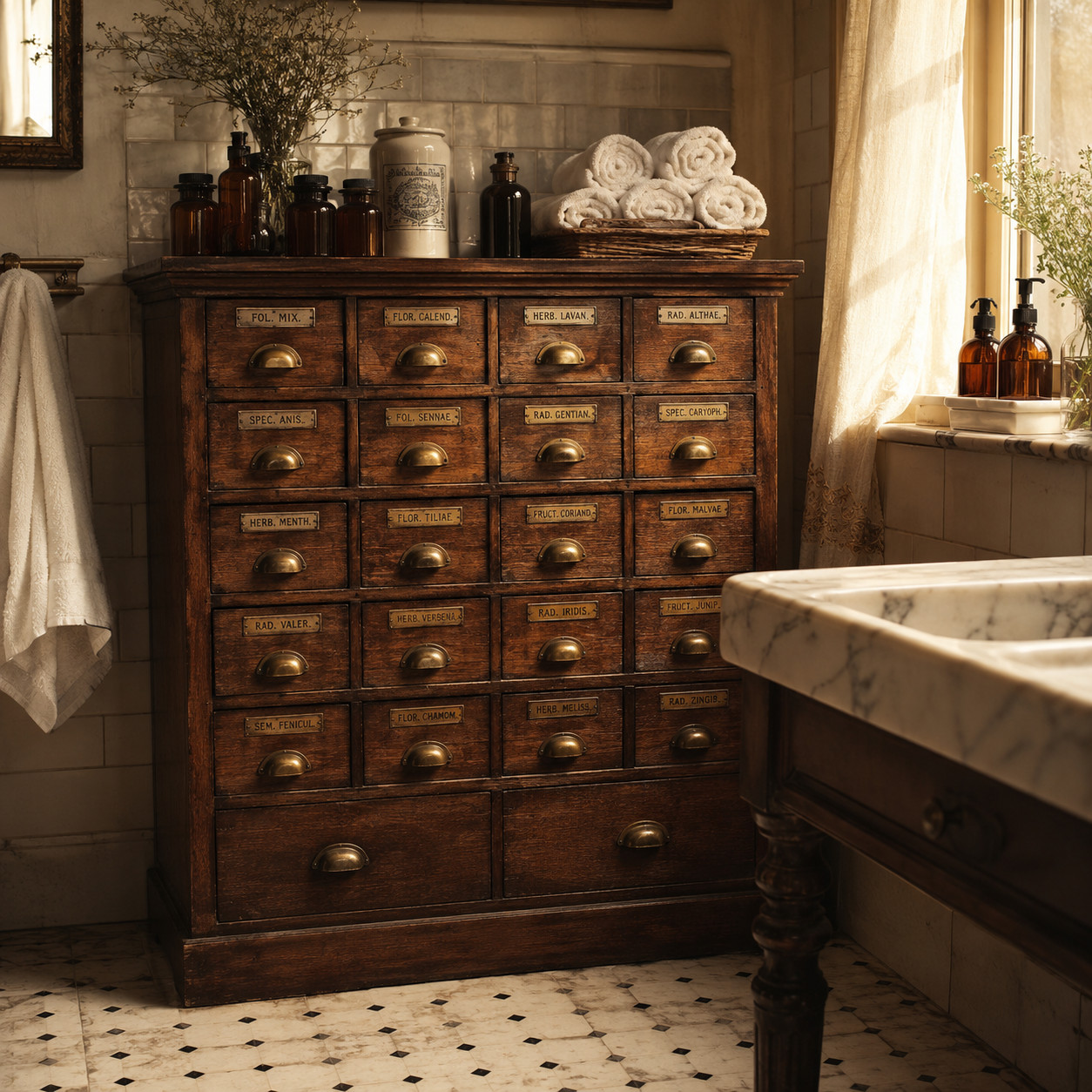
Multi-drawer apothecary cabinets — rows of small labeled drawers, once used to sort powders and remedies — sell well and consistently.
They date to the late 1800s and early 1900s, and they blur the line between bathroom fixture and general antique furniture. A pharmacist’s cabinet repurposed for towels and toiletries fits an old bath perfectly.
Because they’re mobile and beautiful, they compete in the broader antique market, which keeps prices healthy. Original hardware, intact drawers, and a legible finish all add up.
It’s the piece that walks out of the bathroom and into the rest of the house — and holds its value wherever it lands.
Conclusion
The pattern runs through every entry on this list. We stopped making these things — stopped pouring cast iron, stopped glazing sinks in coral, stopped writing HOT on a porcelain button — and the moment we stopped, they started to matter.
Some of it is money. A marked clawfoot or a signed sink can pay for a whole renovation. But a lot of it is just the ache of holding something built to last a century in a world that builds things to last five years.
If you’re sitting in an old house with a pink tub and a pull-chain toilet, don’t be so quick with the sledgehammer. The stuff your grandparents thought was ordinary is the stuff we now can’t replace.
And if you love this kind of hunt, the same story plays out in the kitchen — those kitchen items from grandma’s house worth real money now come from the exact same instinct. Save the old things. Somebody’s looking for them.