

There’s a sound you probably haven’t heard in thirty years. The clack of a hand-crank egg beater hitting the side of a milk-glass bowl.
Grandma’s kitchen wasn’t fancy. Most of it was heavy, chipped, and older than she was.
And almost none of it ever got thrown away. A washer wore out, so you bought a washer. A handle cracked, so you ordered a handle. The thing itself kept going.
Walk into a kitchen built in 2019 and count what’s already been replaced. The faucet cartridge. The blender base. The toaster, twice.
Here are 34 things that filled her kitchen and outlasted everyone who used them.
1. The Solid Brass Compression Faucet You Rebuilt for 39 Cents
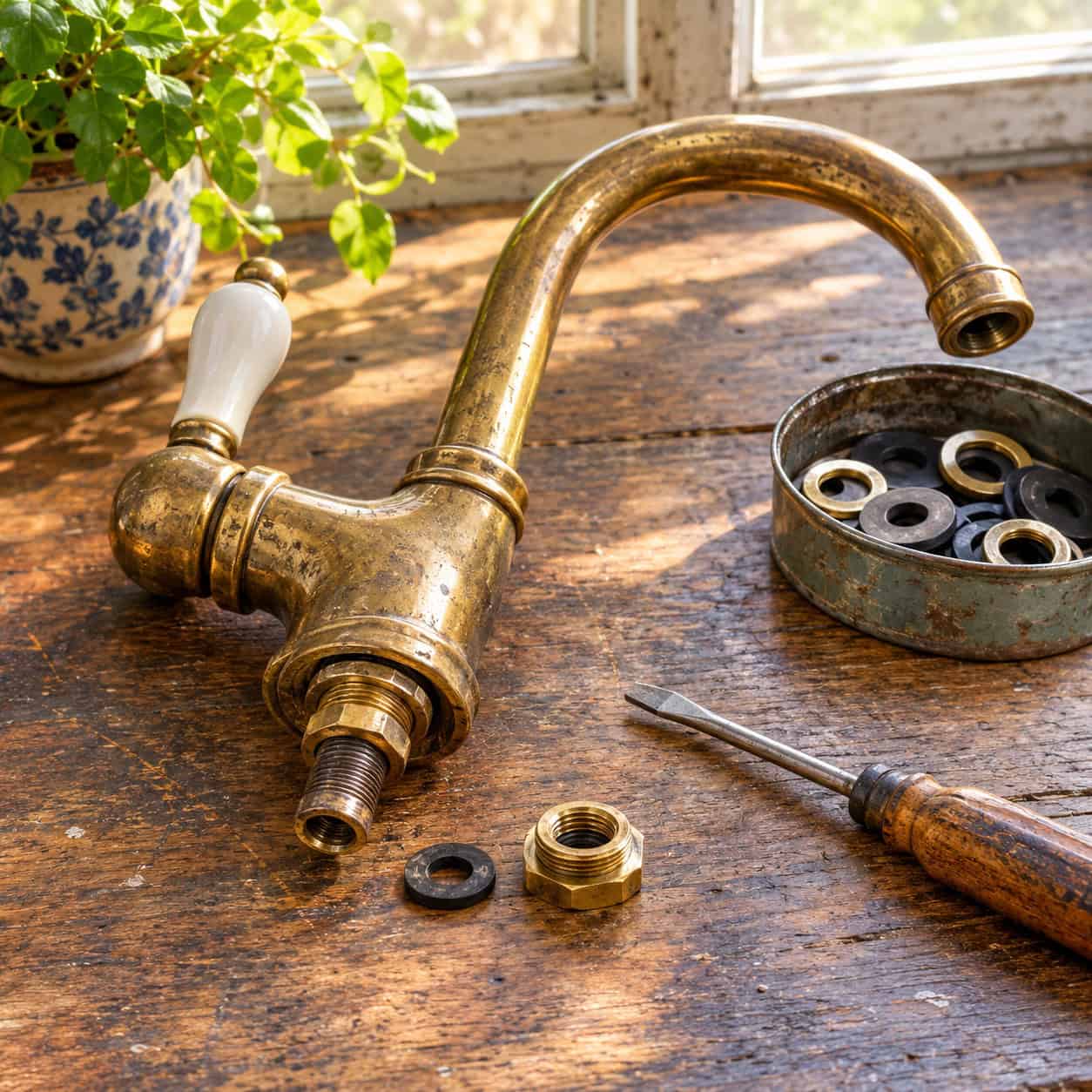
The body was cast brass. Not brass-plated zinc — brass all the way through, thick enough that a dropped cast iron pan would ding the sink first.
Inside were two stems, and inside each stem was a flat rubber washer the size of a dime. That washer was the only part designed to wear out. When the faucet dripped, you shut the stops, backed out the packing nut, swapped a two-cent washer, and the faucet was new again.
The hardware store sold them in little cardboard boxes by size. Every man in the neighborhood had a tin of assorted ones in the basement.
Now the valve is a sealed plastic-and-ceramic cartridge. Nothing inside it is serviceable — when it fails, you buy the whole cartridge, and the difference between a stem and a cartridge is the difference between fixing and substituting.
Worse, cartridges get discontinued. A faucet body can be perfectly sound at year twelve and effectively dead because the $18 part that fits it hasn’t been made since 2016.
So here’s the practical takeaway when yours starts dripping. If the brand still stocks the cartridge and the finish isn’t flaking, rebuild it rather than replace it — thirty minutes and twenty dollars beats a $300 fixture every time. If the part number is orphaned, replace the whole thing and buy from a brand that publishes parts diagrams.
2. The Cast Iron Skillet With Somebody Else’s Name Worn Into It

Griswold. Wagner. Sometimes just a number and a heat ring.
Run your fingers across the cooking surface of a 1930s pan and it feels like polished stone. That’s because it was machine-milled smooth after casting, a step that got cut when labor got expensive.
Most cast iron sold today leaves the sand mold pebbly and goes straight to seasoning. It works fine. It never feels like that.
And the skillet is the one object in this entire list that got genuinely better over sixty years of frying bacon.
3. The KitchenAid Stand Mixer Built by Hobart

Hobart made commercial dough mixers for bakeries. KitchenAid was their home-sized version, built on the same bench with the same philosophy.
All-metal gear train packed in grease. Enough torque to walk itself off the counter if you leaned on it.
Budget stand mixers now use a nylon worm gear on purpose — it’s a sacrificial fuse that strips before the motor cooks. Smart engineering. Not a sixty-year decision.
The old ones still turn up at estate sales with a frayed cord and a seized shaft, and people pay real money to rewire them.
4. The Porcelain-Enameled Cast Iron Sink With Integral Drainboards

One casting. Bowl, drainboard, and backsplash poured as a single piece of iron, then fired with a glass-hard porcelain skin at around 1,500°F.
They weighed 150 pounds and up. Two men and a bad back got it into the house, and then it stayed for fifty years because nobody wanted to move it again.
No seams. No caulk joint at the backsplash to go black. No rim gasket to fail, because the drainboard and the sink were the same object.
Compare that to the three things people buy now. Thin-gauge stainless drop-ins dent under a dropped stockpot and telegraph every ding. Thicker 16-gauge stainless holds up well and is still the sanest mainstream buy. Granite composite looks terrific and resists chips, but it’s a resin-bound material with a warranty measured in years, not a casting measured in generations.
The original enameled sinks did have a real weakness — drop something sharp and the porcelain chips to black iron, which then rusts. Grandma dabbed it with touch-up enamel and ignored it.
Vintage examples still change hands intact; salvage yards list 1924 Standard Sanitary farm sinks that are a century old and still usable. Nobody will be reselling a 2024 composite bowl in 2124.
5. Pyrex Mixing Bowls Made of Actual Borosilicate Glass

Yellow, green, red, blue. Nested on the shelf like they’d been there since the house was framed.
Original Pyrex was borosilicate — low thermal expansion, which is why it shrugged at a cold counter after a hot oven. U.S. production moved to tempered soda-lime glass decades before the brand was sold off in 1998, a shift documented in the American Ceramic Society Bulletin.
Soda-lime is tougher against impact. It’s considerably less forgiving about sudden temperature change.
Which explains why your grandmother never thought twice about it, and you were raised being told not to set a hot dish on a wet counter.
6. The Chrome Sunbeam Radiant Control Toaster

You didn’t push a lever. You laid the bread in and the toaster took it, lowering it on its own with a soft mechanical sigh.
The T-9 through the T-20 judged doneness by sensing radiant heat off the bread itself, not by running a timer. Bagel, rye, half-frozen white — it adjusted.
Mirror chrome, a die-cast body, a repairable mechanism. Sixty-year-old units still work, and collectors trade them like watches.
The $25 plastic one on your counter is a two-year appliance in a disposable shell. Nobody’s restoring it in 2080.
7. The Swing-A-Way Can Opener Hanging on a Nail

Made in St. Louis. It said so right on the handle.
Forged steel gear, chrome body, one moving part, and a cutting wheel that stayed sharp through about four thousand cans of green beans.
When production moved overseas in the 2000s, the name stayed and the metal changed. Softer gear, thinner plating, a wheel that rounds off in a year.
Same package on the shelf. Different tool in your hand.
8. Revere Ware Saucepans With Copper-Clad Bottoms
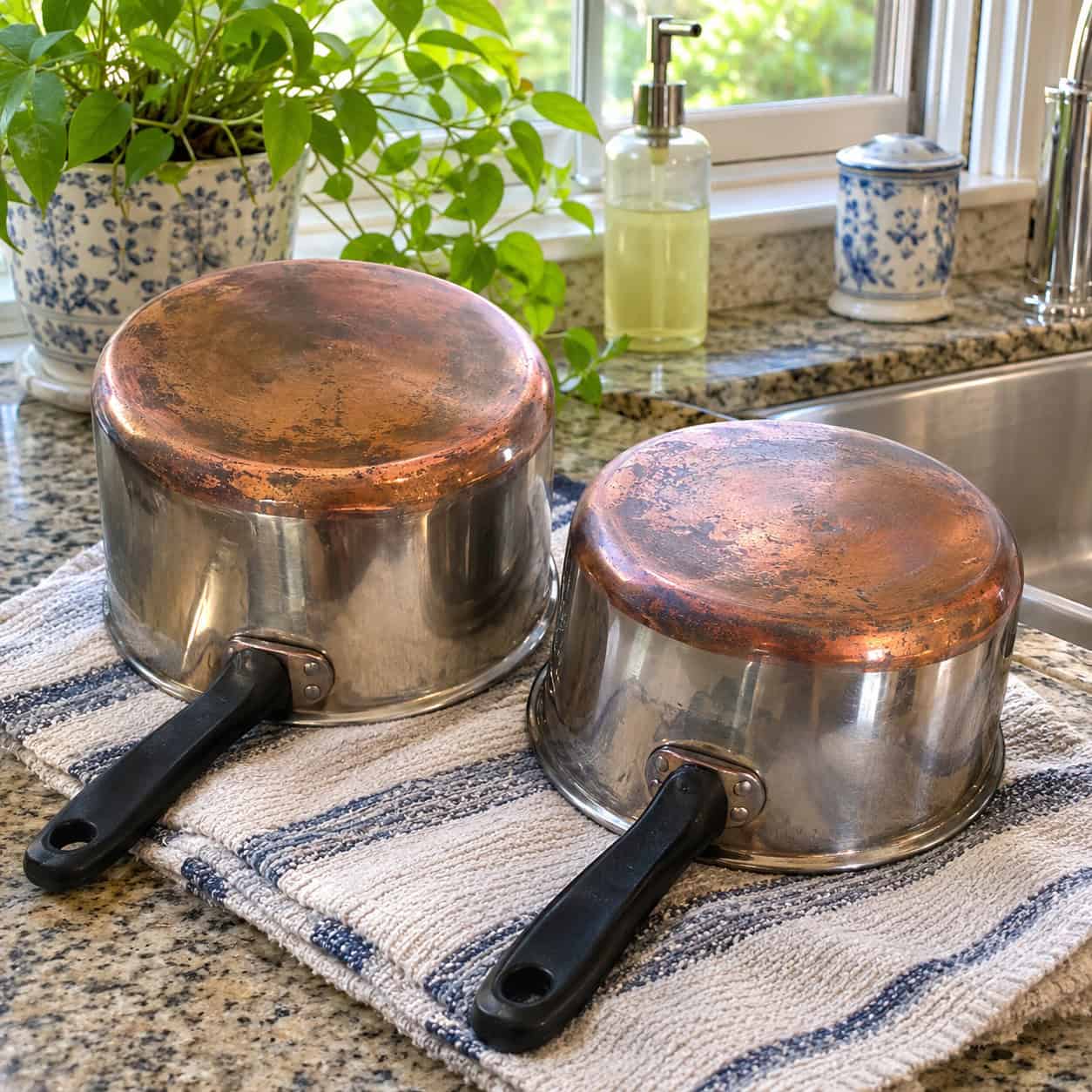
Rome, New York, from 1939 on. Heavy-gauge stainless with a real copper disc bonded to the base — enough mass to even out a gas flame and keep gravy from scorching.
The Bakelite handles were a consumable, and that was the point. The hardware store sold replacements for under two dollars, with the screw included.
Later cost-reduced versions kept the look and thinned the copper to a decorative wash. Same shine on the bottom, different pan on the burner.
Check a thrift store shelf. The heavy ones are still there, lids and all.
9. Copper Supply Lines and Brass Compression Fittings

Open the cabinet under her sink and look at what fed the faucet. Soft copper risers bent by hand, and two solid brass angle stops with oval handles.
Those stops still turn. Sixty years of mineral water through them and the handle breaks loose with firm thumb pressure.
Under a modern sink you’ll find a quarter-turn stop with a plastic collar and two braided stainless hoses with rubber cores. The braid isn’t the pressure vessel — it’s a sleeve over a rubber tube that ages, hardens, and splits.
Manufacturers quietly publish replacement intervals, and most land between five and eight years. Nobody reads them. The hose sits there for fifteen.
Then it lets go at 2 a.m. at full line pressure, and a half-inch supply moves several hundred gallons an hour across your floor until somebody finds the main.
Write the install date on the hose with a paint pen. Replace both at year seven whether they look fine or not — a pair costs about $20, and the cabinet floor, the subfloor, and the ceiling below are worth considerably more. While you’re under there, test that the shut-off valve actually shuts off, because a frozen stop turns a ten-minute swap into an emergency.
10. The Blue Cornflower CorningWare Casserole

That little blue flower was on every church potluck table in America.
The material underneath was Pyroceram, a glass-ceramic that came out of research on missile nose cones. It went from freezer to 400-degree oven to the middle of the table without so much as a tick.
Corning discontinued the U.S. Pyroceram line in 2001. What wore the Cornflower pattern for the next several years was stoneware — pretty, heavy, and absolutely not freezer-to-oven, according to CorningWare’s own product history.
People cracked them doing what their mothers had always done. Same flower, different physics.
11. The Dover-Style Hand-Crank Egg Beater

Tinned steel gears, a wooden knob, and a crank that whirred like a bicycle freewheel.
Patented in the 1870s. Still in the drawer in 1965.
It never needed an upgrade. It got replaced by electric hand mixers that whine, walk, and die around year four, and the beater sat in a drawer waiting to be useful again during the ice storm.
No cord. No gearbox to strip. Ninety seconds of elbow and the whites peak.
12. The Sunbeam Mixmaster With Milk-Glass Bowls

Die-cast metal housing, cloth-covered cord, and two heavy white glass bowls that sat on a rotating turntable.
The motor used carbon brushes, which are wear parts. You bought a pair, pulled two screws, and the mixer ran another fifteen years.
That’s the whole difference in one sentence. Her appliance had wear parts; yours has a failure point.
The bowls outlived the mixers, which is why you still see them stacked at estate sales for four dollars each.
13. The Enameled Steel Bread Box on the Counter

Cream with a red stripe. Or mint. Sometimes a roll-top that rattled down like a tiny garage door.
Porcelain-enameled steel over a folded steel shell. Chip the enamel and you had a chipped bread box that worked exactly as well as it did on day one.
Today’s version is bamboo that warps over the dishwasher, or acrylic that yellows and snaps at the hinge in year three.
Hers is at the antique mall right now. Thirty-five dollars, and it still shuts tight.
14. The Stovetop Percolator That Never Needed a Filter

A glass knob on top, a basket, a stem, and a lid. That’s the entire machine.
Nothing to shatter but the knob, no heating plate to burn out, no pump to seize, no descaling cycle, no pods, no firmware.
Listen to it start — the slow blurp, then faster, then the kitchen smelling like Sunday.
The drip machines that replaced it usually quit at the pump or the heater inside five years, and nobody repairs a $60 coffee maker.
15. The Hoosier Cabinet With the Built-In Flour Sifter

Before kitchens had built-in cabinetry, the kitchen came as a piece of furniture.
Hardwood case. A pull-out porcelain-enamel work surface that slid forward when you needed counter space. A tilt-out tin flour bin with a crank sifter built into the bottom, and a glass sugar jar with a measuring spout.
Spice rack inside the door. Bread drawer with a vented lid. Hooks for cups.
A hundred years on, most survivors are still square and still working, which is more than you can say for a particleboard pantry from 2008.
16. The Osterizer Blender With the Metal Base and Glass Jar

Chrome beehive base, heavy glass jar, and a steel drive coupling between them.
Oster used the same square drive across decades of models, so a jar from 1958 fits a base from 1974. Parts stayed available because the design stayed put.
Modern blenders fail at a plastic drive gear meant to strip before the motor burns. By design, it’s the cheap part that goes — except the cheap part is molded into an assembly you can’t buy separately.
Five bucks of nylon. Two hundred dollars of blender.
17. The Brass P-Trap and Chrome Drain Tailpiece

Chrome-plated 17-gauge brass, heavy enough that it rang when you tapped it with a wrench.
When the sink drained slow, you put a pan underneath, loosened two slip nuts by hand, and pulled the trap off in under a minute. You cleaned out the gray sludge, checked the washers, and put the same trap back on.
Those slip washers cost about a dime and the hardware store had a whole drawer of them. The trap itself might outlast three sinks.
White PVC trap kits cost under fifteen dollars and weigh nothing, which is genuinely useful. But the nuts crack when overtightened, the threads strip if you cross them once, and everybody treats the whole assembly as disposable from the day it goes in.
Here’s the part that costs people money. PVC is fine for drainage, but a cracked slip nut under a cabinet drips slowly onto the cabinet floor for months before anyone notices the swelling particleboard.
If you’re replacing yours, hand-tighten plastic nuts only — a quarter turn past snug with a wrench is how they split. And put a cheap water alarm on the cabinet floor. Ten dollars, two years of battery, and it screams before the subfloor gets involved. It also helps to know what never belongs down that drain in the first place.
18. The Foley Food Mill

Canning season, late August, a bushel of tomatoes on the porch.
Tinned or stainless steel, a hand crank, and a perforated disc that pushed pulp through and held back skins and seeds. No gaskets, no motor, no cord stretched across the counter.
Food processors took its job and do it faster. They also rarely see twenty years, and they can’t separate a skin from a sauce no matter how you pulse them.
The mill clamps to a pot rim and goes in the dish drainer afterward. That’s the whole maintenance plan.
19. The Chambers or O’Keefe & Merritt Porcelain Gas Range

Porcelain-enameled steel over a welded frame, with chrome trim, a griddle in the middle, and a clock you wound.
The thermostat was mechanical — a fluid-filled bulb in the oven and a capillary tube to a brass dial. No control board. No display. Nothing that cares about a brownout.
Chambers famously ran a thermal-well cooker and a heavily insulated oven that finished a roast with the gas off. Restored examples cook daily in kitchens right now, eighty years on.
Modern ranges cook better, light instantly, and clean themselves. They also get scrapped over a $400 control board on a $900 appliance, which is why appliance lifespan tables keep shrinking — Mr. Appliance puts a typical range at 13 to 15 years, and electronic models tend to land at the low end.
The grim math: once a repair quote passes half the cost of new, nobody fixes it. Boards are the fastest way to cross that line.
20. Old Hickory Carbon Steel Knives With Riveted Wood Handles
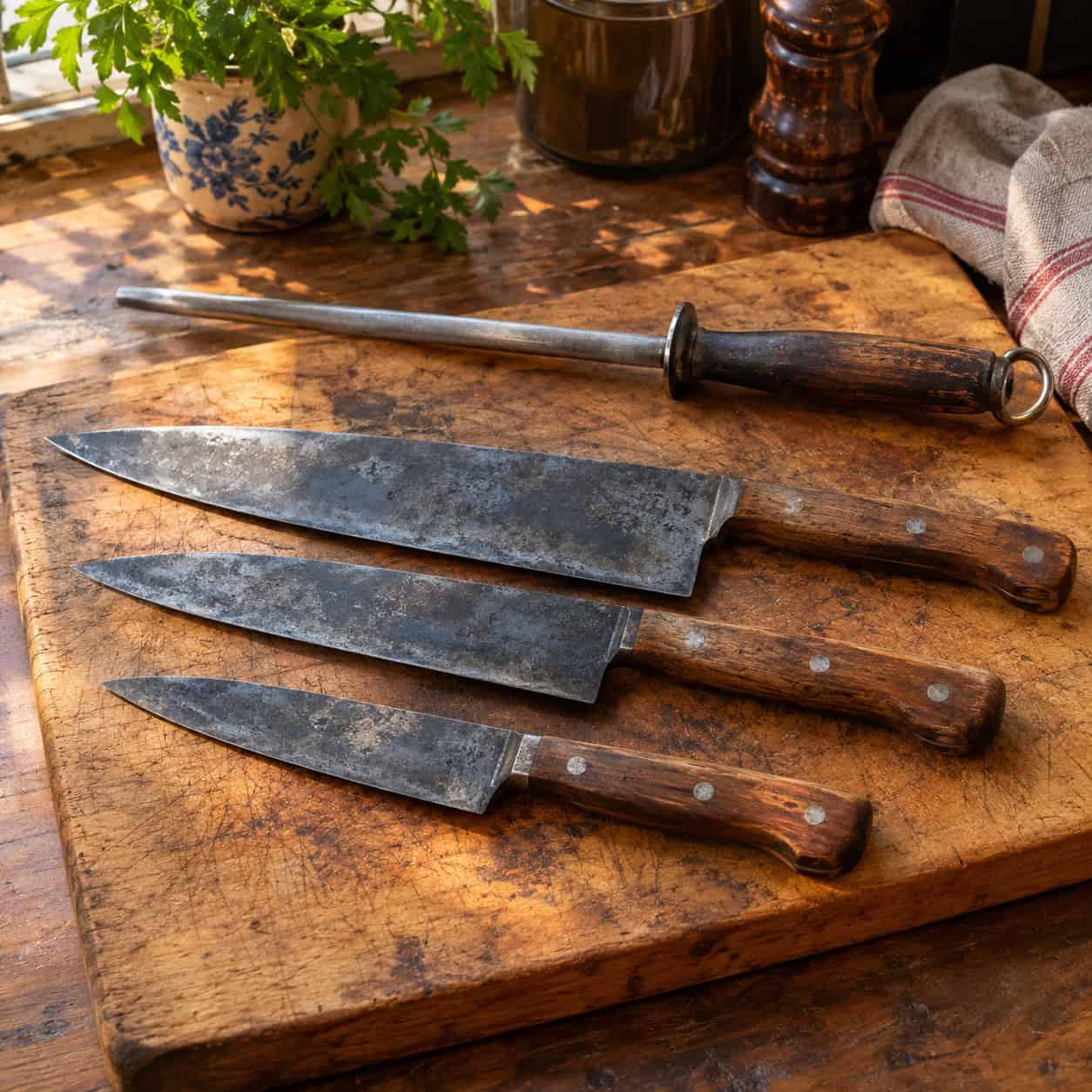
Three rivets through a slab of hickory, a blade that darkened to gray-blue, and an edge you could put back in forty seconds on a steel.
Carbon steel rusts if you leave it wet. It also takes an edge no stamped stainless kitchen knife will ever hold.
Sixty years of sharpening narrowed the blade visibly — grandmothers’ paring knives ended up looking like stilettos. The knife wasn’t wearing out. It was being used.
Stamped stainless with a molded handle is sharp once, then permanently adequate.
21. Ball Mason Jars With Zinc Lids and Glass Liners

People still put up tomatoes in jars embossed with a 1930s logo. The glass simply does not quit.
The honest footnote is the lid. Zinc caps with milk-glass liners are collector items now and aren’t considered safe for modern canning.
Which means the one consumable part became the one part you can’t use — and the two-piece lid that replaced it is designed to be bought every single season.
Still. The jar on the shelf is older than your parents and holding beans.
22. The Hand-Crank Meat Grinder Clamped to the Table Edge

Tinned cast iron, a wing nut that bit into the table edge, and a set of plates for coarse or fine.
It ground venison in November and Sunday roast leftovers into hash on Monday. You washed it, dried it fast, and wiped the auger with oil.
The electric grinder attachments that replaced it burn out their gearboxes inside a decade and cost more than the whole vintage grinder does today.
Twenty dollars at a farm auction. Still works. Still clamps.
23. The Hamilton Beach Drink Mixer in Jadeite Green

Built for soda fountains, then sold into homes for milkshakes.
Enameled cast metal body, a spindle motor with real bearings, and a stainless malt cup that fit the cradle. Diners are still running these — actual commercial duty, decades deep.
The jadeite green ones are the prettiest object on this list, and that’s not nothing.
It makes one thing. It makes it forever.
24. The End-Grain Maple Butcher Block

Thick hard maple, end grain up, drawn together with steel rods through the whole assembly.
It was meant to be used hard and maintained, not protected. Scrape it with a bench scraper, salt it, oil it, repeat for a century.
Plenty of hundred-year-old blocks are still flat. The fibers stand on end, so the knife edge parts them instead of cutting across them.
The glued bamboo board on your counter delaminates after two trips through a dishwasher.
25. The Cast Aluminum Presto or Mirro Pressure Cooker

Heavy cast aluminum, a jiggler weight that rocked on the vent pipe, and a rubber overpressure plug in the lid.
Two parts wore out. The sealing ring and the plug, both ordered by mail for a few dollars, both swapped in two minutes.
That’s the entire maintenance history of a forty-year cooker.
The electric multicooker on your counter does more, safer, with less attention. It’s also governed by a board nobody sells a replacement for, which means its lifespan is whatever that board decides.
26. Tupperware Sold With a Lifetime Seal Warranty

The burp wasn’t a gimmick. It was patented engineering — press the center, lift the edge, and the lid pulled a partial vacuum against the rim.
Crack a lid and your local dealer replaced it. Free. For as long as you owned it.
Think about what that business model assumed: the product would never wear out, so the money had to come from selling to new households instead.
Food storage is sold by the 20-piece set now, and everyone knows the lids will warp in the dishwasher by spring.
27. Armstrong Battleship Linoleum Underfoot

Real linoleum isn’t vinyl. It’s linseed oil, pine rosin, cork dust, and wood flour pressed onto a jute backing.
It cured and hardened over years instead of degrading, which is why the Navy specified it on warship decks and why school districts put it in hallways that saw a thousand kids a day. Forty-plus years of wear was normal.
Sheet vinyl replaced it because it was cheaper and came in more patterns. It also tears at the seams, gouges under a chair leg, and yellows in a permanent rectangle under the refrigerator.
If you’re choosing now, know that some kitchen flooring looks dated and worn in five years while real marmoleum is still sold and still behaves like the original.
28. The Chrome Waffle Iron With the Bakelite Handles

Open the shell and the grids inside are solid cast aluminum, deep and heavy, holding heat like a griddle.
Four screws got you to the heating element. Elements were sold as parts, because of course they were.
Nonstick waffle makers flake within a few years, and the whole unit is ultrasonically welded shut. There is no inside.
A good vintage one still crisps better than anything on a big-box endcap, which is an irritating thing to discover at a flea market.
29. The Red Wing Stoneware Crock in the Pantry

Salt-glazed stoneware, fired hot enough to vitrify, with a cobalt wing stamped on the side.
Sauerkraut fermented in it. Pickles swam in it. Salt pork kept in it through winters before refrigeration, and when all that stopped, it held umbrellas by the front door for another forty years.
Chemically inert, scrubbable, and essentially impossible to wear out short of dropping it.
The food-grade plastic bucket that replaced it has a stated shelf life and takes on the smell of whatever it held last.
30. The Wall-Mount Faucet That Arced Over the Sink

It came out of the backsplash, not the sink deck. Two porcelain cross handles marked Hot and Cold, and a swing spout riding on a brass nut.
That mounting choice did two quiet, excellent things. It kept the deck clear so you could scrub the whole sink in one pass, and it kept the valve bodies above and behind the splash zone instead of sitting in a puddle of dish water.
When a washer went, you rebuilt it in place in ten minutes. No crawling into a cabinet, no basin wrench, no flashlight in your teeth.
They never fully disappeared — wall-mounted faucets have real tradeoffs, mainly freeze risk on exterior walls and a rough-in you can’t easily move later.
31. The 1950s Refrigerator Still Humming in the Garage

Everybody knows one. A latch-door Frigidaire or a round-shouldered Kelvinator out past the workbench, holding six sodas and a bag of ice.
It’s been running since Eisenhower. The gasket is cracked, the latch sticks, and the compressor drones like a small airplane.
They were simple: a sealed compressor, a condenser coil on the back where you could reach it with a brush, a mechanical thermostat, and a steel cabinet. Almost everything was serviceable, and the few parts that failed were sold by every appliance shop in town.
Now the honest part, because this one gets romanticized. That garage fridge may burn three to five times the electricity of a current model — a vintage unit can run well over 1,000 kWh a year against roughly 350 for a modern one, which is real money quietly leaving your account every month. HomeServe makes the same point: old appliances last longer and cost more to run.
Modern refrigerators are dramatically more efficient and dramatically less fixable. Sealed systems, proprietary inverter boards, and a life expectancy that keeps drifting toward a decade.
Both things are true. She got sixty years and a huge power bill. You get efficiency and a replacement cycle.
32. The Maytag Wringer Washer in the Kitchen Corner

In a lot of houses, laundry happened ten feet from the stove.
Cast aluminum tub, a gear-driven wringer on top, and a motor with brushes and bearings you could rebuild on the kitchen table. Monday was wash day and the whole room steamed up.
These genuinely ran sixty years. Some Amish communities still use them, and parts are still made.
You wouldn’t want it back. But it’s worth remembering that the habits built around that machine — sorting, line drying, wringing instead of spinning — cost almost nothing to run.
33. The Pyrex Measuring Cup With Red Graduations

Two cups, red screen-printed markings, that stubby handle shaped for a thumb.
It’s probably the single most recognizable object in any American kitchen of the last century, and the one most likely to still be in yours.
The red printing fades. Decades of dishwasher cycles sandblast it to a ghost, which is how you date one at a glance — crisp numbers are new, faint ones have history.
Hers is still in the cabinet. Still accurate. Still the one you reach for.
34. Club Aluminum and Wear-Ever Cast Aluminum Dutch Ovens

Hammered finish, a domed lid, and a thickness you feel in your wrist the second you lift it off the shelf.
Cast aluminum heats more evenly than anything else at that price and weighs half what iron does, which mattered to a woman cooking three meals a day for forty years.
Club sold them in colors — avocado, harvest gold, that particular mustard. They show up at thrift stores for almost nothing, usually with the lid.
Scrub off the tarnish, oil the inside, and you have a pot that will outlive the person who buys it.
None of this is an argument that the past was better across the board. Her refrigerator burned power like a space heater, her range had no safety shutoff, and her knives rusted if she left them in the sink.
What changed isn’t quality exactly. It’s that things used to be built around the assumption that something would wear out, and that a person would fix it — so the wearing part was cheap, separate, and reachable.
Now the wearing part is molded into the thing itself.
Go open the cabinet under your sink tonight and look at the two braided hoses feeding your faucet. She’d have known exactly how old they were.